VEIT
Historical document, translated for reference. It reflects medical knowledge of the 1920s–30s and is not medical advice.
Summary
Johann Veit (1852-1917) was a prominent German gynecologist who worked in Berlin, Leiden, Erlangen, and Halle. He is known for his significant contributions to gynecology, particularly his theory on the deportation of villi into the maternal bloodstream, and for his influential medical textbooks.
Encyclopedia entry (1928–1936)
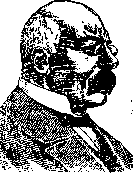
VEIT Johann (Johann Veit; 1852-1917), a prominent German gynecologist of the modern era. He received his medical education and specialized in Berlin. He worked there until 1896, when he received a chair in Leiden, in 1903 he moved to Erlangen, and in 1904 to Halle, where he remained until his death. From his rich literary and scientific legacy, the Handbuch der Gynakologie (Wiesbaden, V. I-III, 1897-1899, 3rd edition is currently being published in a new revision under the editorship of Stoeckel) is particularly significant. Of his scientific ideas, the valuable and fruitful idea of F. "about the deportation of villi" (more accurately their epithelial covering) into the mother's circulatory system remains important. In Russian translation, the following have been published: Diagnostika zhenskikh bolezney (St. Petersburg, 1892; also Moscow, 1893), Lechenie zhenskikh bolezney (St. Petersburg, 1913).
Related articles
Mentioned in
Cite this page
“VEIT.” Soviet Medical Encyclopedia. English translation of Bolshaya Meditsinskaya Entsiklopediya, 1st ed. (Moscow, 1928–1936), ed. N. A. Semashko. https://sovietmedicalencyclopedia.pages.dev/article/veit/