Work Capacity
Historical document, translated for reference. It reflects medical knowledge of the 1920s–30s and is not medical advice.
Summary
This article distinguishes between 'work capacity' (трудоспособность) and 'work ability' (работоспособность), explaining how work capacity is a social concept dependent on both biological capabilities and labor conditions. The text examines how work capacity differs under capitalist versus socialist systems, with data from the USSR showing improved work capacity and reduced disability through better working conditions.
Encyclopedia article (1928–1936)
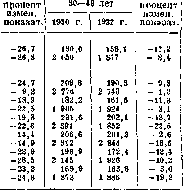
WORK CAPACITY, a concept closely related to the concept of 'labor power,' or 'work ability.' The concept of W. should not be equated with the concept of 'work ability,' as some authors do (Vigdorchik and others). 'By labor power, or work ability, we understand,' writes Marx, 'the sum of physical and mental abilities which a specific organism, a living human personality, possesses and which he puts into use whenever he produces any use-values' ('Capital,' Vol. I, p. 111). Work ability is the sum of the physical and mental abilities of the human organism (condition of the skeleton, functional abilities of muscles, internal organs, nervous system, brain, internal secretion organs, sense organs, etc.), thanks to which he can work and labor. Work ability is the biological basis of W. Work capacity is not merely the ability to productively consume it. W. depends not only on the sum of physical and mental abilities of a person, but also on the nature of working conditions. The latter, however, differ in different economic formations and are determined primarily by the social structure of society. Possessing the same labor power, or work ability, a worker under capitalist working conditions may prove to be unable to work, while under socialist working conditions he may be able to work, since the conditions for consuming 'this labor power' on socialist enterprises fundamentally differ from the corresponding conditions on capitalist enterprises (see Labor). Under capitalist conditions, many with normal work ability prove unable to work. In the USSR on socialist enterprises with a reduced 7-hour, and for workers in harmful shops 6- and 4-hour working day, with normal intensity of labor, with rational placement of labor force in accordance with the psychophysiological characteristics of the workers, the latter not only with normal but often with reduced work ability are capable of work. Proof of this position can be found in the data on the constantly increasing percentage of restoration of W. of invalids who move to production in connection with the restoration of their work ability due to improvement of their health, as well as in connection with improvement of working conditions on socialist enterprises. W. is therefore a concept of social order, although it always has work ability as its physiological basis. Equating the concepts 'work capacity' and 'work ability' is a source of basic methodological errors in questions of examination of W., vocational counseling, professional selection, use of residual work ability, employment of invalids, etc. The biological basis of human work capacity, his work ability, changes with age, as a rule reaching its highest development between 30-50 years. It depends not only and perhaps not so much on genotypic features of the human organism as on acquired characteristics in the process of development, upbringing, training and exercise. Illness, its nosological form, severity, outcome, complete or partial recovery has a great influence on work ability. Changes in work ability can also be traced depending on the severity and duration of work, preceding rest, in particular sleep, character, quality and quantity of nutrition, etc. The prolonged effect of these factors determines the degree of stability of these changes. Changes in work ability, and consequently in W., also occur during the working day. With heavy work, with an incorrect work regime and especially with prolonged continuous work and a very long working day, after a certain more or less long period of time, a period of decreasing W. sets in, mainly associated with the increasing process of fatigue (see). With proper organization of labor and appropriate training, the duration of the period of stabilized W. can be extended almost to the established duration of the working day, and the duration of the other periods to a minimum; the ratio of the duration of periods can serve to some extent as an indicator of rational organization of labor. The characteristic differences in W. by day of the week, manifesting in particular in increased traumatism at the end of the week, inherent in capitalist production, in the USSR conditions, with a shortened work week (5-,6-day week), with a reduced 7-hour working day, with improved working and living conditions, with improving organization of work rest, are not so great. The immediate task is to achieve stabilized normal W. throughout the entire work week, which is quite possible with further rationalization of labor. However, the decisive influence on work ability and W. of workers is exerted by the social structure of society. In a class society, where parasitic, non-working layers of the population live at the expense of the exploitation of workers, the work ability of the latter is at a very low level, although different for different layers of workers depending on the degree of their exploitation. The capitalist system of labor organization is inevitably accompanied by increasing unemployment, heavy exhausting labor, industrial traumatism, social and professional diseases, physical degeneration (see Labor). Low work ability of the working class is therefore a constant companion of capitalism. Indicators of temporary inability to work. Statistical data on morbidity with loss of W. are, along with indicators of mortality and physical development, the most valuable for characterizing social health'. In many respects they are completely irreplaceable. Clinicians use them to determine the frequency and severity (average duration) of diseases with individual nosological forms, since comprehensive accounting of primary attendance for most pathological forms of diseases (except epidemic and some social diseases) is not conducted. In addition, insurance data are the most reliable, since the primary statistical document, the sick leave certificate, is simultaneously a monetary document. Based on the sick leave certificate, the benefit paid to the insured is calculated. Insurance organizations abroad (e.g. in Germany) also paid great attention to morbidity statistics, as they needed it for the purpose of calculating insurance risk. Although insurance data on morbidity of workers in capitalist countries are not fully comparable with data in the USSR due to greater availability of medical-prophylactic care in the USSR, they can still be of interest when used skillfully. At present, preliminary processing of morbidity with loss of W. is carried out at large enterprises by health posts together with insurance posts (as part of signal statistics). The data are finally summarized by industry in trade union organizations, to which the entire matter of social insurance has been transferred.-In addition to current processing according to the tasks of the Central Insurance Board, an in-depth processing of morbidity with loss of W. was carried out according to main nosological forms, sex, age, shops and even individual professions. These materials are of interest. Part of them is published for the first time below in tables, compiled on the basis of materials received from the Institute of Social Insurance of the All-Union Central Council of Trade Unions. These tables show that in all branches of industry and in all regions (Table 1) we have a significant decrease in the number of cases and the number of paid days for temporary inability to work. The decrease in 1932 compared to 1930 is observed both among men and women (Table 2) and for all main forms of disease (Table 4). The data also show a decrease in morbidity of workers of different ages and professions (Table 3). All this undoubtedly testifies to the great stability of this major achievement of the first five-year plan of our socialist construction. All these data testify to the increase in W. of the working class due to the rise in the standard of living, significant improvement of labor conditions. The latter led to an increase in W. not only of full-fledged workers, but also of so-called invalids. This is evidenced by the fact1 that in the USSR, along with the decrease in disability of workers, the percentage of working invalids increases every year. Data from current quarterly accounting - for the USSR show that this percentage on 1/I 1932 was 17.2, on 1/VII 1933 - 18.5. These data show an increase in the percentage of working invalids, despite the re-examination of invalids in a number of regions and removal from disability of the most able-bodied. It should be remembered that current accounting data reflect correctly only the dynamics of this phenomenon. Its absolute size is given only by data from special surveys. According to these materials, the actual percentage of working invalids is approximately twice as large. Materials of these surveys also show that labor productivity and wages among working invalids of Group III in a significant part (more than 1/3), and among skilled workers in an even larger part, do not decrease.
Comparative data on labor productivity and wages of 60 disabled workers (mostly Group III) at the Kolomna Plant and 60 non-disabled workers of the same qualification showed that for qualified workers (turners and fitters of the 6th-8th category) the indicators do not differ, while for less qualified workers (molders, blacksmiths of the 4th-7th category) they are 6-11% lower. Work capacity and labor productivity. The role of Work capacity in labor productivity is determined by the value of the working collective as the main productive force, the value of labor power, the human factor as the most important element of labor, and one of the foundations of labor productivity. An important factor ensuring the increase in output per worker during the second five-year plan is the better utilization of the working year, a reduction in absenteeism, including absenteeism due to illness due to disability. The second five-year plan provides for an increase in the annual number of working days in industry from 257 in 1932 to 287 in 1937. This increase is supposed to be achieved by eliminating absenteeism for invalid reasons (about 6 days in 1932) and reducing by three times non-attendance for valid reasons in connection with improved living conditions, a reduction in illness by 1/3, the elimination of epidemics in the country, industrial accidents and occupational diseases in the leading sectors of the national economy. All this requires serious work on the problem of increasing Work capacity. Prevention of disability. The main path to preventing disability is the vast socio-hygienic and health measures (improvement of the material well-being of the working people, health improvement of labor, improvement of municipal amenities, development of housing construction, public catering, etc.), which are inextricably linked with socialist construction. But along with these measures carried out on a national scale, one should not neglect measures of local importance and even individual preventive measures. Significant results can be achieved through local health measures at the enterprise and in the workshop, by improving the workplace, improving medical-prophylactic care (dispensarization) of individual groups of workers, for example those working in harmful shops, frequently and long-term ill (FDI) and others. At present, this group is given great attention by both social insurance and health authorities. Three groups of FDI are distinguished: 1) with a clearly defined etiology, 2) with an unclearly defined etiology, for which primarily clarification of the diagnosis is required, 3) those frequently subject to industrial injury. Frequently and long-term ill have a large share in the number of paid days for temporary disability (up to 25%) with a relatively small percentage among the sick (up to 10%). In addition, these patients are the most frequent visitors to medical institutions. Rationalization of their care - attachment to permanent doctors with the provision of consultations by highly qualified specialists - significantly reduces attendance at outpatient clinics and polyclinics. Recently, insurance and health posts at enterprises have begun to pay special attention to workers who systematically show reduced labor productivity or an increased percentage of defects, as often the latter is based on reduced work capacity. In the process of dispensary care for this group of workers and FDI, the etiology of their disability is clarified and a number of measures are taken to increase work capacity, such as: special treatment, transfer to other work, improvement of living conditions, etc. The effectiveness of these measures is evidenced by the data of F. Spivak, who, after six months of dispensarization of FDI, reduced the number of paid days from 35% to 86% depending on the severity of the etiology. All this is possible only under the conditions of the victory of the dictatorship of the proletariat in a country where there is a progressive improvement in the material well-being of the working class and all working people. These improvements will undoubtedly create an even higher work capacity and Work capacity of socialist workers than we already have, and will thus ensure an even higher productivity of socialist labor necessary for the victory of a classless socialist society. Expert examination of work capacity - see Expert examination.
Table 1. Morbidity of insured persons in the main branches of labor and regions of the USSR for 1932 and 1933 (per 100 insured persons of both sexes for all diseases, excluding abortions, births, quarantine and care for the sick). Number of paid days
92.8 Rubber (including rubber) ...
162.6 Leather (including fur) ...
6.4 1
The data presented cover a selected group of 27 largest machine-building enterprises in the USSR. The severity indicators are calculated according to calendar days of illness. To convert them into indicators by paid (working) days, they need to be multiplied by a coefficient of 0.8a (for a 6-day work week).
Related articles
Mentioned in
Cite this page
“Work Capacity.” Soviet Medical Encyclopedia. English translation of Bolshaya Meditsinskaya Entsiklopediya, 1st ed. (Moscow, 1928–1936), ed. N. A. Semashko. https://sovietmedicalencyclopedia.pages.dev/article/work-capacity/