Gymnastics
Historical document, translated for reference. It reflects medical knowledge of the 1920s–30s and is not medical advice.
Summary
Gymnastics is a system of specially selected physical exercises with specific objectives and effects on the body. It includes various types such as pedagogical, military, medical, applied, aesthetic, and athletic gymnastics, each with different purposes and effects on the organism.
Encyclopedia article (1928–1936)
GYMNASTICS (from the Greek gymnos-naked) in the modern understanding of this word represents one or another system of specially selected physical exercises that have a specific target setting and a specific effect on the body. Depending on this, G. can be pedagogical, military, medical, applied, aesthetic, athletic, etc., and depending on its effect on the body, it is divided into respiratory, corrective, coordinating, etc. The specificity of gymnastic exercises lies in the fact that they have a specific, sometimes very limited effect on one or another group of muscles with the aim of creating and developing skills in movements (motor reflexes) that are useful in one respect or another. Pedagogical gymnastics, by synthesizing physical exercises, dosing them and achieving proper coordination of movements, subordinates all voluntary muscles to the will of the person exercising - this means that it teaches how to tense and relax muscles at will, to produce one or another effort with calculation, with economy of energy; it subordinates movements to a certain rhythm. The participation of the central nervous system in G. is very great, and from this point of view gymnastics has high educational value; gymnastics requires ingenuity, attention, precision in movements, memory; therefore, a gymnastics lesson cannot be very long, it cannot be considered rest after tiring mental work, it should be interrupted by games and other physical exercises that are more dynamic and emotional. Pedagogical gymnastics includes so-called corrective exercises, the direct task of which is to correct defective body forms and incorrect habitual movements, but this kind of physical exercises is also allowed for preventive purposes - to prevent developmental anomalies. Gymnastic exercises are often performed forcibly in rooms; this greatly diminishes their hygienic value, therefore special attention should be paid to the hygienic conditions in which gymnastics is performed. Gymnastics requires rational methodology and systematic exercises. Gymnastics in schools is essentially a pedagogical process regulated by medical science. From this point of view, gymnastics should be accessible to a given age and sex and coordinated with the biological peculiarities of growing organisms. Its movements should be understandable, interpreted according to anatomical data and, if possible, subjected to analysis by the performers. In preschool age, such analysis is impossible, but in this age, games and other free movements of children are of much greater importance. History of gymnastics. Gymnastics received a systematic organization in ancient Greece. (gymnastike - a system of physical exercises that allowed leaders in the study of body plasticity (plastic anatomy) to better control all movements and correct them in advance. G. of that time had great significance among the Greeks; it essentially had an educational character, served the purposes of upbringing, it represented a system of physical education of the ruling class of ancient Greece, which set as its ideal harmonious development, mental and physical. The G. of the Greeks was divided into 4 basic types: 1) dietetic G. (preservation of health and general physical development), 2) aesthetic G. (development of beautiful body forms and beautiful movements), 3) military G. (development of strength and endurance in combat life) and 4) ethical G. (development of courage, quickness of wit, etc.). In addition, G. was divided into "palestric", "orchestic" and "games". The first included exercises in pentathlon, military exercises (throwing), riding, chariot racing, swimming and ball exercises (spheristics). "Orchestric" included preparatory and imitative dances and finally the "games" section included various games and amusements. In the general setting of physical exercises among the Greeks, one should also distinguish G. from agonistics, which, in contrast to the educational exercises of the former, included exercises aimed at preparation for public competitions. Classes in G. were first held in palaestras, and then in specially constructed buildings - gymnasia, headed by gymnasiarchs. The leaders of the classes were gymnasts. Among them were also doctors (the first of them - Herodicus and Philostratus). All exercises among the Greeks were distributed in strict sequence for different ages. It was in Greece that physical exercises first found application as a method of combating occupational hazards. G., introduced from Greece to Rome, took on mainly a military orientation there.
GYMNASTICS
In subsequent historical periods, gymnastics, along with the very idea of physical education, was forgotten for many centuries. Only during the Renaissance and Reformation did a number of prominent figures who touched upon the organization of education in their works raise once again the question of the importance of physical education (Comenius, Rabelais, Montaigne, J.-J. Rousseau, Luther). In the Philanthropinum schools opened in Germany according to Rousseau's ideas by Basedow (1763–1836) and almost simultaneously with him by Guts Muths (1759–1839), a practical beginning was laid for a system of physical exercises that later grew into the system of German gymnastics. Guts Muths, in creating his national system of gymnastics, gathered materials from historical monuments of antiquity, studied extensively the physical exercises of the ancient Greeks, Romans, Persians, and knights of the Middle Ages, and together with Basedow must be considered a pioneer of systematic exercises in gymnastics not only in Germany, but also in other countries, since the ideas of Guts Muths's system were spread by his followers to other countries: Amoros in France, Clias mainly in Switzerland, and Nachtigal in Denmark. The German system of gymnastics received its definitive form thanks to the works of F. Jahn (1778–1852), who raised the question of the state significance of physical education on a broad scale (to a great extent under the influence of the unsuccessful wars with Napoleon). In his system of Turnen, aside from adding a number of apparatuses (parallel bars, buck, horse, horizontal bar), Jahn was the first to introduce free exercises (that is, without apparatus). Exercises on apparatuses, which have remained characteristic of German gymnastics to this day, were of an athletic nature in Jahn's system and, despite a heavy physiological load and a one-sided influence on physical development, were permitted by him for children as well. It is interesting for the state of medicine at that time that this question of apparatuses was subjected in 1862 to a special discussion by a commission of prominent professors (Virchow, Lehnert, and others), which came to the conclusion: "Exercises on parallel bars can be justified from a medical point of view and should not be rejected." Around the same time, the famous physiologist du Bois-Reymond expressed himself even more decisively regarding a scientific approach to evaluating the foundations of the German system: "To find bodily exercises and bring them into a certain order requires neither philosophical reasoning, nor anatomy, nor physiology," since "everything that is possible for the body is rational, and it alone should limit its actions." Systems of gymnastic exercises. Specifically, gymnastics includes the following types of exercises. 1. Free, or joint movements along the three main axes of the body (frontal, sagittal, and vertical): flexio et extensio, abductio et adductio, pronatio et supinatio, rotatio. Their main purpose is to provide a full range of motion in the joints. 2. Ordinal movements, which accustom one to discipline and to the coordinated movements of individual groups and masses. 3. Exercises with apparatuses (clubs, sticks, flags, weights, dumbbells) that increase muscle tension during the execution of various movements. 4. Breathing exercises that accustom one to the correct respiratory rhythm, which is maintained during all other exercises. Breathing exercises teach how to properly utilize breathing during rest between exercises as well; they calm and regulate the work of the heart. Properly structured breathing exercises during gymnastics classes make special breathing gymnastics unnecessary. The latter is needed as corrective and medical gymnastics. 5. Corrective exercises in the sense indicated earlier. 6. Exercises on apparatuses (parallel bars, trapezes, rings, ladders, ropes, balance beams, Swedish wall, Swedish bench, buck, horse, frame with a rope for jumping, etc.). Apparatuses are required only as an auxiliary means to intensify movement (horse, buck, rope for jumping) or for movements that are necessary but impossible without an apparatus (ladders, apparatus for hanging by the hands, etc.). Young people often get carried away with apparatus gymnastics, go beyond the bounds of reason and usefulness, and indulge in acrobatics. Walking, running, jumping, throwing, wrestling (natural movements) and games often enter into the gymnastics lesson, but they also enter into sports and athletics, and therefore are not characteristic of gymnastics. Spiess (1810–58) laid the foundation for school German gymnastics proper. He introduced ordinal exercises, free movements, classified exercises on apparatuses, and introduced apparatuses for mass exercises. Still, according to Lesgaft's assessment, Spiess's gymnastics "is nothing other than a collection of all sorts of exercises not connected by a common goal and without any adaptation to the structure and activity of the young organism." The German system of gymnastics had a great influence on the development of other systems, but in its pure form it became widespread mainly only in Germany itself.
Figure 1.
The system of Swedish gymnastics underwent significantly greater development. Its beginnings were laid by P. Ling (1776–1839). The goal of Swedish gymnastics: "the correct development of the human body through precisely defined movements" (Lesgaft), selected with great care, testing, and caution. A characteristic feature of Ling's Swedish system of gymnastics was the underlying idea to create such a complex of strictly thought-out physical exercises that would contribute to the harmonious development of the body, for which a precise study of all the mechanisms of the body and its movements was necessary (the beginning of biomechanics). This task was purely scientific; following this path, Ling and his followers discarded everything harmful, tasteless, and useless, and first of all excluded all the acrobatics of German gymnastics with its somersaults on apparatuses. Swedish gymnastics became not an end in itself, but a means to achieve the intended goal, and this was a huge step forward, recognized by the best authorities (Lagrange, Demeny, Tissié, Lesgaft, and others). The pedagogical idea of the harmonious development of man, known since the time of ancient
Figure 2.
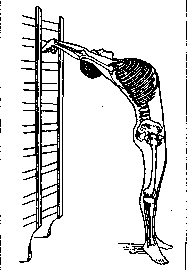
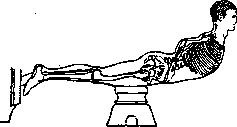
Greece, received special development when medical gymnastics arose, demanding an individual approach, and it was here that rational empiricism was combined in gymnastics with the beginnings of scientific knowledge. The gradualness and consistency of exercises, a conscious attitude toward all movements, and a strict analysis of each exercise separately accustomed gymnasts to the analysis and synthesis of movements. This laid the foundation for the scientific method in gymnastics. On this basis, original ideas and requirements developed and were applied in the practice of Swedish gymnastics, namely: the necessity of exercising the right and left arms, the necessity of concentrating attention on breathing exercises (breathing gymnastics); corrective gymnastics arose, which found application in various school curvatures and other body deformations. Swedish corrective gymnastics enjoys worldwide fame to this day, and the Swedish wall and Swedish bench are indispensable apparatuses of any gymnastics (see figures 1, 2, and 3). The pedagogical significance of Swedish gymnastics was also reflected in the correct formulation of questions regarding teaching methodology. The correct course taken initially had to satisfy both pedagogical and medical (physiological) requirements.
In a medical respect, the load
must correspond to the strength of the exercising person, sex, given physical
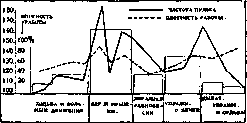
state of the organism, easing the excitement caused by the exercises. This task is simultaneously a pedagogical one: the gymnastics lesson must not interfere with other lessons in school. The pedagogical aspect of Swedish gymnastics is most evident in the "daily lesson," which is expressed in the presented lesson curve (see figure 4). The features of the lesson are as follows: 1) The Swedish lesson is systematic, always thought out, allows all sorts of variations depending on various circumstances (always motivated), its duration is precisely established, chronometry is introduced, that is, the duration of individual elements of the lesson is precisely fixed in minutes. 2) Classes requiring great exertion, for example, running and jumping, are allocated a relatively short time, and lighter exercises are given more time (see the lesson curve). 3) Exercises requiring a large expenditure of energy alternate with lighter ones. 4) At the beginning of the lesson, there are always light exercises to draw one into work; at the end of the lesson, there are calming exercises and "distractive" ones (designed to bring the work of the heart and breathing back to normal). Thanks to these basic qualities of the Swedish gymnastics lesson, students finish the lesson cheerful and unexhausted, capable of performing any other work. The principles of this Swedish methodology have been widely utilized by other systems of gymnastics. However, Swedish gymnastics has some rather significant drawbacks: 1) It is insufficiently dynamic; the movements are rather monotonous, despite variations in exercises.
Figure 4.
of one type. 2) In Swedish gymnastics, emotions and elements of entertainment are almost entirely absent; it has too businesslike a character and, in the words of Haeckel, resembles a sacred rite (liturgy). 3) The pedantic precision of movements and their careful memorization lead to the automatization of movements. Exercises become extremely easy, correct, but boring and uninteresting once they are well memorized. Meanwhile, Swedish gymnastics is in essence preparatory gymnastics, and all movements, like all gymnastic movements, are artificial, i.e., of little practical application in life, although they do prepare a person in terms of the ability to act. 4) In Swedish gymnastics, the local effect predominates over the general physiological one, and so it would be a great mistake, when using Swedish gymnastics, to abandon games and sports. Modern Swedes do not make this mistake, widely using both in schools. The Sokol system of gymnastics originated in Czechia. Its founder, J. M. Tyrš (1832-1884), a student of followers of German gymnastics, aimed to create a system approaching the ancient ideals. This striving received some reflection in the Sokol system in the form of beautiful round dances, free movements, the construction of pyramids from living bodies, etc. But the main means of Sokol gymnastics are almost identical with those of German gymnastics (for example, exercises on apparatus), although with changes in methodology. Later, much from Swedish gymnastics was incorporated into the Sokol system. The tasks of Sokol gymnastics can be divided into 4 main groups: 1) hygienic, 2) hardening of the organism, 3) educational, and 4) artistic-gymnastic. The classification of exercises is not based on biological characteristics, but on purely external ones: 1) exercises without apparatus (walking, running, ordered, free); 2) apparatus exercises (with apparatus—sticks, batons, etc., on apparatus—horse, table, bars, etc.); 3) group exercises (pyramids, etc.) and 4) combat exercises (techniques of defense and resistance, wrestling, fencing). In addition, for the application of exercises in accordance with the tasks of gymnastics, another classification is used, namely: exercises with support on the feet, on the hands, and with mixed support. Sokol gymnastics, as a system, has a number of merits (dynamism, beauty of mass movements, emotional quality, improvement of the nervous system, sufficient development of muscles, acquisition of skills), but also has essential shortcomings; the main of them—great attention to exercises on apparatus. In them, hangs and supports predominate, giving work mainly to the muscles of the upper belt and often disfiguring the body's form. In those who have exclusively practiced apparatus gymnastics for a long time, a number of physical shortcomings are noted: lagging shoulder blades, rounded back, one-sided physical development. Another essential shortcoming of the Sokol system is the absence of elements of correction. The classification of physical exercises is completely unacceptable. Dalcroix (1850-1917) introduced much that was new into the study of movements, connecting theory with practice and attaching great importance to natural movements (running, jumping, throwing, etc.) and applied exercises. He also included them in the scheme of a gymnastic lesson that he proposed. In this, Dalcroix, based on the difference in biological characteristics between men and women, attempted to divide physical exercises into these 2 groups. Dalcroix's system for young men consists of two main sections: 1) preparatory exercises for developing flexibility and agility and 2) applied exercises for developing motor abilities. The lesson plan, consisting of 7 parts, includes: 1) ordered exercises and marching, 2) free exercises without apparatus and with apparatus, 3) hangs and balance, 4) running, games, and dances, 5) more difficult free movements, 6) the most strenuous exercises and 7) breathing exercises and slow marching. Many valuable methodical instructions of Dalcroix have found practical application in physical culture work of our time. P. F. Lesgaft—the greatest pedagogue, physician, thinker—laid the foundation for the ideology of physical education (see Physical culture). Into his system of gymnastics and the tasks of physical education, he introduced a new thesis, expressed by him as follows: 'To learn to consciously produce the greatest physical work with the least effort in the shortest possible time, or to act gracefully and energetically.' Lesgaft set forth his system of gymnastics in the book 'Guide to Physical Education of School-Age Children,' which had great principled significance. The exercises proposed by Lesgaft are divided into the following groups: 1) simple, 2) complex, or with increasing tension, 3) study of spatial relationships and distribution of work over time, 4) application of systematic exercises in the form of complex actions (games, walks, certain types of sports), 5) elementary work (manual labor). The most important methodical instructions of Lesgaft are as follows: movements must be performed consciously, for which explanations are used, not demonstration. Exercises should not be monotonous, should gradually increase in intensity and complexity, and during exercises it is necessary to avoid any additional and strong irritations. Lesgaft's system, interesting for a number of ideas, did not receive wide distribution. The reason for this—on the one hand, the difficulty of conducting classes for leaders (the author did not give detailed descriptions of exercises), and on the other—the lack of attractiveness in the structure of classes. Rhythmoplastic systems of gymnastics. Their development was begun by Delsarte (Delsartes; 1811-71). The goal of his system was reduced to 1) the harmonious development of the body on the basis of the laws of movement and 2) the education of the body as an instrument of expressiveness for everyday life, for the stage, and for the plastic representation of musical impressions. Delsarte considered breathing, relaxation, and tension of muscles to be the main elements of aesthetic gymnastics.—É. Jaques-Dalcroze based the system he developed and conducted at the Hellerau school (near Dresden) on the principle of subordinating movement to music and conveying in body movements any musical duration. The system of Jaques-Dalcroze is divided into 3 parts: 1) rhythmic gymnastics, 2) development of hearing (solfeggio) and 3) improvisation or musical plasticity. In regard to the rhythmoplastic systems of later times, the works of McKay, Stebbins, Labini, Duncan, Menseidik, Varally, Kintzel, and especially Bode are of interest. The latter, in contrast to Delsarte and Jaques-Dalcroze, pays main attention to the physiological side and aims to create a plastic system of physical education. All these systems of movement are closely connected with artistic education. An interesting congress on this question took place in October 1922 (Berlin), in which the most famous physicians, pedagogues, and artists participated. Zuren's gymnastics represents rather a system of physical education. It has become widespread in Germany, and recently has also gained fame in other countries. Among Zuren's exercises, he distinguishes several stages. Preparatory exercises are divided into 12 groups and are performed with considerable tension and the use of a rubber cord. Exercises are accompanied by 'cracking' and tapping of muscles (relaxation and a kind of massage). Before moving on to the next stage, Zuren considers it necessary to prepare for sports exercises, which he includes: exercises with barbells, with apparatus, wrestling, exercises in agility and throwing (medicine balls, hammer, etc.), running, swimming, and games, shooting. The list of recommended exercises is very extensive. In this system, questions of personal hygiene, hygiene of work and rest, and the use of the natural forces of nature are linked with physical exercises. Individual (room) gymnastics has great importance in the spread of physical culture. The first guide to individual gymnastics appeared as early as 1855 (doctor Schreber). Later, with the appearance of Kloss's guide, and then a number of other authors (Sandow, Schmidt, Debonne), dumbbell gymnastics became popular. In place of the fascination with dumbbells, a number of other authors offer a whole series of various apparatus (springs, rubber cords, etc.), the purpose of which was to increase the work of muscles and thereby accelerate their development. This goal is pursued mainly by the method of Prošek and his Russian follower Anokhin, who do not resort to weights, but use volitional, conscious muscle contraction ('psychophysical systems of gymnastics'). A common shortcoming of all these systems is the difficulty of properly normalizing the load, and the easy possibility of harming the cardiovascular system, and in Prošek's gymnastics also the nervous system.—Müller's gymnastics enjoys particular popularity. In contrast to his predecessors, his goal is not the development of strength, but the strengthening of health (hygienic). For his system, Müller took mainly exercises from the Swedish system, paying special attention to the exercise of abdominal muscles and breathing. As a hygienic measure, Müller added to the exercises rubbing and self-massage.—A number of systems of individual gymnastics have been proposed by Soviet authors—Kalpus (the most developed), Blyakh, Kradman, and others. For the correct application of individual gymnastics, the advice of a physician regarding the choice of exercises is especially necessary before beginning classes.
Individual gymnastics will always be an auxiliary means of physical culture, especially with its mass dissemination, since individualities are infinitely diverse and one who has recognized the necessity of bodily culture will find it necessary to supplement or change for oneself what group exercises cannot provide. This diversity of requirements constitutes the difficulty in choosing a guide. There cannot be a single universal system of individual gymnastics, and therefore a conscious attitude toward physical culture is so necessary. Self-control is also necessary when applying individual gymnastics. Corrective gymnastics—a system of exercises having as their special purpose the correction of physical developmental abnormalities, congenital or acquired (school, production). The school corrective gymnastics is more developed. Along with the previously known exercises from the Swedish system, new ones have been proposed in recent years, for example, according to Professor Klapp's method (the "crawling method," widespread in Germany). Corrective gymnastics can be included as separate exercises in the general physical education lesson (for example, in school), and can also be conducted as a separate activity. By charging gymnastics is meant mainly group physical exercises aimed at stimulating the vital activity of the organism after sleep and preparing it for daily work. The program for "charging" includes non-tiring (but at the same time sufficiently active) and technically simple exercises (free movements, breathing exercises, walking, light running, etc.). As morning exercises, charging gymnastics finds quite wide application in school, in rest homes, in the Red Army, and in recent years has begun to spread to production sites, in the form of group sessions. "Production gymnastics" represents an attempt to apply specially selected physical exercises to facilitate the development of motor skills necessary in one profession or another. In this regard, the experiments of the Central Institute of Labor (TsIT) are of interest. Apparatus gymnastics (equipment gymnastics). In view of the abuses of apparatus gymnastics, one must strictly adhere to medical indications, keeping mainly in mind the age of those exercising. 1. The Swedish bar consists of a horizontal bar and two vertical stands, in the grooves of which the bar slides, being set at different heights. The stands are firmly fixed to the floor or are made portable, having in this case a wide base. The upper side of the bar is rounded, the lower side is flat. At the ends of the bars there are holes through which iron rods are passed, holding the bar at the desired height. It is used for pull-ups of all

types and supports. It is convenient because several people can use it simultaneously. It is also used for exercises in balance (by turning the bar flat-side up). This apparatus allows for more diverse applications than the similar single-axis apparatus of the Sokol system (horizontal bar). 2. Swedish bench, gymnastic (see Figure 5), a valuable apparatus for various purposes: it provides support points for different parts of the body, e.g., during tense bends necessary for strengthening the abdominal press and back muscles (corrective exercises); it is suitable for exercises in balance, for running up an inclined surface, etc. The legs of the bench consist of 2 wide vertical boards, into which a 7-8 cm wide rail is fitted along the entire length, serving for walking on it when the bench is turned upside down; for the purpose of exercising on an inclined surface, 2 iron hooks are attached to one end of the bench, with which the bench is fastened to the Swedish wall or to a boom.-Swedish wall (rib-stool) is a very useful apparatus for use in school. On it are performed: hanging by the arms, freeing the legs for various movements, tense bends which have such great importance for correction, and a whole series of special exercises. The rib-stool looks like vertically placed ladders connected by a common frame into one whole.-Ropes for climbing are made of hemp, no thicker than can be grasped by the hand. Ropes can be vertical-hanging and inclined, single and paired. Since the Swedes allow only climbing with the help of hands and feet, i Figure 6. their hanging ropes are provided with thickenings in the form of pears, covered with leather for support with the feet. The rope is attached at the upper end to the ceiling or beam. A hanging rope is movable in all directions.-Rope ladder (trap) consists of two hanging ropes connected every 30 cm by rope rungs; the distance between the vertical ropes is 35 cm. The aforementioned apparatus and equipment are the most necessary equipment of Swedish pedagogical gymnastics. In many cases they can also be used for the purposes of medical gymnastics. The apparatus of the Sokol and German systems are less suitable for this purpose. These include the following most commonly used apparatus. Parallel bars (see Figure 6) consist of two bars placed parallel to each other at a certain height to serve as support points for the hands and other parts of the body during movements. The bars are fixed on 4 legs, which rest on a heavy base firmly connected with them, so that together they form a sturdy stand for the bars. The legs of the stand are hollow and contain 4 vertical blocks connected by means of metal fittings with the parallel bars of the entire apparatus. The vertical blocks should slide inside the hollow legs without wobbling, and in order for the parallel bars to be set at the desired height and at the desired distance from each other, special devices exist. Parallel bars can be wooden and iron,* of different sizes and constructions, depending on the target setting which is quite diverse; their main purpose is still hanging and supports, exercises for strengthening the upper torso. Gymnasts often abuse these movements, achieving great hypertrophy of all the muscles of this torso, sometimes to the detriment of the development of the chest cavity (spirometry gives insignificant values with constant exercises on this apparatus).-Trapeze-a horizontal bar suspended on two ropes, allowing the following movements: hangs and supports, swings and swings of the hanging body, turns, dismounts, throws, etc. according to the Sokol and German systems. They do not have great educational value, they encourage a tendency toward acrobatics.-Gymnastic rings-a movable apparatus of the German and Sokol systems, consisting of iron or wooden rings from 15 to 20 cm in diameter and 2.5 cm thick, suspended on ropes or straps from the ceiling. Gymnastic rings allow almost the same exercises as the trapeze, giving more possibilities for turns and rotations and shifting the body weight from one hand to the other. The height of the rings and the distance between them can be changed when they are suspended on a stand.-Horse and pommel horse (see Figure 7 and 8). The purpose of these apparatus is to serve as support for the hands when jumping over obstacles or in order to jump onto an object. For the general development of the body and for practical purposes these apparatus are very useful; they consist of the following parts: body and legs, widely spread at an angle to give greater stability to the entire apparatus. The pommel horse has a shorter body, while the horse has an elongated body, averaging 170 cm in length and ending with a narrower part of the apparatus which is called the neck. The legs are mostly extendable [to change the height of the apparatus (on average 90-100 cm) varying from 80 to 180 cm]; to the Sokol horse is attached a "saddle" in the form of vertically attached handles, and these handles can be removed. The Swedish horse is significantly wider, has no handles, but if necessary special pads can be attached to it; both the pommel horse and the horse are covered with a leather-stuffed mattress. Both apparatus can be replaced by a box, with a barrel filled with sand inserted into it and covered with a soft mattress or carpet, strapped with belts or ropes so that the covering does not slip.-Trampoline (jumping bridge). The purpose of this apparatus is to increase the amplitude of the jump as much as possible; for this trampolines are sometimes made with springs, simpler ones represent an inclined plane at one angle or another. The Swedes do not recognize such artificial devices for pedagogical purposes. Trampolines have somewhat greater significance in aquatic (diving) and skiing (jumping from hills).-Horizontal bar-a horizontal bar attached to a fixed stand. Inside the wooden bar usually runs a steel rod. The height can be changed as desired. Hanging, support and the straddle (sitting position) are the basic exercises and at the same time the starting positions for many typically Sokol and German exercises on apparatus (see above-parallel bars), which do not have great pedagogical or medical significance.-Stand for jumping-an essential apparatus in any gymnastic system. A horizontally suspended rope or a light bar, thanks to special simple devices, can be placed at one height or another.-Gymnastic beam has very great importance in developing the function of balance and coordination of movements, and since this vitally important conditioned reflex must be developed, consolidated and improved in a timely manner throughout the entire period of growth, this essentially simple apparatus must be modified depending on the complexity of the tasks. The beam can be horizontal and inclined, wide and narrow, placed at a great and small height from the ground. Variations in construction and application present no difficulties. How to use the Swedish bench for exercises of this kind was indicated above. Walking and all kinds of exercises on the gymnastic beam, on a rail or a low fence should be used as exercises already in the preschool age. Gymnastics in the Red Army, entering as one of the types of physical exercises into the system of physical training of the soldier, has hygienic significance (general developmental and health-strengthening) and in addition serves practical purposes-development of psycho-physical qualities of the soldier. It is included 1) in the daily 15-20 minute morning exercises (in the form of breathing exercises and simple ones), 2) in the classes of mandatory physical training. Physical exercises included in these classes are divided into 2 departments: preparatory exercises and military-applied. The first of these departments, having the purpose of general education of psycho-physical qualities, includes the following gymnastic exercises: 1) simple movements, 2) with a rifle, 3) tense
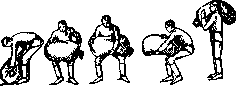
Figure 9.
ly exercises for the development of psycho-physical qualities of the soldier. It is included 1) in the daily 15-20 minute morning exercises (in the form of breathing exercises and simple ones), 2) in the classes of mandatory physical training. Physical exercises included in these classes are divided into 2 departments: preparatory exercises and military-applied. The first of these departments, having the purpose of general education of psycho-physical qualities, includes the following gymnastic exercises: 1) simple movements, 2) with a rifle, 3) tense
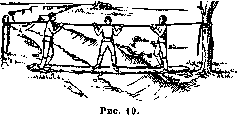
bending exercises, 4) exercises in resistance, 5) in balance, 6) in climbing, 7) in hanging and support, 8) jumps, 9) calming exercises. In the second department, gymnastic exercises already have a military-applied character: 1) lifting and carrying heavy loads (see figure 9), 2) movement stooping and crawling, 3) crossing a beam or tree over a trench (see figure 10), 4) climbing and crossing over obstacles (see figure 11), 5) jumping over obstacles, 6) throwing practice grenades. The practical skills acquired by soldiers during mandatory training are constantly practiced in exercises on field training grounds (artificial obstacles - trenches, fences, palisades, etc.), as well as as part of tactical training in the field (overcoming obstacles in a situation close to combat, encountered natural obstacles). In addition, gymnastics classes are conducted in extracurricular work - in sports clubs of units and military educational institutions of the Red Army. Gymnastics in the general system of physical culture in the USSR occupies a definite place and has significance derived from the peculiarities and value of gymnastic exercises as educational, hygienic, corrective and providing certain motor skills. Not playing the role of self-sufficient exercises, G. enters as preparatory exercises into all individual systems of physical culture that have found application in mass work (system of the State Central Institute of Physical Culture, "Ant", "Spartak" and others). As an independent system, gymnastic exercises find application only in sectional classes of physical culture clubs, to which only persons with sufficient physical development and who have undergone general training before specializing in G. are admitted. G. in the labor school is introduced into the general system of physical exercises of the schoolchild for proper physical development and teaching him individual motor skills. The number
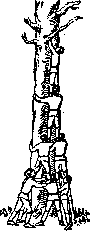
Figure 11.
of gymnastic exercises includes the following (program of the NKP, published in 1928): 1. Ordinal: a) formations b) marching in formation 2. Walking 3. Running 4. Jumps 5. Climbing 6. Balancing 7. Throwing 8. Wrestling and techniques of attack and defense 9. Lifting, carrying, pulling and dragging loads As a skill for organized movement of masses and as a means of developing rhythm and discipline Skills necessary for free movement in any terrain Skills in techniques of attack and defense Skills necessary for finding, pursuing, obtaining and hunting 10. Preparatory exercises Elements of dance Skills that enable the performance of labor tasks As a means of local physiological influence. Development of fullness and independence in the movements of parts of the body as a means of counteracting harmful elements As a means of developing aesthetic feeling and rhythm, flexibility and plasticity of movement and teaching dance A physical exercise lesson consists of 6 departments and is built on the following principles: 1) gradual increase in load (curve) with a maximum in the 5th department, falling in the 6th, 2) tension of attention (curve of psychological load), reaching a great height in the 2nd department, falling in the subsequent ones and rising again somewhat toward the end, 3) the curve of emotional tension corresponds to the load curve, 4) the lesson should include such a selection of exercises that would make it possible to involve the entire organism in work. N. Bunkin, V. Gorinevsky. Respiratory gymnastics aims to develop the respiratory apparatus and improve its performance. In connection with this main goal, its tasks are different: 1) it serves the purposes of proper physical education, developing hygienic skills in correct breathing from childhood, 2) serves preventive purposes when sedentary or other professional work has a detrimental effect on the development of the respiratory apparatus, 3) is used for the correction of changes that have begun in this apparatus, 4) is included as an element in medical G. in various diseases. When respiratory G. is used for proper physical education, it is very important to ensure that the act of breathing is always performed correctly in all cases (the task of developing hygienic skills in students). It is very important to connect all movements and physical exercises with the correct breathing rhythm. A number of authors (Lagrange, Lesgaft, Gorinevsky and others) believe that the best school of breathing is the work of the muscular apparatus, based on natural movements of the type of walking, running, swimming, where regulation of breathing occurs in full accordance with the amount of energy expended on movement. This point of view can be called dynamic. Here there is self-regulation in the work of the respiratory apparatus depending on the quantity and intensity of the muscular work performed and the assimilated oxygen. Some authors emphasize the need for "special" respiratory G. in the form of various exercises not related to movement from place (Kramarenko, Ide, Smirnov, Lobanova). Supporters of "special" respiratory G. point out that natural movements (running, swimming, rowing), although they develop the respiratory apparatus, do not do so comprehensively, which is why it is necessary to introduce "special" respiratory G. (Kramarenko). The respiratory G. of these authors relies mainly on the anatomical basis of the structure of the respiratory apparatus. They seek to develop its individual parts for their specially set goals. Here they distinguish types of breathing depending on which part of the respiratory apparatus is predominantly involved in work. They distinguish clavicular, upper thoracic, lower thoracic, lateral and diaphragmatic breathing. In addition, they distinguish a mixed type of breathing, i.e. a combination of thoracic and diaphragmatic breathing. The involvement of the entire respiratory apparatus in work is noted as complete breathing. Deep breathing is distinguished as breathing performed with maximum amplitude between inhalation and exhalation. Here the question also arises of the need for conscious performance of exercises, i.e. precisely coordinated relationship between inhalation, exhalation and the nature of the movements performed. All movements are usually performed in one place, for which reason this respiratory G. received the name static. In cases where physical development proceeds correctly, where there are already skills in correct breathing and there is a full possibility to play, run, swim, engage in sports in the fresh air, special respiratory G. seems unnecessary, especially in cases where a large expenditure of strength and time is required for its production. Respiratory G. appears in a different light when it comes to correcting changes that have occurred in the costomuscular apparatus of the chest cage or about healing with its help certain diseases. This is primarily those cases when the patient has not learned to breathe, when the nature of the disease does not allow walking or running, and breathing in a static state is the only possible one. In a number of diseases, the functions of the respiratory apparatus weaken and it is necessary to establish its work in order to thereby strengthen and improve the work of the entire organism. In these cases, the application of "special" respiratory G. is quite appropriate. Experiments by French authors have shown that from excessive application of special respiratory exercises, dizziness sometimes appears, and with intensified hyperventilation of the lungs, convulsions may even appear. Thus, the application of respiratory G. in patients must be approached with caution and it should be conducted only by a physician well acquainted with it. On the other hand, the application of static G. may take place in those professions where special development of the respiratory apparatus is necessary, i.e. in singers, glassblowers, divers, etc. But here respiratory gymnastics goes along the line of imparting special respiratory skills that facilitate production work. In physical culture practice, the question of special respiratory G. can arise when training of the respiratory apparatus is required for specially set goals (e.g. teaching to breathe in certain swimming styles, in diving, rowing, etc.). Under normal conditions of physical culture classes with healthy people, special respiratory G. is not required, since breathing is in full accordance with the muscular work performed. The problem of special respiratory G. is acute in a number of professions associated with dust, poor ventilation, harmful gases, or in those persons who have to use the respiratory apparatus for their professional purposes in their work: e.g. glassblowers, musicians on wind instruments, etc.
K. Zhavoronkov. Gymnastics for infants is useful mainly in those cases when the child, depending on environmental conditions (closed institutions, lack of proper care), is deprived of the opportunity to satisfy the innate desire for movement to a degree sufficient for their age. The result of these conditions is retarded and insufficient development of motor skills, weakness of muscles, ligaments, bones, and joints. Under normal conditions, with proper routine and care, the child is usually provided with sufficient opportunity for proper development of their motor apparatus. Nevertheless, even here systematic gymnastics for infants can be beneficial when, through preventive exercises, groups of muscles are strengthened that greatly contribute to upcoming crawling, maintaining the body in sitting and standing positions, development of the abdominal muscles, etc. Such exercises include: temporary position on the stomach (causing active play of the neck, back, and upper limb muscles), transition from lying to sitting position, while holding the legs and offering a finger for the child's hands to grasp (exercise for the abdominal muscles), resistance exercises, etc. The initiator of systematic gymnastics for infants was Neiman-Neirode (not a physician), who developed a whole series of sequential exercises. According to Neiman-Neirode, gymnastics can begin at 5 months. Exercises are performed before meals and before bathing, on a table covered with a small mattress, with a roll or folded blanket at the head end against the wall to prevent bumps. In case of illness, gymnastics is canceled. They begin with simple rotational movements of the upper limbs; then follows a light massage of the chest and rib muscles. Gradually they move to more complex techniques: lifting the child, holding them by the calves, from almost a horizontal to a vertical position; turning from a stomach position to the right and left by 1/4 turn, holding the child by the hips and fixing the pelvis with index fingers or by grasping the shoulder girdle; lifting from a stomach position, with the child holding onto the adult's index fingers; holding the child in an extended horizontal position - the child's head rests on the adult's palm, the ankles are held by the other hand; lifting the legs and rotating them in the hip joint, pushing a child lying on the stomach forward by the legs. Significantly more complex techniques, generally permissible only in a sufficiently strong child and requiring great skill and dexterity from the person performing them, are tense body extension, lifting the torso from an extended position, rotating the torso. Exercises last from 3 to 10 minutes and are stopped at the first signs of child fatigue. According to observations by Lang-stein, who tested the Neiman-Neirode method in his clinic, the child's condition generally improves, static functions often progress rapidly, the desire for movement and confidence in performing it increase with each day. According to observations in the I Physiological Department of the Scientific Institute for the Protection of Mother and Infancy of the People's Commissariat of Health, gymnastics according to Neiman-Neirode - the choice of movements and their duration - requires a strictly individual approach. Children who respond well to it, deriving visible pleasure from the exercises, are lively, strong children with well-developed muscles; after gymnastics, they eat and sleep well. The weaker, more passive, and more phlegmatic the child, the more often and sooner they respond with crying and active resistance. Gymnastics is tolerated worst by neuropaths, in whom after it, loss of appetite, worsening of sleep, and weight stagnation are often observed. The basis of this gymnastics is a healthy idea, but for widespread application in infants, it is necessary through further observations to develop precise indications for application and selection of individual techniques and their exact dosage.
R. Lunts. Medical gymnastics, a system of methodical selective movements which the patient performs for therapeutic purposes, at the doctor's choice, independently or together with the doctor. The history of medical gymnastics goes back 3,000 years before the common era. Thus, in ancient Chinese literature Kong-Phou, drawings and indications are found that testify to the recognition of the therapeutic value of individual gymnastic exercises for treating curvatures, dislocations, etc. The same can be said of Indian books Veday (1800 B.C.). Gymnastic exercises received the greatest development in Greece and Rome during the times of Herodotus, Celsus, Galen. In the Middle Ages, gymnastics as a medical method lost its significance. In 1684, Borelli (Borelli G. A.) in his famous book "De motu animalium" (Hagae, 1743), by indicating a new path for studying the mechanism of movements, thereby gives a powerful impetus to the appearance of numerous works on questions of exercise methodology, the influence of movements on the organism, etc. In France Andry (Andry; 1658-1742), in Germany Hoffman (Hoffman; 1718) publish their works on the therapeutic significance for the organism of active and passive movements. Tissot (J. Tissot) publishes his research: "Gymnastique medicinale et chirurgicale ou essai sur l'utilite du mouvement ou des different^ exercices du corps et du repos dans la cure des maladies" (P., 1780); "Gymnastique medicale ou l'exercice applique aux organes de l'homme d'apres les lois de la physiologie, de l'hygiene et de la therapeutique" (P., 1881). In 1808, the work of Barkley (Barkley) entitled "The muscular motion of the human body" appears. Later appears the classic work of Ling (Ling P. H., Gymnastikens allmanna Grunder, Upsala, 1840), which placed medical gymnastics as a scientific and therapeutic method in the first place. The spread of medical gymnastics after Ling was facilitated by Branting, Bishop, Roth, Hoffman, Rothstein, Neuman, Richter, Becquerel, in Russia - Mondalini, Berglind, etc. Medical gymnastics is a scientific method based on the anatomical-physiological study of the human body; the application of its individual techniques is entirely determined by the nature of diseases and functional changes in our body's organs.
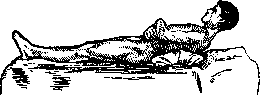
Figure 12.
By this it differs from hygienic gymnastics, in which the task of preventing diseases is introduced, or aesthetic gymnastics, the main goal of which is care for the harmonious development of the human body. While in hygienic or aesthetic gymnastics exercises are built on the principle of broad free choice of movements, in medical gymnastics the choice of exercises is strictly limited and must satisfy the following requirements: movements must be precise, localized, and correctly dosed. Physiological foundations. The physiological action of medical gymnastics is very figuratively characterized by Lucas-Championnière with the following words: "Le mouvement c'est la vie" (movement is life). Of all the organs of the human body, movements have the most powerful physiological effect on the motor apparatus itself. Movement stretches shortened muscle fibers, enhances arterial circulation in tissues, sp
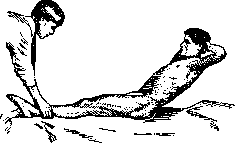
promotes proper metabolism. The joint, like the muscle, lives by movement. The mobility of articular surfaces, the smoothness of cartilage, the proper secretion of synovial fluid—in short, all those anatomical features necessary for joint function—are preserved only with movement. Through movement, one can influence the strengthening of the circulatory and lymphatic systems, as well as change the distribution of blood in the body. Where there is sluggishness in the vital functions of the circulatory system, where it is necessary to enliven circulation, improve nutrition, and increase the excitability of vascular walls, there the prescription of movements can give an excellent therapeutic effect. The respiratory organs are directly dependent on muscular work. The effect of movements on the respiratory organs is as follows: the surface and volume of the lungs increase, pleural adhesions and scar contractures are stretched, shrunken lungs expand, indurated lung tissue becomes more elastic, stronger, and better resists various harmful influences. The effect of physical exercises also widely manifests itself on the digestive organs. Under the influence of movements, the walls of the abdominal press are strengthened, the secretion of intestinal glands is increased, the nutrition of the gastrointestinal apparatus is improved, and the entire chemical process of digestion is enlivened. As for the effect of movements on the nervous system, Du Bois-Reymond had already pointed out that muscle gymnastics can with even greater right be called nerve gymnastics. Under the influence of certain, measured movements, coordination, precision, and economy in the expenditure of neuromuscular energy are achieved; through movement, we can pave new nerve pathways, create new coordinative mechanisms. The influence of physical exercises on metabolism is no less great. The amount of body secretions increases with vigorous movement; skin perspiration also increases. Increased metabolism gives strength and vigor, reduces fatigue, and maintains the body's working capacity. The technique of medical gymnastics. In medical gymnastics, the following types of movements must be distinguished: a) active movements (see figures 12, 13, 14, 15 and 16), b) passive movements and c) dual movements. a) Active movements are performed voluntarily by the patient himself without outside intervention. The physiological sign of active movements is volitional effort. Active movements should be performed smoothly, without jerks, and not causing sharp painful irritations. They are applied where it is necessary to increase nervous tone, stimulate and strengthen the weakened muscular apparatus, etc. b) Passive movements are performed on the patient by an outside force, without any participation on his part. The physiological sign of passive movements is the absence of volitional tension in the patient during movement. In practice, it is difficult to immediately get rid of tension and completely relax the muscles when performing a passive movement. The explanation for this fact should be sought in the fact that active movement is habitual for us, even automatic, while for passive movement, the patient must each time eliminate this automatic action. Correct execution of passive movement is achieved only after systematic exercises. Passive movement is used mainly for mechanical purposes in the treatment of muscle contractures, joint stiffness, etc. c) Dual movements are performed by two persons—the doctor and the patient—where one performs the movement while the other offers resistance, brakes it, and vice versa. The physiological sign of dual movement is the element of resistance introduced into the active movement. If the patient performs the movement while the doctor offers resistance, such a movement is called active-passive (see figure 17). If the patient offers resistance while the doctor performs the movement, it will be a passive-active movement (see figure 18). Depending on whether the endpoints of the contracting muscles approach each other (flexion of the arm at the elbow joint) or move apart (extension of the arm at the elbow joint), the movement will be called concentric or eccentric. The therapeutic purpose of this method is to create selective effects on individual muscles or muscle groups. Starting position. During exercises, one should try to assume a position in which muscular work would occur most economically, easily, and freely. Such a position in medical gymnastics is called the starting position. In medical gymnastics, the following basic starting positions are adopted: standing, sitting and lying down. Standing on knees and hanging are also distinguished. These basic positions can undergo various modifications: inclined standing, standing on tiptoes, etc. The choice of exercises. When choosing one exercise or another, we must make a careful assessment of the physiological influence of the selected exercise and the biomechanical action of this exercise, both on the organ being treated and on the entire organism. Only a joint analysis of these two factors can give a true picture of the total physiological influence of the exercise on the organism, and consequently, of the usefulness or harmfulness of the given exercise. 'The choice of exercise,' says Lagrange, 'is just like a formula in which a certain medicine must be prescribed.' Exercises in medical gymnastics are performed either manually or on special gymnastic apparatus. The most frequently used are the 'Swedish wall' (spiral), simple, double, and parallel bars. General rules. 1) The prescription of medical gymnastics must be made exclusively by a doctor, who, besides being able to make a correct diagnosis of the disease, also requires knowledge of the biological effect of exercises on the body. 2) The time for medical gymnastics should not follow immediately after strenuous physical labor, nor after taking food; in the latter case, the interval should be at least 2 hours. 3) The duration of exercises cannot be regulated by any fixed time norms. The duration of exercises in each individual case is determined by objective signs of fatigue: increased breathing, accelerated pulse, trembling of the extremities, increasing muscle tension, etc. 4) Medical gymnastics sessions must take place in a well-ventilated room or even better—in the fresh air. 5) Movements should not be restricted by clothing, tight belts, etc. 6) It is recommended to perform exercises in the nude in order to better monitor the selective effect of the exercise. 7) When prescribing exercises—do not immediately take on difficult and complex ones. 8) One should carefully avoid useless muscle contractions. 9) Before developing strength in the muscles, one must achieve anatomically correct, precise execution of movements. 10) Do not accelerate the pace, do not proceed to loading before the movement has been well learned and correctly and precisely executed. 11) During exercise, one should breathe calmly, deeply, and synchronously. Medical gymnastics relates to therapeutic physical culture just as gymnastics relates to physical culture: it constitutes a part of it, since there are other motor means (so-called natural movements, games and sports) which can be applied with greater success not only for preventive but also for therapeutic purposes. The scope of application of medical gymnastics is very extensive; it covers diseases of the motor apparatus, respiratory apparatus, heart and blood vessels, metabolism, peripheral and central nervous system; but in all these diseases, besides gymnastics, other forms of physical culture are also used (indications and contraindications—see also the article Mototherapy). Coordination gymnastics—see Mototherapy.
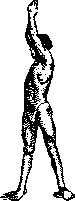
Figure 14. S3
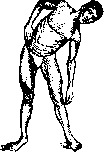
Figure 15.
for passive movement the patient must each time eliminate this automatic action. Correct execution of passive movement is achieved only after systematic exercises. Passive movement is used mainly for mechanical purposes in the treatment of muscle contractures, joint stiffness, etc. c) Dual movements are performed by two persons—the doctor and the patient—where one performs the movement while the other offers resistance, brakes it, and vice versa. The physiological sign of dual movement is the element of resistance introduced into the active movement. If the patient performs the movement while the doctor offers resistance, such a movement is called active-passive (see figure 17). If the patient offers resistance while the doctor performs the movement, it will be a passive-active movement (see figure 18). Depending on whether the endpoints of the contracting muscles approach each other (flexion of the arm at the elbow joint) or move apart (extension of the arm at the elbow joint), the movement will be called concentric or eccentric. The therapeutic purpose of this method is to create selective effects on individual muscles or muscle groups. Starting position. During exercises, one should try to assume a position in which muscular work would occur most economically, easily, and freely. Such a position in medical gymnastics is called the starting position. In medical gymnastics, the following basic starting positions are adopted: standing, sitting and lying down. Standing on knees and hanging are also distinguished. These basic positions can undergo various modifications: inclined standing, standing on tiptoes, etc. The choice of exercises. When choosing one exercise or another, we must make a careful assessment of the physiological influence of the selected exercise and the biomechanical action of this exercise, both on the organ being treated and on the entire organism. Only a joint analysis of these two factors can give a true picture of the total physiological influence of the exercise on the organism, and consequently, of the usefulness or harmfulness of the given exercise. 'The choice of exercise,' says Lagrange, 'is just like a formula in which a certain medicine must be prescribed.' Exercises in medical gymnastics are performed either manually or on special gymnastic apparatus. The most frequently used are the 'Swedish wall' (spiral), simple, double, and parallel bars. General rules. 1) The prescription of medical gymnastics must be made exclusively by a doctor, who, besides being able to make a correct diagnosis of the disease, also requires knowledge of the biological effect of exercises on the body. 2) The time for medical gymnastics should not follow immediately after strenuous physical labor, nor after taking food; in the latter case, the interval should be at least 2 hours. 3) The duration of exercises cannot be regulated by any fixed time norms. The duration of exercises in each individual case is determined by objective signs of fatigue: increased breathing, accelerated pulse, trembling of the extremities, increasing muscle tension, etc. 4) Medical gymnastics sessions must take place in a well-ventilated room or even better—in the fresh air. 5) Movements should not be restricted by clothing, tight belts, etc. 6) It is recommended to perform exercises in the nude in order to better monitor the selective effect of the exercise. 7) When prescribing exercises—do not immediately take on difficult and complex ones. 8) One should carefully avoid useless muscle contractions. 9) Before developing strength in the muscles, one must achieve anatomically correct, precise execution of movements. 10) Do not accelerate the pace, do not proceed to loading before the movement has been well learned and correctly and precisely executed. 11) During exercise, one should breathe calmly, deeply, and synchronously. Medical gymnastics relates to therapeutic physical culture just as gymnastics relates to physical culture: it constitutes a part of it, since there are other motor means (so-called natural movements, games and sports) which can be applied with greater success not only for preventive but also for therapeutic purposes. The scope of application of medical gymnastics is very extensive; it covers diseases of the motor apparatus, respiratory apparatus, heart and blood vessels, metabolism, peripheral and central nervous system; but in all these diseases, besides gymnastics, other forms of physical culture are also used (indications and contraindications—see also the article Mototherapy). Coordination gymnastics—see Mototherapy.
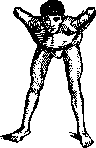
Figure 16.
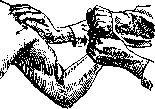
Figure 17.
which a certain medicine must be prescribed». Exercises in medical gymnastics are performed either manually or on special gymnastic apparatus. The most frequently used are «Swedish wall» (spiral), simple, double, and parallel bars. General rules. 1) The prescription of medical gymnastics must be made exclusively by a doctor, who, besides being able to make a correct diagnosis of the disease, also requires knowledge of the biological effect of exercises on the body. 2) The time for medical gymnastics should not follow immediately after strenuous physical labor, nor after taking food; in the latter case, the interval should be at least 2 hours. 3) The duration of exercises cannot be regulated by any fixed time norms. The duration of exercises in each individual case is determined by objective signs of fatigue: increased breathing, accelerated pulse, trembling of the extremities, increasing muscle tension, etc. 4) Medical gymnastics sessions must take place in a well-ventilated room or even better—in the fresh air. 5) Movements should not be restricted by clothing, tight belts, etc. 6) It is recommended to perform exercises in the nude in order to better monitor the selective effect of the exercise. 7) When prescribing exercises—do not immediately take on difficult and complex ones. 8) One should carefully avoid useless muscle contractions. 9) Before developing strength in the muscles, one must achieve anatomically correct, precise execution of movements. 10) Do not accelerate the pace, do not proceed to loading before the movement has been well learned and correctly and precisely executed. 11) During exercise, one should breathe calmly, deeply, and synchronously. Medical gymnastics relates to therapeutic physical culture just as gymnastics relates to physical culture: it constitutes a part of it, since there are other motor means (so-called natural movements, games and sports) which can be applied with greater success not only for preventive but also for therapeutic purposes. The scope of application of medical gymnastics is very extensive; it covers diseases of the motor apparatus, respiratory apparatus, heart and blood vessels, metabolism, peripheral and central nervous system; but in all these diseases, besides gymnastics, other forms of physical culture are also used (indications and contraindications—see also the article Mototherapy). Coordination gymnastics—see Mototherapy.
Fig 18 complex. 8) One should carefully avoid useless muscle contractions. 9) Before developing strength in the muscles, one must achieve anatomically correct, precise execution of movements. 10) Do not accelerate the pace, do not proceed to loading before the movement has been well learned and correctly and precisely executed. 11) During exercise, one should breathe calmly, deeply, and synchronously. Medical gymnastics relates to therapeutic physical culture just as gymnastics relates to physical culture: it constitutes a part of it, since there are other motor means (so-called natural movements, games and sports) which can be applied with greater success not only for preventive but also for therapeutic purposes. The scope of application of medical gymnastics is very extensive; it covers diseases of the motor apparatus, respiratory apparatus, heart and blood vessels, metabolism, peripheral and central nervous system; but in all these diseases, besides gymnastics, other forms of physical culture are also used (indications and contraindications—see also the article Mototherapy). Coordination gymnastics—see Mototherapy.
A. verbov.
Related articles
Mentioned in
Cite this page
“Gymnastics.” Soviet Medical Encyclopedia. English translation of Bolshaya Meditsinskaya Entsiklopediya, 1st ed. (Moscow, 1928–1936), ed. N. A. Semashko. https://sovietmedicalencyclopedia.pages.dev/article/gymnastics/