Du Bois-Reymond
Historical document, translated for reference. It reflects medical knowledge of the 1920s–30s and is not medical advice.
Summary
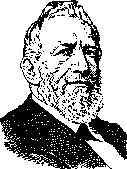
Emil Du Bois-Reymond (1818-1896) was a prominent German physiologist known for his pioneering work in animal electricity. He succeeded Johannes Müller as professor of physiology at the University of Berlin and made significant contributions to the understanding of electrical phenomena in living organisms.
Encyclopedia article (1928–1936)
DU BOIS-REYMOND, Emil (Emil Du Bois-Reymond, 1818-1896), one of the greatest German physiologists of the 19th century. Having entered the university in 1837, Du Bois-Reymond was interested in various fields of knowledge and for a time considered studying theology, but under the influence of lectures by Müller and acquaintance with Hirsch (assistant to J. Müller) he turned to medicine. Soon, through Hirsch, he began working with the famous Johannes Müller in physiology. His first studies were conducted on the electric organs of fish; these studies were published in 1842. In 1848, the first volume of his famous work appeared—"Untersuchungen über thierische Elektricität" (Vols. I-II, Berlin, 1848-60) with the famous preface "On the vital force." In 1851, Du Bois-Reymond was elected a member of the Berlin Academy of Sciences, and in 1867 became its permanent secretary. From 1858, Du Bois-Reymond was a full professor of physiology at the University of Berlin (in place of the deceased J. Müller). From 1857 to 1877, he edited the "Archiv für Anatomie und Physiologie," and from 1877, the "Archiv für Physiologie." Du Bois-Reymond was one of the brilliant representatives of the physical direction in physiology. His main works concern animal electricity. He obtained a huge number of new facts, developed precise methodology, constructed instruments that still bear his name today, and created coherent theories, so that Du Bois-Reymond is rightly considered one of the founders of the doctrine of animal electricity. In his philosophical views, Du Bois-Reymond was close to materialists; his works greatly discredited vitalistic theories. In addition to his physiological works, Du Bois-Reymond is known for his speeches (published in two volumes by his daughter, Lpz., 1912); among them, "Über die Grenzen des Naturerkennens" (1872) and "Die sieben Welträtsel" (1880) made an enormous impression and were translated into many languages, including Russian. Lit.: Junk J., Emil Du Bois-Reymond, Deutsche med. Wochenschr., 1897, № 1.
Du Bois-Reymond was one of the brilliant representatives of the physical direction in physiology. His main works concern animal electricity. He obtained a huge number of new facts, developed precise methodology, constructed instruments that still bear his name today, and created coherent theories, so that Du Bois-Reymond is rightly considered one of the founders of the doctrine of animal electricity. In his philosophical views, Du Bois-Reymond was close to materialists; his works greatly discredited vitalistic theories. In addition to his physiological works, Du Bois-Reymond is known for his speeches (published in two volumes by his daughter, Lpz., 1912); among them, "Über die Grenzen des Naturerkennens" (1872) and "Die sieben Welträtsel" (1880) made an enormous impression and were translated into many languages, including Russian. Lit.: Junk J., Emil Du Bois-Reymond, Deutsche med. Wochenschr., 1897, № 1.
Related articles
Mentioned in
Cite this page
“Du Bois-Reymond.” Soviet Medical Encyclopedia. English translation of Bolshaya Meditsinskaya Entsiklopediya, 1st ed. (Moscow, 1928–1936), ed. N. A. Semashko. https://sovietmedicalencyclopedia.pages.dev/article/du-bois-reymond/