Footwear
Historical document, translated for reference. It reflects medical knowledge of the 1920s–30s and is not medical advice.
Summary
This 1930s Soviet medical article examines footwear's role in protecting feet from mechanical damage, moisture, and cold, detailing how improper footwear causes various foot deformities and health problems.
Encyclopedia article (1928–1936)
Footwear serves to protect the feet (the sole and lower leg) from mechanical damage, moisture, and cooling. The hygienic requirements for footwear are as follows: 1) Footwear should not impede the natural development of the foot and should conform to its shape; 2) Footwear should not restrict the feet during walking and work; 3) Footwear should be lightweight, comfortable, adapted to climatic conditions, the time of year, as well as to general and professional working conditions; 4) Footwear should not contribute to deformation of the foot. To meet these requirements, the manufacturing of footwear and its forms and types must fully take into account the anatomical shape of the foot, its contours, volume, and all those changes that occur in it during work, walking, when the body is loaded with weight, during physical exercises, etc. At the same time, footwear should be as portable as possible and easy to remove, while at the same time not impeding normal ventilation of the feet. Footwear that does not meet these hygienic requirements usually leads to a number of pathological consequences. The opinions and views of various authors can be summarized here as follows: 1) inappropriate footwear is the cause of numerous diseases of both the foot and the entire body; 2) in most cases, however, these diseases have a local character, being limited to damage to the foot; 3) a normal foot in so-called civilized peoples is a very rare phenomenon; 4) deformation of the foot under the influence of improper footwear begins already in childhood. Diseases of the external coverings of the foot are caused by friction from tight (as well as loose) footwear and can be of both acute and chronic nature; the most common form of disease of the external coverings is chafing (see). Products of skin secretion, accumulating in footwear, especially unhygienic footwear, decompose, irritate, and macerate the skin, causing prolonged eczemas, slowly healing ulcers, complicated by inflammations of varying degrees—from superficial lymphangitis to deep phlegmons that extend to the tendon sheaths, mucous bursae, the periosteum, and joints. Impairment of blood circulation is also a consequence of tight footwear that compresses the blood vessels of the foot and causes congestion phenomena. One consequence of congestion is increased sweating of the feet. Due to congestion and increased heat loss, unfavorable temperature conditions (lowering of temperature) are created, causing cooling of the feet in cold weather (chilblains, frostbite of the foot and toes). Frostbite also has military significance and is observed during winter campaigns. One of the common forms of disease of the external coverings of the foot is callus formation (see). Calluses form from friction with footwear and are therefore most often observed on the prominent parts of the foot, namely: at the base of the big toe, on the heads of the individual metatarsal bones, on the dorsal side of the interphalangeal joints of the toes, as well as on the sole at points of support. In the latter case, they are particularly painful. Under the callus, serous bursae often form, which, with prolonged friction, become purulently inflamed. Curvature of the toes, especially the big toe (fig. 1), is caused by the action of improper footwear (Hoffa, Lange, and others) and is observed very frequently: from 51.5% (Yakovlev) to 65% (Lindau) of all those examined. These curvatures of the toes are expressed in their bending and overlapping each other in various directions, forming an angular shape (instead of the normal round cylindrical shape), as a result of which the shape of the former outline of the foot changes, becoming triangular (instead of the normal quadrangular), which affects one of the functions of the foot—to form supports when lifting the body.
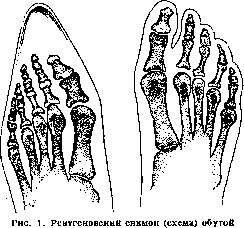
(left) and bare (right) foot in one person.
onto the toe by spreading out. Prolonged keeping of the toes in such a bent state leads to loss of mobility of the joints, ankylosis, subluxations, and dislocations. When the toe box is excessively raised, the ends of the toes expose the heads of the metatarsal bones, subjecting them to direct blows and shocks when walking, which causes severe pain (metatarsalgia), as well as swelling of the dorsum of the foot. Due to pressure from footwear in the toe area, ingrown toenails often form on the big toe, observed as an independent disease, as well as together with toe curvature. Pressure from footwear in the instep (arch) on the tendons causes inflammation of them. Pressure from footwear on the bones, especially the arch bones, causes painful changes in the periosteum and the bones themselves (exostoses, osteomyelitis, disfiguring arthritis, etc.). Constant pressure also affects the joints of the foot and causes various acute and chronic processes in them. With high heels, characteristic of some types of women's footwear, the calf muscles shorten, while the front muscles of the lower leg, as well as the ligaments of the foot, relax, the center of gravity of the body shifts too far forward—onto the bent toes, as a result of which gait becomes unstable, accidents are frequent, sprains of the ankle ligaments, ruptures of ligaments, dislocations. The most common disease of the foot due to poor footwear is flat foot (see Flatfoot) (fig. 2). In addition to its local action on the foot and its parts, unhygienic footwear also affects other organs and the entire body. Many authors note the harmful effect of high heels on the female body; difficult labor due to increased lordosis of the spine and narrowing of the pelvis, scoliosis of the spine in young women, displacement of internal organs, tilting of the uterus forward, pain in the lower abdomen, frequent urges to urinate, transmission of body vibrations to the cranial cavity and brain, and, as a result of this, phenomena of fatigue, general weakness, headaches, migraines, hysteria. The harmful effect of footwear can finally also manifest itself in poisonings caused by footwear dyed with aniline dye (Landuzi; 1900), a phenomenon that still occurs even now. In view of the harm caused by improper footwear to the population and the state, the hygiene of footwear is one of the pressing questions of health improvement requiring practical resolution. The implementation of hygienic measures regarding footwear in the German army reduced, for example, foot diseases from 35.1% of the establishment in 1881/82-85/86 to 10.8% in 1903/04. Construction of hygienic footwear. In constructing proper footwear, the question of the foot that is 'normal' in anatomical and physiological relationships is of primary importance. But the concept of a 'normal' foot is not yet precisely formulated and universally recognized. The main reason for disagreements regarding the shape of the foot lies in different views on the shape and position of the toes. The shape of the front outline of the foot depends on the length of the 1st and 2nd toes, but the position of the toes also affects their length. If one proceeds from the position that the bones of the metatarsus and toes are arranged like a fan, then according to this, the big toe should occupy an arrow-shaped (sagittal) position, as can be seen in the sculpture of classical times (Meyer's line, fig. 3); but such a position of the big toe in Europeans at the present time is a very rare phenomenon. Therefore, the position of the big toe is considered normal if its deviation from the arrow-shaped line does not pre
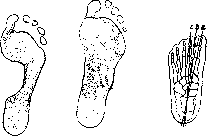
a
Figure 2. b
Figure 3.
Figure 2. Prints of feet: a normal foot; b-flat foot. Figure 3. Lines: Meyer's (a), Vallin's (b), Manouvrier's (c). It protrudes 0.5 cm (Vallin's line, fig. 3). The normal length of the 1st and 2nd toes is considered different: some believe that the second toe is always longer than the big toe in a normal foot, others believe the opposite. In the majority of cases, the first toe should be considered longer, and in this case, the outline of the front contour of the foot will be straight, and in the area of the last 3 toes, slightly sloping backward. According to data for the USSR, the first toe should also be considered longer (Khlopin). To construct proper footwear that meets all the requirements of a normal foot, precise measurements of the foot and data regarding its shape are necessary. The size of the foot is determined by a measuring tape and is expressed either in centimeters (and millimeters) or in stitches—a measure adopted in shoemaking practice (1 stitch = 2/3 cm; the number of the last and boot is also denoted in stitches). There are several measurement systems. According to Rodhegast (Rodegast), the most important volume measurements are as follows: 1) from the head of the 1st metatarsal bone at a right angle across the foot; 2) from the head of the 5th metatarsal bone parallel to the first measurement; 3) from the head of the 1st to the head of the 5th metatarsal bone; 4) volume of the instep at the prominence of the 5th metatarsal bone (direct instep); 5) volume through the heel to the instep at the boundary (fold) separating the back of the foot from the leg (oblique instep); 6) measurement of length from the heel to the tip of the big toe. For boot shafts, additional measurements of the leg are made: a) volume at the condyles; b) volume of the lower part of the calves; c) maximum volume of the calves and d) volume at the point where the boot shaft ends. As for the question of in what position to take the measurement, most authors state that the foot should be measured when placed on a flat surface, while the instep should be measured on a hanging leg (Besley, Kirchhoff), i.e., in the position of maximum height of the unloaded arch. The measurement should be taken on a bare foot. The time of measurement (morning or evening), physical strain, climate, season of the year, etc., affect the measurement data. Based on the measurement data, the insole is drawn and then the last is made, selected, or adjusted. The insole model is made according to a geometric system or based on a footprint. There are also several systems for geometric construction of the insole (Meyer's, Manouvrier's, Bradford's, etc.); all of them aim to give the sole a shape corresponding to the shape of the foot; among modern Russian authors who proposed their own schemes for constructing the insole, one can mention Kuslik and Chizhin (fig. 4). The basic, new, and important circumstance from a hygienic point of view in the footwear industry is the construction of footwear on asymmetric insoles and lasts, in contrast to the symmetrical footwear that existed for at least 1,500 years (the same for both feet). However, an individual system for constructing footwear is unacceptable for mass supply of footwear to the population from an economic point of view. There was a need to apply group lasts, which should be manufactured based on anthropometric data; the sizes of lasts are denoted by numbers. Civilian footwear is currently usually divided into 3 categories: 1) girls' (undersized) and children's (youthful and hussar) footwear, 2) women's footwear and 3) men's footwear and footwear for boys. Each of these categories corresponds to lasts of different lengths: 1) for girls' and children's footwear, sizes 18-34 (in stitches), 2) for women's footwear, sizes 33-42 and 3) for men's footwear and footwear for boys, sizes 38-47. Group sizes of footwear allow for approximate selection to fit a given foot.
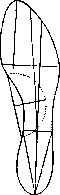
Figure 4. Construction of the insole and arch support
The quality of the last is determined by two factors: size and shape. The size and shape of lasts are established based on anthropometric measurements of the feet of various population groups. The most complete and correctly developed are wooden lasts for army footwear (table 1). Table 1. Table of sizes for wooden lasts for new model army footwear (in cm). (Bulletin of the Leather Industry and Trade, 1931, no. 8-9.)
The quality of the last is determined by two factors: size and shape. The size and shape of lasts are established based on anthropometric measurements of the feet of various population groups. The most complete and correctly developed are wooden lasts for army footwear (table 1). Table 1. Table of sizes for wooden lasts for new model army footwear (in cm). (Bulletin of the Leather Industry and Trade, 1931, no. 8-9.)
The footwear industry is extremely interested in the assortment of footwear in terms of its sizes (sizing). There are no materials on sizing for the civilian population, and studying the population's needs in terms of sizing is a current task. The only material available is on sizing for men's footwear for the Red Army (table 1). However, despite the fact that the issue of sizing in the Red Army is being worked out with special care, from 1924 to 1928, before its establishment was finalized, it changed several times; in practice, it currently does not satisfy military units, and corrections are being made: for some districts, an increase in the availability of small, medium, or large sizes. The example with army footwear sizing shows that the sizing issue is not simple; its study should be conducted on a large amount of material from diverse population groups, and the work on studying it should be lengthy. The above hygienic requirements for footwear can be met, therefore, while observing the following conditions: 1) proper length and shape of the sole, 2) flexibility and mobility of the narrow part of the sole corresponding to the arch of the foot (impression), 3) correct toe box, ensuring space for the movement of the toes and their ventilation. From a hygienic point of view, the most important parts of footwear in this regard are the sole (insole), arch, and heel. In constructing the shape of the sole, as mentioned above, the direction of its axis, along which the foot unfolds, plays a major role. This line was established by Meyer to pass through the heel in the direction of the big toe, but since a normal foot is rarely found in modern Europeans, and constructing footwear in this direction promotes the development of flat feet, most authors now recognize it as advisable to draw the axis of the sole not through the big toe, but through the 2nd toe (Manouvrier's line, fig. 3) or between the second and third toes; in this case, the insole will obtain the shape presented
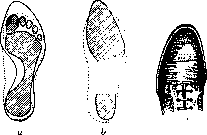
Figure 5. a-Correct relationship between the foot and the sole; b-ordinary relationship. Figure 6. The toe of rational footwear. shown in Figure 5. A planimetric representation of the sole serves as the basis for the construction of the last. In the latter, the arch is important from a hygienic point of view, which for mass production in lasts is taken as average height (1 cm-average arch according to Pestel); therefore in most cases footwear does not fit the foot snugly in the instep and does not fulfill its purpose of supporting the arch, which is one of the main requirements of rational footwear. To eliminate this deficiency and for the prevention of flatfoot, the arch padding corresponding to the shape and size of the arch under load of the foot is recommended (Vreden, Kuslik). The heel is a highly rational device in footwear, protecting the heel from impact with the ground, since when walking the foot touches the ground first with the heel; moreover, the higher position of the foot with a heel, by raising the arch, increases the elasticity and mobility of the foot, promotes the wheel-like deployment of the foot, more rationally distributes the body weight, supports the flexors and extensors of the foot in a state of balance (Vreden), protects the feet from dirt, facilitates walking on uneven surfaces (due to reduced area) and reduces heat loss. The normal height of the heel is determined by the height of the toe lift and the thickness of the sole. The toe on lasts in the presence of a heel is normally raised by 1 cm (Pestel). The thickness of the insole (with the insole and padding) ranges from 1/2 to 2 cm, therefore the height of the heel equals 1.5-3.0 cm. Heels exceeding these sizes are, as already indicated, harmful to the foot and body: the foot slides forward, the center of gravity of the body also moves forward, the position of the body changes, lordosis increases, the abdominal muscles are in a constant state of tension. In addition, high and narrow heels reduce the stability of the feet and contribute to overturning in the ankle joint (Kerm). To soften the impact of the heel on the ground and reduce its wear, rubber pads are recommended.-The toe should correspond to the outline of the front edge of the foot, the inner edge should be straight so as not to displace the big toe (Figure 6). The toe should not restrict the movement of the toes, and therefore should be made high.-The vamp should have a normal and rational shape, i.e. its high part should lie on the inner edge, extend from the tip through the dorsum of the big toe along the inner edge and go upward to the surface of the tibia, and outward descend along the slope of the dorsum of the foot and along its outer edge; the material should be sufficiently soft.-The counter should be strong, not narrow, well hug the heel also from the sides (to the middle of the metatarsal bones, Kuslik), have the proper height (lower on the outside, since the outer ankle is lower than the inner), stand at a right angle to the sole, its edges should be well beveled and smoothed (to prevent chafing); the material should be elastic.-Lacing is preferable to other methods (rubber, buttons), as it allows for correct, uniform and as needed tightening of the boot without compressing the superficially lying vessels and nerves of the dorsum of the foot and with good fixation of the boot in the instep area. Hygienic requirements for materials used in the manufacture of footwear are essentially the same as for clothing fabrics, i.e. the footwear material should possess: 1) sufficient porosity and air permeability for more complete air exchange; 2) low and stable moisture absorption capacity (hygroscopicity); 3) low water absorption capacity and water impermeability to protect the feet from getting soaked; 4) low thermal conductivity and high specific heat capacity for thermal protection; 5) high elasticity to resist and moderate mechanical shocks when walking. The material for building footwear is mainly leather, used for the upper and lower parts of footwear. Soft leathers (calf kip chrome, chrome, suede) are used for the upper; hard sole leather is used for the lower part of footwear. For the upper of footwear, fabrics are sometimes used: woolen cloth, combined materials, serge, satin, etc. In addition, fabric is also used for lining (tick of various grades, canvas, flannel). In some countries, footwear is made of felt, leather with fur, wood, leaves (palm), etc. The hygienic properties of leather, as research shows, in general meet the requirements of rational footwear: 1) leather is very porous (even in sole leather 42% pores), therefore it is well permeable to air, which ensures good ventilation of the foot in leather footwear; 2) the pores of the skin are filled with air-a poor conductor of heat, therefore the leather reduces heat loss and prevents cooling of the feet; 3) leather, containing some amount of fat, slowly absorbs water, thereby protecting the feet from getting soaked; in case of soaking, however, the leather becomes, on the contrary, very thermally conductive, and feet in wet footwear cool quickly and strongly. The porosity of leathers, i.e. the amount of air contained in the leather, ranges from 22.9% to 68.1% and depends on the thickness of the leather. The content of hygroscopic water ranges from 14.28% (plate leather) to 17.74% (sole) at normal air humidity; at 100% humidity, hygroscopic water is absorbed from 10.45% to 35.86%; the most-sheepskin, chrome, growth. Maximum water absorption capacity from 1.04% (growth) to 16.4% (sheepskin), minimum-from 0.33% (plate, "Hamburg") to 1.75% (sheepskin); the amount of free pores at minimum water absorption capacity from 19.4% (plate leather) to 62.6% (sheepskin, chrome); high content of free pores at minimum water absorption capacity is more favorable for natural ventilation. The thermal conductivity of leather depends on its thickness, specific gravity, method of processing, etc.; the thermal conductivity of leather is similar to that of woolen fabrics. The thermal conductivity of wet leather increases. Evaluation of modern footwear. The most significant shortcomings of modern footwear lie in its failure to correspond to the anatomical and physiological features of the foot, namely: in relation to 1) the shape of the sole-narrow, its inner edge slopes outward instead of having a straight direction, the outer edge in the toe area is too deviated inward, the axis of the insole does not pass through the second toe, does not have sufficient length; 2) the arch of the foot-does not fit the foot snugly in the instep, does not have a well and correctly expressed arch, the arch part is not sufficiently hard and strong; 3) the instep-shape of an angle or semicircle and 4) the heel-very high and not placed in the right place. In this respect, the most irrational and harmful to health should be considered the open boot (having no lacing, no straps, no buckles) and especially open high-heeled shoes. Hygienic requirements for men's and women's footwear are the same (see above). Children's footwear, however, in view of the peculiarities of the child's foot skeleton (greater deployment), the presence of not completely ossified parts and the associated great mobility, should be made with special care compared to adult footwear: in children's footwear, a wide toe should be made to not restrict the toes (according to Brats children's footwear at the tip of the toe is wider than in the area of the heads of the metatarsals). As a preventive measure against the harmful effects of footwear, it is recommended for children to walk barefoot as often as possible, to allow the foot to spread out and rest from the pressure of footwear. Making children's footwear on straight (symmetrical) lasts is unacceptable.--Special footwear. In addition to everyday footwear, there is also special footwear, which is adapted and adapted for specific purposes and for a specific group of the population. Depending on its purpose, special footwear is divided into military, professional, and sports. Military footwear is one of the important items of equipment, especially of infantry, since the combat power of the latter is closely related to its ability to move. Hygienically rational military footwear should also be adapted to the skeleton of the foot and subject to all the peculiarities of its structure and the requirements of military service. Military footwear should ensure rapid mass movements of troops; for the successful fulfillment of this task, footwear should satisfy all the general hygienic requirements stated above and some special requirements: 1) suitability for all climates, any weather and any time of year, 2) protection from unevenness and hardness of the ground, as well as against moisture, humidity and cold, 3) durability during prolonged storage, 4) simplicity and ease of construction while maintaining strength and 5) low cost of production. Types of military footwear in different states are different depending on the climate, nature of the terrain, nationality, etc. In the Red Army of the USSR, one type of footwear is established-boots with tops, while in the armies of other countries, boots (leather or canvas) with gaiters, puttees or leggings are used as footwear.
The boot is very convenient footwear in terms of protecting the feet from getting wet, mechanical impacts, and cold; furthermore, the boot provides support for the ankle joint and protects it from fatigue. The boot is suitable footwear for most terrains except for hot climates and mountains; its negative aspects should include the difficult access of ventilating air, the delay of heat transfer, and its great weight. The sole of a military boot should be cut in such a way that the big toe is ensured its normal position. During the fitting of footwear, it is necessary to especially consider the flattening of the arch of the foot when walking and its increase in length and width, therefore the sole between the toe and heel is given a slightly convex position and sufficient width is provided to give the foot wide support. The front part of the boot should be cut in such a way as to exclude the possibility of pressure from above on the back of the foot. The heel of a military boot should be wide and strong, with a height of no more than 3 cm. A properly placed heel gives the foot the necessary curve and facilitates walking. A high and narrow heel shortens the step and hinders stable walking. The front part of the boot should have enough space for the free placement of the toes when walking. For this purpose, the toe of a military boot is given a rounded rather than a pointed shape. To avoid chafing of the skin over the Achilles tendon, the counter is given a slightly backward rather than a vertical position. Boot tops, which protect the feet from contamination, moisture, and cooling, should not restrict blood circulation, hinder ventilation of the boots, or make it difficult to put on and remove them. Due to the great weight of boots and difficulties in fitting them, a number of military hygienists advocate for the introduction into army supply of leather shoes with puttees or wraps. The advantages of the latter consist of less weight, easier and more correct fitting, and the ability to vary the thickness of the inner footwear according to the weather. The combined effect of all the above factors must explain the significant reduction in chafing in troops supplied with boots. The disadvantages of this type of footwear are: worse protection of the feet from rain and cold and the inconvenience of using puttees and wraps on the march. In addition, tightly laced boots and poorly wrapped wraps restrict blood circulation and hinder the normal work of the foot. Military footwear is made according to 36 different lasts, differing from each other in the length of the foot and so-called volumetric measurements. According to basic measurements, Red Army boots are divided into 9 sizes, designated by serial numbers (Table 2). Each size in turn is divided into 4 widths or letters. Table 2. Table of sizes according to which army boots are currently being made (Leather Industry and Trade Herald, 1931, No. 8-9). Size No. Letters a k grad. Per 1000 pairs of assortment 15% 15% 30% 40% 1 1 2 1 38 72 80 88 64 36 16 4 Width Size j Measurements of footwear increase from smaller numbers to larger ones and from letter B to letter D. Numbers and letters are necessarily stamped on each pair of boots in the upper part of the boot top and on the sole. Newly called-up Red Army soldiers are issued 2 pairs of footwear at the same time, one of which, intended for wear in winter, is fitted on a warm foot wrap. The fitting of footwear and uniforms in military units is carried out with the mandatory participation of command and medical personnel. Professional footwear has the task of protecting the feet from harmful or dangerous influences in one profession or another; depending on the nature of the harm, one or another material is used for the construction of footwear, otherwise the hygienic requirements are the same as for general (household) footwear; so for example in foundry work to protect the feet from burning sparks and possible accidental burns, asbestos footwear is used, for prolonged work in water-rubber or leather boots (galoshes), for work involving walking on hot surfaces-footwear with wooden heels and soles, etc. Sports footwear is intended for use in various kinds of sports and depending on the features of one or another type of sport, the following types of sports footwear are distinguished: 1) mountain, 2) football, 3) for skates, 4) for tennis and volleyball, 5) for boxing, 6) for running, 7) for skiing and 8) gymnastic. The peculiarities of requirements for each type of this footwear are as follows: 1) for mountain footwear-durable goods (especially the sole), elimination of slipping (special nails, rope sole for rocks), no constriction of the foot, especially in the toes (wide soles and toe), lacing and a closed tongue (for protection from dust); strong attachment of the heel; the upper edge is trimmed with cloth (for protection from snow and small pebbles); 2) for football-boots: exact to the foot, flexibility, protection from impacts, elimination of slipping (padding from leather circles), possibly low lacing (closer to the toes), strong (added) toe, also padding on the instep and a special bandage for the ankles; 3) for skates-immobility of the sole, warm insole (from cloth or felt), warm lining, low lacing; 4) for tennis and volleyball: tight fit of the foot, flexibility of the sole, elimination of slipping (rubber, crepe or rope sole), low lacing; 5) for boxing: light flexible non-slip sole with low heel, long and light lacing; 6) for running: lightness and flexibility of the sole (especially in the heel), strong sole (sometimes with protruding nails), without heel (running on toes), the edge of footwear below the ankle; 7) for skiing-pieks: insulation, attachment of the sole not from below but from the sides, a spike on the toe; 8) gymnastic: softness and flexibility of the sole, low heel, lacing, low edge. Native footwear. Among various peoples under the influence of the local climate, character of the terrain, available materials, customs, way of life, etc., their own type of footwear has been created, very often corresponding to its purpose and worthy of study; in other cases, under the influence of various social customs and prejudices, on the contrary, extremely irrational types of footwear were created among some peoples, causing artificial deformation of the feet (feet of Chinese women). One can further point out some types of national footwear, most of which in the past were tested for the purpose of their adoption in the army, but for technical reasons were not accepted: fur boots (of Samoyeds), valenki (pim), bast shoes, porshni (South Slavs), postoly (Bulgarians), chuvyaki and chaburi (Caucasian mountaineers), ichigi, ulla and brodni (Siberia), etc. Finally, the wooden footwear (French 'sabots') must be included among the irrational types of footwear, due to the impossibility of giving it the necessary flexibility. Rubber galoshes are an additional accessory for footwear with the aim of protection from getting wet and cooling. Types of galoshes-low, high, closed (booties). Galoshes hinder ventilation of footwear, so the open type, covering only the sole and sides, is preferable. Depending on the season, a corresponding lining for galoshes is necessary (light, warm). The shape of galoshes should correspond to the shape of footwear. 4v Inner footwear (socks, stockings, etc.). Knitted stockings first appeared in the 16th century in Germany, before that they were cut from fabric and sewn to the foot. The toe of stockings and socks was made funnel-shaped; this form had a harmful effect on the toes, exerting constant elastic pressure on them (especially on the big toe, contributing to its deviation). To eliminate this, Starke (1880) proposed a method of asymmetrical knitting of stockings (socks) for each foot, but his proposal did not receive support from other authors. The established form of the toe in stockings is semi-circular. The disadvantages of modern stockings are the side seams in the toes (especially in stockings with a double toe), which cause chafing of the feet. As for the material for stockings, most authors recommend wearing woolen stockings, as they well retain heat in the feet and absorb moisture (sweat) and also soften the impact of the step. In addition to stockings, foot wraps are used as inner footwear in some countries; foot wraps are also adopted in the armies of the USSR and Norway. Many authors (also foreign) speak in their favor. Hygienic requirements regarding foot wraps are that they should be made of strong hygroscopic, air-permeable fabric; in this respect, the best material is washed canvas; calico as a foot wrap worse serves its purpose, because it becomes impregnated with fat, dirt, and sweat faster than canvas, and slips off the foot more easily, causing chafing. To avoid chafing, skillful wrapping of the foot wrap is necessary, which should be taught to those using foot wraps (Red Army soldiers). In cold weather, it is necessary to insulate the feet with foot wraps made of thicker and heat-insulating material (calico, wool). Great attention is paid to the problem of hygienic footwear in the USSR.
Research on this problem is being conducted in various directions by scientific research institutes of the People's Commissariat of Health (Traumatological in Leningrad, Sanitary-Hygienic and Orthopedic in Moscow), the military department (Military-Medical Institute in Moscow), labor protection (in Moscow), and the leather industry (in Moscow, Leningrad, Kharkov). In recent years, a number of works have been published in the form of monographs and articles in the periodic press, medical and specialized (leather industry); in solving the problem, both doctors (hygienists and orthopedists) and engineers participate. Anthropometric measurements of feet are being carried out among both the civilian population (in Ukraine) and in the Red Army (in a number of military districts), new systems and types of lasts (Petrov, Kuslik) as well as size charts are being developed; their practical testing is being carried out (trial fitting and wearing); based on experience, standards for lasts and footwear are being developed (Standard Bureau of the All-Leather Trade Union); assortments of footwear are being established based on trial fitting (footwear for school-age children); new, more advanced methods of processing raw materials, cutting and sewing footwear are being developed; research and testing of new types of shoe materials are being carried out (e.g., wooden and rubber soles, artificial leather, etc.). All these scientific research works on studying hygienic types of footwear and developing hygienic standards for it have great economic importance and are extremely important from the point of view of protecting the health of the working population. From an economic point of view, the questions of what materials are used to make various types of footwear are currently of great importance everywhere. The shortage of animal raw materials (leather) leads to various attempts to use other materials for making footwear. In conditions of a private market in bourgeois countries, the use of new materials for footwear is not regulated by any mandatory sanitary requirements and is left to private entrepreneurs. In the conditions of the Soviet Union, all these economic issues are resolved by the state and corresponding economic bodies taking into account scientific research work, which, as indicated above, is now being developed in a number of institutes. Hygienic research should be particularly expanded and carried out, on the one hand, along the line of evaluating materials for footwear, particularly new surrogate materials, and on the other hand, along the line of developing standards and types of footwear for different population groups. Here, first of all, professional groups, various children's groups, sports and military footwear are highlighted. Corresponding work plans have been outlined in the above-mentioned scientific research institutes for the coming years in this regard. The same questions have been raised in connection with the development of the five-year plan for supplying the population of the USSR with footwear (standards, rationalization, economy, hygienic types). This coordination of rational economy and rationalization with the interests of the health and labor protection of the population is possible only under the conditions of socialist economic development, where the interests of the working population as a whole come first, and are not sacrificed to the private interests of individual wealthy groups, as is the case in capitalist countries. And here, questions of prevention should be put forward first of all and thus ensure the health of the population in this area.
Yu. Bankovskaya, S. Slonevsky. Orthopedic footwear. Footwear for pathologically changed feet is usually called orthopedic footwear. It would be more correct to speak of footwear for orthopedic patients and only in this sense to use the term orthopedic footwear. Orthopedic footwear should be prescribed only by a doctor. The doctor must give an assignment to the shoemaker-orthopedist, precisely formulating what goals the footwear being made should pursue; orthopedic footwear does not perform the function of treating orthopedic diseases, its task is to keep the foot in a corrected position, 'fix the results obtained during treatment, level out existing defects of the foot and shortenings. In its manufacture, the master requires technical knowledge, as well as an understanding of the anatomy of the foot, its function and mechanics, and in addition information about pathological changes in the foot. In the manufacture of orthopedic footwear, normal footwear is taken as the basis, but all parts of orthopedic footwear—as the blank, sole, heels—must correspond to the existing deformation of the foot. The manufacture of footwear begins in each individual case, with the exception of mass factory production, with taking measurements, on the basis of which the last is made. The blank is made according to the last, which is firmly connected to the sole. Measurements are taken using a footprint (sole) and measurements of the foot. The footprint is made on a sheet of paper, the foot is outlined with a pencil held perpendicular to the plane of the paper. The following are measured (using a centimeter): 1) the circumference of the foot in the area of the heads of the metatarsal bones; 2) the circumference of the foot in the area of the joint between the metatarsal bones and the tarsal bones; 3) the circumference of the foot in the area of the anterior edge of the ankle joint; 4) the circumference of the foot through the ankle joint and the posterior-inferior edge of the heel; 5) the circumference of the leg at a height of 12-14 cm from the sole. In addition to taking linear measurements, footprints are widely used. Any deviation of the foot from normal is reflected in the footprint. The footprint can be made in various ways. The simplest is the footprint using smoked paper. The patient steps barefoot on the paper, after which the footprint is fixed in an alcohol solution of shellac. On the footprint, the bony prominences, scars, points of support of the foot are outlined, which facilitates the making of a good last, and consequently a good orthopedic footwear. In cases of significant changes in the foot, it is necessary to make a special, individual last. The shape of the diseased foot can be perfectly reproduced using a plaster model. The foot is greased with vaseline and wrapped in plaster bandages, starting from the tips of the toes to the upper border of the lower third of the leg. The shape of the foot, all deviations from normal, prominences must be well modeled by hand. After hardening, the plaster cast is cut, the cut is mostly made from the back of the foot, avoiding the most important support
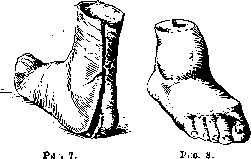
places (Fig. 7). After cutting, a plaster positive is made from the plaster model (Fig. 8), and the orthopedic last is made from the positive. In cases where it is necessary to reproduce the smallest details of a pathological foot, the plaster model is also made by another method. The foot is lowered into plaster porridge located in a flat box. As soon as the plaster begins to harden, it is
is guided by a laid cord, and the negative is divided into two parts, and then finished in a form in which the positive is cast. The model obtained in this way represents an exact copy of the foot. When making plaster casts, it is necessary to give the foot a working position. Orthopedic lasts for adults, in whom no new changes in the foot occur, can serve for a long time for making footwear. The blank is cut from leather according to a pattern, sewn with an insole of fabric or light leather. Goat leather, suede, or more durable varieties such as calfskin, chrome leather, or cowhide are usually used for the blank. The blank must be modified in one way or another, made higher when there is shortening, scars on the shin at the usual end of the blank when fixation of the shin is required, etc., or stiffer when it is necessary to fix the foot, ankle joint, etc. To eliminate the possibility of pressure in areas with existing scars or bony protrusions, corresponding depressions are made. In cases of severe equinus foot or defects of the front part of the foot, the blank is made stiffer and less yielding in the toe area. Protruding parts and calluses on the supporting surface of the foot (clubfoot, heel foot, etc.) cause sharp pain when walking. Orthopedic footwear should eliminate these pains. Painful areas must be unloaded and relieved from pressure by means of indentations in the insole. The insole is made of soft elastic material, for example, of felt. The heel plays a major role in the manufacture of orthopedic footwear. The statics of the boot must be in complete accordance with the direction of the trajectory of the body's gravity, which is connected with the heel. For the purpose of correcting pathological feet, the heel is moved to the side, the height of the heel is increased on one side, etc. In the manufacture of orthopedic footwear, a whole range of additional parts is used. To compensate for shortening of the leg, to compensate for defects of the foot in various deformations, cork is used. The missing part of the foot is compensated by an insert made of cork or wood. Paralytic feet require the use in footwear of elastic metal splints—with and without joints—with the addition of metal supports in the sole. This type of footwear already resembles orthopedic appliances. Various types of orthopedic footwear depend on various orthopedic diseases of the foot. Orthopedic footwear in case of shortening of the lower extremity (Fig. 9). Shortening is caused by congenital or acquired defects of the bony skeleton. These include underdevelopment of the lower extremity, cases of congenital dislocation or joint contracture, improperly healed bone fractures, old joint dislocations, pathological dislocations, ankyloses and joint contractures, retardation in the function of the lower extremity in childhood paralysis, various lateral curvatures of the extremity itself as well as of the pelvis and spine. In almost all cases of shortening of the extremity, the patient can use the foot when walking only with a limp. Shortening of the leg is determined by comparing measurement data between certain points on both legs in the position of extension in all joints. Measurement is made in the vertical position, placing precisely
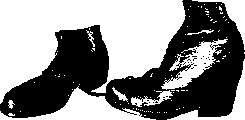
Figure 9.
cut boards under the leg until the transverse axis of the pelvis becomes parallel to the ground (except in cases where there are persistent changes in the spine and pelvis). Shortening of the leg is equalized by inserting cork into the boot (specially fitted to the foot). It is necessary to use the natural adaptability of the leg, giving the foot the position of plantar flexion of the equinus foot. In such cases, the cork in the heel area will correspond to the shortening, and further forward it will gradually taper off. If the shortening is more than 7-8 cm and it is impossible to compensate it with the vertical position of the foot, cork is placed under the entire foot, but higher under the heel than under the toes. With shortening of more than 16-18 cm, it is impossible to compensate for the shortening with one piece of cork, one has to resort to making a prosthesis (Fig. 10), or a shin-cylinder apparatus, consisting of an upper part, enclosing the patient's foot in the equinus position, and a lower part, or artificial foot. In cases of ankylosis of the ankle joint, when the foot is in the middle position between dorsal flexion and plantar flexion, in the presence of shortening, cork of the same height is taken both under the heel and under the toes. In cases of joint ankylosis with shortening of the extremity, the cork is taken 1-2 cm less than the shortening, otherwise during walking when the leg is brought forward, the toe will touch the ground and hinder walking. In the practice of the Moscow Therapeutic-Prosthetic Institute, orthopedic footwear is issued in the presence of shortening of at least 2 cm. Orthopedic footwear in the absence of toes. The absence of individual phalanges does not require the manufacture of orthopedic footwear. The absence of one big toe hinders the pushing off of the foot from the ground and fast walking. Therefore, in these cases, it is recommended to reinforce the sole of the footwear with a metal plate, while the defect is filled with cork. In the absence of all toes except the big one, one can do without orthopedic footwear. Orthopedic footwear after operation according to Lisfranc. The normal support points on the front part of the foot after the Lisfranc operation are lost. The operation requires that the stump scar be even, mobile, and not adherent to the bone; in the presence of large scars, the latter become ulcerated and interfere with the use of footwear. Footwear is made from a cast with a metal plate inserted in the sole, the defect is filled with cork or felt, the arch of the foot is filled with padding. Orthopedic footwear after operation according to Chopart. The Chopart operation rarely gives a good supporting stump. In most cases, one has to observe a stump in the position of equinus foot, with inward curvature (pes equino-varus), with large scars. Therefore, if the stump is mobile in the ankle joint, the sole is unchanged, the end of the stump is covered with normal skin, the foot has the correct position, orthopedic footwear can be made necessarily from a plaster cast with a metal plate in the sole, with cork to fill the defect, as well as under the arch. If the stump is unsatisfactory, not supporting, instead of footwear, an appliance is made. According to the same type, orthopedic footwear is also supplied for other types of partial amputation of the foot. Orthopedic footwear after operation according to Pirogov. The Pirogov operation gives an excellent supporting stump. The patient can use such a stump without orthopedic footwear and without a prosthesis. The absence of the ankle joint, difficulty in fixing footwear to the shin, rapid wear of the metal plate in the sole significantly complicate the manufacture of orthopedic footwear, and therefore it is recommended to make special appliances in case of Pirogov operation. Orthopedic footwear in case of defects of the sole, heel, etc. In all cases where there are deep scars, protrusions, painful areas, ulcers on the sole, on the heel, when making footwear, corresponding indentations are made in the insole with a felt lining. In cases where loading on the foot becomes impossible, it is necessary to make a unloading appliance. Orthopedic footwear in case of curvature of the toes. Curvature of the toes, especially of the big toe outward (hallux valgus), is quite common. The head of the first metatarsal bone protrudes, as a result of pressure from footwear on the head, pains appear, especially when inflammation of the mucous bursa joins as a result of friction. In making orthopedic footwear, it is necessary to make the toe box wide (Fig. 11). In the area of the head of the 1st metatarsal bone, the skin is bulged out from the side of both the last and the sole, the arch of the foot is padded with cork, since the foot here usually shows a picture of various degrees of flatfoot. Of other curvatures of the toes, orthopedic footwear is required for hammer-shaped and claw-shaped toes. Over time, these diseases lead to the formation of painful calluses and progressive deformation of the toes. Orthopedic footwear is made with a rigid, high toe box and with corresponding indentations on the sole. Orthopedic footwear in case of flatfoot. Insoles-supinators are widely used for flatfoot in all ages, while orthopedic footwear is used mainly in severe cases of flatfoot, when there are changes in the skeleton of the foot and deformation of the joints. In making orthopedic footwear for a flat foot, a last in the varus position is used, thanks to which the footwear can counteract the turning of the heel outward. On the inner side of the footwear
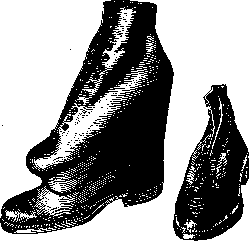
padding is placed
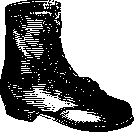
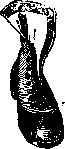
a firm insole extending to the main joint of the big toe, corresponding to the arch of the foot. The sole is made stiffer; the heel is well-fixed; the heel should not be higher than 3 cm; it is recommended to make it longer on the inner side than on the outer side. A cork or metal (steel, aluminum) arch support insole, which precisely conforms to the arch of the foot, is inserted into the shoe. It is better to make the insole removable so that it can be removed and dried. Orthopedic footwear for hollow foot (pes excavatus). Hollow foot is characterized by an excessively high arch in contrast to flat foot, with the posterior part of the foot in a supinated position and the anterior part in a pronated position. Severe forms of hollow foot greatly impede walking and cause pain. Orthopedic footwear should correct the position of the foot. A special insole made of cork or a metal plate is manufactured according to the sole of the foot and inserted into the shoe.
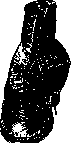
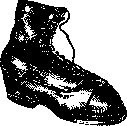
Orthopedic footwear for clubfoot. Each clubfoot must first undergo treatment, and only after treatment is the use of orthopedic footwear indicated. Orthopedic footwear is used for the purpose: 1) to fix and maintain the achieved results and 2) to conceal foot deformations that cannot be corrected (Fig. 12). After correction of clubfoot, the foot often tends to return to its previous equi.no-varus position. Orthopedic footwear should counteract the components of this deformation. The last should be made in a valgus position, proper fitting of the posterior part of the shoe should be done, a firm sole should be used, the shoe should be large enough not to restrict the possibility of further flattening of the arch, which should not be filled with cork. In the presence of various persistent foot deformations that cannot be corrected, orthopedic footwear must be made strictly from a plaster cast, conform to the shape of the foot, improve foot support, and conceal deformations. Orthopedic footwear for clubfoot should be worn as long as possible, especially in childhood, to avoid recurrences.
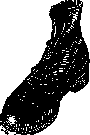
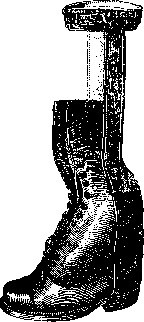
Orthopedic footwear for equinus foot can completely correct the abnormal gait by inserting cork under the heel in the shoe. If the distance of the heel from the ground is not more than 2 cm, no cork is required, as a normal heel sufficiently compensates for the shortening. Orthopedic footwear for paralyzed foot. The form and position of the paralyzed foot depend on the loss of function of the affected muscles. Either all muscles of the foot, or separate groups, or even individual muscles are affected. When walking, the paralyzed foot serves only as a mechanical support due to the preserved bony skeleton, often turns over and becomes unstable. Orthopedic footwear is made in the same way as for flatfoot or clubfoot, with the function of the paralyzed muscles replaced by elastic traction. Additionally, to prevent skeletal deformations, metal splints with a hinge at the ankle joint and a metal plate in the sole are used (Fig. 13).
A number of other foot diseases, such as heel foot, heel spurs, arthritis, etc., also require the use of orthopedic footwear. In all cases of making orthopedic footwear, precise knowledge of the nature of the observed pathological changes in the foot and clarification of the task set for orthopedic footwear in each individual case is required. The importance of orthopedic footwear is very great. In the presence of shortening, orthopedic footwear, in addition to preventing curvatures of the spine and pelvis, contributes to the complete restoration of working capacity. In various foot deformations after a series of therapeutic measures, footwear is so necessary that therapeutic measures can only be carried out when the patient is provided with appropriate orthopedic footwear. The same applies to childhood paralysis and flatfoot, especially in severe cases. The use of ordinary footwear in these cases is not only impractical and harmful to patients, but also hinders work, causes pain, and increases deformations not only of the foot but of the entire torso. Orthopedic footwear is made in places where there are orthopedic workshops with the necessary equipment.
Related articles
Mentioned in
Cite this page
“Footwear.” Soviet Medical Encyclopedia. English translation of Bolshaya Meditsinskaya Entsiklopediya, 1st ed. (Moscow, 1928–1936), ed. N. A. Semashko. https://sovietmedicalencyclopedia.pages.dev/article/footwear/