Amyotrophic Lateral Sclerosis
Historical document, translated for reference. It reflects medical knowledge of the 1920s–30s and is not medical advice.
Summary
Amyotrophic lateral sclerosis, first identified as a distinct form by Charcot, is a rare neurological disease characterized by muscle atrophy, particularly in the hands, and spastic paralysis mainly in the lower limbs, without sensory disturbances. The etiology remains unknown, with theories including trauma, toxicity, and premature degeneration of the motor apparatus.
Encyclopedia article (1928–1936)
AMYOTROPHIC LATERAL SCLEROSIS was identified as a separate form by Charcot and is therefore often called Charcot's disease. The characteristic features of this disease are muscle atrophy, mainly of the hand muscles, with spastic paralysis, predominantly in the lower extremities, without any disturbances in sensitivity. A.L.S. occurs rarely: on average, among a thousand nervous patients, no more than two have A.L.S. Men are affected more frequently, usually at an average age between 30 and 45 years, less frequently at 60-70 years, and even less frequently in childhood. The etiology of A.L.S. is still unknown; factors such as trauma, toxemia, muscular overexertion (especially combined with emotional stress), cooling, and others are mentioned as possible causes; these factors should probably be considered precipitating rather than causative. Strümpell believed that the essence of the disease lies in premature wear (abiotrophy) of the corresponding motor apparatus, apparently due to its congenital weakness. This leads some (Lenz), citing very rare cases of hereditary A.L.S., to classify it as a hereditary disease.
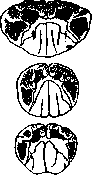
Figure 1. Cross-sections of the spinal cord
Pathologically, they find a characteristic picture of parenchymatous degeneration with subsequent proliferation of glia throughout the cortico-muscular nerve pathway, both central and peripheral. In the spinal cord (see Figure 1), degeneration of the pyramidal systems is found, in some cases it was traced to the cortex of the anterior central gyri. Atrophy of ganglion cells of the anterior horns in the cervical enlargement is usually observed more strongly and earlier. Sensory pathways, cerebellar connections, and posterior columns are usually not affected. The symptomatology of A.L.S. consists of 1) spastic phenomena, 2) muscle atrophy, and 3) bulbar phenomena. In typical cases, the disease is usually recognized when atrophy and weakness of the small muscles of the hands appear, where thenar lesion leads to the thumb not opposing the other fingers but lying in the same plane as in a monkey ('monkey hand'), and lesion of the interosseous muscles leads to flexion of the terminal phalanges and extension of the proximal ones ('bird's claw'; see Figure 2). In far-advanced cases, a 'skeleton hand' results. Later, atrophy extends to the forearm muscles, where the extensors are mainly affected, and to the shoulder—the deltoid muscle; sometimes fibrillary twitching is observed here before atrophy. Regeneration reaction is usually found in atrophic muscles. Atrophy often appears earlier and more markedly on the right side as the more developed hand. In this hand, the patient begins to feel fatigue and at times weakness, and upon examination, a sharp increase in reflexes is noted, which may disappear if the entire corresponding muscle atrophies. Clinic. The schematic course of the disease is as follows: fatigue, spasticity, weakness, atrophy, and rarely—atrophy first. Later, contractures of the fingers develop, the elbow flexes, the shoulder is brought to the trunk. In the lower extremities, spastic phenomena and weakness appear first. The gait becomes markedly spastic, with small shuffling steps. The knee and Achilles reflexes are sharply increased, foot clonus and pathological reflexes are easily obtained. Later, atrophy of the small muscles of the foot and calf also appears on the legs. After 2-4 years, the medulla oblongata becomes affected, and a picture of progressive bulbar paralysis develops (see). Lesion of the medulla oblongata with disturbance of swallowing usually leads to the patient's death. The sensory disturbances (paresthesias and pains) mentioned do not occur in typical cases. Lesions of the bladder, rectum, and sexual apparatus are usually not observed. The spinal fluid is normal. The following subgroups of A.L.S. can be distinguished: 1) typical picture according to Charcot: atrophy of the hands, spastic phenomena in the lower extremities, and finally—bulbar phenomena; 2) less frequently, atrophy begins in the legs and then extends to the upper extremities; 3) in old age, the disease mainly begins with bulbar phenomena and leads to death before significant atrophy develops in the hands; 4) rarely, the so-called hemiplegic type occurs, when all phenomena remain on one side for a long time; 5) cases difficult to diagnose where atrophy is so prominent before spasticity that the paralysis is flaccid, and the picture resembles spinal muscular atrophy; 6) there is almost no atrophy or it is so insignificant that the picture of spastic spinal paralysis predominates. Here it is sometimes necessary to differentiate between syringomyelia (see) and A.L.S. Attention should be paid to the dissociation of sensory disturbances, as syringomyelia is characterized by lesion of pain and temperature sensitivity. The increased reflexes on the hands characteristic of A.L.S. are usually absent in syringomyelia. A similar picture is occasionally given by amytrophic syphilis, but the history, blood and spinal fluid Wassermann reaction will clearly indicate the nature of the condition. All other diseases rarely present diagnostic difficulties, as they affect the spinal cord more diffusely, not so systemically, and involve sensory pathways and pathways to pelvic organs, which is not characteristic of A.L.S. The disease has a chronic-progressive course and lasts on average 2-4 years; however, cases with a 10-year course have been described. Recoveries have not been observed. In the origin of the disease, occupational factors play a certain role. In professions where the facial muscles bear a heavy load, as in glass blowers (lips), the disease begins with the facial muscles. In professions with monotonous, tiring movements, rest should be given and a change of work made. Therapy consists of strengthening treatment with arsenic, phosphorus, strychnine, etc.
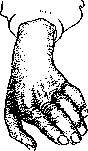
Figure 2. Atrophy of the hand in 'bird's claw' (according to Oppenheim).
Related articles
Mentioned in
Cite this page
“Amyotrophic Lateral Sclerosis.” Soviet Medical Encyclopedia. English translation of Bolshaya Meditsinskaya Entsiklopediya, 1st ed. (Moscow, 1928–1936), ed. N. A. Semashko. https://sovietmedicalencyclopedia.pages.dev/article/amyotrophic-lateral-sclerosis/