Boris Weisbrod
Historical document, translated for reference. It reflects medical knowledge of the 1920s–30s and is not medical advice.
Summary
Biography of Boris Solomonovich Weisbrod (born 1874), a prominent Soviet surgeon, professor at the 2nd Moscow State University, and revolutionary figure who played a major role in organizing early Soviet healthcare and treating V. I. Lenin.
Encyclopedia article (1928–1936)
WEISBROD, Boris Solomonovich (born 1874), surgeon, professor at the 2nd Moscow State University, prominent public and revolutionary figure. After graduating from the medical faculty of Kharkov University, he worked in the surgical department of the Golitsyn Hospital and as a district doctor in Saratov and Kharkov provinces. Already as a student, Weisbrod took part in the revolutionary movement. In 1903, forced to leave his service in the Zemsky administration, he emigrated abroad, where he specialized in the surgical clinics of Bergmann, Israel, and Czerny. From 1906 he worked in Moscow at the 1st City Hospital as an extern. In 1910, during the organization of the clinics of the Moscow Higher Women's Courses, he was invited as an assistant at the faculty surgical clinic, but was not approved by the Minister of Public Education and was listed as temporary. In 1917, Weisbrod was the commissar of all medical institutions in the city of Moscow not subordinate to the Moscow City self-government (The Foundling Home, Golitsyn, Pavlov, and other hospitals).
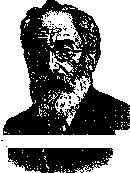
Weisbrod took an active part in the October Revolution and is one of the first builders of Soviet medicine. He was a member of the board of the Health Department of the Moscow Soviet, the first head of the Health Department of the Zamoskvorechye Soviet. In 1918, Weisbrod was sent as chairman of the Red Cross commission for the evacuation of prisoners and the wounded to Austria and Hungary, where he was subjected to persecution, arrest, and expulsion to Russia. During the typhus epidemic, he was appointed by the Council of Labor and Defense as chairman of the Extraordinary Commission for Combating Epidemics on the Turkestan and Southwestern fronts. In 1922, Weisbrod was elected chief physician of the 2nd City Hospital in Moscow, which since 1924 has borne his name and has been significantly expanded and improved over 1924-28. In the same year of 1922, Weisbrod was elected professor at the 2nd Moscow State University to the chair of the parallel hospital surgical clinic, and from 1924 as director of the propaedeutic surgical clinic of the same university. All this time he has been a member of the State Academic Council and a member of the German Society of Surgeons.
Weisbrod is a most active public figure, taking a lively part in party and public work: since 1904 he has been a member of the Bolshevik party, a member of the Moscow Provincial Executive Committee, almost continuously a member of the Moscow Soviet, a member of the board of the provincial department of the Medsantrud union, and finally, in 1924 he was elected chairman of the Central Bureau of the Medical Section of the Medsantrud union, in which capacity he repeatedly held congresses in Belarus, Ukraine, and other union republics, and is also an energetic defender of improving the living conditions of the district doctor. Special note should be made of Weisbrod's role during the illness of V. I. Lenin in 1918. He was one of the first to appear to him after the wounding and remained uninterruptedly with him during difficult moments of the illness. During his final illness, for many months he spent days and nights near Vladimir Ilyich, enjoying his exceptional trust.
Related articles
Cite this page
“Boris Weisbrod.” Soviet Medical Encyclopedia. English translation of Bolshaya Meditsinskaya Entsiklopediya, 1st ed. (Moscow, 1928–1936), ed. N. A. Semashko. https://sovietmedicalencyclopedia.pages.dev/article/boris-weisbrod/