Hideyo Noguchi
Historical document, translated for reference. It reflects medical knowledge of the 1920s–30s and is not medical advice.
Summary
A biographical entry on the renowned Japanese bacteriologist Hideyo Noguchi (1876–1928), detailing his extensive research on syphilis, yellow fever, and snake venoms. It covers his career at the Rockefeller Institute and his tragic death from yellow fever while conducting field research in Africa.
Encyclopedia article (1928–1936)
Hideyo Noguchi (1876–1928; the Japanese pronounce it "Nogushi"), a famous Japanese bacteriologist; received the title of Doctor of Medicine at the Tokyo Medical College in 1897. In 1897–1898, he was an assistant at the Tokyo General Hospital and then at the State Institute of Infectious Diseases. At the same time, he served as a quarantine physician at the port of Yokohama and taught pathological anatomy at the Tokyo Dental College. In 1901, he moved to the USA, graduated from the University of Pennsylvania, and received the title of assistant in pathology.
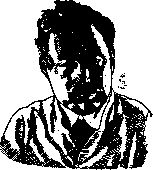
In 1903–1904, he worked at the Copenhagen Serum Institute, then returned to America and worked in Washington at the Carnegie Institution. From 1904, he worked at the Rockefeller Institute in New York. In 1928, while on an expedition to study yellow fever in British Guinea, in West Africa, he contracted this disease during an autopsy and died. The scientific activity of Noguchi was extremely diverse. His first works, relating to the study of snake venoms, were summarized in the monograph "Snake venoms" (Washington, 1909). Then Noguchi studied methods for obtaining pure detritus for smallpox vaccine and the bacteriology of infantile paralysis. But his main works relate to syphilis and yellow fever. Noguchi was the first to obtain pure cultures of syphilitic spirochetes and established with precision the syphilitic origin of progressive paralysis and tabes. He managed to show the presence of spirochetes in the cells of the central nervous system in patients who died from these diseases. Noguchi also proposed a new method for the Wassermann reaction, as well as a method for the diagnosis of syphilis by means of a skin reaction with luetin. To Noguchi belongs a major, several times republished, monograph "Laboratory diagnosis of syphilis" (N.Y., 1923). In 1918, while working on the study of yellow fever (see), Noguchi described the parasite Leptospira, which for some time was considered the causative agent of this disease; subsequently, this assumption was not confirmed. Nevertheless, the works of Noguchi on yellow fever played a major role—he managed to prepare a prophylactic vaccine against yellow fever, as well as a therapeutic serum against it. Noguchi also studied diseases common in South America—Oroya fever and verruga peruana. He was the first to isolate the causative agents of these diseases. Among other works of Noguchi, it is necessary to note his discovery of the bactericidal properties of certain preparations of unsaturated fatty acids in relation to acid-fast microorganisms, i.e., mainly in relation to tuberculosis. Also important are the works of Noguchi on the etiology of trachoma.
Related articles
Cite this page
“Hideyo Noguchi.” Soviet Medical Encyclopedia. English translation of Bolshaya Meditsinskaya Entsiklopediya, 1st ed. (Moscow, 1928–1936), ed. N. A. Semashko. https://sovietmedicalencyclopedia.pages.dev/article/hideyo-noguchi/