Hidradenitis
Historical document, translated for reference. It reflects medical knowledge of the 1920s–30s and is not medical advice.
Summary
This article from the 1928–1936 Soviet Great Medical Encyclopedia discusses hidradenitis, an inflammation of the apocrine sweat glands primarily caused by staphylococcal infection. It details the clinical presentation, particularly in the axillary region, and outlines various therapeutic approaches including surgical intervention and physical therapy.
Encyclopedia article (1928–1936)
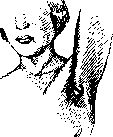
HIDRADENETIS, hidradenitis (Verneuil, 1854), inflammation of that type of skin sweat glands which are now segregated into a special group of apocrine glands (see). The infectious agent here is usually a staphylococcus, most commonly golden; a favorable soil for its implantation is created by physical and nervous-psychic overwork, anemia, poor nutrition, and, apparently, certain other undetermined conditions that lower the skin's resistance to infection in seemingly completely healthy individuals. The proximate causes of the disease are considered to be poor hygiene and skin injuries (abrasions, cracks, scratch marks). This disease occurs at any age, but more often in young people who have reached puberty. - In its pathological-anatomical aspect, these cases deal with an abscess (see) originating from a sweat gland; less often the abscess is single, but more frequently there are several. Their formation occurs in the uppermost part of the subcutaneous adipose layer. The penetration of bacteria is possible both from the outside, through a defect in the epidermis or through the excretory ducts of the glands, and via a hematogenous pathway during the excretion of bacteria from the organism. Most often, hidradenitis is observed in the axillary fossa, then around the nipple, around the anus, in the labia majora, on the scrotum, and on the neck. At the beginning of the disease, there is a dense, well-demarcated nodule, ranging in size from a pea to a cherry, fused with the skin and mobile relative to deep tissues. Tenderness is expressed differently: some patients are unable to raise their arm from pain, do not allow the inflamed focus to be touched, and are bothered even by the touch of clothing, but less painful forms are also observed, and finally, on rare occasions, one can encounter patients suffering from bilateral hidradenitis in the axillary fossae who do not stop their normal work. The skin over this nodule is initially unchanged and only subsequently reddens. The initial induration (or indurations) may in rare cases undergo regression, but more often they undergo softening, pus forms in them, and then under the reddened skin several adjacent pustules are usually visible, often connecting with each other in the depths. The skin over each pustule is raised, depressions form in the intervals, and the entire inflamed area as a whole presents an appearance that has received the popular name "bitch's teat" (see figure).
The disease is characterized by extreme duration and persistence; following the opening (spontaneous or surgical) of one pustule, another arises nearby; bilateral axillary hidradenitides are frequent. A multitude of treatment methods has been proposed: previously, compresses, lotions from weak formalin solutions, plasters, ointments, and heat in all forms were used; softened infiltrates were opened; recently, in addition to all this, Bezredka's antivirus, vaccine therapy (autovaccination), quartz lamp treatment, and roentgenotherapy are recommended; always, in addition to local treatment, general treatment is also prescribed: enhanced nutrition, brewer's yeast, fresh air, a change of surroundings and even climate, and subcutaneous arsenic. Sometimes, despite the listed measures, the disease does not yield to treatment, and then one has to resort to excision of the entire skin area containing the inflamed glands.
M. Egorov
Related articles
Cite this page
“Hidradenitis.” Soviet Medical Encyclopedia. English translation of Bolshaya Meditsinskaya Entsiklopediya, 1st ed. (Moscow, 1928–1936), ed. N. A. Semashko. https://sovietmedicalencyclopedia.pages.dev/article/hidradenitis/