LIMANS
Historical document, translated for reference. It reflects medical knowledge of the 1920s–30s and is not medical advice.
Summary
Limans are saltwater bodies found along sea coasts, particularly in the Black, Azov, and Caspian seas. They form when bays are separated from the sea by sandbars and are valued for both salt extraction and therapeutic purposes.
Encyclopedia article (1928–1936)
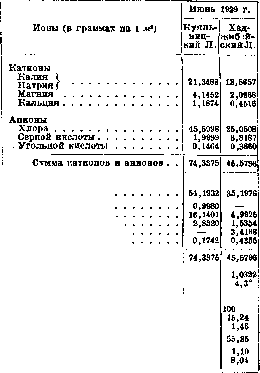
LIMANS (from the Greek limen - bay, harbor, adopted by the Tatars and Turks), saltwater bodies scattered along sea coasts (in the USSR along the coasts of the Black, Azov, and Caspian Seas). They are marine formations of the barrier type, representing mostly narrow, elongated basins separated from the sea by so-called "spits". Many of them have been salt-producing since time immemorial and served as a rich source of salt extraction* while some have become health resorts.* The Black Sea coast is particularly rich in L. (both closed and open). Limans are divided into 3 main groups: Bessarabian-Odessa, Taurida, and Kuban-Caucasian; of these, the Odessa limans - Kuyalnitsky and Khadzhibeysky [see volume VII (pp. 801-802), map] are the most studied. The water of these limans, despite its marine origin, differs from sea water not only in significantly higher concentration but also in the character of its salt mass.-From the moment of complete separation from the sea, a liman begins its own special, unique life, subject to the influence of the most diverse new factors and undergoing further physico-topographical, chemical, and other transformations. The geochemical equilibrium established in the formation of mineral springs and springs is maintained with some constancy for centuries; this law of constancy in the composition of mineral springs and waters is equally applicable to saltwater bodies.-The water of different limans differs in the quantitative content of salts (different concentrations), measured by the Baumé hydrometer; it ranges for different limans from 0.5° to 26° Baumé (at 26° Baumé, self-depositing salt precipitates). For the characterization of limans, along with the description of their ionic and salt composition, the chlorine coefficient and the concentration of water are also used.-The significance of limans is determined either by their therapeutic properties or their salt-producing capacity as sources of NaCl extraction. Of all limans on the northern coast of the Black Sea, the aforementioned Odessa limans have gained the greatest fame as health resorts, being the most important and characteristic. To the northeast of Odessa, bordering the Odessa Bay, there are two limans: Kuyalnitsky and Khadzhibeysky; both stretch along deep, narrow ravines, the first for 30 km, the second for 33 km, with an average width of about 2 km. Both limans, like others, in remote times constituted bays that connected into one huge bay, at the remaining part of which Odessa now stands. On ancient maps of the Black Sea, this bay was called "Istrianon".-Leveling, carried out by the expedition of the Novorossiysk Society of Naturalists (1894), showed that on the morning of August 25, 1894, the level of Kuyalnitsky Liman was 5.14 m below sea level, and Khadzhibeysky Liman at the same moment was 1.78 m below sea level. In depth, the Odessa limans differ sharply from each other. Measurements made in 1895 showed that the maximum depth of Kuyalnitsky Liman reaches only 2.2 m. The bottom of the liman represents almost a flat surface. Due to the slope of the shores, the area occupied by the liman's water changes greatly with changes in its level, and the rate of evaporation from the surface of the lake, the concentration of brine (liman water), etc., are subject to similar fluctuations. Measurements of Khadzhibeysky Liman made in 1896 showed that it is a body of water with considerable depth. Initially, counting from the "spit", the depth is insignificant, in places it reaches 5 m, but then it increases and reaches 13 m.-The area of Kuyalnitsky Liman, outlined by the map contour, by June 1894 amounted to about 6,142 hectares; the corresponding volume was 98,055,000 m3. These numbers may vary from year to year depending on fluctuations in the level.-The level of both limans and the density of their water mass undergo periodic fluctuations depending on the amount of atmospheric precipitation, the rate of snow melting, the average summer temperature, and the strength of evaporation from the lake surface, etc. These conditions can combine in the most diverse ways from year to year, acting either jointly in one direction or in opposite directions to each other. The result of such combinations is either a progressive drop in the water level in the liman and a gradual increase in the concentration of salts in it for several consecutive years, or the opposite phenomenon-a sudden rise in the water level and a decrease in its density. All these conditions apparently combine differently for both limans, causing significant differences in the range of fluctuations in density and water level.-Measurements of the water density of Kuyalnitsky Liman have been carried out since 1860 in the northeastern part of the liman by the "Salt Works". During the 60-year period of observations, the density fluctuated within the range of 4.5° to 27° Baumé. The greatest thickening of brine during the summer reached 5° Baumé. Systematic observations of the water density of Khadzhibeysky Liman showed that the extreme fluctuations in density over a 10-year observation period did not exceed 4° Baumé; seasonal fluctuations barely reached 2° Baumé; minimum density 3.5°, maximum 7.5° Baumé. Over a 10-year period of continuous observations, it turns out that the years of highest and lowest brine density for both limans fully coincide, and the lower limits of water density for both limans are quite close, while the upper limits differ significantly from each other.-The temp. of water in limans is characterized by great constancy and never gives such sudden and significant fluctuations as observed in the coastal northern zone of the Black Sea. Temperatures Extreme fluctuations in summer months . . . . Average seasonal . . . . Average months: in June . . . . in August Kuyalnitsky Liman 19.25-33.75° 23.6° 22.75° 25.25° 23.25° Khadzhibeysky Liman 12.5-31.25° 23.25° 23° 24° 22.75° Chemical composition of liman mud-see Mud. Wave action in Kuyalnitsky Liman is slight. The average wave height according to Kozlovsky's observations is 4.6 cm*. The maximum wave height reached 25 cm. A mirror-like surface of the liman is observed in approximately 30% of all observations. Wave action on Khadzhibeysky Liman is much more significant; the average wave height is 11.4 cm*. The maximum wave height observed in the liman reached 76 cm. On average by month: in June-12.5 cm, in July-12 cm, in August-10 cm; wave action is greater in the morning and day and decreases toward evening. A mirror-like surface of the liman was noted 784 times during all observations, and wave break-2389 times. Consequently, in 30% of all observations there was no wave.-Briefly summarizing the features of the Odessa limans, we obtain the following characterization of each of them: Kuyalnitsky Liman is thus distinguished by its lesser depth, much greater water density, higher temperature, and weaker wave action; its level is below sea level and below the level of Khadzhibeysky Liman. The distinctive features of Khadzhibeysky Liman consist of its greater depth, significantly lower concentration of its brine, lower temperature, and stronger wave action. The chemical composition of water of both limans according to the latest analyses by E. S. Burxser and N. B. Lapkina is presented in the table (p. 118). Therapeutic agents of limans _are water or brine and the bottom sediment of the liman-therapeutic mud (see Therapeutic mud). Brine is used 1) in the form of warm therapy with heated brine, diluted, and carbonic baths of various temperatures and densities as an independent form-brine therapy-and in combination with mud baths as a component of a mud therapy course (see) and 2) in the form of cold therapy
Probable salt composition Chloride of sodium \ \ \ \ potassium \ \ \ \ calcium \ \ \ \ magnesium Sulfate of calcium \ \
Related articles
Mentioned in
Cite this page
“LIMANS.” Soviet Medical Encyclopedia. English translation of Bolshaya Meditsinskaya Entsiklopediya, 1st ed. (Moscow, 1928–1936), ed. N. A. Semashko. https://sovietmedicalencyclopedia.pages.dev/article/limans/