Parinaud Syndrome
Historical document, translated for reference. It reflects medical knowledge of the 1920s–30s and is not medical advice.
Summary
Parinaud syndrome is characterized by paralysis of elevation, depression, and convergence of the eyeballs, with normal lateral eye movements. It is associated with lesions in the midbrain and is observed in epidemic encephalitis.
Encyclopedia article (1928–1936)
Parinaud syndrome, (Parinaud) consists of paralysis of elevation, depression, and convergence of the eyeballs. At the same time, simultaneous movements of the eyeballs to the sides are completely normal, whereas during convergence the eyeballs do not move inward or move insufficiently. P. s. is characteristic of lesions in the area of the midbrain. It is observed, among other conditions, in epidemic encephalitis.
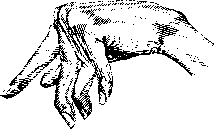
Figure 1. Toe walking in parkinsonism.
the mechanism of walking loses the ability to vary and adapt to individual moments (stops, turns, etc.). Complex synkineses of the trunk and extremities, which underlie normal gait, sometimes disintegrate, with individual elements of walking becoming particularly pronounced. This is the so-called disintegration of gait in the form of limping, squatting, shuffling (fig. 2). Against the background of the hypertonic-akinetic syndrome in encephalitic P., various and complex hyperkineses develop. These include tics of the face and neck, tonic spasms of the oculomotor muscles, nystagmus of the eyes and eyelids, yawning spasms, etc. Sometimes in P., complex dystonic syndromes develop, close to dys-basia iordotica progressiva (Ziehen's disease and
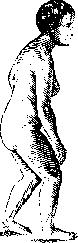
Figure 2. Disintegration of gait in parkinsonism.
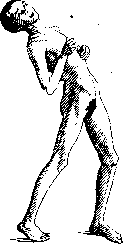
Figure 3. Dystonic syndrome in parkinsonism. .Oppenheim's) (fig. 3). The duration of such hypertonic and dystonic phenomena in the course of P. varies. Usually, when the parkinsonoid elements themselves, i.e., rigidity and akinesia, intensify, many hyperkineses (except tremor) weaken. Extremely interesting are the phenomena of the so-called paradoxical kinesia: a patient almost completely paralyzed by rigidity, with difficulty turning in bed from side to side, sometimes shows the ability to run, jump, leap over the bed, etc. The distribution of motor disorders, especially the more severe ones, despite all their polymorphism and scattered localization, still follows certain patterns. In some cases, motor disorders are distributed according to types known from pyramid system pathology—mono-, hemipareses and paralyses and cross-hemipypes relative to the face (see Alternating syndromes). In other cases, motor formulas are created that are characteristic exclusively of extrapyramidal syndromes, for example, lesion of half the neck and extremities of the opposite side. In character, motor disorders in encephalitic P. are divided into two groups. In the first, the nature of all lesions is homogeneous regardless of their localization. The second group includes cases of heterogeneous lesions where in some segments of the body the motor disorders are stable, while in others they are paroxysmal. Such are, for example, paroxysmal spasms of the oculomotor muscles, the so-called "gaze spasm," or "Schauanfalle," with stable hypertonia of the extremities (fig. 4). motor phenomena in encephalitic P. have a static character, i.e., they change with a change in body position. However, the Magnus-Klein neck reflexes (see Magnus-Klein reflexes) in P. are weakly expressed or completely absent. In addition to the above-mentioned autonomic disorders (mostly of the vagotonic type—hypersecretion of sebum, saliva, sweat), in encephalitic P. there are also deeper autonomic disorders. Most patients lose weight, sometimes reaching cachexia. Sometimes a period of pathological obesity of the adiposogenital dystrophy type (Frohlich) precedes the stage of emaciation. The psyche in encephalitic P. usually shows more or less profound changes. In mild cases, patients present a picture close to neurasthenia. In severe cases, there is a slowing of mental processes (bradypsychia). The emotional and volitional spheres are especially affected. Patients are apathetic, indifferent to their surroundings, emotionally blunt; they become more egocentric; their interests are limited to their illness, hence the frequent pathological importunity, pestering, and begging in encephalitic-parkinsonian patients. Characteristic is the monotony of constantly renewed complaints, questions, or demands (Akvapriya Astvatsaturova). The formal functions of consciousness, intellect, and memory usually remain unaffected. Children with encephalitic parkinsonism often become aggressive, rude, irritable, intractable, lying, and annoying. There is a tendency toward stealing and vagrancy. Often premature sexual development. The intellectual sphere in children usually remains preserved, and defects are only
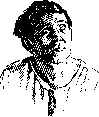
Figure 4. Upward deviation of the eyes in encephalitic parkinsonism.
rarely noted in it. These children are difficult to educate and often asocial. P. in epidemic encephalitis is very similar to that which characterizes paralysis agitans. It is therefore natural that the differential diagnosis between these two conditions currently attracts much attention. Some authors (Souques, Massary, Zakharchenko) generally identify both diseases, while some clinical differences they attribute to the difference in age between encephalitic patients and patients with paralysis agitans. Most researchers, however, believe that despite the striking external similarity, these two diseases are essentially different: the anatomical basis of paralysis agitans is a degenerative process, whereas in encephalitis there are inflammatory, resp. vascular-degenerative changes. From a symptomatic point of view, it should be noted that the facial musculature is more severely affected in encephalitis than in paralysis agitans—"maximum facial" Barre, moreover in paralysis agitans there are no such affected postures and attitudes as in encephalitic P. Besides these not very significant differences in the manifestation of P. itself, the two diseases also differ from each other in a number of other respects. The various bizarre hyperkineses that occur in encephalitis are not characteristic of Parkinson's disease. In general, the symptomatology of paralysis agitans is more uniform and monotonous than that of P. with its tendency toward grotesqueness. Autonomic disorders are significantly more pronounced in encephalitis, for which the above-mentioned mental changes are also characteristic. In patients with Parkinson's disease, electrical excitability to both currents is decreased, which is not characteristic of encephalitis. The erythrocyte sedimentation rate is faster in paralysis agitans and slower in encephalitis. Both diseases are progressive in their course, but in encephalitis the increase in symptoms proceeds more rapidly and relentlessly. Finally, for most cases of encephalitis, a younger age of patients is characteristic than in paralysis agitans. The infectious onset of the disease and residual effects of the acute period (pareses of III, VI and VII pairs of nerves) speak in favor of encephalitis and are not characteristic of paralysis agitans. The treatment of P. is based on two principles. First, the underlying disease is treated (in P. in the early stages of encephalitis—urotropin, collargol, protein therapy; in syphilitic P.—specific treatment, etc.). Second, symptomatic treatment of P. is applied, aimed at reducing the hypertonic-akinetic phenomena. Of medicinal agents, scopolamine is most indicated, then atropine. Physiotherapy has greater importance. For rigidity, vibrational massage, special exercises, and gymnastics according to Fridlander are used. Warm baths are beneficial; in cases of recent onset, sulfur baths (Vershilov) and brine baths (Shevarev) have been successfully used. Nielsen proposed for the treatment of P. transverse diathermy of the skull; in some cases, improvement was noted in the treatment of the skull with iontophoresis of calcium and exposure to a quartz lamp. The question of utilizing the remaining strength of parkinsonian encephalitics is particularly acute. Mental changes and defects in motor skills make work in ordinary production conditions impossible for them. It is necessary to organize special labor colonies and workshops for them.
Related articles
Cite this page
“Parinaud Syndrome.” Soviet Medical Encyclopedia. English translation of Bolshaya Meditsinskaya Entsiklopediya, 1st ed. (Moscow, 1928–1936), ed. N. A. Semashko. https://sovietmedicalencyclopedia.pages.dev/article/parinaud-syndrome/