Tics
Historical document, translated for reference. It reflects medical knowledge of the 1920s–30s and is not medical advice.
Summary
This article from the 1928–1936 Soviet medical encyclopedia defines tics as involuntary muscle contractions that mimic purposeful movements. It details their classification, symptoms, and the distinction between localized and generalized tics, including the complex condition known as Gilles de la Tourette syndrome.
Encyclopedia article (1928–1936)
TICS, involuntary contractions of the musculature that reproduce or approximate expressive or purposeful movements. The contractions of muscles during tics usually have a lightning-like, clonic character; tonic Tics are extremely rare. Tics are involuntary movements, resistance to them is impossible or extremely difficult; after their performance a feeling of relief ensues. Tics are divided into localized and general. Facial tics are the most common. Localized Tics are designated by the bridge or by the act they resemble. Among facial ones the most common T.-tic of the circular muscle of the eye - blepharotism (cM.Blephorottc), or blinking. In a decreasing order of frequency T.'go' the musculature of the nose, oral and frontal. Corresponding tics have the character of "sniffing", chewing, licking, grinding, surprise, fright, etc. In the second place after facial musculature by frequency T. stands the cervical musculature. Its coverage by T. is extremely diverse. At one pole stand relatively simple T. of individual cervical muscles, causing elementary motor acts, at the opposite - complex T., spreading to several cervical muscles and sometimes passing to the musculature of the shoulder and scapula (Fig. 1). Tics of the anterior muscles are called Salamander's cramps. Tics of deep cervical muscles cause a rotation of the head (rotator T.), resembling its position under a military command. Often cervical Tics are combined with facial ones. Tics of the upper extremities are especially complex, reproducing clicking, saluting, fastening or pulling at clothing. At localization of T. in the legs squatting occurs, sudden bending of the knees, hopping (jumping Indians). Tics of various localization are often accompanied by changes in respiratory and voice-speech function in the form of sighs, gasps, exclamations. In speech T. inappropriately and meaninglessly constantly the same sounds (bleating, mooing) or individual words are pronounced. In persons possessed by T.-ticcers- various neuropathic traits are usually noted. General T. [tic general convulsif, syn. disease of Gilles de la Tourette (Gilles de la Tourette), syn. maladie des tics impulsifs) consists of a combination of widespread tic hyperkinesia with obsessive states, such as echolalia, i.e., a tendency to repeat what is heard, echopraxia - repetition of visible actions, forced production of an action corresponding to a heard word, repeated pronunciation of the last word. A subtype of general T. is Guinon's disease (see.) (tic de Guinon). Tics are primary diseases of the nervous system. Usually they begin in childhood, predominantly at 7-8 years, and reach their peak during puberty. They are intensified under the influence of emotion. Sometimes habitual work with the hand reduces or completely eliminates the localized T. in it. During sleep the tic usually ceases. Only rarely is there an exclusively nocturnal T. Tics often begin after exhausting infectious diseases or psychic traumas. Sometimes they develop from initially reflexively conditioned acts and habits; sometimes in the origin of T. plays a certain role imitation. Almost all ticcers are neuropaths or hereditarily nervously burdened. -- The second group consists of Tics of the face occurring in adult and elderly age. Tic convulsif, syn. prosopospasmus, covers almost the entire musculature of one half of the face; usually it has a psychogenic origin. It was observed by Oppenheim in the form of a flash in a number of persons who had suffered an earthquake. Another form is painful T. of the face (tic douloureux) - occurs at the height of pain in trigeminal neuralgia, covers more often the same half of the face as the neuralgia, but sometimes passes to the other (Fig. 2). Painful T. has a reflex origin. -- The third group is formed by Tics during epidemic encephalitis. Sometimes already in the acute and much more often in the chronic period of this disease Tics develop, by their character and motor formula coinciding with endogenous Tics of the first group. Tics during epidemic encephalitis sometimes have an extremely whimsical character, e.g., wide opening of the mouth with protrusion of the pharyngeal wall forward (Fig. 3), contraction of the diaphragm, movement of the ears, etc. Epidemic encephalitis not only increased the enormous variety of Tics, but gave a basis for revising the question of their pathogenesis. French authors, especially those who worked much on the question of Tics (Charcot, Brissaud, Mégret), and among the Germans Oppenheim, considered Tics a functional disease of the cortex without anatomic changes in it. Recent investigations give a basis to link Tics and especially Tics during epidemic encephalitis with fine organic lesions of mesencephalic formations (tic mesencephalique Davidenkova) and basal ganglia. From facial Tics one should distinguish various forms of facial spasms. The median facial spasm of Mégret differs from Tics by symmetric localization in the small facial muscles and internal portions of the circular muscles. Brissaud's spasm at the height of an attack resembles painful T., but lacks the coarse etiological moment inherent in the latter. The greatest differential-diagnostic significance has the character of contraction. During tics it is lightning-like; during facial spasms two phases are easily distinguishable: the first - clonic twitching of muscles, the second - their tonic contraction. Facial Tics are not accompanied by changes in other areas of the body, whereas during facial spasms myoclonic, dystonic or atrophic changes in the musculature of the extremities occur. Tics begin in childhood and youth, facial spasms - in maturity. Spasms occur much less often than Tics. Prognosis during Tics is unfavorable. Tics during epidemic encephalitis are sometimes suppressed by progressive parkinsonism. -- Treatment of Tics is predominantly psychotherapeutic. The French speak of psychomotor upbringing, the Germans of inhibitory gymnastics. It consists of willful suspension of movements, replacement of one by another. Exercises are performed first under observation of a doctor, then controlled by a mirror. Simultaneously a course of general psycho- and physiotherapeutic strengthening treatment is conducted. Success of treatment requires a stationary setting.
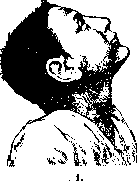
Fig. 1
Fig. 2


Fig. 3
Fig. 4
Related articles
Mentioned in
Cite this page
“Tics.” Soviet Medical Encyclopedia. English translation of Bolshaya Meditsinskaya Entsiklopediya, 1st ed. (Moscow, 1928–1936), ed. N. A. Semashko. https://sovietmedicalencyclopedia.pages.dev/article/tics/