Wassermann
Historical document, translated for reference. It reflects medical knowledge of the 1920s–30s and is not medical advice.
Summary
August von Wassermann (1866-1925) was a prominent microbiologist and immunologist, a student of Robert Koch. He made significant contributions to immunology, serodiagnosis of infectious diseases, and the development of the Wassermann test for syphilis.
Encyclopedia article (1928–1936)
WASSERMANN, August (August von Wassermann, 1866-1925), the greatest microbiologist and immunologist of our time, one of the most talented students of R. Koch. He received his medical education at the University of Strasbourg. For 22 years he headed one of the departments of the Koch Institute in Berlin; from 1913 to 1925 he was director of the Institute of Experimental Therapy (Dahlem); author of fundamental works in the field of immunity (diphtheria, cholera, tetanus and other infections), which were done in collaboration with Brieger, Kitasato, Pfeiffer, and Ehrlich. Developing Ehrlich's side chain theory, W. was the first to establish in vitro the binding of tetanus toxin by the nervous system of animals (nerve cells as poison receptors); in his work with Citron, he also put forward (in 1905) the concept of the special importance of local (histogenic) immunity. In the field of theoretical
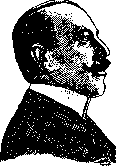
serology, W. managed to prove the fundamental identity of the phenomena of agglutination and precipitation; he also established the different antigenicity of different strains of the same species of bacteria and thereby proved the practical necessity of 'polyvalence' of vaccines. Simultaneously with Uhlenhuth, W. proposed using the precipitation method to differentiate between protein species, which found wide application in forensic medicine. W. introduced a significant improvement to the complement fixation method (Bordet-Gengou), developing the use of extracts of bacteria and organs (instead of emulsions) as antigens; thereby he laid the foundation for the practical serodiagnosis of syphilis (Wassermann reaction), tuberculosis, gonorrhea and other infections (glanders, etc.); he also successfully used this method to determine the strength (activity) of meningococcal serum. W. achieved worldwide fame through the theoretical and practical development of serodiagnosis of syphilis in collaboration with Neisser, Brack, Schucht and hundreds of other, less known researchers. W. published over 200 works on the above-mentioned fields. Together with Kolle, W. was editor of the world-famous 'Handbook of Pathogenic Microorganisms,' which is a standard work for every bacteriologist, and contributor to many of the most reputable German and foreign periodicals ('Deutsche medizinische Wochenschrift,' 'Berliner klinische Wochenschrift,' 'Münchener medizinische Wochenschrift,' 'Wiener klinische Wochenschrift,' 'Zeitschrift für Immunitätsforschung und experimentelle Therapie,' 'Zeitschrift für Hygiene und Infektionskrankheiten,' 'British medical journal'). W. was famous not only as a scientist but also as a talented teacher (for 15 years he taught a course in bacteriology and immunology at the Koch Institute), whose students are spread throughout all countries of the world. W. was repeatedly proposed by scientific societies as a speaker at German and world congresses of microbiologists.
Related articles
Mentioned in
Cite this page
“Wassermann.” Soviet Medical Encyclopedia. English translation of Bolshaya Meditsinskaya Entsiklopediya, 1st ed. (Moscow, 1928–1936), ed. N. A. Semashko. https://sovietmedicalencyclopedia.pages.dev/article/wassermann/