Air Defense
Historical document, translated for reference. It reflects medical knowledge of the 1920s–30s and is not medical advice.
Summary
This article from the 1930s Soviet encyclopedia details the complex system of air defense, covering its history, the development of military aviation, and the specific measures taken to protect civilian populations and infrastructure from aerial and chemical attacks.
Encyclopedia article (1928–1936)
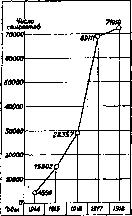
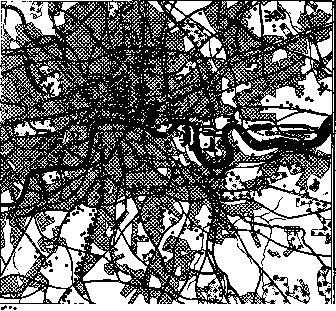
AIR DEFENSE (AD), a complex system of measures for protection against attacks by hostile air forces in wartime. The air defense of troops is tasked with ensuring the execution of combat operations against enemy attacks and reconnaissance from the air. Air defense in the rear aims to hinder the actions of enemy air forces and reduce the damage they inflict. The means of air defense are: active - fighter aviation, anti-aircraft artillery, and machine guns; active means are assisted by anti-aircraft searchlights with sound locators; local - camouflage, fortification protection, anti-chemical protection, air barriers, and dispersed placement of protected objects. Air defense emerged during the World War of 1914-18, when the increasingly numerous and qualitatively improved enemy air fleets (Fig. 1) threatened attacks from the air not only on the rear of a military district but on the entire territory of Western European countries. During the World War, a number of the capitals of warring states were subjected to air attacks (Paris, London, and others - Fig. 2). After the World War, military air fleets continued to develop intensively. If in 5 large capitalist countries (France, England, USA, Italy, and Japan) in 1914 there were 263 aircraft in service, then in 1923 the number of aircraft increased to 3,350, and by 1930 to 6,250. The qualitative indicators of aircraft also increased (see the table on p. 431). In recent years, the tendency of imperialist states to create powerful and numerous bomber aviation with a large radius of action has become completely clear. A system of views on the decisive significance for the outcome of war of large-scale air fleet operations directed against the vital centers of the hostile state is also being formed and gaining ground. The tendency of capitalist countries to ensure themselves in the modern class war with a type of armed forces in which, in their opinion, it is easier to ensure political stability in the event of an attack on the Soviet Union - a country of building socialism - also plays no small role in this matter. The technical achievements of aviation are such that the entire territory of warring states at a distance of 600-800 km from the border will be under constant threat of bomber and air-chemicalg raids, as well as airborne landings. As happened during the World War of 1914-18, giant airships will also be used for military purposes, which are capable of transporting thousands of kilometers dozens of tons of explosives, troops, and combat supplies. At the same time, modern airships can be flying bases for aircraft, which will significantly expand their radius of action. The growing military danger of direct air attack on the deep rear, especially in view of the possibility of using combat aircraft for poisonous substances, has increasingly attracted the attention of government bodies of all countries in recent years. After the articles of the Italian General Dué, a Ministry of Air Defense was created in France. However, the full coverage of the entire civilian population with air defense in imperialist countries is recognized as an utterly impossible task. The attempt to resolve the issue through international agreements and treaties proved to be hypocritical and only emphasized the contradictions of the interests of the capitalist world. The commission of military experts on the protection of the civilian population from chemical danger created under the International Committee of the Red Cross was dissolved after two sessions (in Rome and Brussels). This commission came to the conclusion that 1) air-chemical danger threatens the entire territory of Western European states, that 2) one must think about the protection of populated areas during their construction, planning, and reconstruction, that 3) it is impossible to protect the entire population with existing means and it must be divided into active (contingents serving transport, communication organs, vitally necessary installations - water supply, power plants; ensuring public order and fighting popular disasters: police, firemen, members of public organizations of the Red Cross type and some others), provided for first of all, and passive, in essence almost completely unprovided for, that 4) it is necessary to announce a number of competitions for the discovery and invention of means and methods for determining chemical agents in the air, individual and group protection, etc. Thus, in the situation of air-chemical danger, the majority of the population finds itself left to itself, and the resolution of the question of its protection and the organization of help for it, in particular medical help, has to be sought in the mobilization of public forces and resources. For this purpose, almost in all states, societies (leagues, commissions) have been created, part of which works under the flag of the Red Cross, for the preparation of the population for the deployment of self-activity in the situation of air-chemical danger. In the USSR, the functions of operational air defense leadership belong to the organs of the RKKA, the implementation of measures of local significance is entrusted to civilian departments, in the jurisdiction of which are so-called "air defense objects". The commander of the aviation detachment
Figure 1. Growth in the number of combat aircraft in the armies of warring states during the 1914-18 war.
their number increased to 3,350, and the qualitative indicators of aircraft also increased (see the table on p. 431). In recent years, the tendency of imperialist states to create powerful and numerous bomber aviation with a large radius of action has become completely clear. A system of views on the decisive significance for the outcome of war of large-scale air fleet operations directed against the vital centers of the hostile state is also being formed and gaining ground. The tendency of capitalist countries to ensure themselves in the modern class war with a type of armed forces in which, in their opinion, it is easier to ensure political stability in the event of an attack on the Soviet Union - a country of building socialism - also plays no small role in this matter. The technical achievements of aviation are such that the entire territory of warring states at a distance of 600-800 km from the border will be under constant threat of bomber and air-chemicalg raids, as well as airborne landings. As happened during the World War of 1914-18, giant airships will also be used for military purposes, which are capable of transporting thousands of kilometers dozens of tons of explosives, troops, and combat supplies. At the same time, modern airships can be flying bases for aircraft, which will significantly expand their radius of action. The growing military danger of direct air attack on the deep rear, especially in view of the possibility of using combat aircraft for poisonous substances, has increasingly attracted the attention of government bodies of all countries in recent years. After the articles of the Italian General Dué, a Ministry of Air Defense was created in France. However, the full coverage of the entire civilian population with air defense in imperialist countries is recognized as an utterly impossible task. The attempt to resolve the issue through international agreements and treaties proved to be hypocritical and only emphasized the contradictions of the interests of the capitalist world. The commission of military experts on the protection of the civilian population from chemical danger created under the International Committee of the Red Cross was dissolved after two sessions (in Rome and Brussels). This commission came to the conclusion that 1) air-chemical danger threatens the entire territory of Western European states, that 2) one must think about the protection of populated areas during their construction, planning, and reconstruction, that 3) it is impossible to protect the entire population with existing means and it must be divided into active (contingents serving transport, communication organs, vitally necessary installations - water supply, power plants; ensuring public order and fighting popular disasters: police, firemen, members of public organizations of the Red Cross type and some others), provided for first of all, and passive, in essence almost completely unprovided for, that 4) it is necessary to announce a number of competitions for the discovery and invention of means and methods for determining chemical agents in the air, individual and group protection, etc. Thus, in the situation of air-chemical danger, the majority of the population finds itself left to itself, and the resolution of the question of its protection and the organization of help for it, in particular medical help, has to be sought in the mobilization of public forces and resources. For this purpose, almost in all states, societies (leagues, commissions) have been created, part of which works under the flag of the Red Cross, for the preparation of the population for the deployment of self-activity in the situation of air-chemical danger. In the USSR, the functions of operational air defense leadership belong to the organs of the RKKA, the implementation of measures of local significance is entrusted to civilian departments, in the jurisdiction of which are so-called "air defense objects". The commander of the aviation detachment
Figure 2. Places of bomb falls over London during the 1914-18 war.
and so on. Thus, in the situation of air-chemical danger, the majority of the population finds itself left to itself, and the resolution of the question of its protection and the organization of help for it, in particular medical help, has to be sought in the mobilization of public forces and resources. For this purpose, almost in all states, societies (leagues, commissions) have been created, part of which works under the flag of the Red Cross, for the preparation of the population for the deployment of self-activity in the situation of air-chemical danger. In the USSR, the functions of operational air defense leadership belong to the organs of the RKKA, the implementation of measures of local significance is entrusted to civilian departments, in the jurisdiction of which are so-called "air defense objects". The commander of the aviation detachment
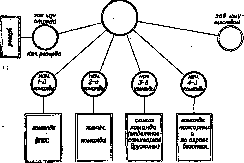
Figure 3. Example scheme of organization of an aviation-chemical detachment.
Under socialist planning of the national economy, air defense in the USSR knows a whole series of obstacles in its organization that exist in capitalist countries. The mobilization of Soviet public opinion, the preparation of the population, and the active assistance of the RKKA and civilian departments in the matter of air defense lie with the Societies for the Assistance to Defense (Ossoaviakhim) and the development of aviation and chemical industry. Medical-sanitary provision of the population in air defense was taken over by the republican societies of the Red Cross and Red Crescent, coordinating their work with Ossoaviakhim, which deals with questions of observation, communication, reconnaissance, decontamination, fire fighting, and maintaining public order in relation to the assistance of organizing air defense. In the aviation-chemical detachments formed by Ossoaviakhim (Fig. 3), as one of their units, medical-sanitary teams are included, prepared and provided materially by the Red Cross and its local organs. The preparation of the population for the provision of medical help in air attacks is carried out in first aid circles. Persons who have completed such circles, not subject to military service and satisfying the requirements of physical health, are enrolled in sanitary squads; the latter are combined into sanitary corps in large centers (Moscow, Leningrad). Sanitary squads periodically gather for classes according to the annual program. The adaptation of medical institutions, shower installations, sanitary showers, laboratories, and disinfection stations to the needs of air defense lies with civilian health authorities. They are also obliged to care for the accumulation of medical personnel familiar with the organization of air defense, the toxicology of chemical agents, as well as the clinic and therapy of lesions by these substances.
Related articles
Cite this page
“Air Defense.” Soviet Medical Encyclopedia. English translation of Bolshaya Meditsinskaya Entsiklopediya, 1st ed. (Moscow, 1928–1936), ed. N. A. Semashko. https://sovietmedicalencyclopedia.pages.dev/article/air-defense/