Bitot's Spots
Historical document, translated for reference. It reflects medical knowledge of the 1920s–30s and is not medical advice.
Summary
Bitot's spots are distinctive changes on the conjunctiva of the sclera in the form of small triangular spots or plaques located on both sides of the cornea. These spots lack the usual epithelial luster, appear as if covered with dried foam or smeared with white fat, and are not moistened by tears.
Encyclopedia article (1928–1936)
BITOT'S SPOTS (Bitot), first described by Bitot, are distinctive changes on the conjunctiva of the sclera in the form of small triangular spots or plaques located on both sides of the cornea, with the base of the triangle facing the cornea and the apex directed toward the corner of the eye. These spots lack the usual epithelial luster, are dull, as if covered with dried foam or smeared with white fat, and are not moistened by tears. They usually occur in both eyes and represent limited xerotic changes on the conjunctiva of the sclera (xerosis epithelialis conjunctivae). They often exist simultaneously with night blindness (hemeralopia) and develop on the basis of body exhaustion and insufficient or improper nutrition. A huge role in the disturbance of nutrition in these conditions is played by avitaminosis, deficiency in the so-called lipovitamins A and B in food. The fact of the excellent therapeutic effect of fish oil, rich in these vitamins, on the mentioned conditions confirms this. B. spots are not always characteristic only of benign xerosis of the conjunctiva, but can also be the initial symptoms of a more severe form of avitaminosis, so-called keratomalacia, when the dryness from the spots quickly spreads to the remaining conjunctiva and cornea and leads to the death of the eye in the phenomena of corneal decay.
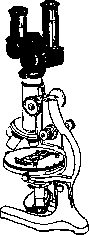
BITUMI (Bitumi), the factory name of a stereoscopic binocular for a microscope, manufactured by the firm Zeiss in Jena. The B. is inserted into the tube in place of the usual eyepiece, for which the upper part of the tube is first unscrewed. The B. gives an excellent stereoscopic image with both weak and strong systems; in the latter case, the use of a strong light source is necessary. The price of bitumi is about 50 rubles. Similar insert binoculars are also produced by other firms (Reichert); see Binocular instruments, Microscope.
Related articles
Cite this page
“Bitot's Spots.” Soviet Medical Encyclopedia. English translation of Bolshaya Meditsinskaya Entsiklopediya, 1st ed. (Moscow, 1928–1936), ed. N. A. Semashko. https://sovietmedicalencyclopedia.pages.dev/article/bitot-s-spots/