Caterpillars
Historical document, translated for reference. It reflects medical knowledge of the 1920s–30s and is not medical advice.
Summary
This article describes the anatomical features of butterfly larvae, specifically focusing on the structure of their hairs and the toxic properties of certain species. It details the mechanisms by which these caterpillars cause dermatitis and inflammation in humans, noting the historical debate regarding whether the irritation is purely mechanical or caused by a specialized venom apparatus.
Encyclopedia article (1928–1936)
CATERPILLARS, the name for the larvae of butterflies (see). Their body is worm-like, with a head. Figure 1. Cross-section of a gold-tail moth caterpillar from a winter nest (Euproctis chrysorrhoea) at the level of the shields (ft) covered with poisonous hairs (a); t—muscles lowering the shields with poisonous hairs. Figure 2. Various forms of hairs of overwintering gold-tail moth caterpillars: A and B—poisonous hairs; C, D, E and F—non-poisonous hairs. (According to Pavlovsky and Stein.) Besides three pairs of thoracic legs, they have up to 5 pairs of abdominal false legs, which remain from the embryonic stage of development. The abdominal legs are not segmented. The mouthparts are chewing. On the lower lip, two long, tubular silk glands open via a common duct; at the base of the upper jaws, tubular salivary glands also open. The integuments of caterpillars are either smooth or equipped with hairs, spines, tubercles, etc. (see Figure 1). The hairs of caterpillars have different structures. Some of them are simple outgrowths of the chitinous cuticle; others have a cavity inside and are connected at their base to a glandular cell, the secretion (or protoplasm) of which enters the lumen of the hair. The hairs of some caterpillars are sharp and brittle and easily penetrate human skin, where they introduce the secretion contained within them from the glandular cell.
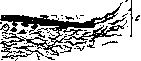
Figure 3. Vertical section through human skin at the site of penetration of poisonous hairs (shown in black) of overwintering gold-tail moth caterpillars: sc—stratum corneum; ep—epidermis; c—corium. (According to Pavlovsky and Stein.)
hair. Some caterpillars are distinguished by the poisonous properties of their hairs (see Fig. 2), causing dermatitis and inflammation of the mucous membranes. Such "stinging" caterpillars include the larvae of the following butterflies: Thaumetopoea processionea L. (oak processionary moth), Thaumetopoea pityocampa (pine processionary moth), Euproctis chrysorrhoea (gold-tail moth), Porthesia similis, Megalopyge (Lagoa) crispata, Parasa hilarata, and a number of other species. The cause of the painful effect of the hairs of certain caterpillars is explained in various ways. Some are inclined to see here only the mechanical effect of the penetrating hairs on the skin; others, such as Fabre, believe that the hairs of caterpillars are not poisonous in themselves, but become contaminated with excreta, acquiring skin-irritating properties, since excretory products of the Malpighian tubules are also released with the caterpillar's feces. Still others (Pavlovsky et al.) see in the hairs of caterpillars a poisonous apparatus consisting of a glandular cell that produces venom and a brittle, hollow chitinous hair, which serves as the piercing part of the venom apparatus. The nature of the effect on the skin of the poisonous hairs of caterpillars of different butterfly species is not uniform. In particular, the hairs of the gold-tail moth caterpillar (common in the southern and partly in the central part of the USSR), when penetrating the skin, cause local inflammation with edema of the dermis, dilation of blood vessels, and the accumulation of nests of inflammatory infiltration both in the corium and in the epidermis, in which, moreover, the intercellular fluid channels expand and "alteration cavitaire" appears (Pavlovsky and Stein) (see Figure 3). Dermatitis from poisonous caterpillars can take on the character of occupational diseases (during efforts to control the corresponding insects). Since poisonous hairs break easily and are carried by the wind, they can cause mass afflictions among people in settlements located near forests infested with certain stinging caterpillars.
Related articles
Mentioned in
Cite this page
“Caterpillars.” Soviet Medical Encyclopedia. English translation of Bolshaya Meditsinskaya Entsiklopediya, 1st ed. (Moscow, 1928–1936), ed. N. A. Semashko. https://sovietmedicalencyclopedia.pages.dev/article/caterpillars/