Deaf-Mutism
Historical document, translated for reference. It reflects medical knowledge of the 1920s–30s and is not medical advice.
Summary
Deaf-mutism is a condition where, due to congenital underdevelopment of hearing or loss of hearing before age 7, articulate speech does not develop or is forgotten. The article explores various classifications, etiologies, pathological changes, and residual hearing in affected individuals.
Encyclopedia article (1928–1936)
406 Psychological features of deaf-mutes.
418 Types of deaf-mutism. Deaf-mutism, surdomutitas, is a condition in which, due to congenital underdevelopment of hearing or loss of hearing before the age of 7, articulate speech does not develop or is forgotten. For deaf-mutism to occur, complete loss of hearing ability is not necessary. The degree of hearing loss may be such that learning speech becomes impossible through hearing without the use of auxiliary means. According to Bezold, for deaf-mutism to develop, it is sufficient for hearing to be reduced from childhood to 25-50 cm for whispering in each ear separately.--Even in Aristotle's time, deaf-mutism was divided into 2 forms--congenital and acquired; however, as new data accumulated, it became clear that such a classification is insufficient, since on the one hand, constitutional deafness may develop only after birth, and on the other hand, acquired deafness may have its beginning in embryonic life. As a result, a number of new proposals emerged. Hammer-schlag was the first to point out that it is necessary to distinguish between deaf-mutism caused by local diseases of the hearing organ from constitutional deaf-mutism. The first group includes all forms of acquired deaf-mutism, regardless of whether it occurred during intra- or extrauterine life, while the second group includes endemic deaf-mutism (deaf-mutism of cretins) and sporadic forms. The latter in turn are divided into hereditary-degenerative forms (marriages between blood relatives) and syphilitic forms. The most suitable classifications can be considered those of Denker, Alexander, and Fischer. They are based on the etiological-clinical principle, and Denker's classification is also partly anatomical. A purely anatomical division is currently impossible due to the similarity of patho-anatomical pictures of congenital and acquired deaf-mutism. Denker divides deaf-mutism into 3 groups: 1) congenital, or congenital, 2) acquired in connection with trauma received during the act of birth, and 3) acquired after birth. Alexander and Fischer propose to distinguish the following 3 groups of deaf-mutism: 1) constitutional hereditary-degenerative lesion of the inner ear and cranial nerve VIII, 2) individually acquired form and 3) individually acquired due to intercurrent diseases in subjects with status degenerativus. All three groups can occur intra- and extrauterinely. However, later, due to established custom, the term "congenital" will be used along with the term "constitutional" deaf-mutism. The etiology of deaf-mutism is diverse. For a long time, telluric influences and unfavorable social and hygienic conditions have been given importance. Barren mountainous areas with drinking water containing an unknown harmful substance create conditions that indirectly influence the more frequent occurrence of deaf-mutism. Heredity plays a huge role. Its influence becomes understandable from the fact that various pathological conditions can be transmitted from parents to offspring, provided they are contained in the determinant cells of parents (in chromatin substance). According to Albrecht, the hereditary transmission of deaf-mutism follows Mendel's laws. It manifests itself monohybridly and recessively. Therefore, if both parents are recessive homozygotes, then all offspring will be deaf-mute; if they are both heterozygotes, then only 1/4 of the offspring will be deaf-mute. In a marriage between a heterozygote and a healthy г/a individual, there will be deaf-mute offspring. From the point of view of heredity, the influence of marriages between blood relatives with hereditary predisposition on deaf-mutism becomes especially clear. According to Hammer-schlag, out of 168 marriages with 1 deaf-mute child, there are 14.3% consanguineous marriages; out of 28 marriages with 2 deaf-mute children-28.57% and out of 14 marriages with 3 deaf-mute children-57.14% consanguineous marriages. The possibility of the occurrence of deaf-mute offspring from consanguineous marriages without hereditary predisposition seems doubtful. In addition to deaf-mutism, constitutional inferiority of the hearing organ can also be inherited, as a result of which a special predisposition to the occurrence of various ear diseases and their unfavorable course in case of occurrence arises. According to Hammer-schlag, in hereditarily burdened families, not only deaf-mutism but also otosclerosis and progressive labyrinthine hearing loss are observed. Constitutional causes should also include the influence of cretinism, which in most cases is accompanied by hearing loss, but also often by deafness and deaf-mutism. The cause of acquired deaf-mutism can be primarily infectious diseases and in the first place cerebrospinal meningitis (up to 38%). Then come in descending order scarlet fever (up to 20%), measles (up to 8%), typhoid, diphtheria, syphilis, mumps, influenza, whooping cough. Among other causes, trauma in general and during childbirth in particular should be mentioned. Pathological-anatomical changes in constitutional deaf-mutism are divided, according to Alexander, into 2 large groups. 1. Primary congenital aplasia or hypoplasia of the n. cochlearis, gangl. spiralis and Corti's organ. 2. Primary underdevelopment (complete absence or delay in development) of the bony capsule of the labyrinth or middle ear with secondary atrophy of the n. cochlearis, gangl. spiralis and Corti's organ. In deaf-mutism of cretins, changes are found in the middle ear from the side of the mucous membrane, as well as in the inner ear in the form of atrophy of the n. VIII and neuroepithelium. The possibility of central lesions is not excluded either. Acquired forms can be divided into meningogenic, tympanogenic and primarily arising within the labyrinth. Meningogenic forms arise due to the spread of infection from the subarachnoid spaces to the labyrinth along preformed paths (aquaeductus cochleae, perineural and perivascular spaces of the internal auditory canal). Changes occur from the side of the bony capsule and membranous labyrinth. Destruction of bone with replacement by newly formed bone tissue, exostoses, complete obliteration occur, as a result of which the niches of the windows narrow or overgrow, and the vestibule and the lumens of the cochlea and semicircular canals narrow or become empty. From the side of the membranous labyrinth, abnormal partitions in the perilymphatic spaces, collapse and stretching of the canal walls, and retraction of membranae Reissneri are observed, partial or complete obliteration of the canal, changes from the side of Corti's organ (atrophy, replacement of sensory epithelium with indifferent), loss of the tectorial membrane, loosening of lig. spiralis, atrophy of striae vascularis, atrophy and degeneration of the trunk of the auditory nerve. Similar changes are observed in the vestibule and semicircular canals. From the side of the middle ear, usually no changes are observed.--Tympanogenic forms are caused by the transition of suppuration from the middle ear, usually also through preformed paths: fenestra vestibuli and i. cochleae, but also through fistulas in the external semicircular canal and promontorium. The changes are similar to those found in meningogenic forms, with the difference that here sometimes remnants of an untreated suppurative labyrinthitis are still found, and, of course, severe changes from the side of the middle ear in the form of greater or lesser destruction of the tympanic membrane, auditory ossicles, walls of the tympanic cavity, both windows, etc.--Primary forms in the labyrinth arise due to trauma and hereditary syphilis. In trauma, traces of former bone fractures and hemorrhages are sometimes found, in hereditary syphilis the process can spread from the middle ear to the inner ear or primarily arise in the latter, with lesions observed from the side of the bony capsule and membranous labyrinth. Acquired during childbirth deaf-mutism develops due to large or small hemorrhages in the middle, inner ear and central nervous system. Residual hearing and disorders of the vestibular apparatus in deaf-mutism. Investigation of the cochlear apparatus in deaf-mutism showed that in it larger or smaller remnants of hearing are often preserved. The following table gives an idea of the frequency of this phenomenon (in %): Authors Bezold 1st series. . . . Bezold 2nd » . . . . Wagener.......... Schwendt-Wagner . . . Kickefell G....... Denker......... Hasslauer........ Treitel......... Preobrazhensky S. S. . Schubert........ Koebel in two schools Nager.......... Lannois-Chavaime . . . Alexander-Mackenzie . . Schmiegelow...... Wanner......... Brock.......... Kompaneez....... Complete deafness 30.4 28.8 65.5 26.4 17.2 49.2 54.6 51.1 53.0 16.6 /27.8 \ 42.1 28.1 53.8 47.0 28.0 29.1 36.7 58.0 Residual hearing 69.6 71.2 34.5 73.6 82.8 45.5 48.9 47.0 83.4 /72.4 157.9 71.9 48.2 53.0 72.0 70.9 63.3 42.0 To determine residual hearing, either speech or other sources of sound are used: clapping hands, bell, whistles, etc. To determine the remnants of the tonal scale, either the Urbančič harmonica (V. Urbantschitsch) or the Bezold-Edelmann set of continuous tones are used. Bezold, who quantitatively investigated residual hearing in deaf-mutes with his set, divides them into 6 groups. Group I: only islands of the entire tonal scale remain, not exceeding 2*/3-3 octaves.
II group: throughout the tonal scale there are breaks—tonal gaps or blanks—from a semitone to 3½ octaves. III group—defects in the upper part of the tonal scale. IV group—simultaneous defect at both upper and lower limits of hearing. V group—defect only in the lower part of the tonal scale. VI group—small defects at both limits, but insignificant quantitative perception of individual tones. The following table shows the frequency of individual groups of Bezold according to various authors (in %): Authors Bezold 1st series .... 17.7 12.7 0.6 5.1 11.4 20.9 Bezold 2nd series .... 15.3 5.9 4.2 5.9 8.5 31.4 Barth .... 5.2 9.8 1.2 3.5 2.3 10.8 Schwendt-Wagner . . . 30.0 6.3 2.1 5.3 29.9 Kickefehl . . 5.2 22.4 20.7 3.4 31.1 Denker .... 24.4 5.6 3.2 3.2 2.4 12.0 Hasslauer . . 10.7 6.2 0.6 2.8 10.1 15.2 Schubert . . . 9.0 12.5 0.7 9.1 9.7 34.0 Wanner . . . 13.9 6.5 3.3 6.9 10.2 30.1 Lannois-Chavanne . 4.61 1.53 0.76 1.53 3.07 1.53 Brook .... 6.1 6.1 3.0 5.1 10.2 32.5 Kompaneev . . 19.7 9.2 6.5 1.3 5.3 Research of residual hearing in deaf-mutes has practical significance, as it allows selecting subjects especially suitable for training articulate speech by using these residuals. Not all residual hearing is equally significant in this regard. According to Bezold's research, understanding of the components of speech is possible only with preservation of part of the tonal scale b¹-g², with the important condition that the tones of this part of the scale are heard for at least 5-10% of normal time. Research of residual hearing in deaf-mutes also has theoretical interest. The presence of islands and gaps in the tonal scale indicates various localizations in the cochlea for perception of different tones, i.e., speaks in favor of Helmholtz's resonance theory, and also helps to clarify the localization of various components of speech in the tonal scale, which can be easily determined by comparing residual hearing for tones with the ability to perceive individual vowel and consonant sounds. Research of the vestibular apparatus in deaf-mutes was undertaken by authors to the same extent as research of the cochlear, as partial and complete loss of function made it possible to some extent to judge the physiological purpose of the apparatus. In lesions of the vestibular apparatus, disturbances of equilibrium are observed, as well as certain deviations in the appearance and character of nystagmus. Kreidl investigated 109 deaf-mutes on a special board suspended from the ceiling. A chair was placed on the board, on which the deaf-mute and experimenter sat astride, one behind the other. The latter placed his fingers on the closed eyes of the subject, after which an assistant rotated the board, making 10 turns. Kreidl found normal nystagmus 31 times (28.5%), weak eye movements 10 times (9.1%), and complete absence of eye movements 55 times (50.5%). On the same deaf-mutes, Kreidl also determined the sense of verticality. Normally, when rotating on a disk, a sensation of tilting of the rotating circle is obtained, which, according to Kreidl, depends on the irritation of the otolith apparatus that occurs. If a healthy subject is rotated on a disk with a diameter of 2 m and a circle with degree divisions and an arrow hidden from the subject is placed on the periphery of the disk, the latter, setting the arrow vertically, makes an average error of 8.5°. Deaf-mutes, according to Kreidl, make a smaller error: from 2.5° to 6.5°. Pollak investigated 82 deaf-mutes by means of galvanization. Absence of head oscillations was observed in 33% and absence of nystagmus in 29.3%. When rotating the same subjects, absence of nystagmus was observed in 32.8%. Strehl in 167 deaf-mutes found absence of nystagmus after galvanization in 18.1%, and after rotation—in 21.5%. Hammerschlag out of 23 deaf-mutes with undoubtedly constitutional affection in 22 did not find reaction to galvanization, but since in the acquired form a certain percentage also does not give reaction, this sign cannot be used to distinguish constitutional forms of D. from acquired ones. Investigating the same deaf-mutes in parallel for rotation, Hammerschlag could divide them into 3 groups: 1) the largest number react positively to rotation and galvanization; 2) a small percentage react negatively to rotation and positively to galvanization; 3) also a small percentage do not react to either rotation or galvanization. From these investigations of Hammerschlag it is evident that preservation of excitability of the vestibular apparatus for one type of irritant is possible while losing it for another, which is confirmed by all subsequent researchers (see below). The same question was also studied by Alexander and Kreidl. They investigated deaf-mutes by means of galvanization and found that in congenital D. 68.8% of all investigated show normal galvanic reaction, while in acquired—only 28.9%; consequently in the congenital form of deaf-mutism, the vestibular apparatus remains unaffected more often. Frey and Hammerschlag investigated 93 deaf-mutes for nystagmus by means of rotation and found positive reaction in 49.5%, negative—in 45.2%, and undefined—in 5.3%; consequently about half of all deaf-mutes suffer from affection of the vestibular apparatus. Furthermore, in the congenital form positive reaction was observed in 72.1% and negative—in 25.6%, while in acquired—the opposite: positive in 26.7%, and negative—in 64.4%; consequently in the congenital form of D. the vestibular reaction is preserved much more often than in acquired, which coincides with the data of Alexander and Kreidl. Moreover Frey and Hammerschlag attempted by this method to determine whether there is any connection between the degree of hearing loss and the degree of reduction of vestibular function. Bezold's observations amounted to the fact that there is a certain parallelism between these two functions, namely: among the completely deaf, the largest number not reacting to rotation is observed, while among deaf-mutes with the largest residual hearing, the largest number reacts to irritation of the vestibular apparatus. Frey and Hammerschlag made the following amendment to Bezold's statement: the said parallelism is observed only in acquired D., while in congenital it is different—here a significant predominance of normally reacting over persons with complete absence of reaction is observed (68.2% against 31.8%). Alexander and Mackenzie applied to deaf-mutes simultaneous research by means of several different irritants. 51 deaf-mutes were investigated: 33 with acquired and 18 with congenital D. The relationship between the cochlear and vestibular apparatuses was as follows: 1) complete deafness and complete non-excitability of the vestibular apparatus were observed 15 times; 2) residual hearing and excitability of the vestibular apparatus—20 times; 3) complete deafness and excitability of the vestibular apparatus—9 times; 4) residual hearing and complete non-excitability of the vestibular apparatus—7 times. The first and second groups are represented by an equal number of cases of acquired and congenital D., in the cases of the third group congenital predominated, and in the fourth—acquired deaf-mutism. Thus only groups 3 and 4 satisfy the difference which according to data of other authors is observed between the state of the cochlear and vestibular apparatuses in congenital and acquired D. and which is proven by anatomical research on humans and animals. When tested on a goniometer in 10 cases, the authors found disturbances of equilibrium where excitability for rotation and galvanization was preserved, which they connect with the absence of impulses normally coming from macula sacculi et utriculi, i.e., from the otolith apparatus. Brock, investigating deaf-mutes by means of rotation, found absence of disturbances of equilibrium in 34.7%, weak disturbances in 53.0%, and strong disturbances in 10.2%. Absence of nystagmus—in 34.7%, weak nystagmus—in 8.1%, and strong—in 57.2%. In caloric testing absence of reaction was found in 34.7%. In 6 cases he found a paradox: presence of rotational reaction with absence of caloric. It is interesting that caloric nystagmus gives, according to Brock, diametrically opposite results for the completely deaf and for Bezold's group VI. Kompaneev investigated 38 deaf-mutes and found spontaneous nystagmus in only 18.4%, which indicates reduced excitability of the vestibular apparatus. Rotational reaction was found in 66.0%, caloric—in 63.1%, and galvanic—in 61.5%. The rotational reaction thus proves to be the most constant. When tested on a goniometer, 3 groups could be distinguished: 1) cases with complete loss of vestibular functions, 2) cases with partial loss of vestibular functions, and 3) cases with complete preservation of all vestibular functions.
The average angles at which the first disturbances of equilibrium appeared are given in the following table: Inclinatio I group II group III group c. ^ tig p, rt tin d" я s я K й £ « « 4 .£ B a « 5 s o S roE 03 h o г P5 £ anterior . . . 30° 31° 26° 31° 20° posterior . . . 20° 9° 31° 20° 27° 18° dext. later. . , 23° 7° 26° 21° 29° 21° sin. later. . . . 25° 4° 28° 18° 29° 22° When comparing all three groups, it is seen that the smallest average angles are obtained in those deaf-mutes who suffer from a complete loss of excitability of the vestibular apparatus (group I) and only with the eyes closed, i.e., when excluding the factor which normally contributes to maintaining equilibrium and which compensates for the loss of excitability of the vestibular apparatus. The difference in angles for all three groups is also not the same, as is evident from the following table: Inclinatio I group II group III group anterior .... posterior .... dext. later . . . sin. later. . . . 27° 15° 24° 29° 8° 11° 5° 10° 13° 9° 8° 7° From the table, the influence of the vestibular apparatus on maintaining equilibrium is clearly seen, since when vision is excluded, the difference in the angles at which the first disturbances of equilibrium occur on an inclined plane becomes especially significant in cases with a complete loss of excitability of the vestibular apparatus. A separate place is occupied by the study of counter-rolling of the eyes (Gegenrollung) in deaf-mutes, since since the experiments of Magnus and de Kleyn, it has become certain that the innervation of this movement originates from the otolithic apparatus, specifically from the macula sacculi. Counter-rolling of the eyes in deaf-mutes was first studied by Barany (Barany) with the help of an optical apparatus specially proposed by him. Barany found that deaf-mutes in this respect can be divided into 3 groups: 1) Counter-rolling of the eyes does not differ from normal. This includes deaf-mutes with a normal reaction to galvanization, rotation, and calorization. 2) Counter-rolling of the eyes differs from normal. This includes cases with a complete loss or barely expressed excitability of the vestibular apparatus. Here either very small angles of counter-rolling were observed, or unequal angles when tilting the head to the right and left shoulders. 3) Counter-rolling differs from normal, but the parallelism with other reactions as mentioned in the first 2 groups is not observed. Kompaneez, using a modified Barany apparatus, studied counter-rolling of the eyes in 48 deaf-mutes. They could be divided into 3 groups: 1) all reactions of the vestibular apparatus are preserved; 2) all reactions are absent; 3) reactions are partially lost. In cases of the first group, the angles obtained were in general close to normal, however in some cases the angles were equal to zero. In cases of the second group, parallelism is more often observed, however here too the preservation of the reaction to counter-rolling of the eyes is often observed in the absence of other reactions. In cases of the third group, no parallelism was detected either. From these studies it follows that the loss of all other reactions of the vestibular apparatus is by no means accompanied by the loss of the reaction to counter-rolling of the eyes, consequently the latter has a separate source of innervation, which is in agreement with the studies of Magnus and de Kleyn. If we now summarize all the above-mentioned studies of the vestibular apparatus in deaf-mutes, we can arrive at the following conclusions: 1. There are absolutely no reliable methods for distinguishing congenital D. from acquired one by means of clinical research methods. Nevertheless, in most cases, for congenital (constitutional) D. the preservation of vestibular functions is characteristic. This greater stability of the vestibular apparatus compared to the cochlea is explained by its phylogenetic age, since descending far down the zoological ladder, the static apparatus is found even in some invertebrate animals. Therefore, the same inherited defect can delay the development of the cochlea without having any effect on the development of the vestibular apparatus. Conversely, exogenous harmful factors (infection) affect both parts of the inner ear equally. 2. There is no parallelism between all types of reactions of the vestibular apparatus, as evidenced by so-called paradoxical cases. This circumstance speaks in favor of either the mechanism of excitation in individual reactions being different, or the qualities of the neuroepithelium being different. 3. The loss of function of the semicircular canals and the otolithic apparatus also does not go in parallel. 4. The study of vestibular functions in deaf-mutes presents an inexhaustible source for studying the normal functions of the vestibular apparatus. A certain analogy with deaf-mutes is presented by dancing mice, suffering from congenital deafness and disturbances of equilibrium. Therefore, some authors conducted their clinical and anatomical research on these animals with the aim of clarifying the normal functions of the vestibular apparatus. In addition to phenomena from the side of the auditory organ, in deaf-mutes a number of other phenomena are observed, which are in direct connection with their suffering. First of all, these include peculiarities of gait. In complete deafness, it is striking that patients when walking heavily shuffle their shod feet on the floor or ground. This depends first of all on the fact that they are unable to control their gait with the help of hearing, and secondly on the fact that due to damage to the vestibular apparatus, gait lacks sufficient stability. In the presence of residual hearing, these phenomena are less striking. Speech in absolutely deaf people is distinguished by the absence of euphony and modulation, it is heavily articulated, monotonous, and scanned, because deaf-mutes learn speech only with the help of touch and vision. Therefore, totally deaf people when talking either gradually raise their voice, or conversely gradually lower it and quickly get tired. In the presence of residual hearing, speech is significantly better, since residual hearing is used in its acquisition. Brunner and Fruwald proved by means of X-rays that the articulation of vowel and consonant sounds of speech in deaf-mutes always differs by certain irregularities. Due to unskillful use of the voice, pareses of the laryngeal muscles, hoarseness, nodules on the vocal cords and other phenomena of phonasthenia arise. In deaf-mutes, an incorrect type of breathing is also observed. The ratio of the duration of inhalations and exhalations in normal condition is 1:5 or 1:8, in D. the situation is the opposite. This also does not remain without influence on speech, which is interrupted by frequent inhalations. These disorders are especially pronounced when reading aloud, which is so difficult for deaf-mutes that it usually brings them into a state of general excitement. There are still a number of other phenomena observed in deaf-mutes, but they need to be considered not as consequences of D., but as accompanying phenomena. These include above all various manifestations of syphilis in the form of Hutchinson's triad, deformities of the bony skeleton of the limbs, dwarfism, partial gigantism, deformities of the skull box, nasal bones and hard palate, scar changes on the mucous membranes of the oral cavity, pharynx and larynx, etc. Further - mental disorders, especially in case of alcoholism of parents, phenomena of cretinism. In constitutional-sporadic D., retinitis pigmentosa, epilepsy and mental diseases are observed. Since, according to Albrecht, this form of D. is inherited monohybridly, it must be assumed that the just mentioned disorders are not connected with D. as such, but are inherited parallel to it. The frequency of hereditary-syphilitic lesions in deaf-mutes varies, according to data from different authors, from 7% to 40%, and retinitis pigmentosa - from 2.5% to 5.8%. However, one should not think that deaf-mutes constantly represent mentally retarded individuals compared to normal subjects. In many cases this is indeed observed with deaf-mutism, but individual deaf-mutes may show brilliant abilities and achieve great success in the fields of sciences and arts. Diagnosis, prognosis and treatment. Recognition of D. can present great difficulties in very small children, in whom it is impossible to carry out functional research. Great difficulties can also be presented by distinguishing D. from verbal deafness, in which the hearing ability is preserved, but there is insufficient development of the motor pathways for speech or there are no innate volitional impulses for speech, or finally, the spoken words remain incomprehensible and therefore do not cause the desire to imitate them. It is especially difficult to recognize verbal deafness when children do not react to sounds either subjectively (by understanding what is said) or objectively (by reacting to what is said with appropriate facial expressions, turning of the head, looking at the speaker, etc.). In such cases, the symptom of Froschels helps - the reflex on tickling the skin of the auditory canal, which is absent in D. and is present in verbal deafness. The reaction to tickling can be different: it is either expressed by squinting of the eyes, or by a smile, or by pulling back the head.
Freschels himself found the absence of this reflex in 94% of cases of Deaf-Mutism. Kompaneez, however, could find the absence of the reflex only in 63.6% and a decrease in it in 18.2%, i.e., in a total of an abnormal reflex in only 81.8%. Thus, this symptom also does not appear to be absolutely reliable. Prognosis in Deaf-Mutism in terms of improvement in hearing ability must be considered absolutely unfavorable. The described individual cases, in which improvement occurred over time (Politzer, Urbančič), should probably be attributed not to true Deaf-Mutism, but to word deafness. Artificial development of hearing through exercises is possible only in such deaf-mutes who have certain remnants of hearing preserved, and then not in the sense of expanding the hearing area, but only in the sense of using these remnants of hearing in the study of speech. However, Urbančič considers even such cases suitable where tones b1-g are not heard when testing hearing with Bezold's set of tuning forks, because with severe weakening of hearing, the sounds of tuning forks turn out to be insufficiently intense to be perceived by the ear, while other, more intense sources of sound, for example, the tones produced by Urbančič's harmonica, are perceived. Moreover, the tones of the harmonica are closer in timbre to human speech. Development of hearing in the sense proposed by Urbančič has not justified itself. The results achieved with the help of hearing exercises on N. A. Skritsky's (Belogolovov) electronic apparatus are also not yet conclusive. Prognosis in Deaf-Mutism as to life expectancy worsens in the presence of an untreated, chronic purulent inflammation of the middle ear. But in such cases, it is not Deaf-Mutism as such that is significant, but the suppurative processes in the middle ear. Treatment. From what has just been said, it is clear that there can be no question of treating Deaf-Mutism as such. Treatment may be necessary only to eliminate pathological phenomena that have a harmful effect on the general condition of the body or threaten life. Thus, according to Lemcke's research, in 62% of acquired Deaf-Mutism, there was an curable underlying disease of the ears. Thus, with timely treatment, it would be possible to prevent the occurrence of Deaf-Mutism in a large number of cases. Therefore, timely treatment has great preventive significance. In diseases of the middle ear of a non-purulent nature, appropriate and timely treatment may also prove very important from a preventive point of view, since complete deafness can result from the obliteration of both windows of the tympanic cavity (S. S. Preobrazhensky). According to Bezold, signs of middle ear disease are found in 12.6% of all deaf-mutes. Along with the treatment of the ears, attention should be paid to the treatment of other pathological disorders; first place should be given to the removal of adenoid growths of the nasopharynx, the frequency of which in deaf-mutes is considered various by different authors. For example: Nager found them in 18%, Denker in 44.5%, Zwillinger in 56.7%, and Gellat even in 64%. Likewise, it is necessary to eliminate all other disorders in the area of the upper respiratory tract that adversely affect the act of breathing, which is already irregular in deaf-mutes, and on their general state of health. (For the education of deaf-mutes, hearing exercises, schools for deaf-mutes, kindergartens and other educational and auxiliary institutions, see below.)
S. Kompaneez. Psychological features of deaf-mutes. The psychology of deaf-mutes has been very little studied, and only the works that have appeared in recent years have more correctly approached the solution of this problem. In former times, the incorrect assessment of the personality of deaf-mutes arose from the difficulty of communicating with them, they were approached from the point of view of theoretical reasoning, and therefore the personality was evaluated much lower than it deserved. There was a time when deaf-mutes were placed on the same level as monkeys and idiots solely on the basis of the absence of speech, because the processes of thinking were not separated from speech. In the further evolution of the study of the problem of thinking, when the processes of thinking gradually separated from verbal speech, the view of the personality of deaf-mutes gradually changed, thinking ability was recognized in them, but not to the full extent, because generalizations, conclusions and judgments without verbal speech are unthinkable, as a whole series of psychologists, with Stern at the head, have pointed out. Therefore, in the psychological development of deaf-mutes, a delay is noted, and compared with hearing persons, a certain difference in the structure of the personality itself is outlined. In 1925, the works of Lindner (Lindner, 'Vergleichende Intelligenzprüfungen') and Rabinovich ('On the question of the study of the personality of deaf-mutes') appeared, in which the approach to the personality of deaf-mutes was the same, namely, the study of general giftedness was undertaken through experimental-psychological research with the aim of revealing 'primary mind,' and a parallel was drawn with hearing children; this made it possible to uncover the peculiarities of the intellect of a deaf-mute. In both of these works, the method of studying individual functions was used: in the first - Winkler's method, in the second - Rossolimo's method, adapted for deaf-mutes. These works made it possible to prove the fact of an undoubted delay in the development of deaf-mutes. Thus, elementary representations in a hearing child are all present by 4 years of age, in a deaf-mute they develop only by 6 years, but the stages of development are the same in them, which was discovered, among other things, by studying the drawings of deaf-mutes. Lindner showed that the phases in the development of drawing are the same in hearing and deaf-mute children. If we turn to the analysis of individual intellectual processes, then the specific features, which are in the closest connection with the basic defect - the absence of hearing and speech, manifested themselves in a number of functions, which was especially evident in deaf-mutes who had not yet been taught speech. For example, in the processes of thinking and analysis, defects in the area of abstract thinking were very sharply pronounced. In deaf-mutes, the understanding of the sequence of events, the causal connection between them is insufficiently developed. Therefore, for example, when studying their combined understanding, establishing a connection between individual pictures that make up a story either does not succeed at all or succeeds with great difficulty. This same insufficiency in the area of abstract thinking explains why in deaf-mutes who have never been taught speech, there is no period of childhood which is characterized in hearing persons by asking questions 'why,' 'for what,' 'from what.' This period is compensated for in deaf-mutes by the fact that childish fantasy tries to fill the gaps in the area of thinking and therefore it is preserved in them for a longer time than in hearing persons. Likewise, the poor memory in relation to both abstract concepts and numbers is in close connection with these defects in thinking. All these defects in deaf-mutes with normal intelligence are gradually smoothed out as soon as, having learned speech, they begin to think verbally. In general, in the processes of memory in deaf-mutes, a number of peculiar features can be noted. Thus, memorization of concrete images stands rather high with them, while as for the types of auditory, or rather motor, and visual memory, the former is much better developed, which a number of authors have noted. This is explained by the fact that motor memory in them is based on imitation, which is especially well developed in deaf-mutes; while in visual memory, the combination of visual images with the corresponding word is either difficult or absent, whereas in hearing persons this subconscious process greatly facilitates the memorization of visual images. In a deaf-mute, a high degree of observability, a very large volume of attention and a high degree of its stability are noted. The absence of auditory impressions is compensated for by visual perceptions; he eagerly absorbs everything he sees around him, thus accumulating material for further internal processing. In addition, a high concentration of attention is cultivated in him by the method of instruction. He carefully observes everything that the teacher teaches him, because he realizes that this facilitates his communication with the outside world. A specific feature of deaf-mutes is also strongly developed suggestibility and imitation, which are preserved in him far beyond the physiological age, which can be easily explained by the helplessness of deaf-mutes and the methods of instruction applied to them. All these phenomena are also observed in hearing persons, but in very early childhood, and they gradually disappear as thinking abilities grow. Among deaf-mutes, the same psychological types can be noted as are found in hearing persons, but since all the above-mentioned features are closely connected with their basic defect, namely with the absence of hearing, it is necessary to establish among them also a number of types, depending on the nature and time of onset of deafness, i.e., to distinguish types with hereditary, congenital, acquired in early childhood (before the development of connected speech) and acquired in a later period of deafness; it is also necessary to distinguish the hard of hearing.
S. Rabinovich. Methods of Education for the Deaf-Mute. The term 'deaf-mute' as used in everyday language applies to various categories of people suffering from defects of hearing and speech: those deaf from birth or who became deaf before the age of 1 and thus did not learn to speak; those who became deaf from diseases up to 5-6 years of age and gradually lost speech; those who became deaf at a later age (up to 12-14 years) and retained speech in a more or less distorted form; those with aphasia (alalics, or deaf-mutes) who have almost normal hearing but do not speak (and sometimes do not understand speech); and even those who were previously deaf-mutes but who have learned to speak through special education. In the West, especially in recent times, the term 'deaf-mute' (taub-stumm, sourd-muet, deaf-mute) refers only to those deaf-mutes who have not learned to speak [while speaking deaf people (those who became deaf later and educated deaf-mutes) are called gehorlos, sourd or sourd-parlant, deaf]. Since in everyday usage the above-mentioned categories are mixed together, there is every reason to assume that in national censuses, enumerators count all of them together under the term 'deaf-mute'. According to available data, there are on average 1 such 'deaf-mute' per 1,000 people of the total population, which for the RSFSR amounts to over 80,000 deaf-mutes of both sexes and all ages (according to other data, there are more). Of this number, school age (8-15 years) accounts for approximately 20% (16,700 persons). The 52 schools currently existing in the RSFSR cover a total of 3,050 students, which is approximately 18% of the total number of school-age deaf-mutes (in the Moscow province, approximately 40%). According to the prospective plan of the People's Commissariat for Education, universal education for deaf-mutes in the RSFSR cannot be implemented before a 10-year period, i.e., by 1938.
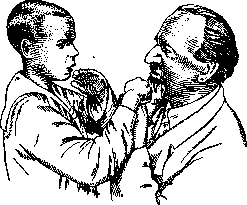
Figure 1. Assistance of touch in placing the sound s.
In Germany, in some northern countries, and in the U.S.S.R., even before the war, it was possible to provide schooling for 100% of deaf-mutes; followed by Western countries (England, France, Austria), where at present a law has been passed on universal compulsory education for deaf-mutes. The modern Soviet school for deaf-mutes aims to integrate the deaf-mute into society of hearing people by teaching them articulate speech, literacy, and all subjects taught in the unified Soviet labor school of the first stage, to develop in them a Marxist worldview, skills of collectivism, and class consciousness, and to prepare them, through vocational training, for an independent working life. The curriculum for deaf-mute education is based on the programs of the State Scientific Council, mandatory for all first-stage schools and adapted by a special methodological commission at the Narkompros to the specific features of deaf-mute education. In view of these peculiarities, an 8-year period has been established as the minimum for educating deaf-mutes in all countries. Deprived of hearing, this chief analyzer for perceiving the speech of the environment and for controlling one's own speech, the deaf-mute
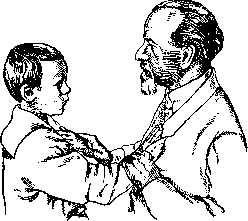
Figure 2. Placement of the sound m through touch of vibration of the chest.
must use other paths: with vision he captures the movements of speech organs; with touch he performs quantitative, baric, and thermal differentiation of the expiratory stream (for plosive and fricative consonants); and with touch he also confirms and measures the presence and degree of intensity of vibrations of the vocal cords (when pronouncing vowels and so-called voiced consonant sounds; see figures 1, 2, and 3). Control of the correctness of one's own pronunciation is carried out by the same vision (through a mirror; see figure 4), by touch of one's own larynx, chest, cheeks, etc., and in addition by so-called kinesthetic speech sensations. However, this replacement of hearing with vision, touch, and kinesthetic sensations cannot be considered a full equivalent of hearing: vision can only perceive a small part of those organs that participate in the formation of phonemes; touch, which only detects the results of the action of organs hidden from the eye, gives very indefinite, rough impressions; similarly, kinesthetic sensations, which are completely subjective and not subject to quantitative or qualitative measurement, cannot serve as an exact regulator of speech movements. Under such conditions, it is understandable that the speech of deaf-mutes more or less differs from the speech of hearing people, primarily in the lack of modulation, and in addition, more or less to a significant extent, by small and large defects in vowels, consonants, and sound combinations. It is also understandable that a stable correct speech reflex can be achieved only under the condition of long exercises under the control of the teacher's ear—a teacher of the deaf. If to this is added the difficulty of perceiving speech through vision ('lip reading') due to the fact that many sounds have the same visual image and some are barely visible because they are pronounced deep in the oral cavity, then it becomes clear why it takes an 8-year period in the school for the deaf to work through the programs of the first-stage schools, which are designed for 4 years. Until the last 10-15 years, the most common approach to teaching oral speech to deaf-mutes was the so-called 'sound method'. It consists in that each sound is first taught separately to the deaf-mute child; then, when more or less correct pronunciation is achieved, the new sound is combined with already mastered sounds (vowels and consonants) into syllables; syllables form words, and words form phrases. In this way, the entire alphabet is covered in phonetic sequence, and at the end of the so-called articulation course, the child can pronounce any sound of the native language, mastering during this time up to 300 words related to the child's environment, and a small number of short phrases from the words covered. The child also reads these words and phrases from lips. Recently, the sound method has increasingly given way to the so-called 'whole word method', which is based not on individual sounds but on the sound complex—the word. - Understanding children's books and (later) popular literature, newspapers and magazines presents enormous difficulties for deaf-mutes with their poor and inflexible speech baggage; therefore, teachers of the deaf are concerned with publishing, so to speak, intermediate literature specially created and adapted to the understanding of deaf-mutes of different speech ages with the aim of gradually leading them to an understanding of books for normal people. Unfortunately, our literature is still extremely
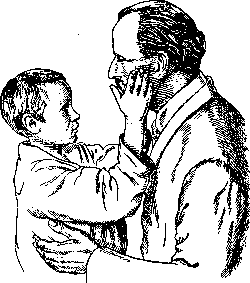
Figure 3. Assistance of touch of vibration of the cheeks in placing the sound m.
poor in special guides on deaf education and, especially, in special textbooks, reading books, etc. Physical education in the broad sense of the word and gymnastics in particular are of no less importance for deaf-mutes. Special periods for physical education should be allocated, aiming to correct certain physical deficiencies that are consequences of deaf-mutism, such as weak development of the respiratory apparatus, heavy, arrhythmic, shuffling gait, sometimes (in meningitis patients) a staggering gait, clumsy movements, etc. Morning exercises and rhythmic gymnastics should be mandatory for every institution for deaf-mutes. Deaf-mutes love physical exercises and are enthusiastic about sports; often they win over teams of hearing people. - Fine arts are also intensively cultivated in institutions for deaf-mutes, because graphic literacy is needed by a deaf-mute to a greater extent than by a hearing person, as an addition to their meager speech. Among the fine arts in institutions for deaf-mutes, cinema occupies first place as the most accessible form of entertainment for deaf-mutes and as a visual aid. Excursions, as a means of visual instruction, are given a prominent place in the school for deaf-mutes. In the Soviet school for deaf-mutes, from junior to senior groups, both in class and especially in extracurricular time, great attention is paid to developing organizational and collectivist skills. Political education is carried out, in addition to working through corresponding comprehensive topics of the curriculum and political campaigns, by organizing detachments of Oktyabrata, Pioneers, and Komsomol cells. In some institutions, almost all children are involved in children's and youth communist movements. Socially useful work Figure 4. Hearing exercises before a mirror according to the Bezold-Kreuss method. is performed by children of all ages, mainly within the walls of their institution, where children are assigned a significant share of self-service, however with observance of a certain age dosage established by the physician of the OZDet, and with such calculation that educational and vocational-technical classes do not suffer from duty assignments. Since deaf-mutes include various categories of people suffering from defects of hearing and speech, in institutions for deaf-mute children one can encounter the most diverse types not only in the degree of deafness and muteness, but also
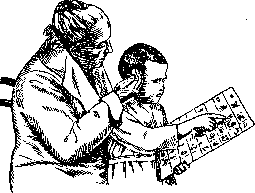
Figure 5. Exercise of residual hearing in a deafened child.
according to the degree of mental giftedness, as well as by behavior (difficult-to-educate, psychopaths, etc.). In some places at present, some differentiation has already been made within institutions or territorial separation of different types of children. Thus, in Moscow, the hard-of-hearing have been separated into a special school for the hard-of-hearing since 1919, where 60 people are currently being taught; the late-deafened, due to the lack of a separate building, for now form a special department within the first institute, opened in 1918 and having 4 groups with 44 pupils; deaf-mute imbeciles have been placed in the III institute since 1920, designed for 90 people (in the settlement of Pererva near Moscow); in Leningrad, an agricultural colony has been organized for mentally retarded deaf-mutes. Such differentiation of children makes it possible to a greater extent to take into account the individual characteristics of each type, to develop a specific program for each type, and to achieve the greatest success with normally gifted children. Among those placed in institutions for the deaf-mute, the absolutely deaf account for no more than 25%; attempts to develop the remnants or rudiments of hearing and use them to improve oral speech often gave positive results. Since ancient times, deaf educators and otologists interested in the problem of Deaf-Mutism have undertaken hearing exercises through various devices and speech (see Figure 5). A particularly strong agitation in favor of introducing hearing exercises into the curriculum of schools for the deaf-mute was raised in the 1890s by Urbančič, as a result of which in many schools children with remnants of hearing were separated into special hearing classes. However, since the results achieved by this measure did not meet the expectations of deaf educators, at the beginning of the 20th century, the differentiation of children by hearing was replaced by the separation of children by mental abilities. The method of Urbančič was replaced by the method of Bezold, developed for schools for the deaf-mute by the deaf educator Kreus. The distinctive feature of this method is that instead of exercises in hearing of individual sounds and meaningless sound combinations, after preliminary exercises on vowels, hearing attention is developed immediately on words and phrases, and hearing sensations are associated with corresponding visual and tactile sensations. Hearing exercises in the deaf-mute with the help of devices (e.g., Skritsky's apparatus) deserve attention, but at present are still in the stage of unfinished experiments. It is also very important and necessary that an otologist be attached to each school for the deaf-mute, whose duties should include, in addition to observing the hearing of children and guiding the development of hearing, also the treatment of pathological processes of the ears, nose, and throat, which occur in a very large number of pupils in schools for the deaf-mute. An important condition for the successful teaching of the deaf-mute to speak is also the time to begin pronunciation and lip-reading lessons. Practice has shown that the earlier a deaf child is taught to speak, the more natural his voice and pronunciation will be. Therefore, from the last quarter of the 19th century, first preparatory schools for children aged 5-6 years began to appear, and then kindergartens-externats and boarding schools, where children are accepted from the age of 3. In Russia, the first such kindergarten was established in 1900 in Moscow by N. A. Ray. The idea of teaching the deaf-mute to speak is not new. Already in the 16th century, the Spanish monk Pedro Ponce (1508-84) taught deaf-mute children from noble families to speak and write. He himself did not leave literary traces of his work, which caused general admiration among his contemporaries. But his experience was used by the Spaniard Pablo Bonet, who in 1620 published the first guide on applied phonetics and teaching the deaf-mute to speak—"Simplification of Letters and the Art of Teaching the Mute to Speak." However, it was only at the end of the 18th century that the first special mass institutions for the deaf-mute appeared. Almost simultaneously, boarding schools were opened in Paris (1770) and in Leipzig (1778). The founder of the Leipzig school, a practical self-taught autodidact Samuel Heinicke (1727-90) adhered to the method of Ponce and Bonet and substantiated it scientifically, for the first time pointing to the role of kinesthetic speech representations in the process of teaching the deaf-mute to speak. On the other hand, the French abbés de l'Épée (de l'Épée, 1717-89) and Sicard (1742-1822), applying to the individual characteristics of the thinking of the deaf-mute (their mimetic speech), created a whole system of complex "methodical signs" that was philologically and philosophically substantiated, and thereby isolated the deaf-mute from the rest of society. True, they associated their signs with writing, but oral speech was in the background. Since then, thanks to the propaganda of the "German" and "French" methods, the number of institutions for the deaf-mute grew in all countries, and only in 1881 at the international congress of deaf educators in Milan was the superiority of the oral (aural) method over the mimetic and dactylological proclaimed. At present, the oral method is conducted throughout the world, with very rare exceptions, gradually improving thanks to close contact with related sciences: reflexology, experimental phonetics, child psychology, and philology. The idea of teaching the deaf-mute penetrated to Russia from France in the early 19th century, and in the first Russian institutions for the deaf-mute, only the mimetic, dactylological, and written method was applied. The first school for the deaf-mute was founded in 1806 in Pavlovsk and moved to St. Petersburg in 1810. The work of teaching the deaf-mute in Russia developed slowly, depending entirely on charity until 1917, except for the Warsaw Institute for the Deaf-Mute and Blind, which was under the jurisdiction of the Ministry of National Education. The oral method began to be conducted in Russian schools only in the 1880s under the influence of Germany (especially the school of Fatter in Frankfurt am Main), to which a number of Russian teachers for the deaf-mute were sent. A significant shift in expanding the network of schools for the deaf-mute was made by the "All-Russian Guardianship of the Deaf-Mute" (1898). But the work of teaching the deaf-mute was placed on a solid footing only in 1917, when the Soviet government recognized the care for the deaf-mute as the duty of the state. A series of decrees of the VTsIK, SNK, and NKP issued in recent years serves as proof of the unflagging attention of the authorities to the needs of the deaf-mute; the culmination in this respect is the inclusion of the deaf-mute in the prospective state plan for universal compulsory education. Before the revolution, the work of preschool education for the deaf-mute in Russia developed slowly, and only under Soviet power did the number of kindergartens for the deaf-mute begin to grow quite rapidly. At present in Moscow there are 4 kindergarten-boarding schools: 1-for preschoolers (up to 4 years old) for 25 people and 3-for preschoolers (5 and 6 years old) for 40 people each; in addition, there are 3 private kindergartens-externats. In Leningrad, there are 2 kindergartens at the oto-phono-technical and regional institutes, each for 60 children aged three years and older. In the provinces, the work of preschool education is still poorly developed. Of the total number of deaf-mute preschoolers—approximately 12,500 people (15% of the total number of deaf-mute)—up to 300 children (about 2½%) are educated in special preschool institutions. In addition to the above-mentioned benefits of kindergartens for speech development, another very important moment for the prevention of deaf-mutism should be pointed out, to which S. S. Preobrazhensky drew attention, noting that in a significant number of preschoolers, with timely medical help, improvement of hearing can be achieved. The Russian school for the deaf-mute has long included in its curriculum the development of professional-technical skills. For this purpose, workshops are available at each school for the deaf-mute, where from the age of 13 children are taught the techniques of the most accessible crafts for the deaf-mute. In essence, the number of professions in which the presence of hearing is an indispensable condition is not so great; compared to the blind, the deaf-mute are much less limited in the choice of profession. The most popular types of work among the deaf-mute are the following: printing (typesetting and printing), bookbinding, cardboard work, carpentry, joinery, locksmithing, tailoring, shoemaking, baking, white sewing, women's tailoring, knitting, millinery, etc. Of the more intellectual and artistic professions, the deaf-mute are engaged in typing, drafting, textile design, painting of signs, retouching, dental technology, photography, etc. Each school, in organizing its workshops, orients itself to the prevailing demand for labor in the given locality. The target setting of the workshops in schools for the deaf-mute is on semi-skilled workers or on artisans. It is very desirable and useful to bring deaf children together with hearing children in games, walks, Pioneer activities, etc. As for the joint education of both sexes, it has always been conducted in almost all Russian institutions for the deaf-mute, both small and larger.
By 16-18 years of age, a deaf-mute, having acquired to a greater or lesser extent the skills of oral speech, lip-reading, literacy, and some trade, is released from school and enters independent life: into production, into state, public, or private enterprises. Due to common prejudices about the character of deaf-mutes and due to difficulties in communicating with them, it is not easy for them to find employment. The All-Russian Association of the Deaf-Mute (VOG) and its provincial departments provide great assistance in the employment of deaf-mutes in the RSFSR by organizing production artels for deaf-mutes. For older children and adolescents (11-14 years), in recent times, special schools have been established with a reduced general education program designed for 4-5 years, with a predominant emphasis on vocational training. Work on eliminating illiteracy and on political education among adult deaf-mutes is now beginning to unfold: a special primer is published for teaching adult deaf-mutes written and dactylic speech (for oral speech in an adult deaf-mute, the speech organs have lost the necessary flexibility), literacy points, clubs, libraries, etc. are being organized. - One cannot fail to mention another category of people suffering from hearing defects - those who have lost their hearing completely or partially after already being adults engaged in a specific profession. Most of these people, due to the onset or impending deafness, must leave their former occupations and choose a new profession. This circumstance, as well as the difficulty in communicating with surrounding society, causes the strongest psychological trauma - up to thoughts of suicide. Such persons should be recommended to learn lip-reading. According to Bogdanov-Berezovsky, 'one should begin learning lip-reading not when hearing has already been lost, but when it has just begun to decline. We must apply lip-reading in all patients when we are convinced that by medical measures we cannot bring hearing to normal, whether it is a question of a completely deaf person or one who has lost only a negligible part of the auditory field.' In recent years, both abroad, especially in America, and in our country, courses in lip-reading, circles, and clubs for the deafened and hard of hearing have been organized, to which all suffering from hearing impairment should be directed. - If in the previous section it was only about deaf-mutes completing only the first stage of school, this does not mean that secondary and higher education is inaccessible to deaf-mutes. The whole series of deaf-mutes who have been awarded academic degrees, the existence of a special university for the deaf-mute in America, and of higher-type schools in Germany and in the USSR serve as a convincing proof that under favorable conditions (sufficient duration of study, a large number of experienced teachers, etc.) a normally gifted deaf-mute can reach the highest stages of intellectual development. The same is evidenced by cases of deaf-mutes being transferred to normal first and second stage schools and technical schools - cases that have occurred not only in the West and America but also in the RSFSR. Finally, the whole series of newspapers and journals published by deaf-mutes leaves no doubt about the mental abilities of deaf-mutes. For the training of workers with deaf-mutes (surdopedagogues), at the present time there are special sections on surdopedagogy and logopedics at the defectology departments of the pedagogical faculties of the 2nd University in Moscow and the Herzen Institute in Leningrad. Students receive their practical training in school and preschool institutions for deaf-mutes in Moscow and Leningrad, attached to the aforementioned higher educational institutions. To improve the qualifications of teachers who received their training in the course of work, the People's Commissariat of Education annually arranges retraining courses. List of cities in the USSR where institutions for deaf-mutes are located.-Moscow [I Institute for the Deaf-Mute, II Institute for the Deaf-Mute, III Institute for the Deaf-Mute (Pererva), 12 district groups for day students, I Children's Home for pre-schoolers, II, III and IV Children's Homes for preschoolers, county school for day students (Orekhovo-Zuevo), school for the hard of hearing]; Leningrad (Oto-phonic institute with kindergarten and colony, I Leningrad Regional Institute with kindergarten, I Railway boarding school); Arkhangelsk; Astrakhan; Baku; Vladikavkaz; Vladivostok; Vyazniki (Vladimir province); Vyatka; Dorogobuzh (Smolensk province); Dnepropetrovsk-USSR; Zaporozhye-USSR; Irkutsk; Ishim; Kazan; Kaluga; Kiev (Ukrainian boarding school, school for day students, Jewish boarding school); Kostroma; Krasnodar; Karachev (Bryansk province); Kursk; Krasnoyarsk; Kobelyaki-USSR; Lubny-USSR; Mstislavl-BSSR; Marxstadt-ASSR of Germans of the Volga region; Mariupol; Novocherkassk; Nizhny Novgorod; Odessa; Orel; Orenburg; Perm; Penza; Pskov; Rostov-on-Don; Ryazan; Samara; Saratov; Simferopol; Stavropol; Stalingrad; Sverdlovsk; Solvychegodsk; Sumy-USSR; Tambov; Tashkent; Tver; Tiflis; Tige-USSR; Tomsk; Tula; Ustye (Vologda); Ufa; Ulyanovsk; Kharkov (boarding school, school for day students); Harbin; Chelyabinsk; Chita; Cherkasy-USSR; Shuya; Yaroslavl.
F. Pay. G. from a medico-legal point of view. Deaf-mutes are divided into two categories: some represent an example of a congenital anatomical defect of the organ of hearing, others have a general brain lesion as their basis. According to criminal laws, deaf-mutes from birth or those who have lost hearing and speech in early childhood, as having received no concept of duties and law, are not subject to punishment for crimes and offenses, but in case of murder, an attempt on murder, or arson, deaf-mutes, along with the dangerously mentally ill, are subject to strict and unrelaxed supervision. Of all congenital defects of the senses, deaf-mutism has the greatest significance due to the deprivation of important paths for receiving elementary education, concepts and judgments that restrain sensory and egoistic impulses. If deaf-mutes have only an anatomical change in the hearing apparatus with almost normal mental activity, then such patients, with appropriate training and education, may not only differ little in their psyche from a normal person, but even surpass the average level and exhibit traits of talent (e.g. Ellen Key). In G., depending on congenital defects of the brain or an acquired pathological condition of it, such patients cannot receive education close to normal, but only some training and must be equated with the insane, mentally incompetent. During examination, it is first necessary to establish the degree of understanding of deaf-mutes, for which all their previous behavior, the education they have received, the possibility of combination with congenital or acquired feeble-mindedness or other psychological anomalies should be taken into account, and then - the degree of development in them of the ability to control themselves. The help of a special interpreter is necessary in this regard. Deaf-mutes until they reach majority are under guardianship. Those who have reached majority, if after examination they are found capable of expressing their thoughts and will, may be allowed to manage and dispose of their property on the same terms as other adults; however, if there are any doubts and fears in this regard ; guardianship or guardianship is established over them, as over minors.
Related articles
Mentioned in
Cite this page
“Deaf-Mutism.” Soviet Medical Encyclopedia. English translation of Bolshaya Meditsinskaya Entsiklopediya, 1st ed. (Moscow, 1928–1936), ed. N. A. Semashko. https://sovietmedicalencyclopedia.pages.dev/article/deaf-mutism/