Dermatoses
Historical document, translated for reference. It reflects medical knowledge of the 1920s–30s and is not medical advice.
Summary
Dermatoses are various diseases of the skin and its appendages, both inflammatory and neoplastic, caused by external or internal factors. Professional dermatoses result from occupational hazards affecting workers in various industries.
Encyclopedia article (1928–1936)
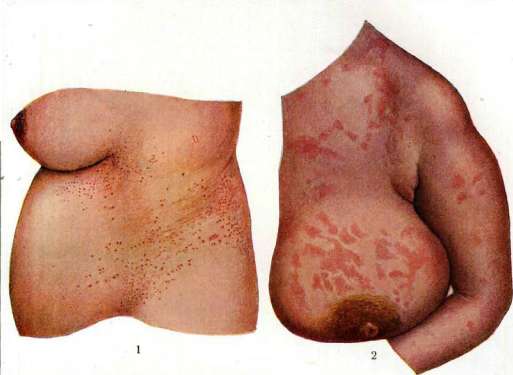
Dermatoses. Contents: I. Professional D................703 II. Dermatoses of pregnancy..............712 III. Menstrual dermatoses..............715 IV. Dysmenorrheal dermatoses..............718 Dermatoses (synonyms: rashes, eruptions, exanthems) is the name given to the most diverse diseases of the skin and its appendages (hair, nails, etc.) of both inflammatory and neoplastic character, the latter regardless of whether they are congenital (birthmarks, warts, etc.) or acquired, occurring at a later age (fibroma, cancer, sarcoma, etc.). Dermatoses are caused by both local, purely external causes and the most diverse internal factors and can either represent completely independent diseases or (which happens less frequently) be merely one of the symptoms (usually far from the most important) of some general constitutional or infectious disease (such as diabetic and gouty rashes, measles and scarlet fevers erythema, etc.). Dermatoses are also often accompanied by lesions of visible mucous membranes, called enanthemas in contrast to exanthems. I. Professional dermatoses. Definition. Professional dermatoses are various skin diseases, the producing or predisposing cause of which are harmful factors firmly associated for a given time either with the work process itself, or with the nature of the material being processed, or with the physical environment and sanitary working conditions surrounding the worker (S. M. Bogoslovsky). Only with such a broad interpretation of professional dermatoses will this group of diseases include not only 'specific' professional diseases, in which the influence of harmful agents is obvious, but also 'non-specific' ones, where professional etiological factors are not clearly defined, where they still need to be identified and proven. History. The harmfulness of individual factors associated with various occupations of different worker groups was occasionally noted by physicians of various eras. Thus, Hippocrates described callous ulcers on the buttocks from prolonged horseback riding, Paracelsus mentioned 'scabs' and 'pustules' in metal workers, Agricola among the skin diseases of miners indicated an ulcer 'reaching the bones'. Ramazzini (1700) gave not only an exhaustive description of the then known professional diseases but also drew physicians' attention to the most important branch of medicine - prevention. In 1775, Pott wrote his famous treatise on 'chimney-sweeper's cancer'. When at the end of the 18th century the foundations of scientific dermatology were created, representatives of the English and French schools did not forget to indicate the connection between skin diseases and various professional occupations. Villan gives descriptions of 'baker's scabies', 'shoemaker's psoriasis', 'laundress's eczema' and others. Alibert spoke of 'crusted ringworm' as a result of the influence of sun rays, of furunculosis in fishermen from wet clothing. Tack in his work (1831) draws attention to working and living conditions. Among German authors in the early 19th century, Frank in his work 'Doctrine of Skin Diseases' mentions a number of professions and occupations affecting skin disease in workers. In the history of Russian professional dermatology, the first works must be sought in studies on the health of workers, which appeared in the 1880s and belonged to the founders of the professional-hygienic direction among Russian physicians. Among American authors, only in 1896 did J. White first point out the etiological connection of 'crafts' with skin inflammation 'from poisons'. In the last decade, two fundamental works on professional dermatoses have been published: the first, written by P. White, the second - edited by M. Oppenheim, J. Rille and K. Ullman - a collective work by a number of authors. Intensive development of professional dermatology in the USSR was achieved under Soviet power, which was expressed in the creation of scientific institutes and clinics for the study of professional pathology and harmful factors, in the publication of scientific works of these institutes and a whole series of journals with articles devoted to solving this complex problem. Etiology and pathogenesis. A characteristic feature of professional dermatoses is the direct or indirect dependence of the pathological process on external causes. These external causes act on the skin more often from the outside than from the inside. Normal endurance and adaptive capacity of the skin protect most people from developing professional dermatoses. The distribution of people by professions occurs according to certain laws (e.g., a person with ichthyosis will readily go to work as a bathhouse attendant, where he will feel well, and will not go to 'dusty' professions). A professional dermatosis develops only when the intensity or duration of the harmful agent exceeds the physiological limit of endurance. Damage caused by a certain industrial factor, plus the reaction to this damage, create one or another pathological process. The diversity in the nature of the reaction depends, therefore, on the relationship between profession and constitution. In the origin of the pathological process, Blaschko sees not only the presence of increased skin sensitivity to one or another irritant, but also a pathological form of reaction. Predisposing causes for professional dermatoses may be hidden (according to P. White) in defects in the 'structure' and 'function' of the skin. It has been noted that persons with 'hairiness' are more than others susceptible to skin disease from 'cutting mixtures and oils'. Gardiner observed that three quarters of his patients suffering from various dermatitis had in their history one or another skin disease and almost two thirds objectively gave pathological changes mainly in the form of seborrhea and hyperhidrosis. The French dermatological school in the origin of a number of professional skin diseases (e.g., eczema, toxicoderma) assigns a greater role to the influence of constitution and general body disorders than the German one. When studying groups of workers, the dermatologist must take into account the complex interaction of social and professional factors (in particular, professional history on the one hand and constitutional factors on the other). To isolate the harmful professional factor from the above chain, to prove its 'guilt', to take measures for prevention and protection of workers' health - the immediate task of professional dermatology. When studying professional morbidity, in particular professional dermatoses, it is necessary to use three basic methods: 1) sanitary-statistical, 2) clinical and 3) experimental-laboratory. 'Prof.', 'Rhs, U Pmrigo gestation Is, Figure % Urticaria post partum (atnularis, g\gante&)* Fig. 3. Dermatitis venenata'
II. Dermatoses of pregnancy. Definition. Dermatoses of pregnancy are skin diseases that develop during pregnancy and disappear after childbirth. The most characteristic of them are: 1) prurigo of pregnancy (prurigo gestationis), 2) herpes gestationis, 3) toxic erythema of pregnancy (erythema toxicum gestationis), 4) urticaria of pregnancy (urticaria gestationis), 5) impetigo herpetiformis. Prurigo of pregnancy (prurigo gestationis). This disease, described by P. Unna in 1901, is characterized by the appearance of small, intensely itchy papules, mainly on the abdomen and extremities. The disease begins in the 3rd-4th month of pregnancy and usually ends with childbirth. The etiology is unclear. Treatment: symptomatic. Herpes gestationis. This disease, described by P. Unna in 1901, is characterized by the appearance of small, intensely itchy papules, mainly on the abdomen and extremities. The disease begins in the 3rd-4th month of pregnancy and usually ends with childbirth. The etiology is unclear. Treatment: symptomatic. Herpes gestationis. This disease, described by K. Duhring in 1872, is characterized by the appearance of grouped vesicles on an erythematous base, similar to herpes zoster. The disease begins in the 4th-5th month of pregnancy and ends with childbirth. The etiology is unclear. Treatment: symptomatic. Toxic erythema of pregnancy (erythema toxicum gestationis). This disease, described by L. T. Darier in 1904, is characterized by the appearance of erythematous spots and papules, mainly on the abdomen and extremities. The disease begins in the 3rd-4th month of pregnancy and ends with childbirth. The etiology is unclear. Treatment: symptomatic. Urticaria of pregnancy (urticaria gestationis). This disease is characterized by the appearance of urticarial elements, mainly on the abdomen and extremities. The disease begins in the 3rd-4th month of pregnancy and ends with childbirth. The etiology is unclear. Treatment: symptomatic. Impetigo herpetiformis. This disease, described by H. Hebra in 1872, is characterized by the appearance of grouped vesicles on an erythematous base, similar to impetigo. The disease begins in the 4th-5th month of pregnancy and ends with childbirth. The etiology is unclear. Treatment: symptomatic.
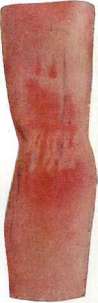
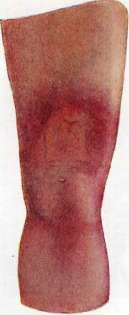
from nigrosin on the left elbow bend. Figure -I. Toxicoderma and iodine on the popliteal region. Idiosyncrasy to tetrachlorobenzene in a worker with jaundice. 4th day of illness (According to Pashchuk.) To the axioms of hygiene, according to Vigdorchik's terminology, are entirely applicable to the pathogenesis of prof. D. Thus, 1) "the worse the working conditions, the more the body of workers is destroyed"; 2) "progressive deterioration of health is parallel to the length of service in this harmfulness"; 3) "the more diseased or generally weaker the body of the worker, the sharper the influence of professional harmfulness". Harmful acting moments. It is impossible to give an exhaustive list of all harmful industrial agents, especially since with the growth of industry, especially heavy and chemical, the number of new harmfulnesses is increasing; therefore it is more convenient to distribute them, following the etiological classification, into three groups (according to Foerster): 1) physical, 2) chemical, and 3) infectious agents. The first group includes agents: a) mechanical, b) thermal, and c) actinic. The second - elements of both organic and inorganic chemistry. The third - infections of a) plant and b) animal origin. Mechanical agents. Injuries to the skin from mechanical agents are characteristic of the so-called "rough" professions and mostly belong to the field of surgery (punctured wounds, cuts, tears, etc.). The harmful effect of these agents is also manifested when the natural resistance of the skin is overcome. Here, in addition to the epidermis and dermis with their rhombic structure, allowing stretching and contraction in vertical and horizontal directions, the hypodermis also significantly helps, serving as a soft padding for the deeper parts. A noticeable role should be assigned to the fibrous and elastic tissues in protection from mechanical influences. Mechanical influences acting on the skin differ greatly: from slight friction to strong stretching. The result of more significant, uniform and prolonged effects of mechanical agents can be callus formations. The epidermis usually reacts with increased growth and especially thickening and hardening of the horny layer, i.e., phenomena of hyperkeratosis, and in other cases - "abrasions" (thinning of the epidermis) and atrophy. Along with this, the skin undergoes changes depending on one or another damage of a sudden nature. The latter includes contusion and the associated tissue crushing. Often, damage to the skin due to violation of the integrity of the epidermis leads to various secondary purulent-inflammatory processes (abscesses, phlegmon, etc.). Thermal agents. Injuries from thermal agents are the result of direct or indirect exposure to the skin of high and low temperatures and their fluctuations. Injuries to the skin from the action of heat are characteristic of workers in the so-called "hot" shops, from cold - outdoor workers. Of all the layers of the skin, the epidermis and hypodermis conduct heat worst, the derma somewhat better. Dry skin conducts heat worse than moist skin. The skin's fatty lubricant also protects from temperature harmfulnesses. With unlimited heat loss, the basis of body protection lies in thermoregulation - physical and chemical. Heat and cold rarely act in isolation; usually other influences are added to them - air movement (wind), humidity, dust, etc. In model sanitary-hygienic conditions, the work of workers should be carried out in a strictly established "comfort zone". Kyrle indicates that to obtain a burn of any degree on the skin, it is sufficient to expose it to the corresponding source of heat for a very short time, while for the development of frostbite, exposure to low temperature for a longer period is required. If the latter takes place, the symptom complex does not appear immediately, but only after a certain period of time (depending on the intensity of the damage). In the development of chilblains, in addition to racial characteristics, the state of the vascular and nervous apparatus plays a large role; conversely, in the development of frostbite, the center of gravity shifts exclusively to the action of low temperature. Therefore, anyone can suffer from frostbite, while chilblains - only some. For chilblains, a temperature below zero is not required at all; it can be close to the average. Youth age is especially prone to "chilblains"; girls more than boys, anemic people more than full-blooded ones, "moist" (lymphatic) - more than "dry". Social and professional conditions contribute to this no less. One can also draw a parallel between the short action of strong heat and the prolonged action of medium heat on the skin. Strong heat usually causes in everyone phenomena of burns of one degree or another, while prolonged action of medium heat causes changes only in some; e.g., out of 112 bakers who passed through the Central Institute of Prof. Diseases of the People's Commissariat of Health, "redness from fire" was observed only in three. Actinic agents cause skin changes in farmers, sailors, and other persons exposed to the action of both natural and "artificial" sun. Actinic rays predispose to skin diseases similar to "smallpox of light", pellagra, lupus erythematosus, senile keratoses; they also cause the so-called "photo-electric dermatitis" in workers of foundries, electricians, bakers. Injuries caused by X-rays and radioactive materials and observed in medical and technical personnel belong to the same category. The main protective barrier for the penetration of actinic agents into the depth of human tissue is the horny layer of the skin and the pigment melanin. An auxiliary protective barrier is the reflection of rays from the skin surface. The fatty lubricant and moistening with sweat enhance this property of the epidermis (Levitsky). Chemical agents. Lesions observed in the chemical industry differ in significant severity of clinical symptoms and occur more often than from other agents. These are usually burns, cauterizations, less often - eczemas, dermatitis (see separate table, fig. 3 and 4), even less often - new growths. The openings of sweat and sebaceous glands are the usual paths, and through them a number of chemical substances enter the body: aniline, trinitrotoluene, iodine, mercury, etc. P. White gave these openings and grooves of the skin a vivid name "gripping points". A place where cauterizing and irritating chemical substances and particles of foreign bodies can also be retained is the space under the free edges of the nails, the nail grooves (Heller) and hairs. With chemical, as well as other harmfulnesses, one must take into account: 1) the peculiarities of the irritating substance and 2) the peculiarities of the organism. The degree of damage from chemical substances will depend on the intensity of the agent's action, the strength of its solution, the time of its application, the size of the application surface and the peculiarities of the molecular state (Shapiro). In addition to individual properties, the state of the skin before damage (moist or dry, fatty or not) is of great importance. Thus, in the origin of "nickel eczema", a large role is played by degreasing of the skin; with phenomena of increased sweating, hyperkeratosis develops more intensely. Many organic and almost all inorganic chemical products can cause various changes on the skin: maceration, tanning, cauterization, peeling and due to removal of the fatty lubricant - dryness, which (in turn) in places of bending leads to the formation of cracks and promotes the penetration of various pyogenic agents. The epidermis is especially sensitive to alkalis. Therefore, their action is deeper than that of other chemical substances. On average, damage from acids is three times weaker than from alkalis. Horn cells from the action of weak alkalis swell, and from stronger ones - dissolve; therefore, in burns, the action of alkalis is more intense, deep and diffuse than that of acids. The scab resulting from alkalis is soft and smeary. Necrosis has the so-called colliquative character, in contrast to coagulative in acids. The scab in acids is dry and brittle. When acting on the whole body, alkalis increase, and acids decrease the normal alkalinity of the blood. Alkalis, especially soda and potash, when hands are frequently immersed in a strong solution, often cause changes in the nail plates. In the chemical industry, well-equipped with trained personnel, accidents (sudden injuries) are observed very rarely, but they are almost always severe and end either with disability with loss of working capacity to one degree or another or with death. Special mention is deserved by small cauterizations of the skin in the form of ulcers, caused by the most diverse substances, usually on the previously thickened epidermis. The French gave these ulcers because of their similarity to a bird's eye the name "nightingale", the Germans - "finch". Eczema and various forms of dermatitis observed in the chemical industry do not represent anything special compared to eczema and dermatitis caused by other etiological moments. Infectious agents as a cause of professional dermatoses include various representatives of animal parasites, bacteria and fungi. Of animal parasites, various species of lice, mites, worms and others are most often encountered.
Among bacteria, staphylococci occupy first place, followed by streptococci and others. Anthrax deserves special mention due to the frequency of industrial cases. Other infections include erysipeloid, 'snout-and-hoof disease' ('foot and mouth disease'), glanders, 'cowpox' (vaccina), tuberculosis, and others. Among infections of fungal origin, trichophytosis, favus, sporotrichosis, blastomycosis, actinomycosis, epidermophytosis, and others are encountered. Statistics. First of all, it must be established that there is no significant statistical material on the question in question that has complete scientific significance. The absence of an exact classification of occupational skin diseases and the controversial nature of many terms leave their mark on the final conclusions drawn from most of the figures obtained. According to the resolution of the People's Commissariat of Health and the People's Commissariat of Labor of March 1, 1924, on the mandatory registration of occupational diseases, the following are to be recorded along with occupational poisonings: 1) occupational infections—anthrax and glanders, 2) occupational skin diseases—eczema, ulcers, burns, etc., caused by work with products of coal tar and petroleum distillation, turpentine, chromium, chlorine, and other chemical compounds, and other diseases. Since this law was recently enacted, the corresponding occupational morbidity has not yet been fully accounted for, and only some data can be provided. Thus, in enterprises of 30 governorates within the RSFSR (excluding the North-Western Region, Moscow, the North Caucasus Territory, and the Urals), observed (for 1924-25) among occupational D. 23 cases of skin ulcers on the hands from the action of sulfuric acid and 25 cases of dermatitis on the hands from the use of ammonia, sodium sulfide, calcium chloride, etc.; 24 cases of dermatitis of the hands and face from the use of poorly purified turpentine; 17 cases of anthrax in the leather production and 1 case of glanders at a stud farm. According to the statistics of Bogoslovsky (1928), concerning 115,349 industrial workers and employees of the city of Moscow examined in the so-called 'dispensaryization' system, among skin diseases diagnosed during examination, the majority are eczema and furunculosis; 427 cases of the first and 295 of the second were recorded. According to the latest summary (for 1926) of occupational D. in English industry, compiled by Bridge and covering more than 267,000 enterprises, the following were noted: occupational dermatitis—429 cases, anthrax—38 cases, ulcers from chromium—55 cases; 'distillation' of coal and petroleum products gave 187 cases of malignant ulcers, from arsenic—2 cases of skin cancer. Gardner observed in Edinburgh for 1919 1,194 skin diseases, of which 128 were dermatitis; of the latter, 87, i.e., 68%, were of occupational origin. He also provides valuable data collected by him over 10 years (1912-22) on the localization of 621 occupational dermatitis. According to this statistics, the most frequently affected are the uncovered parts of the body and areas subjected to irritation. First place is occupied by the upper extremities—59.5% (the hand and wrist alone—39.4%), second—the face and neck—23.5%, third—the lower extremities—9.8% (the calf alone—3.5%). The percentage of occupational D. among all skin diseases varies from 2 in Fordyce [10% in Lane, 16% in Hoyaca (Nowles), 20% in Oppenheim] to 25% in P. White. Herxheimer in 1912 lists 74 industries in Germany in which there are 'conditions' for the development of eczema; J. White for 1916 reports on 120 harmful industries in America. Ferster (America, 1928) considers J. White's 120 'industries' to be below the actual number, since the number of new enterprises is growing, and with them the number of 'harmful factors' is also growing. Pathological anatomy. The almost exclusively external origin of occupational D. also leaves its mark on the patho-anatomical picture: the epidermis is more often affected than other parts of the skin. Nails (Geller) and sebaceous glands (Hayhurst) are often involved in the process. Except for the typical localization for most occupational D., the presence of so-called stigmata, the patho-anatomical picture of occupational D. coincides with that of a homogeneous non-occupational disease. Occupational signs (so-called stigmata). The term 'occupational signs' is difficult to define in a broad sense, because first, some occupational signs develop in all persons without exception performing the same type of work, while others do not develop in all, requiring for their development a certain predisposition of the body; second, some occupational signs disappear with the cessation of occupational work, while others remain for a long time, and third, some occupational signs can leave persistent changes in tissues affecting work capacity. In a restrictive interpretation, this term means 'only those changes in the skin that develop as a result of prolonged work in all workers of a given profession with a certain regularity and possibly with varying intensity'. In relation to the skin, these signs may affect either its superficial layers or deep layers, involve one or another horny (hair, nails) or glandular (sebaceous, sweat glands) appendages. Oppenheim divides all signs into 10 sections: 1) colorations, 2) deposits, 3) cracks and abrasions, 4) changes in nails, 5) scars, 6) inclusions and tattoos, 7) pigmentations, 8) callous formations, 9) telangiectasias and 10) neoplasms of connective tissue and mucous bursae. The first six sections represent examples of classical 'occupational signs', since their origin entirely depends on the production; the last four require a predisposition of the body, i.e., they stand on the border of pathology. Dermatokoioses represent skin diseases in which the main harmful agent is the dust factor and which are most often encountered in 'dusty' professions. Some, like P. White, use this term in a restrictive sense, designating only skin diseases caused by dry dust-like substances penetrating only through the skin; others, like Oliver, give an even broader interpretation, understanding under it also those skin diseases in which the agent can be in a dissolved state and penetrate not only through the skin but also through the respiratory and other routes, depositing in the skin later (argyrosis, arsenical melanosis, etc.). The consequences caused on the skin by dust are also very different; more often these are dermatitis, eczema, less often—toxicoderma, ulcers, cancer, etc. In particular, each type of production has its own 'specific' features: workers dealing with vegetable dust suffer from dermatitis, eczema; from lime—burns, ulcers; from soot—cancer, etc. Hands and neck are the favorite localization of dermatokoioses. Uncovered parts of the body are affected more often than covered ones. The dust factor is considered in any production as an additional risk for various diseases. Lichenification is the most typical clinical picture of chronic dermatokoioses. Terminology. Most terms accepted in the nomenclature of occupational D. are borrowed from general dermatology, and original ones (like 'bird's eye', 'finger phthisis', 'grain scabies', etc.) are few and little used. Among the types of occupational D., inflammatory forms are most often encountered; degenerative ones are rare, neoplasms are singular. To designate inflammatory forms, the terms 'eczema', 'dermatitis', 'toxicoderma' are most often used. In some countries, like America, England, the term 'occupational eczema' has almost been abandoned in favor of using the term 'occupational dermatitis'. Blashko for designating acute inflammatory forms uses the term 'dermatitis', leaving the name 'eczema' only for subacute and chronic forms. The presence of common signs—redness, swelling, and scaling—brings together all these three inflammatory dermatoses (i.e., eczema, dermatitis, and toxicoderma). Occupational dermatitis flare up suddenly and immediately in a significant number of workers. Occupational eczema does not develop suddenly but insidiously, occurring more often not in groups of workers and not at the same time. Toxicoderma—inflammation of the skin, more often diffuse than limited; the extent of the lesion depends less on the action of the harmful agent than on the allergic state of the body, more often hereditary than acquired. The irritant acts in 'homeopathic' doses; the route is more often endogenous, i.e., through the blood. The process disappears at different times after the removal of the irritant depending on the degree of irritation produced. Toxicoderma is extremely rare, can flare up suddenly. For dermatologists, it is of particular interest to establish the signs that distinguish occupational eczema from idiopathic eczema. A big drawback for objective interpretation is usually the complete unfamiliarity of the examining physician with the skin of the worker at the time of the latter's entry into production. Meanwhile, it is very important to establish in each individual case the absence of eczema in the patient before the last illness. To what extent occupational eczema in most cases etiologically stands in direct dependence on external agents, usually known and accessible for study, to that extent idiopathic eczema does not provide such reference points and etiologically represents a kind of 'equation with many unknowns' (for more details—see Dermatitis).
When faced with a patient suffering from idiopathic eczema before entering a workplace, it is difficult, and sometimes entirely impossible, to determine whether this is an exacerbation of a previous process or the emergence of a new one caused by specific agents, i.e., the addition of professional eczema to a pre-existing idiopathic one. The usual localization of professional eczema is the hands and face. When the hands are affected, it is usually not the palms but the backs of the hands and the palmar surface of the wrists that suffer. The hand that is more exposed to the agent suffers more and more severely. In professional eczema, the nails are often involved in the process, especially when working with alkalis. In professional eczema, professional signs are often noted, frequently accompanied by atrophic changes of the skin of a professional nature. Oppenheim draws attention to skin thickenings in professional eczemas. On the palms, such thickening leads to tylotic eczema (eczema tyloticum). The usual type of professional eczema is squamous, with dry scales. Recurrences in professional eczema usually do not occur if there is no new contact with harmful agents. In idiopathic eczema, recurrences are more frequent, prolonged in course, and unclear in origin. A duration of more than 4 weeks is considered characteristic of idiopathic eczema, while a duration of less than 4 weeks is characteristic of professional eczema. The pustular form (eczema impetiginosum) is less common in idiopathic eczema. Treatment. The most important part of the treatment of professional diseases, in particular professional D., is prevention, i.e., the elimination of the irritating cause. Where the agent has already produced its harmful effect, treatment is of course necessary in accordance with the etiological factor, i.e., professional acute and chronic infections are treated according to accepted therapy for infectious diseases, professional eczema—according to the generally accepted principle for treating idiopathic eczema. Acute professional inflammatory D. are treated according to the principle of acute D. For professional chronic D., especially industrial poisonings, resort treatment is quite appropriate (Pyatigorsk, Matesta, etc.). Degenerative forms, new growths require appropriate treatment measures: physical therapy procedures, surgical measures. For dry and cracking skin, soothing ointments or cold creams are very good, provided their use does not harm the production process itself (for example, in galvanoplasty). Internal treatment and all other types of therapy are of course indicated in the treatment of professional dermatoses. It is often quite necessary to permanently discontinue the occupation that has a harmful effect. Prevention of professional dermatoses does not represent anything specific or new compared to the basic measures for the prevention and control of professional diseases. All measures in the latter area, according to Kaplun, can be reduced to 5 main groups: 1) sanitary-technical improvement of working conditions, 2) individual prevention of workers, 3) measures of a therapeutic-organizational nature, 4) special legislation in the field of labor protection, 5) organization of supervision over working conditions and compliance with labor legislation. Since a professional disease, in particular a disease of the skin, is the result of the harmful influence of the professional environment on the body, main attention should be paid to all possible improvement of working conditions. Only the impossibility of completely eliminating these sources of harm at the present time and under the given conditions gives special importance to measures of personal prevention. It is quite understandable that maintaining bodily cleanliness and neatness in the surrounding environment is the basic rule of hygiene, and this should be striven for by all means. The use of protective gloves made of various fabrics is advisable in many cases, all the more so since the hands are the most vulnerable part during work. In some cases, protective clothing, respirators, etc. are also appropriate. It is recommended to advise men to have short hair and to shave mustaches and beards in 'dusty' and 'poisonous' industries, and for women to wear kerchiefs, headscarves, etc. P. Dermatoses of pregnancy, skin diseases observed only during pregnancy, i.e., etiologically connected only with it. This group does not include those skin lesions that偶然 occur during pregnancy, as well as chronic skin diseases observed before pregnancy. The skin, along with other important organs (liver, kidneys, heart, etc.), plays an exceptional role during pregnancy. Along with its protective function, it participates in the altered biochemical life of the pregnant woman, in the increased metabolism, in the new hormonal correlation, and, along with other organs, helps maintain the hyperfunctioning organism within physiological limits. With one or another dysfunction, with a violation of the chemical process, one or another reaction of the skin is observed, manifesting in one or another sharply outlined pathological process (of the same nature as is observed in other organs in such cases). In this respect, those authors (Scheuer and others) are quite right who say that skin disorders during pregnancy are manifestations of the same order as intractable vomiting and eclampsia. Clinical observations of recent times, favorable results with the same therapy (Ringer's solutions, Locke's solutions, N-serum of the pregnant woman, N-serum of the horse, etc.) in various toxicoses and D. fully confirm this view and allow one to say that the cause causing them is the same and that they are not local but general diseases. In addition, the alteration and impairment of some physiological functions of the skin, especially perspiratio insensibilis in pregnancy toxicoses (for example, in intractable vomiting, eclampsia), show what a significant role the skin plays in these processes, and on the other hand, what connection undoubtedly exists between D. and toxicoses in general. Repeated cases of combination of the mentioned diseases (e.g., chorea + dermatitis, purpura + eclampsia, etc.), their simultaneous course and cessation also serve as confirmation that the cause of their origin is the same. The immediate cause of D. of pregnancy is still unknown, but it must be assumed that the endocrine system and pathological fluctuations in metabolism during pregnancy must play a significant role in this regard. Recent facts speak in favor of the possibility that an altered and increased metabolism plays a significant role here, being a predisposing factor, since a number of authors have established such disorders in fat and carbohydrate metabolism as hyperglycemia and hypercholesterolemia in skin diseases without pregnancy (e.g., psoriasis, pruritus, etc.). The characteristic properties of D. of pregnancy are 1) symmetrical distribution, 2) itching, 3) insomnia, and 4) the onset of the disease only during pregnancy and its disappearance with its termination (some authors believe that especially often during pregnancy the extremities are affected and that this localization is also characteristic). The frequency of D. in general, as well as the frequency of their individual forms, cannot be established at the present time due to insufficient factual material; one can only say that they apparently occur in approximately the same percentage of cases as pregnancy toxicoses, and that some of them are observed more frequently (e.g., urticaria, pruritus). D. can arise throughout the pregnancy or appear for the first time only during childbirth or in the postpartum period. In this respect, the form of D. must also be considered and whether it appears for the first time or recurrently (previous pregnancies), as well as taking into account whether it arises primarily, independently or secondarily. According to the observations of Selitsky, D. occur equally in first-time and repeat pregnancies. For some types of D. (e.g., herpes gestationis), repetition with a new pregnancy is especially characteristic, and in this case they already arise at earlier stages of pregnancy and proceed much more severely, which gives the right (as in the case of some toxicoses) to speak of a special predisposition of some women to D., of a special lability of the skin, of its constitutional insufficiency. The clinical course of most D. is favorable. Some of them may pass without any therapy even during pregnancy (e.g., prurigo, urticaria, herpes zoster). The majority of them do not cause serious disorders, do not affect the functions of the entire organism and its individual organs, being accompanied only by a number of unpleasant (sometimes quite agonizing) sensations such as itching. Some forms, however, especially the so-called 'large D.' (according to Wechselmann's classification)—herpes gestationis and impetigo herpetiformis, besides the extent of the process and its polymorphism, are also distinguished by the property of causing deep disorders throughout the body and are accompanied by a number of more serious pathological symptoms. In impetigo herpetiformis, a significant mortality rate is already observed, especially if the disease occurs repeatedly; in severity of course, this is one of the most severe diseases of pregnancy, which can be equated to the most severe forms of eclampsia and intractable vomiting.
These two 'major D.' occur very rarely (in Russia - 1 case of impetigo herpetiformis and 2 cases of herpes gestationis).-Among individual pathological manifestations, abnormalities of skin sensitivity deserve special attention. Paresthesias are a fairly common phenomenon both in normal and pathological pregnancy; in clinical practice they have significant importance. They occur either in isolation or concurrently with other pathological symptoms (dizziness, palpitations, feeling of fatigue). Paresthesias, just like other abnormalities of sensitivity (especially hyperesthesias), are observed together with other dermatoses and toxicoderms; moreover, they often precede or accompany mild degrees of body edema, pronounced edema, and elevated blood pressure; consequently, along with other pathological symptoms, they can be included in the group of eclampsia and eclampsia precursors. In advanced stages of kidney damage, Selitsky sometimes noted more specific painful zones known in neuropathology as Geda's hyperesthetic zones (see Geda zones). Angioneuroses and vasomotor disorders are also common; it can be said that these are fairly common diseases during pregnancy; some types (urticaria factitia) occur more frequently in the first months, others (urticaria symptomatica) sub et post partum. The most common form is urticaria urticaria (see separate table, fig. 2), which sometimes takes the form of gigantea, while urticaria linearis is very rare. Among other most typical forms, pruriginous rashes are relatively common (see separate table, fig. 1); in Russia, individual cases of them have been described. The group of erythemas and exanthemas is very diverse; they are observed less frequently but apparently provide the greatest number of variants (erythema toxica multiforme, exsudativum, symmetrica universalis, nodosum, etc.), the number of which cannot yet be considered definitively established. Some forms of dermatitis are also distinctive. The rarest form here is eczema, which with rare exceptions (eczema diffusa universalis, Tibone) during pregnancy does not present any peculiarities in its course. Skin hemorrhages (both local and general) and skin neoplasms are equally rare. Changes in pigment deposition are interesting. Physiological hyperpigmentation during pregnancy, usually symmetrical arrangement of pigment, characteristic coloring of the face, white line of the abdomen, etc. have been known for a long time, but most authors do not evaluate them sufficiently, they do not attract special attention and are simply included in the rubric of so-called physiological signs of pregnancy. Recent observations show that increased pigment deposition (melanoses, melanodermias), as well as depigmentation phenomena (vitiligo, pigmentary ataxia), should be approached more deeply and considered in the light of all changes occurring in the body during pregnancy. Clinical facts indicate that increased pigmentation is often accompanied by general poisoning phenomena, that it can sometimes be observed in unusual places (e.g., in the armpits) and be associated either with typical D. (e.g., prurigo) or with toxicosis (nephropathy, eclampsia). Therapy of pregnancy dermatoses should be based mainly on the prevention of each pregnant woman. This prevention is the same as is usually carried out in relation to eclampsia and other toxicoses. When any D. occurs, general treatment should be foremost, which along with general preventive measures (rational lifestyle, hygienic conditions, proper emptying of the bowels, diet) consists of a more strict regimen (some recommend exclusively a milk diet), sometimes even bed rest, and administration of substances that help raise the general tone of the body and restore its disrupted biochemical life. For this purpose, various solutions (Ringer's, Locke's), sera (normal horse, healthy pregnant), autogenous blood therapy, calcium chloride for increasing blood alkalinity are used. Some have successfully used: bloodletting (Aschner), ovarin (Selitsky). The statistics collected by Selitsky (76 cases) of various D. treated with the indicated therapy shows 95.9% positive results. The use of baths, especially frequent and hot ones, as well as the use of various ointments and pastes is hardly rational; similarly, medicinal substances used earlier quite widely, such as arsenic, strychnine, etc., are not indifferent for both mother and fetus. D. sometimes noted in the medical history serve as an indication for preventing pregnancy, and when it occurs, they may be an indication for its termination (e.g., herpes gestationis, impetigo herpetiformis). III. Menstrual dermatoses represent skin diseases associated both directly with menstruation and in general with the ovarian-menstrual cycle. Menstrual dermatoses can be observed with a completely normal course of menstruation or serve as an additional pathological equivalent in any disorders of the menstrual rhythm (e.g., amenorrhea, menorrhagia, dysmenorrhea). Physiological changes in the skin during menstruation are also observed, but they are still little studied. Thus, shortly before the appearance of menstruation, a stronger skin reaction to the subcutaneous injection of blood gland extracts is noted than in other phases of the menstrual cycle (Gans). Increased sensitivity to X-rays is observed during menstruation compared to the intermenstrual period (Freund and others). In addition, Patzschke and Sieburg, based on their research and finding a significantly increased amount of choline in the sweat of menstruating women compared to periods between menstruations, believe that choline is an important factor in the occurrence of menstrual exanthems (irritating effect on the autonomic and parasympathetic nervous system). A certain reaction from the skin is noted before menstruation in general, even with its most normal course, the skin becomes more transparent, tense, a flush appears on the face, especially sharply expressed in healthy women in the most flourishing period, in childbearing years. These phenomena, caused by hyperemia, pass after the end of menstruation, replaced by completely opposite manifestations - a peculiar facial color, some pallor (circles, dark circles under the eyes, pallor of the lips), especially noticeable in anemic, exhausted persons or generally with excessive menstrual blood loss, in blondes. The nearest etiological moments of the occurrence of menstrual dermatoses are unknown; with great probability it must be assumed that they are caused by improper ovarian function, both its hypo- and hyperfunction. Along with ovarian dysfunction, there undoubtedly exist, especially in more severe forms of menstrual dermatoses, disorders in the activity of other endocrine glands (e.g., pituitary, thyroid, adrenal glands), and more or less serious metabolic disorders. Along with hygienic, dietetic, and social factors, constitution, phenomena of general and local infantilism, inadequacy of the body at the onset of sexual maturity, irregularities in sexual life during childbearing years, at decline, in transitional years, and in the climacterium play an essential role. Consequently, menstrual dermatoses can be considered as one of the subspecies of menstrual toxicoses caused by disrupted metabolism, pathologically altered ovarian function and disrupted correlation of endocrine glands. There is no reason, as some think (Walthard), to classify them (when appearing in completely healthy women) as erythrophobias, consider them as functional disorders, as manifestations of some psychoneurosis.-In the diagnosis of menstrual dermatoses, one must, to the same extent as with other pathological phenomena associated with the ovarian-menstrual cycle, consider and strictly differentiate whether there is really a menstrual toxicosis or whether this is a D. that coincidentally manifested during menstruation. A characteristic feature of menstrual dermatoses is the periodicity of their appearance and disappearance (before, during or after the discharge of blood, as well as in intermenstrual periods), often accompanying itching and symmetrical arrangement of the rash (frequent but not constant phenomenon). Along with the periodicity of appearance, some D. have a tendency to exacerbate during subsequent menstruations (sometimes affecting the general condition): with the onset of pregnancy, due to the observed amenorrhea, they may not appear throughout the entire pregnancy and lactation and reappear after its completion. In some cases, menstrual dermatoses cease with the onset of pregnancy or remain unchanged. In differential diagnosis, one must take into account the possibility of skin diseases sometimes coinciding with menstruation, on the basis of inflammatory processes in the female genital sphere or as a consequence of general acute or chronic infections.
In addition, menstruation, just like pregnancy, can sometimes be a factor that first causes a particular skin disease or worsens or exacerbates the course of the pathological process (tuberculides, furunculosis). The forms of occurring menstrual dermatoses are extremely numerous and varied; due to the limited study of the question, no classification can be discussed at present. The clinical course of most dermatoses is favorable, they do not affect the entire body and do not lead to diseases of any particular organs. The majority of them are accompanied only by a number of unpleasant sensations (pain, itching). They are usually localized in specific areas (e.g., acne on the chin) and are not particularly widespread. In terms of time of appearance, menstrual dermatoses present many different variants: thus, they often appear shortly before the onset of menstruation and disappear with its onset (for example, urticaria), or the rash occurs simultaneously with the discharge of blood, and finally, sometimes the onset of menstruation or exacerbates a previously observed dermatosis or causes some additional disease (thus, Wiener cites one case described in the literature where a severe urticaria regularly occurred 8 days before each menstruation, reached its highest development at its very beginning, and was accompanied at that moment by a pronounced white dermographism). Dermatoses may not be directly related to menstruation and may occur in the intervals between them. In addition, Selitsky had to observe a somewhat different development of dermatoses (herpes sexualis, furunculosis)—periodically recurring gradual development of a furuncle throughout the ovarian-menstrual cycle, reaching its most lush growth on the eve of blood discharge and with its appearance beginning to develop in reverse. The most common menstrual dermatoses are acne, urticaria, dermographism, and dermatoses associated with circulatory disorders. Herpes genitalis vulvae is also often encountered and even has a special name 'bouton de regie' (herpes catamenialis) and, according to Scheuer, is more frequently observed in neurasthenia and in women with increased sexuality. In the climacteric period, itching is more frequently observed and generally pruritic skin diseases predominate. Treatment of menstrual dermatoses with fairly satisfactory results is carried out using extracts of the ovary as a whole or preparations of the corpus luteum. Sometimes combined therapy is also rational—ovariin and extracts of other endocrine glands. Thus, there are indications (Collard-Huard) that the most successful cases were those in which thyroidin was also used concurrently, since along with hypo-ovary, hypothyroidism was also observed. Repeated small bloodlettings, protein therapy were successfully applied. Along with the treatment of menstrual dermatoses themselves, it is necessary to treat the various menstrual abnormalities, pay attention to the lifestyle, dietetics, and observance of cleanliness. As a prevention of menstrual dermatoses, rational upbringing, the fight against childhood infections, hygiene of sexual maturity, and in general, hygiene of menstruation can also be considered.
c. Sepitskia. IV. Dysmenorrheic dermatosis. Dermatitis symmetrica dysmenorrhoica (symmetric dysmenorrheic dermatitis), a rarely encountered dermatosis. In 1912, Matzenauer and Polland described it as a unique, independent skin lesion observed by them predominantly in girls during the period of sexual maturity and in young women with menstrual dysfunction (dysmenorrhoea ovarica). Dermatitis symmetrica dysmenorrhoica arises suddenly and spontaneously with symptoms of itching and burning, in the vast majority of cases is located strictly symmetrically on any area of the skin, excluding the hairy part of the head, most often on the face, trunk, upper and lower extremities, in the form of various erythematous spots the size of a palm, pale pink in color, hemorrhages or urticarial edema, often in the form of vesicular efflorescences resembling weeping or crusted dermatitis, or even in the form of skin necrosis, mostly of follicular origin [see separate table (art. 687-688), fig. 2]. Sometimes the skin lesion has an urticarial-impetiginous character. After healing, the eruptions leave pigmentations and often scar changes. The disease usually affects (but not always) irritable subjects with a psychopathic constitution, resp. with psychological abnormalities or hysterical stigmata, showing lability of blood vessels and vasomotor disorders. This anomaly of the psychological sphere apparently stands in close connection with the so-called menstrual psychosis (see Menstruation). Often the beginning of the development of the disease is preceded by severe mental disorders (e.g., death of a close relative, accident, etc.). The course of the disease is very chronic. Often the dermatosis repeats periodically, in flare-ups, for several days before the start of menstruation and gradually disappears with its onset. However, the eruptions do not always coincide in time with the onset of menstruation. In case of pregnancy, the eruptions disappear spontaneously. With the restoration of normal menstruation, the disease ceases. The existing definition of the described dermatosis as 'dermatitis' should be removed from use, since here a thrombosis arises endogenously, and only secondarily infarction and demarcation inflammation as a result of the reaction of healthy tissue.-Path-anatomically, marked changes are noted around the follicles, the deep parts of which are bordered by a dense network of dilated vessels. The walls of the vessels and the surrounding tissues show intense round-cell infiltration. Often the lumen of small vessels is filled with leukocytes. The existence of this idiopathic symptom complex as an independent clinical type has been repeatedly disputed by many authors. Some authors (Rost) adhere to the view that in most cases it concerns artifacts and injuries on a hysterical basis. Others (Kreibich, Wirz) tend to attribute such cases to the group of angioneurotic processes (multiple neurotic gangrene of the skin, gangrenous urticaria). Matzenauer and Polland (on the basis of a large casuistic material) tried to prove that the basis of the disease is a disorder of menstrual activity, a violation of the internal secretion of the ovaries, weakening of the function of their follicles and an excess in the blood of vasodilating toxins. With the help of the turbidity reaction (Neumann-Hermannsche Lipoidtrübungsreaktion), they managed to detect an increased content of lipoids in the blood (cholesterol esters). At present time, they persistently insist on including this form in the group of hematogenous diseases, in which secretory toxins (ovaries) play a primary role, and energetically refute the possibility of a mistaken diagnosis of artificial skin damage on a hysterical basis (with so-called hysterical dermatoses) in view of the fact that no one has been able to experimentally cause completely analogous skin changes. According to Friedenberg and others, under certain pathological relationships causing menstrual abnormality, toxic substances that prevent blood clotting and, as established by Schickele, are found in the juice of the ovaries and uterus, as well as in menstrual blood, penetrate in excessive amounts into the general circulation and give rise to characteristic skin eruptions hematogenously. A characteristic feature of purely neurogenic dermatoses is their connection with certain sensory nerves. Psychogenic dermatoses are easily recognized on the basis of a number of signs of the patient's psychological state, the beneficial effect of hypnosis, the presence of vasomotor disorders, a more urticarial character of the process, etc. Under toxic dermatoses are understood such skin changes in which poisonous substances, entering the bloodstream, cause a symmetrical arrangement of the eruptive elements. Therapy in the broad sense is symptomatic. Opotherapeutic agents (ovaden-triferin, ovariin, ovoglandol) can have a beneficial effect and thus provide relief (appearance of menses, disappearance of skin manifestations). m. per.
Related articles
Mentioned in
Cite this page
“Dermatoses.” Soviet Medical Encyclopedia. English translation of Bolshaya Meditsinskaya Entsiklopediya, 1st ed. (Moscow, 1928–1936), ed. N. A. Semashko. https://sovietmedicalencyclopedia.pages.dev/article/dermatoses/