Epigastrius
Historical document, translated for reference. It reflects medical knowledge of the 1920s–30s and is not medical advice.
Summary
Epigastrius is a type of asymmetrical double monster where parts of a parasitic fetus, often acardius, are attached to the epigastrium region of a normally developed autositic fetus. This condition is considered an early developmental abnormality that can sometimes present as a teratoma.
Encyclopedia article (1928–1936)
EPIGASTRIUS, epigastricus, a type of asymmetrical double monster (see), consisting of the fact that in the epigastrium region of the main, well-developed fetus (autositus) are located parts of another fetus (parasite) which has significant developmental defects, most often of the acardius type (see). These parts of the second fetus are what the term epigastrius specifically refers to. EPIGNATHUS (Greek epi- upon, gnathos- jaw, throat), a type of asymmetrical double monster, consisting of the fact that in the oral cavity or throat (sometimes nose) of the main, well-developed fetus (autositus) are attached and emerge outward more or less formless parts of another fetus (parasite) (see figure), to which the term E specifically refers; in case reports, parts of several fetuses may be attached in this manner [e.g., in one case, two parasites of the acardius type (see) were suspended from a formless mass on a bifurcated umbilical cord to the oral cavity]. Sometimes this monster is also called epignathia (epi-gnathia), and the parasite itself is called teratoma epignathicum (when the parasite is completely formless on the outside). Some teratoid formations, dermoid cysts and mixed tumors, as well as polypoid growths sometimes covered with skin and hair are also classified as varieties of E. The monster belongs to early stages of development (apparently to the initial phases of cleavage) and the earlier, the more perfect the organization of the parasite, the closer it approaches a well-differentiated fetus. Usually E is born as such, but delays in the development of the mentioned teratoid formations are possible, e.g., their appearance only during the period of sexual maturity (teratomas of adulthood). Sometimes E is used to denote teratoid formations attached in the orbital region (so-called orbital parasites), which however does not correspond to the concept of E. Parasitic inclusions of the E type found in the cranial cavity are designated as enkranius. Severe forms of the monster may be an obstacle to the act of birth. See also Teratoma, Monsters.
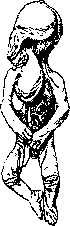
Epigastrius is a type of asymmetrical double monster where parts of a parasitic fetus, often acardius, are attached to the epigastrium region of a normally developed autositic fetus. This condition is considered an early developmental abnormality that can sometimes present as a teratoma.
Related articles
Cite this page
“Epigastrius.” Soviet Medical Encyclopedia. English translation of Bolshaya Meditsinskaya Entsiklopediya, 1st ed. (Moscow, 1928–1936), ed. N. A. Semashko. https://sovietmedicalencyclopedia.pages.dev/article/epigastrius/