Fasciolopsis
Historical document, translated for reference. It reflects medical knowledge of the 1920s–30s and is not medical advice.
Summary
This article from the 1928–1936 Great Medical Encyclopedia describes Fasciolopsis, a genus of parasitic flukes including the human parasite Fasciolopsis buski. It details the morphology, life cycle involving snail intermediate hosts, geographical distribution in Southeast Asia, clinical pathology, and prevention methods.
Encyclopedia article (1928–1936)
FASCIOLOPSIS, generic name of parasitic worms of the class Trematoda, order Prosostomata, family Fasciolidae Rail. 1895. Several species of the genus Fasciolopsis have been described, of which Fasciolopsis buski (Lankester, 1857) is the type. All other species according to Faust (1930) fall into synonyms: Fasciolopsis rathouisi, Fasciolopsis fulleborni, Fasciolopsis goddardi, Fasciolopsis spinifera. Brief description of Fasciolopsis buski (Fig. 1). Length 30–55 mm, width 12–20 mm. The cuticle is covered with spines. The intestine is simple, unbranched; genital glands are branched, the cirrus pouch is very long. Vitellaria, consisting of small follicles, extend along the entire length of the body laterally from the intestine. Oral sucker 0.5–0.7 mm in diameter. The uterus is in the anterior half of the body, genital openings are anterior to the ventral sucker, which is significantly larger than the oral sucker—3.2 mm in length and 2.5 mm in width. Eggs are oval—0.13–0.14 mm in length and 0.08–0.085 mm in width (Fig. 2). Definitive hosts: man, dog, pig, and other mammals. Localization: small intestines and stomach. The biological cycle is carried out with the help of a single intermediate host—mollusks Planorbis coenosus Bens and Segmentina hemisphaerula Bens. From eggs excreted with feces and entering water, miracidia hatch after 2–3 weeks, which penetrate the body of intermediate hosts and transform successively into sporocysts, rediae, and cercariae, which leave the mollusks into the water and encyst on aquatic plants. The body of cercariae is 0.21–0.23 mm in length and 0.12–0.15 mm in width; the tail is 2–3 times longer than the body. The entire developmental cycle until transformation into the imago in the body of the definitive host is accomplished in 90 days. Geographical distribution: Southeast Asia, most often China and Indochina (in China, two aquatic plants consumed by natives in raw form have the greatest epidemiological significance—leaves and fruits of Trapa natans and tubers of Eleocharis tuberosa). In the USSR, 1 imported case has been registered, described by Skrjabin, Podyapolskaya, and Statirova (1929). In the literature, there is an indication of the discovery of Fasciolopsis buski in Central Asia. Pathogenesis and symptomatology. According to Goddard (1919), the clinical picture is subdivided into 3 periods: 1) latent, which sometimes drags on for months and ends with asthenia and mild anemia; 2) period of diarrhea: frequent stools, sometimes mixed with blood; often dull pains in the intestines; 3) period of edema, accompanied by pronounced anemia. Edema usually begins with ascites, then edema of the lower extremities, upper extremities, face, and finally lungs appears. The skin takes on a yellowish tint, becomes dry and hard. In uncomplicated cases, the disease can proceed without sharply expressed edema and anemia. Diagnosis is made by eggs found in feces (caution when differentiating from Fasciola eggs!). Therapy: beta-naphthol (twice 2 cm3) or carbon tetrachloride (3 cm3 for an adult). Prophylaxis. Do not consume in food in places where the parasite is prevalent...
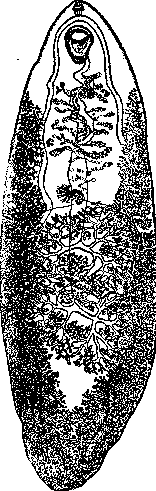
Figure 1. Fasciolopsis buski.
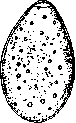
Figure 2. Egg of Fasciolopsis buski. 85 of water plants that have not been washed or thermally treated. Broader prophylactic measures should concern the disinfection of feces and preventing them from reaching water bodies where intermediate hosts may be present.
Related articles
Cite this page
“Fasciolopsis.” Soviet Medical Encyclopedia. English translation of Bolshaya Meditsinskaya Entsiklopediya, 1st ed. (Moscow, 1928–1936), ed. N. A. Semashko. https://sovietmedicalencyclopedia.pages.dev/article/fasciolopsis/