Incubators
Historical document, translated for reference. It reflects medical knowledge of the 1920s–30s and is not medical advice.
Summary
Incubators are apparatuses with constant high temperature used to warm and protect premature or debilitated infants. The article describes various historical models, their advantages, disadvantages, and proper usage in medical settings.
Encyclopedia article (1928–1936)
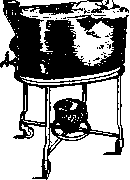
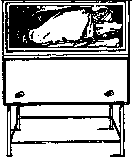
INCUBATORS (from Latin incubare - to lie), the more common name being incubators (French couveuse), apparatuses with constant high temperature, in which premature infants or debilitated children are placed for warming and protection from heat loss. The necessity of protecting premature infants from cooling was already known to old-time midwives. Primitive methods of keeping such children in furs, cotton wool, warm fabrics, besides being unhygienic, only reduce the premature infant's heat loss but do not provide new heat from outside. For this latter purpose, hot-water bottles and incubators are used. The simplest such apparatus is the hot-water bath, which was already used from the first half of the 19th century in Russian (von Rüle in St. Petersburg; 1835), Austrian, Swedish, French and other foundling homes. The hot-water bath by Crede (Leipzig, 1860) was especially popular. It consists of a metal bath with double walls; the hollow space between them is filled through a funnel-shaped opening with hot water at 60-70°, which is changed every 2 hours; the cooled water is drained through a special tap (Figure 1). The disadvantages of the hot-water bath: danger of overheating, difficulty in maintaining constant temperature; the solid metal walls hinder good ventilation, replacing the premature infant's bed. The great advantage of this model is its simplicity, which allows it to be reproduced under any conditions. It is sufficient to take two baths of different sizes and place the smaller one, in which the child is, into the larger one filled with hot water. Winkel's experience in keeping premature infants in a permanent bath with water at 38°, in order to create conditions for the premature infant close to intrauterine conditions, proved completely unsuccessful due to contamination of the water with feces and urine, the need to change water frequently, etc. A further improvement of the hot-water bath was the incubator, or incubator (Figure 2), which represents a closed heat-air bath, in which the child breathes warmed air. The first incubator was proposed by Tarnier in 1878 in Paris (Maternité). Its original construction consisted of a two-story wooden box, closed on all sides with double walls, equipped with a glass window on top for observing the child. Sawdust is placed between the walls of the box. In the lower story of the box are metal vessels with taps containing water, connected by two pipes to a thermosiphon. The water in the thermosiphon is heated by gas, alcohol or kerosene and is in constant circulation in the pipes. In the upper story the child is placed, with sufficient free space between the child and the walls of the incubator. A ventilation opening is arranged at the top of the box. Humidification of the air in the incubator is achieved with wet sponges. The relatively simple Tarnier model underwent many changes and improvements in France and other countries, but all systems are based on the same principle and differ from each other only in the material from which they are made (wood, glass, metal, faience), or in the heating method (kerosene, gas, electricity).
At present, the most common models are: a) Finkelstein's - a closed incubator with glass walls, heated by a battery of metal hot-water bottles, in which the water is changed not all at once but gradually, to avoid temperature fluctuations (Fig. 2); b) open incubators (Fig. 3), in which regulation and constant temperature are achieved by a complex system of heating devices, while the space for the child remains open (Figure 3).
Undoubtedly, incubators, with experienced personnel and careful observation, have contributed to reducing the mortality of premature infants. However, in practice, their inherent defects also became apparent: the impossibility of sufficient ventilation and sterilization of the apparatus, the effect of high temperature on bacterial multiplication, and the increased danger of infection, especially the difficulty of observation and care for the premature infant and the harmfulness of sharp temperature fluctuations when taking the child out of the incubator for feeding, turning over, medical examination, etc. To eliminate all these incubator defects, in many children's institutions (Paris, Florence, Turin, Graz, Berlin, etc.), entire incubator rooms (chambre-couveuse) were constructed, in which both the attending personnel and nursing mothers can stay. The temperature in these incubator rooms was gradually reduced from 34° (Pinard) to 25-26° (Budin). The main disadvantages of incubator rooms, apart from their high cost, are the difficulty of staying in them, the harmfulness to the attending personnel, and the impossibility of dosing heat for individual children. The experience of the State Scientific Institute for the Protection of Mother and Infancy in Moscow confirms the literary data: in institutions, good results can be achieved without incubators by combining a high temperature of 22-23° in an ordinary room-ward with an individual thermal regime for the premature infant, ensured by keeping it in an ordinary crib with hot-water bottles. The experience showed that incubators not only did not eliminate all difficulties in raising premature infants, but also contain certain specific harmful effects and dangers that follow from the principle of the incubator as a closed heat reservoir for the premature infant. The abundance of new models exhibited at international exhibitions, advertised by firms, etc., also testifies to the fact that these defects have not yet been eliminated. Nevertheless, with proper organization of the institution, the incubator provides invaluable services and significantly reduces the mortality of premature infants.
The requirements that must be met for keeping a child in an incubator are basically as follows: the air in the incubator must be clean, fresh, of a certain constant temperature and humidity. The air temperature is set individually depending on the child's condition and need for heat, usually within 25-27°; higher temperatures are not recommended, as overheated air does not stimulate the respiratory reflex; besides, there is too great a danger of overheating. The incubator must be easily washable and disinfected. Care of the child in the incubator should not be particularly difficult, and the child must be under constant observation by the personnel (through glass). The duration of stay in the incubator is determined by the child's general condition, temperature curve and weight, appetite, but should not be particularly long - no more than 2-3 weeks. As soon as the child establishes normal monothermia, the incubator temperature is gradually reduced to 22-23°, after which the child is transferred to a crib with external hot-water bottles under intensified control of temperature and the child's entire condition.
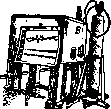
Figure 2. Closed incubator.
Figure 3. Open incubator.
Related articles
Mentioned in
Cite this page
“Incubators.” Soviet Medical Encyclopedia. English translation of Bolshaya Meditsinskaya Entsiklopediya, 1st ed. (Moscow, 1928–1936), ed. N. A. Semashko. https://sovietmedicalencyclopedia.pages.dev/article/incubators/