Mutualism
Historical document, translated for reference. It reflects medical knowledge of the 1920s–30s and is not medical advice.
Summary
This article defines mutualism as a form of symbiosis where both organisms benefit, citing the hermit crab and sea anemone as a classic example. It also discusses the phenomenon in single-celled organisms, such as algae living within amoebas.
Encyclopedia article (1928–1936)
MUTUALISM (from Latin mutuus—mutual), mutualism, one of the forms of organism symbiosis, when both symbionts render each other a certain benefit. The determination of the moment of mutual benefit is very difficult and relative; therefore, Mutualism is less studied than other forms of symbiosis. Some biologists are skeptical about Mutualism in general, and it is undoubtedly that in the assessment of specific examples of Mutualism, measures of an anthropomorphic character are often applied. The most famous example of Mutualism is the relationship of the hermit crab and the sea anemone. The former has a soft abdomen, which can easily be bitten off by fish. Usually, the hermit crab inserts its abdomen into the empty shell of a gastropod mollusk, and in case of need, also draws its whole body inside. It crawls along the bottom, dragging the shell. On Eupagurus bernhardus, the sea anemone Sagartia parasitica is often found, sitting on the shell of the hermit crab in numbers from 1 to 8. Spreading its tentacles like a fan, the sea anemone protects the hermit crab from attacks by predators. If a squid attempts to seize the crab, it receives a charge of stinging cells possessing poisonous properties. Crawling along the bottom, the crab carries the sea anemone on itself and actually turns it into a mobile animal, which can facilitate the sea anemone's capture of food. Although Sagartia has retained the ability to live alone, it leaves the shell if the hermit crab is removed from it. On the other hand, when moving to a new shell, the hermit crab carries the sea anemone on its claws with it, and the anemone does not react to this procedure by ejecting acronia with stinging cells. Another sea anemone, Adamsia palliata, always lives on the hermit crab Eupagurus prideauxi, but is arranged on the shell so that the mouth opening of the anemone is located at the edge of the shell under the crab's head. In the presence of moments of mutual benefit indicated above, Adamsia extracts for itself additional benefit; it becomes a parasite of the hermit crab, since it captures scraps of food falling down during the crab's meal. Thus, it is impossible to sharply distinguish the phenomena of Mutualism, since at the same time as it, relationships of a different order can exist. Mutualism is also attributed to some cases of symbiosis of single-celled animals and plants. Thus, green algae (zoochlorellae) can live in an amoeba. In the light, the latter release O2 and absorb C02. For an amoeba, the reverse process is typical: absorption of O2 and release of C02. Thus, the "waste products" of one symbiont are a valuable substance for the other. The use of these substances is facilitated by the fact that one symbiont lives inside the other. Phenomena of intracellular symbiosis are very widely spread in nature; their study is proceeding quite energetically, but the physiological side of the relationships of symbionts remains the darkest, and without its precise elucidation, a correct assessment of the mutual significance of the symbiosis of a given pair of organisms is hardly possible.
E. Pavlovsky. MUS HANS (Hans Much, born in 1880); graduated from the university in Würzburg, worked under Behring in Marburg. Since 1907, he has worked in Hamburg at the Institute of Experimental Therapy, Serology, and Bacteriology (at present time as head). The main significance lies in Much's works on tuberculosis in the field of the doctrine of the causative agent and in the field of immunity. Much discovered a new non-acid-fast agent named "Much's" grains and rods. The question of the existence of this virus caused a great polemic and to this day cannot be considered finally solved, just as Much's doctrine on partial antigens. A valuable contribution is Much's work on the study of the course of tuberculosis depending on the immunobiological state of the organism. In the work "Eine Tuberkuloseforschungsreise nach Jerusalem" (Lpz., 1913), a rich material was collected on the examination of the course of tuberculosis among Arabs, indigenous Jews, and Jewish settlers from Europe. Much is a convinced supporter of the doctrine on the antigenic properties of lipoids. The most important works of Much, published separately, besides the named expedition works to Jerusalem: "Pathologische Biologie" (in the 1st edition under the title "Immunitatswissenschaft", Leipzig, 1911; 5th edition, 1922; Russian edition—Saratov, 1914); "Partikengesetze u. ihre Allgemeingültigkeit" (Lpz., 1921); "Kindertuberkulose" (Lpz., 1923; Russian edition—M., 1925); monograph—"Hippokrates der Große" (Stuttgart-Lpz.-Zurich, 1926). Much owns the chapters on the causative agent and immunity in the capital "Handbuch der Tuberkulose", hrsg. v. L. Brauer, G. Schroder u. F. Blumenfeld (B. I, Lpz., 1922), as well as reviews on organotherapy in "Handbuch der inneren Sekretion", hrsg. v. M. Hirsch (B. III, Lpz., 1930). Finally, Much issued a series of brochures under the name "Moderne Biologie" (Hefte 1-13, Lpz., 1921-29), containing lectures which Much read in the countries of Europe, Asia, and America on various questions of medicine and biology (specific and nonspecific Reiztherapie, nonspecific immunity, bacteriolysis, homeopathy, idiosyncrasy, relationships of climate, public health, and world economy). Much is also known as a popularizer and as a poet (collection of poems—"Denken u. Schauen", Lpz., 1913).
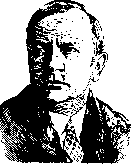
The internal tuberculosis virus, "Handbuch der inneren Sekretion", hrsg. v. M. Hirsch (B. III, Lpz., 1930). Finally, Much issued a series of brochures under the name "Moderne Biologie" (Hefte 1-13, Lpz., 1921-29), containing lectures which Much read in the countries of Europe, Asia, and America on various questions of medicine and biology (specific and nonspecific Reiztherapie, nonspecific immunity, bacteriolysis, homeopathy, idiosyncrasy, relationships of climate, public health, and world economy). Much is also known as a popularizer and as a poet (collection of poems—"Denken u. Schauen", Lpz., 1913).
Related articles
Mentioned in
Cite this page
“Mutualism.” Soviet Medical Encyclopedia. English translation of Bolshaya Meditsinskaya Entsiklopediya, 1st ed. (Moscow, 1928–1936), ed. N. A. Semashko. https://sovietmedicalencyclopedia.pages.dev/article/mutualism/