Objective
Historical document, translated for reference. It reflects medical knowledge of the 1920s–30s and is not medical advice.
Summary
The objective is a system of lenses used to form real images of objects in photographic apparatus, projectors, microscopes, telescopes, and other optical instruments. This article describes the characteristics, types, and applications of objectives in various optical devices.
Encyclopedia article (1928–1936)
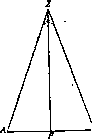
OBJECTIVE, a system of lenses used to obtain a real image of an object (in a photographic apparatus, projector, lantern, microscope, telescope, etc.). The main characteristics of an objective are its focal length and light-gathering power, equal to the ratio of the area D of the effective (unstopped-down) aperture O to its focal length, i.e. i=p. In most modern objectives, diaphragms are marked directly in units of light-gathering power (exceptions are the Voigtländer system, where the unit of light-gathering power is taken as the aperture F: 3.16, and the old Zeiss system, where the unit of numbering is taken as the aperture =50, and other diaphragms are marked with numbers corresponding to the squares of the light-gathering power; in Herz photographic objectives, diaphragms are sometimes marked with numbers proportional to exposure time). The field of view (image) of an objective is characterized by the so-called angle of view or angle of the light cone. This angle is determined graphically: when focusing the objective on infinity, an image—a bright circle—is obtained in the focal plane, and the diameter of the latter is measured. An isosceles triangle is constructed on paper, whose base AB is equal to the diameter of the bright circle, and whose height ZF is equal to the focal length of the objective. The angle a - /_AZB is measured with a protractor, which will be the angle of view. This angle depends not only on the focal length of the objective but also on the compactness of its construction (Figure 1). Thus, anastigmats have a wider field of view than aplanats with the same focal length. Modern wide-angle objectives can capture an angle of up to 135° from a close distance. The simplest objective can be an ordinary converging lens. Such an objective gives a very imperfect and unsharp image, as it has all the disadvantages inherent in thick optical glass. In artistic photography, where it is often necessary to avoid sharpness and, conversely, to 'blur' the image (for example, in portrait photography), a simple spectacle glass monocle (=25... F=20 cm and d~5 cm) is used as an objective. Simple single-lens objectives are also found in inexpensive projectors. More advanced objectives are those corrected for chromatic aberration—achromats (see Achromatism, achromat) (the first achromat was constructed by Chevalier in 1830; in photographic equipment, achromats are known as 'landscape lenses') and for spherical aberration—aplanats (the first was constructed by Voigtländer in 1840 (see Aplanat). Next come apochromats (see), in which both chromatic and spherical aberration are corrected. The most advanced objectives are anastigmats (the first was designed by Rudolph at C. Zeiss in 1830, the best Zeiss 'Tessar' (Figures 2 and 3), Herz 'Dagor', 'Collinear', 'Heliar' and 'Dinar' of Voigtländer), which are corrected in addition to aberrations for astigmatism and for curvature of lines and planes. Such objectives give exceptionally perfect images and are the highest achievement of modern optical technology. All these objectives have
Figure 1. Angle of view.
Figure 2. Angle of view of 110°.
Figure 3. Angle of view of 75°. found especially wide application in photographic and projection equipment. Recently, for the possibility of photo and cinematography in low light, particularly high-light-gathering-power objectives have become widespread. Ernemann has produced objectives with a light-gathering power of up to F: 1.8 (camera 'Ermanox' with 'Ernostar' objective—Figure 4). In such apparatus, the objective is already larger in size than the camera itself. In particularly high-light-gathering-power objectives, correction of defects is less possible than in ordinary ones. In telescopes, achromatic and apochromatic objectives are used. The highest degree of perfection has been achieved in microscopic objectives. (SEE MICROSCOPE).
Figure 4. Camera 'Ermanox' with 'Ernostar' objective.



Related articles
Cite this page
“Objective.” Soviet Medical Encyclopedia. English translation of Bolshaya Meditsinskaya Entsiklopediya, 1st ed. (Moscow, 1928–1936), ed. N. A. Semashko. https://sovietmedicalencyclopedia.pages.dev/article/objective/