Obstetric Operations
Historical document, translated for reference. It reflects medical knowledge of the 1920s–30s and is not medical advice.
Summary
This article provides a historical overview of obstetric operations from ancient times through the early 20th century, detailing their evolution, techniques, and indications across different periods of medical development.
Encyclopedia article (1928–1936)
OBSTETRIC OPERATIONS, operations performed during pregnancy, childbirth, in the postpartum period, and in the puerperium. Obstetric operations were known in deep antiquity (thus, ancient Egyptians performed cesarean sections on the dead, in the time of Moses operations of version, craniotomy, etc., were known), but for many centuries obstetric operations were empirical in nature; there was no scientific obstetrics, nor any understanding of the physiology of pregnancy, of the fetal position, or of the mechanism of labor. This was explained by the fact that physicians were not admitted to births, and all obstetric care was in the hands of midwives or, as expressed by Astruc, "umbilical cord ligators." There could be no observation, development of obstetric concepts, and for this reason the invented instruments bore the marks of empiricism. There could be no discussion of indications for operations, not only precise but approximate, and moreover, a distinctive feature of obstetric care was complete indifference to the fate of the child. This first, dark period of obstetrics in general, and of obstetric operations in particular, stretched from time immemorial for millennia, continued in the Middle Ages, and only in the 16th century began a new era, a second period, characterized by new discoveries, reassessment and revival of earlier knowledge, development of observational skills and the associated establishment of indications for intervention. This period, covering three centuries, owed its prosperity to France and is associated with the name of Ambroise Pare and partly Jules Clement—the first physician who conducted births from beginning to end and received from the favorite of King Louis XIV, Marquise de La Vallière, the title of accoucheur (in 1663). During these centuries, along with the revival of version, forceps were invented, the operation of induction of labor, abortion, premature births emerged; finally, the first verified case of cesarean section and symphysiotomy were recorded. Simultaneously with this, we see attempts at rationalization of obstetric care and a more substantiated approach to surgical intervention. The subsequent third period, covering the 19th century, is the century of development and prosperity of obstetrics. This was facilitated by a number of major discoveries—the introduction of anesthesia into practice, the theory of Semmelweis, the ideas of Lister. A significant moment is also the fundamental change in the thinking of the obstetrician, who in performing each operation began to equally consider the interests not only of the mother but also of the fetus. The fourth, current period can be evaluated from the modern viewpoint as a period of further scientific development, the appearance of a biological direction and the emergence of the so-called surgical era in obstetrics. One of the slogans of the latter can be considered the classic words of Pinard, that perforation of the head of a living fetus should not exist. All obstetric operations are divided into preparatory and delivery operations; the former aim to prepare the soft birth canal and bony pelvis (and to correct abnormal fetal positions), the latter directly contribute to the termination of the act of labor by artificial means. It is also necessary to distinguish between operations per vias naturales and per abdomen (and operations performed on the mother and on the fetus). The division of operations into manual and instrumental is irrational, since, depending on the viewpoint, the same operation under equal indications and conditions can be performed by one method or another. Obstetric operations during pregnancy aim to interrupt it at all stages (before 28 weeks—early and late abortion, after seven months—artificial premature labor) due to various diseases, both existing before pregnancy (heart defects, tuberculosis, etc.) and arising directly on its basis (intractable vomiting, eclampsia, nephrosis). In addition, with abnormal fetal position, an operation of version is undertaken to correct it. The largest group of operations occurs during labor. They can be divided into four categories aiming: 1) to accelerate the act of labor with rigid cervix, to extract or express the fetus with uterine inertia, to prepare the perineum with its rigidity; 2) to correct abnormal fetal positions and complications from the ovum; 3) to reduce the volume of the fetus and 4) to resolve delivery through the abdominal wall (with malformations of the genital organs, narrow pelvis and other complications). In the postpartum period, all operations are associated with abnormal separation, retention and attachment of the placenta, and moreover, are aimed at combating subsequent bleeding. Postpartum operative care aims to restore damage inflicted during labor, to suture tears of the cervix, tears of the perineum, and finally, with appropriate indications, have the aim of removing retained remnants of the placenta and membranes (manual or instrumental intervention). For performing obstetric operations, as for any other surgical operations, it is necessary to strictly observe all the rules of asepsis and antisepsis, to know the anatomy and mechanism of labor in normal and narrow pelvis. E P I S I O T O M Y (operation of incision of the perineum to prevent its rupture during labor). The reason for its emergence was the insufficiency of methods for preserving the perineum. The first to propose its incision along the raphe was Michaelis (1810); Ritgen subsequently (1836) proposed to increase the vaginal opening, instead of incision along the raphe, to make several lateral incisions. In ancient times, they used incision of the perineum or even tore it with nails in case of its narrowness. Scanzoni later recommended making only two lateral incisions. In Russia, D. O. Ott was a hot supporter of episiotomy, who revived Michaelis's idea and considered that for preserving the perineum, the median incision (perinaeotomy) is most suitable. In addition, this operation should be performed prophylactically much more often, since an incision is better than a rupture, it is easier to suture and it heals better. Now, usually, episiotomy is performed either as a perineotomy or as lateral incisions with a high, rigid perineum, in elderly primiparas, with a large head, beginning tear, sometimes prophylactically in every primipara. In addition, episiotomy is performed additionally in hysterotomia vaginalis anterior (as a vaginal-perineal incision) and pubiotomy. Artificial puncture and r u p t u r e of membranes and a m n i o t i c s a c k (amniotomy), an obstetric aid known since ancient times. The first mention (540-550 AD) is in the book of Aetius of Amida on its application in prolonged labor, with dense membranes. The puncture was performed with special forceps, or the membranes were cut with a sharp knife (scolopomacherion). For therapeutic purposes, to stop bleeding in placenta previa, it was first applied by Justine Siege-mundin (1690). The successful results of puncture led to the invention of many instruments for this purpose, so-called conductors (Siegemundin, Osiander and others), constructed in the form of a trocar, scissors or forceps with pointed ends. The abuse of membrane puncture led to a number of objections—Mauriceau, Levret, Osiander, Baudelocque, as a result of which the indications for its application were clarified. The pioneer of membrane puncture to induce artificial premature labor is the Dane Scheeb (1799). Hopkins (1826), to avoid excessive discharge of waters, recommended performing the puncture not at the level of the internal os, but higher, to the side. Membrane puncture is performed either with the index finger [Joerg in case of failure proposed to insert two fingers into the vagina, grasp the membranes in folds, cross the fingers and perform gentle rotations] or with the appropriate instrument—a thin forceps. Indications for membrane puncture are: 1) short or dense membranes with sufficient dilatation, 2) polyhydramnios, 3) multiple pregnancy, 4) placenta previa. Membrane puncture is also performed to induce artificial premature labor, and it can be combined with a number of other techniques (introduction of balloons) or therapeutic agents (preparations of the pituitary gland in the absence of contraindications, quinine, etc.). Hysterotomia sub partu, bloody, bilateral incision of the cervical canal during labor, for safety preferably performed under visual control (usually with Scanzoni scissors). Incisions or notches of the cervix have been known for a long time, references to them are found in Lauverjat (1785). Subsequently (1887), as an operation with more precise indications, Dührssen first described these notches. He proposed so-called deep notches up to the vaults, which, however, did not receive particular distribution due to rather severe consequences. With the publication by the same author of vaginal cesarean section, he himself apparently abandoned the application of notches.
At present, this operation can find application as a standalone operation, mainly in cases of cervical rigidity, or as a preliminary to the application of forceps. Artificial abortion. References to artificial abortion are found already in Hippocrates in his 'De natura puerperum'. Thus, in the famous Hippocratic Oath, students entering practical practice swore that they would never dare to produce an abortion. Only after many centuries did physicians begin to raise the question that abortion could be performed in cases threatening death. The means to induce it over many centuries among all peoples were internal - medicinal, which sought to cause direct or indirect contractions of the uterus. The first mention of mechanical methods is found in Avicenna's Canon, for example, about inserting twisted paper or wooden sticks into the cervical canal. A scientific approach to abortion should be considered to have begun with Soranus, who showed that it is better and safer to perform an abortion than subsequently to perform embryotomy. The development of more justified medical indications belongs to the end of the 18th century (W. Cooper) and was caused by certain failures of cesarean section and the application of this operation, mainly in cases of a narrow pelvis. During the 19th century, before the invention of Hegar's dilators and before the idea of a curette for scraping (Buyalsky), we see a number of further attempts at mechanical production of abortion (tamponing the cervical canal with formalin-soaked gauze, separating the membranes with a probe from the uterine wall, introducing bougies, injecting water or glycerin into the uterine cavity, inserting sticks of Tupelo or laminaria into the cervical canal). As a surgical operation, abortion was first performed by Puech in 1895 and consisted of dilating the cervical canal followed by scraping the uterine cavity. At present, for medical or social indications, abortion in the first three months is performed only in this way, and two methods are distinguished - one-stage and two-stage. The latter consists of preliminary insertion of laminaria sticks. The latter method is not considered rational and expedient by all (laminaria are difficult to disinfect). In the USSR, laminaria are rarely used; in Germany, they are used quite widely. The use of metal dilators with several branches or the introduction of rubber balloons is not expedient and not always safe. Artificial premature labor (partus arte praematurus) was first proposed by Denman, but practically performed by Macaulay in 1756. Denman was the first to approach this operation scientifically and among the indications for its performance considered - a narrow pelvis, habitual death of the fetus, certain diseases of the pregnant woman, especially uncontrollable vomiting. In the first years of its appearance, this idea (which sought in complications of pregnancy to save the life of the mother and fetus) met with varying attitudes. Along with its hot supporters in Germany (Siebold) and in England (Burns), there were also opponents, mainly in France (Baudelocque). During the 19th century, this operation was the subject of the hottest disputes, and - despite the fact that in 1827 the Paris Academy even spoke of the immorality of this operation and such great authorities as Ozianther, Jörg, Spiegelberg and others spoke against it - it still found a large number of followers who continued to develop indications and propose new methods. Krassovsky wrote (1885) that this operation belongs to the number of the most beneficial aids in obstetrics; later (1907) Phenomenov said that a true understanding of the significance of this operation forces one to welcome its appearance. The methods of inducing artificial premature labor also have their history and reflect the views of one or another era. First we see rupture of the membranes, later - separation of the membranes in the lower segment (Hamilton, 1800), which were gradually replaced by hot (ascending uterine) vaginal douches (Kiwisch, 1848), vaginal tamponade, injection of fluids into the uterine cavity (Cohen, 1846, Lazarevich), introduction of bougies (Lehmann, Simpson, Krause, 1855), and finally massage and electrization (Apostoli and others). The insufficiency, unsatisfactoriness and duration of all these methods served as an impulse for further attempts to accelerate the production and completion of this operation. Subsequent proposals - balloons, colpeurynters, metreurysmometers (Braun, Barnes, Tarmer, Champetier de Ribes), manual dilation of the cervix (Harris, Bonnaire), metal dilators (Bossi, Mensing and others) for inducing artificial premature labor - created the era of so-called accouchement force, which in recent years has been replaced by faster, gentler and more sparing delivery by surgical means (hysterotomia vaginalis anterior). In cases not requiring rapid delivery, at present are used - puncture of the membranes followed by periodic injections of pituitrin (in the absence of contraindications), balloons (extra- and intraovularis), introduction of one or another fluid into the uterine cavity (very few obstetricians), metal dilators and insertion of bougies.
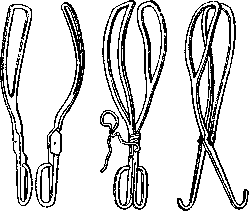
Version - an obstetric operation performed to change the position of the fetus by external or external-internal (combined) methods. The version aims to correct the position from transverse (version to the head or to the foot) and to replace one longitudinal position with another. Obstetrics in antiquity did not know version, as pelvic positions were considered pathological, nor did the school of Hippocrates, which advised to replace not only a prolapsed hand but also a foot. Celsus was the first to point out the possibility of version in a dead fetus. Soran Ephesius (97-155) performed version on a living fetus and, in addition, recommended doing it also in head presentation. After these obstetricians, version was forgotten for several centuries, and we again find mentions of it only with Albertus Magnus, Eucharius Rosslein and Ambroise Pare (1550), with the latter having the great merit in restoring version to the foot. The latter's students - Guillemeau (who in 1599 performed version on his teacher's daughter) and Pierre Franco and subsequent French obstetricians and midwives (Bourgeois, Mauriceau, Portal) contributed to the fact that version soon acquired all civil rights. Soon it went beyond France and was subjected to comprehensive practical and theoretical discussion. Justinus Zimmermann introduced version by means of a double maneuver, Levret taught about the indications for version and sought to perfect the technique, Jörg insisted that it is necessary to distinguish between version to the feet and extraction, and finally Ozianther recommended for the first time preventive version in a narrow pelvis. The latter complication, apparently, interested many obstetricians, the performance of version in it was largely developed by Lachapelle, Simpson and others. In the 19th century, interest in version did not weaken; the further development and elaboration of the operation are associated with the names of Wiegand, Outrepont, Siebold and others and especially Braxton Hicks (1860), who created a certain era in the therapy of some complications of pregnancy and the act of labor. In the last decades of the 19th century, the attention of obstetricians was particularly drawn to the version for a narrow pelvis, newly proposed by Schroeder on the grounds indicated earlier by Simpson (that the subsequent head passes through the pelvic canal more easily than the previous head). The latter, apparently the most controversial point in the indications for version at the end of the 19th and beginning of the 20th century, was decided in favor of its opponents, mainly due to the advent of the surgical era and the wider application of major operations (pubiotomy, cesarean section). In our time, this operation occupies its definite, honorable place in obstetrics and has its sufficiently developed indications and conditions for its performance. In Russia, the first mentions of version are found with Ambodik (see). Obstetric forceps (forceps obstetrica, former Russian name - 'obstetric forceps'), a folding instrument with two branches, - are intended for extraction of the fetus (and not for correction of position). Obstetric forceps were invented in 1569 by Peter Chamberlen, initially they were straight (see Figure 1), and there is no reason to assume that in an earlier period there was any similar instrument. Some, however, believe that the need for forceps existed earlier; as proof, 'Figure 1. Chamberlen's forceps.'
They cite the advice of Hippocrates to extract the head with both hands, point to the forceps of Albucasis (1500) with sharp teeth on the inner surface, etc., but this is hardly the case—all these manual and instrumental techniques apparently served only for extracting the dead fetus. The original invention of forceps constitutes one of the darkest pages in the history of obstetrics. Chamberlen, instead of publishing his discovery, kept it a secret within his family. Chamberlen's initial attempt in 1670 to sell the forceps in Paris for 10,000 thalers ended in failure. In 1688, Chamberlen sold his so-called secret to Roonlmysen in Amsterdam, who in turn resold it to Baclielmann and Ruysch. Trade deals with forceps continued, and the first Chamberlen forceps were never published, and only the family belongings, letters, and several models of the instrument found in 1818 in a secret door serve as confirmation that obstetric forceps were indeed known to the Chamberlen family. The actual year of the invention of obstetric forceps is considered to be 1723, when the Ghent surgeon Johaim Palfyn presented to the Academy of Sciences in Paris the instrument he had invented (1720) for extracting the head (see Fig. 2); forceps thus become the center of attention for the obstetrician; in the nearest time new modifications appear, and the improvement of forceps does not cease to this day. The total number of different models at present exceeds 300. The scientific development of the question of forceps begins only in the 18th century. Two obstetricians—Levret in France and Smellie in England—made significant changes to the initially proposed models and first stopped at the indications for their application. It can be said that if they are not the inventors of forceps, then a new era begins with them, and some of the ideas they expressed formed the basis of subsequent improvements and relate to the design of most modern forceps.
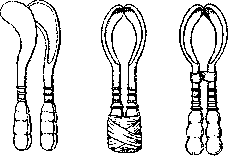
Fig. 2. Palfyn's forceps and two methods of connecting their blades.
The scientific development of the question of forceps begins only in the 18th century. Two obstetricians—Levret in France and Smellie in England—made significant changes to the initially proposed models and first stopped at the indications for their application. It can be said that if they are not the inventors of forceps, then a new era begins with them, and some of the ideas they expressed formed the basis of subsequent improvements and relate to the design of most modern forceps.
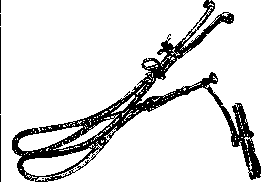
Figure 3. Tarnier's forceps.
Levret must be given great credit for improving the lock (instead of the previous axis—a movable screw), introducing the pelvic curvature (1751), and lengthening the entire instrument to enable its use in the higher part of the pelvis. The doctrine of forceps reaches its greatest development in the 19th century—along with a more detailed elaboration of indications, we also see a whole series of models that strive, primarily, to make the instrument safer for both mother and fetus [especially much work was done on the forceps of Naegele, Simpson, Tarnier (see Figure 3), Braun, Lazarevich (see Figure 4), and others]. In the 20th century, despite new attempts to modify forceps [especially the forceps of Kjelland, constructed
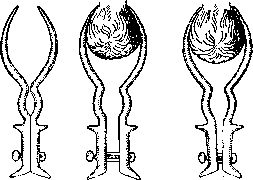
Figure 4. Lazarevich's forceps.
According to the idea of Lazarevich and the associated involuntary expansion of indications, we see a fairly strong trend in favor of significantly limiting their application. This trend arose, on the one hand, under the influence of the so-called 'surgical era,' and on the other, based on consideration of clinical data, which state that indications must be weighed more strictly, since this intervention, in its immediate and remote consequences, is not as harmless as is commonly thought. In Russia, forceps were introduced into practice by Erasmus, a professor at Moscow University (on June 9, 1765, a living girl was extracted with forceps by Levret). At first, the operation was greatly facilitated by Richter-father in Moscow and Ambodik in Petersburg; later, Russian obstetricians took a significant part in developing the instrument (Boryakovsky, Hartmann, Dimant, Lazarevich, Polotebnov, Pravosud). Initially, in the first decades of the 19th century, forceps of Siebold were in common use, with which all district physicians were equipped; now, the most widespread is the modification of Simon-Brown. Operations for extraction of a fetus reduced in volume (craniotomy, embryotomy, cleidotomy, sternotomy) were known in the most ancient times, and instruments for their production were also known. There are indications that it was recommended to apply them with great caution. Craniotomy, or perforation of the fetal head—the most ancient obstetric operation—undoubtedly had to be widely performed in that era when there was no version, forceps, and cesarean section on the living. The primitive instruments of the Hippocratic school for this purpose—gladiolum and piestron (for disrupting the integrity of the skull and for crushing its bones)—were perfected over the centuries, and in the past millennium, more than a hundred different models have been counted. The most common method is perforation of the head with scissors-like perforator or trepan, followed by cranioclasia. The sawing of the head with forceps, proposed as early as 1842 by Hügel (v. Huevel), from the very beginning did not find many followers, and in recent decades has not been performed at all. Embryotomy, the operation of reducing the fetus's body, is considered by some to be the most ancient operation. The first information about it is found in Hippocrates in his works 'De morbis mulierum' and 'De exsectione foetus,' where two instruments for its production are also described—machairion (knife) and elkyster (hook). Later, Celsus and Aëtius of Amida dwell in detail on embryotomy. This operation existed all the time and was relatively widespread, but with the introduction of version and forceps into obstetric practice, its performance decreased significantly, and some obstetricians, like Osiander, even demanded the absolute exclusion of embryotomy from the list of applied operations. Here, the number of instruments for decapitation as well as for opening the abdominal and thoracic cavities of the fetus is very large. All these operations, being significantly widespread in ancient times and in the Middle Ages, gradually, with the development of scientific obstetrics, are applied less and less, and at present, in connection with the rationalization of obstetric care and surgical achievements, they are extremely rare. Pelvitomy, a collective name for operations aimed at expanding the pelvis in its narrowing. At present, there are four modifications of pelvitomy: 1) symphysiotomy (Sigault's operation), 2) pubiotomy (or ischiopubiotomy), 3) ischiopubiotomy, and 4) resection of the sacral promontory. Symphysiotomy—incision of the pubic symphysis. The idea of the physiological mobility of joints during pregnancy and childbirth was known to Hippocrates, but was more thoroughly confirmed only in 1519 by J. d'Ambroise (Jacques d'Ambroise) in a lecture with a demonstration of a corpse executed several days after childbirth. Theoretically, Severin Pineau was the first to propose incising the pubic joint (1575); practically, however, it was first performed on a corpse by Jean Claude de Courvee (1585) in Warsaw, and on a living person by Jean René Sigault (October 2, 1777) with the assistance of Alphonse Leroy. In the first years of its existence, symphysiotomy met with sharp opposition from Bodelok, L'Orgeril, Lachapelle, and others, who to a large extent contributed to the operation being forgotten for a long time and mentions of it not even appearing in classical textbooks of the last decades of the last century. Despite all the attacks on the operation, its performance caused a sensation, its significance was discussed at the Paris Academy of Sciences, which decided to strike a gold medal in honor of Sigault and Leroy. The revival of symphysiotomy we see only at the end of the 19th century, thanks to the work of the Italian professor Morisani and his school, and thanks to the new research and anatomical investigations of Pinard and Farabeuf that arose under his influence. The success of the revival was facilitated by the scientific study of symphysiotomy, the proposal of new methods, the establishment of more precise indications, and the consideration of remote results, as well as the introduction of X-rays into obstetric practice. After a significant fascination with symphysiotomy throughout Europe, a period of cooling off to it set in, continuing to the present time. The reason for this is the wider application of cesarean section and the emergence of a new pelvis-expanding operation—pubiotomy, and, mainly, a number of rather serious complications. In Russia, symphysiotomy was also studied (Dimant, Krassovsky, Ott, and others), but it did not receive particular spread even in the first years; Krassovsky wrote (1889) that it is difficult to understand how this operation could have caused such enthusiasm and misled an entire faculty, which was obviously deceived by Sigault. The proposal of Phenomenov and Kochetkov to saw out a piece of bone from the symphysis with its reinsertion so that the operated area became wider also did not find practical application. Pubiotomy, incision of the pubic bone, was described under the name of pelvitomy as early as the 18th century by Aitken (1780) of Edinburgh, secondarily proposed at the beginning of the 19th century (1821) by Champion de Bar-le-Duc and Stolz, but first performed practically by Galbiati (1824) in Naples. Apparently, its revival coincides with the revival of symphysiotomy and arose thanks to the Italian Gigli (1894). In its first years, pubiotomy received significant spread in Italy and Germany (new names also arose—gebotomy, ischiopubiotomy) and almost completely displaced symphysiotomy, since, for many reasons (incision of bone, not joint, a safer place in terms of the possibility of hemorrhages, injuries to the bladder, etc.), it appeared as a more advantageous, safer operation. A large number of supporters was also acquired by the subcutaneous pubiotomy, proposed in two different modifications by Bumm and Döderlein. In Russia, the operation has been applied repeatedly (for the first time—by Kitner in 1904); alongside practical data, there are experimental studies (Prozorovsky, Schwoger-Lettensky) and observations confirming the possibility of subsequent normal spontaneous births (Pobedinsky, Khmogorov, Bortkevich). However, despite its relative simplicity and easy technique, in recent years this operation is almost not performed at all by some schools, both in the USSR and abroad; cesarean section in one or another modification is rightly preferred to it. The ischiopubiotomy (sawing, besides the horizontal branch of the pubic bone, and the ascending part of the ischium) proposed by Farabeuf and Sigault is finally condemned by all obstetricians and has only historical interest. Similarly, Rotter's proposal to resect the promontorium for more or less permanent expansion of the anteroposterior diameter of the pelvic inlet will probably never receive wide application. Cesarean section (sectio caesarea)—the operation of artificial delivery, performed by opening the abdominal cavity and uterus. Cesarean section dates back to the time of Numa Pompilius (715-673 B.C.), who issued the law 'lex regia de inferendo mortuo.' In general, cesarean section was known in ancient times, in prehistoric times. From mythology, we know that Dionysus, Esculapius, Aesculapius, and others were extracted alive from the wombs of deceased mothers. This idea arose from observations during sacrifices that the offspring could outlive the mother. In India, according to Susruta, we encounter the provision of opening the abdomen of deceased pregnant women. In the Talmud, it is prescribed to perform the operation on Saturday. In subsequent times, with the emergence of Christianity, this operation began to take on an even more religious orientation; in Belgium, a law, in the absence of a physician, prescribed its mandatory performance even by priests. The law of Numa Pompilius was repeatedly considered by legislators, lawyers, and physicians over the centuries and eventually entered into all legislation, both current and in our time. Cesarean section on a living person arose much later.
It is first mentioned in the 12th century by Abulcasem and in the 15th century by Nicolaus Nicolus based on observations of the spontaneous exit of the fetus through the abdominal walls in ectopic pregnancy. Before the appearance in 1581 of the classic work by F. Rousset, cesarean section on a living patient was rejected. Rousset contributed to the development of this operation. The first case of cesarean section on a living patient was performed in Wittenberg by J. Trautmann on April 21, 1610, on account of a hernia of the pregnant uterus (the patient suddenly died on the 25th day, the child lived for 9 years). From this time it began to be performed more frequently, but did not receive proper dissemination, partly due to the very deplorable results, and partly due to the sharply negative attitude from prominent authorities of the time—Ambroise Paré, Moriceau. The latter even equated cesarean section with murder. The beginning of the scientific study of obstetric questions in general (the emergence of the doctrine of the narrow pelvis) and a number of inventions (forceps) contributed to a change in views on cesarean section and served as the basis for the initial development of its indications (Levret, Baudeloc). Despite this, there were many opponents of cesarean section, and the struggle between different directions reached particular sharpness with the proposal of symphysiotomy (Sigault, 1777). In the following years (1797) a special league of opponents of cesarean section was even formed, whose representative Sacombe acted not on scientific-principled considerations, but out of jealousy of his great contemporaries (Baudeloc, Dubois, Léger). Not being a physician, he publicly challenged obstetricians to competitions, saying that he would conduct deliveries manually where Parisian obstetricians intended to perform cesarean section or symphysiotomy, and thereby prove that they were charlatans. This league (L'ecole ariticesarienne) published a journal (Les douze mois de l'ecole), awarded prizes for the best works against cesarean section: the first prize—a special silver medal, the second—a kiss or embrace from Mrs. Sacombe. This dark page in the history of obstetrics, although undoubtedly it affected the dissemination of cesarean section, still could not stop the further scientific development of the question of cesarean section. And indeed, in the very next years we see a number of new proposals (Jörg-1806, Ritgen-1821, Fisk-1822, Baudeloc Jr.)—suprapubic cesarean section, extraperitoneal method, gastro-elytrotomia—already aimed at improving the methods and outcomes of the operation. The question of the technical side of the operation was not left aside either. Thus, as early as 1363 Guy de Chauliac and later (1513) Islain recommended making a longitudinal incision on the left side of the abdomen to avoid injuring the liver, while extracting the infant with the fingers. There were also proposals for a lateral incision (Rousset, Levret), a transverse one (Léger), and a diagonal one (Stein). The incision along the linea alba, currently accepted and known as Deleurye, was proposed as early as 1410 by de la Cerlata for cesarean section on a dead patient. Despite all these innovations and attempts to scientifically rationalize the cesarean section operation, throughout the first half of the 19th century it was performed extremely rarely, as obstetricians were frightened by failures and high mortality. Two moments in the second half of the 19th century created an era in the history of cesarean section, produced a turning point in views, and, along with significantly improved results, technical improvements and detailed indications, contributed to its greater dissemination. These are the operation proposed by Porro (Porro, 1876) and the introduction of uterine suturing by Saenger (1882). On May 21, 1876, Porro (in Milan), based on considerations of removing the source of bleeding and infection and with the aim of preventing peritonitis, performed simultaneous supra-vaginal amputation of the uterus (amputatio utero-ovarica caesarea). The idea of Porro arose simultaneously in Russia: Reine experimentally sought to prove the possibility and advisability of replacing cesarean section with complete removal of the uterus. Even earlier indications of this are found in Cavallini (1768), Michaelis (1809), in the lectures of Blundell (1828), and even in 1869 in Boston Storer this idea was practically implemented in one case of uterine fibromyoma, but still the first methodically performed and premeditated operation is associated with the name of Porro. The consequence of successful outcomes of the aforementioned operation was initially excessive enthusiasm for it, expansion of indications, and only with the beginning of Saenger's proposal does a more critical attitude to it and more strict and substantiated indications begin. At present, this operation has an extremely limited range of application, and most modern obstetricians are satisfied with more conservative methods. Of course, greater significance in the history of cesarean section was had by the uterine suture, the introduction of which Saenger based on the fact that when using antiseptics and suturing the uterus, brilliant results could be obtained (he sought at the same time to deprive the Porro operation of its predominant significance). And the uterine suture was not something new, and regarding it we find indications in Léger (1753), who was the first to propose joining the cut edges of the uterus with a suture, while Lebas (1769) was the first to perform this in practice. The question was further discussed, the number of supporters of the necessity of suturing the uterus increased, new proposals arose [e.g., Osiander—application of two sutures with exit to the lower angle of the wound, Pillaire (Pillare)—application of a general suture to the uterus and peritoneum, etc.], and in parallel the question of the nature of the suture itself and the material began to be considered. For this purpose, silk, silver wire, horsehair were initially proposed, and finally in 1872 catgut (Hegar, Veit). Around this time also dates the application of an elastic tourniquet in the form of a rubber tube to the uterus and broad ligaments (Kleberg, Odessa) for hemostasis. The advisability of using the tourniquet was later refuted (1890) by the experimental research of Stolypin. The end of the 19th century and the first two decades of the 20th century represent the era of flourishing of cesarean section, in which, along with brilliant successes, we see unceasing attempts to expand indications more and more, a number of the latest modifications, and finally the technical development and formulation of scientific-clinical indications and contraindications to the operation. All this taken together, along with other major operative aids, laid the foundation for the so-called surgical era in obstetrics. The significant decrease in the percentage of postoperative morbidity and the reduction in the mortality rate inevitably led to the expansion of indications for cesarean section (lesser degrees of pelvic narrowing, eclampsia, placenta previa; premature separation of the placenta, abnormal fetal positions, etc.), to detailing the technique and the revival of forgotten proposals (Jörg, Ritgen, Baudeloc) about the possibility of operating in doubtful and even infected cases. From 1904, on the initiative of Frank, a number of modifications appear—suprapubic, extraperitoneal cesarean section (Frank, Salgeim, Latsko, Dederlein, etc.), initially met by some with great enthusiasm. The subsequent critical evaluation did not justify the hopes placed on these modified methods and showed, as Franz rightly noted, that although they made it possible to obtain a larger number of living children, they did not reduce the maternal mortality rate, since it was necessary to operate in cases of suspected or existing infection. Regarding the technique of cesarean section, the question is discussed comprehensively: proposals concern operating with the uterus being exteriorized (Müller)—to prevent amniotic fluid and blood from entering the abdominal cavity,—the incision of the uterus itself [in the lower segment, fundal—transverse (Fritsch) and longitudinal, on the posterior wall (Polano and others)], extraction of the fetus (Fournier's method with membranes), peritonization of the uterine suture with the omentum, its improvement in general, etc. At the same time, long-term results begin to be taken into account in connection with one or another method, the possibility of uterine ruptures in a new pregnancy, and the possibility of subsequent spontaneous births after an operation performed for relative indications. Repeat cesarean sections begin to be performed (up to 6-7 times on the same woman), statistical material appears allowing direct assessment of the advantages and disadvantages of one or another method. The latest modification, aiming to operate in doubtful, contaminated, or even definitely infectious cases, is the operation of Portes. It consists in exteriorizing the uterus from the abdominal cavity, fixing it to the abdominal walls, and subsequently (after 4-5 weeks) returning the uterus to the abdominal cavity. Another method—Lectoguoy's—consists in isolating the uterine suture and attaching it throughout its length to the abdominal wound. In view of the novelty and small number of observations, a final judgment on these methods cannot be made, but it must be assumed that they will not receive particular dissemination.
Russian obstetrics also has its history and certain distinctive features in relation to cesarean section. The first case reports date from 1756 and 1796, with the first operation performed by Zrasmus in Pernau, and the second in Riga by Sommer (both operated patients recovered). The first scientific treatise on cesarean section was written by the Moscow obstetrician Daniel Samoilovich (1780), in which the author places cesarean section above symphysiotomy, which had arisen at that time. In the first Russian textbooks on obstetrics by Maksimovich-Ambodik, Korablyov, and in the obstetric notes of Koch, we also find mentions of cesarean section and its indications; among the peculiarities, we can note Korablyov's negative attitude toward Michaelis's proposal to remove the uterus during cesarean section. In the first half of the 19th century, isolated cases were recorded (Richter-son, Etlinger, Glyshinsky, Koch), but we see the beginning of the development of the operation only at the end of the 1880s, and as mentioned above, Russian obstetricians took direct part in the clinical study and experimental development of issues related to cesarean section (Rein, Kleberg, Stolypinsky, Lebedev, Ott, and others). The noted successes in Russia inevitably affected the expansion of indications and application of cesarean section for eclampsia, placenta praevia, as we see from the first statistics on cesarean section by Pobedinsky (1912) and the more recent one by Ponomarev (1925), covering 1,010 cases. A distinctive feature of Russian obstetricians during the surgical era was that, with rare exceptions, they remained somewhat detached from the fascination with newly proposed methods of cesarean section in Western Europe, especially extraperitoneal ones, and in the representatives of individual schools (Gubarev, Pobedinsky), they preferred the classical method, considering the peritoneum no less resistant to infection than the cellular tissue, and believing (Pobedinsky) that in septic cases, no method of cesarean section should be applied. Vaginal cesarean section (sectio caesarea vaginalis), proposed in 1895 by Dürssen and playing a major role in obstetrics, is one of the greatest achievements of recent times, and it greatly contributed to the development of the surgical era at the beginning of the current century. Vaginal cesarean section has largely displaced all methods of interrupting pregnancy used before its introduction—forced delivery, so-called accouchement force. During its 30 years of existence, vaginal cesarean section has undergone many improvements (Bumm, Krenig, Dürssen, Strassmann, Dützmann, Geissins, Ott, Kakushkin, and others). The initial modifications concerned, mainly, methods of incising the cervix (Bumm, Krenig), with Bumm's modification—incision of only the anterior wall (hysterotomia vaginalis anterior)—becoming the most widespread. Among the additional measures recommended were preliminary dilation of the cervix with Hegar's bougies for better drainage of secretions (Rühl), a vaginal-interstitial incision to avoid injury to the bladder, incision along the metreurynter (Metreurynterschnitt of Dürssen)—but all these modifications did not receive sufficient dissemination. Subsequent modifications relate, primarily, to methods of gaining access to the uterine cavity without incising the cervix, for the reason that sometimes poor or incomplete healing occurred. All these methods (intra- and extraperitoneal) of directly incising the body of the uterus are now strongly recommended by individual schools and appear under the names: sectio caesarea vaginalis vera (Kakushkin), hysterotomia vaginalis extraperitonealis modo Hensius (Henter), and others.—Sectio caes. vagin., both in the originally proposed form and with subsequent modifications, is quite widely performed by modern obstetricians, and some expand its application and even perform it for social indications, which is hardly rational. There are also long-term results showing that in the vast majority of cases, the operation does not affect the menstrual function of the woman and does not lead to changes in the position of the uterus. In addition, there is quite extensive statistics of normal pregnancies and deliveries after the operation has been performed.
Related articles
Mentioned in
Cite this page
“Obstetric Operations.” Soviet Medical Encyclopedia. English translation of Bolshaya Meditsinskaya Entsiklopediya, 1st ed. (Moscow, 1928–1936), ed. N. A. Semashko. https://sovietmedicalencyclopedia.pages.dev/article/obstetric-operations/