Pasteur Stations
Historical document, translated for reference. It reflects medical knowledge of the 1920s–30s and is not medical advice.
Summary
This article from the 1928–1936 Soviet Great Medical Encyclopedia defines Pasteur stations as sanitary-prophylactic institutions dedicated to rabies prevention and vaccination. It also provides a historical overview of Louis Pasteur's development of the rabies vaccine and the subsequent establishment of the Pasteur Institute in Paris.
Encyclopedia article (1928–1936)
PASTEUR STATIONS (or Points) are sanitary-prophylactic institutions whose tasks include: a) the administration of vaccinations against rabies; b) consultation on issues of rabies prevention; c) scientific research into issues related to rabies; d) conducting sanitary-educational work on issues of combating rabies. This work program is established by the "Regulations on Pasteur Stations," approved by the People's Commissariat of Health of the RSFSR on September 24, 1927. These institutions are called "Pasteur" stations after Pasteur (see), who discovered the method of prophylactic vaccinations against rabies. Pasteur stations are also called "antirabic" stations. History. After five years of research and experiments on animals, Pasteur in 1885 developed a method to protect animals from rabies (see). In July 1885, Pasteur, for the first time and with great hesitation, decided to test this method of immunization on a human, which he had successfully used on dogs. Pasteur's first patient was a 9-year-old boy, Meister, who had been severely bitten by a rabid dog. When 3 months had passed safely after the bite and vaccinations, Pasteur reported this case to the Paris Academy of Sciences on October 26, 1885. By this time, a second patient had been brought to Pasteur for vaccination—a 15-year-old shepherd named Jupille, who had also been severely bitten by a rabid dog. This patient of Pasteur's, having received a course of vaccinations, remained healthy and did not contract rabies. Then, a multitude of bitten people from all corners of the world began to arrive at Pasteur's laboratory, which was located in the École Normale. By March 1, 1886, Pasteur reported to the Academy of Sciences about 350 patients who had received vaccinations. The cramped premises of Pasteur's bacteriological laboratory soon became insufficient. An international subscription was announced for the construction of the "Pasteur Institute," which yielded about 21/2 million francs.
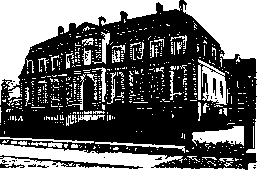
Figure 1. Pasteur Institute in Paris.
With this money, by the end of 1888, a large building for the Pasteur Institute was built and opened in Paris (Fig. 1). Already at the end of 1885, patients from Russia appeared among those bitten. At first, Pasteur was not inclined to grant permission for the establishment of vaccination stations outside of Paris. He believed that "for the treatment of hydrophobia, patients, in view of the length of the incubation period, can arrive in Paris from any locality in Russia in time." At that time, there was no accurate statistics on bites, the possible scale of the work was unknown, and Pasteur thought that his laboratory would cope with all the needs. But soon, peasants from Smolensk, Oryol, Penza, Vladimir, Tver, and Kostroma provinces, severely bitten by rabid wolves, began to arrive in Paris from Russia in groups. In total, 44 people bitten by wolves were brought. They arrived, of course, with a great delay. Despite the vaccinations, several of them died of rabies, partly in Paris and partly upon returning to their homeland. This prompted Pasteur to give his consent to the opening of vaccination (Pasteur) stations against rabies outside of Paris. In Russia, 5 Pasteur Stations were opened during 1886 alone. The first to open was the Odessa Pasteur Station, where vaccinations against rabies were started on June 11, 1886, by N. F. Gamaleya (see), who had been previously sent to Paris to familiarize himself with the vaccination method. Soon the Odessa Pasteur Station expanded into the Odessa Bacteriological Institute, where, in addition to Pasteur vaccinations, scientific work in bacteriology and practical courses in bacteriology for doctors began under the guidance of Mechnikov (see), with the participation of Gamaleya, Bardakh, and Diatroptov; on June 17 of the same year, 1886, the Pasteur Station in Warsaw began vaccinations. The third to begin work on July 2, 1886, was the Pasteur Station in Samara at the Samara Provincial Zemstvo Hospital. On July 13, 1886, the St. Petersburg Pasteur Station, organized at the veterinary infirmary of the Horse Guards Regiment, began its work. Two rabbits infected with the fixed virus of the 116th-117th passage were brought from Paris, and from them, the station began to further cultivate the virus. Pasteur sent two of his young associates to the opening of the station. In the same July 1886, Pasteur vaccinations also began in Moscow at the former Alexandrovskaya Hospital. Since 1918, the Moscow Pasteur Station has been part of the Mechnikov Institute of Infectious Diseases. In the same year, 1886, on July 19, vaccinations against rabies began to be performed in Moscow at the Moscow Military Hospital, but a few months later this station was closed, and all vaccinations were concentrated at the former Alexandrovskaya Hospital. It is interesting to note that the chronicle of the journal "Vrach" reported on the opening of the first Pasteur Stations in Russia and invariably added that "while being enthusiastic about vaccinations, one should not forget the most important thing, i.e., about limiting the possibility of being bitten," about the fight against rabies among dogs through veterinary-sanitary measures. The vaccinations themselves were met with great distrust: a relatively small number of people had managed to receive vaccinations; at the same time, there was no reliable statistics on the mortality of those bitten without vaccinations; in such a state of affairs, doctors naturally could not gain confidence in the usefulness of the Pasteur method. In the debate on the report of Dr. Kessler at the St. Petersburg Medical Society on October 14, 1886, one of those present considered himself entitled for the time being "not to advise vaccinations to those bitten," while another considered it premature to speak out against Pasteur vaccinations, "which at least cannot be denied a psychic influence." But the number of Pasteur Stations still gradually grew in Russia. In 1887, a Pasteur Station opened in Kharkov, in 1888 in Tiflis, in 1896 in Kiev, etc. By 1916, there were 30 Pasteur Stations in Russia, at which almost 46,000 people were vaccinated during that year. Pasteur Stations were opened with the funds of zemstvos and cities; on the initiative of medical societies, a station of the military department and a station of the railway department (Irkutsk) were opened, and some belonged to private doctors or charitable organizations. Many Pasteur Stations expanded the scope of their work and developed into bacteriological institutes, and from the St. Petersburg Pasteur Station in 1890 grew the State Institute of Experimental Medicine. After the war of 1914-18, four Pasteur Stations remained outside the USSR (Warsaw, Vilna, Helsingfors, Riga), the Mogilev Pasteur Station was transferred to Gomel, the Pasteur Station from Orsha was transferred to Vitebsk, and from Feodosia to Simferopol. In recent years, along with the rapid growth of the network of medical institutions, the number of bacteriological institutes and laboratories has grown significantly, which now also include Pasteur Stations. By January 1, 1929, 71 Pasteur Stations were operating on the territory of the USSR. As for the development of the network of Pasteur Stations abroad outside of Paris, the first to open was the Pasteur Station in Vienna, which was initially opened as a private enterprise by Dr. Ullmann in July 1887; in September 1887, Pasteur Stations opened in Italy (in Turin and Naples) and then in other countries. Since 1923, an increase in the number of those bitten on the territory of the USSR has been noted; the need to bring Pasteur vaccinations closer to the population, as well as the large monetary expenses associated with sending and maintaining patients, difficulties in accommodating visitors in apartments, and the overload of the work of Pasteur Stations made it necessary to be concerned with the decentralization of anti-rabies vaccinations. Pasteur Stations began to organize branch anti-rabies points, where the finished vaccination material from the main station was sent. The first to start sending vaccine to local areas were Ufa and Vladivostok, then Vladikavkaz and Rostov-on-Don. The distribution of vaccine was also practiced abroad. Kraus distributed anti-rabies vaccine in Argentina, and Puntoni organized a number of branch vaccination points at the Pasteur Station in Rome. The practice of life indicated the expediency of this measure and its benefit for those bitten (see below). Premises, equipment, and working conditions of Pasteur Stations. The work of Pasteur Stations and anti-rabies points in the RSFSR is regulated by the aforementioned "Regulations on Pasteur Stations." According to these "Regulations," Pasteur Stations are under the jurisdiction of the relevant health departments and are opened with the permission of the People's Commissariat of Health. They can be established both independently and as departments at bacteriological institutes or large bacteriological laboratories. Each new station must be provided with qualified personnel, premises, and equipment, according to the instructions. The minimum staff for any Pasteur Station is as follows: a head (bacteriologist doctor), a laboratory assistant (bacteriologist doctor), 1 preparator, 2 attendants. At the head of a Pasteur Station must be a doctor who has interned for at least 2 years at a large bacteriological institution and has received special practical training at a large Pasteur Station. The administration of anti-rabies vaccinations is free of charge in all cases without exception. The "Regulations" further provide for the mandatory establishment of free (at the expense of health departments) dormitories for visiting patients who have been bitten. Pasteur Stations submit brief reports on their work to the appropriate health department within the time limits and in the form established by the People's Commissariat of Health. Large Pasteur Stations can, if necessary, open peripheral anti-rabies points as their branches for performing anti-rabies vaccinations on-site with vaccine manufactured by the given Pasteur Station. Local anti-rabies points can be organized only at medical institutions provided with laboratory service. Permission to open each new point is given by the relevant health department after the conclusion of the Pasteur Station. The management of an anti-rabies point can be entrusted only to a person who has undergone special training at one of the large Pasteur Stations. A Pasteur Station that distributes anti-rabies vaccine to its branches is obliged to control the work of the points through visits and correspondence. Reporting on anti-rabies points must be received by the Pasteur Station and included in the annual report as a special paragraph. As for the premises, according to the "Regulations," an independent Pasteur Station must have the following rooms: 1) an entrance hall, 2) a waiting room, 3) a reception room for interviewing, examining, and registering patients, 4) a dressing room, 5) a vaccination room, 6) an operating room for infecting Pasteur rabbits and removing the brain, 7) a room or box for preparing the vaccine, 8) a laboratory, 9) a workroom for washing dishes and sterilization, 10) a room for infected rabbits with an isolated section for rabbits infected for the purpose of obtaining material for the vaccine, 11) a room for autopsies of animal carcasses and heads, 12) a room for reserve rabbits (rabbit hutch). To maintain the fixed virus, it is recommended to take rabbits weighing 1,500
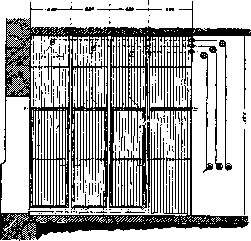
Figure 2. Cages for rabid dogs. Front view. 2,000 g, completely healthy, kept for 1 week in quarantine. Operations on rabbits are conducted according to the rules of asepsis. Rabbits infected with the fixed virus must become ill typically; brains from rabbits that have died on time or were killed in agony may be used; brains are extracted by pushing out according to the Japanese method and are subjected to the processing adopted at the station. Control cultures are made from each brain. To the extent possible, Pasteur stations must conduct scientific work in the field of studying rabies, for which they must be provided with the appropriate scientific environment. An exemplary inventory of a Pasteur station is attached to the "Regulations," including furniture for each room, laboratory instruments and apparatus, tools, glassware, and chemical preparations necessary for the work of the station. Cages for housing dogs suspected of rabies must be constructed particularly sturdily. In these cages, double doors are installed, between which a feeding trough is placed. When the inner door is lowered, one can safely place the feeding trough (Figs. 3 and 4).
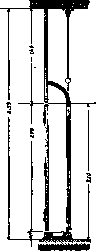
Figure 3. Construction of a double door in cages for rabid dogs. Side view. A feeding trough is placed between the doors. The inner door is lifted upwards on a chain.
Dog cages must be sufficiently numerous, in accordance with the needs of the city where the institution is located. In Leningrad, the vaccination department of the Institute of Experimental Medicine has at its disposal up to 60 cages for dogs and cats suspected of rabies, and in the summer months, these premises are sometimes insufficient. Types of Pasteur stations. Existing Pasteur stations on the territory of the USSR at the present time in most cases are part of bacteriological institutes and sanitary-bacteriological laboratories, which seems most practical. Although according to the "Regulations on Pasteur Stations" they should have inpatient departments for visitors, some stations do not have them, and those bitten are placed for the duration of vaccinations in a House of the Collective Farmer or in local hospitals, or finally, they are given a daily allowance for living in private apartments. An isolation ward for housing the sick exists only at the Moscow Pasteur station; the sick are placed in the isolation ward, regardless of vaccinations, as well as those who have not received vaccinations. In Moscow, over the entire time of the existence of the Pasteur station, 1,800 patients have passed through the isolation ward, i.e., about 40 per year. With a small number of hydrophobics, an isolation ward may not be set up, but one should secure the consent of the nearest clinic or hospital regarding the unhindered admission of such patients. In such a hospital, the necessary environment can also be created. Widely established quarantining of animals that have inflicted bites exists only at the Leningrad Pasteur station. The remaining Pasteur stations either have a few cages or the entire matter of animal supervision is transferred to the hands of veterinary supervision. Modern network of Pasteur stations and a general outline of the work of Pasteur stations in the USSR. As of January 1, 1929, 71 Pasteur stations were operating on the territory of the USSR. A list of them and the years of their opening are indicated in the table. The majority of Pasteur stations are located in the European part of the USSR; there are 19 Pasteur stations in the Asian part. In 1928, 51 Pasteur stations were operating in the RSFSR, 12 in the UkrSSR, 3 in the BSSR, 2 in the ZSFSR, 1 in Turkmenistan, and 2 in Uzbekistan. Dormitories existed at 43 Pasteur stations. The Moscow Pasteur station works most intensively, which as of 1/1/1923 had vaccinated 128,828 people out of 644,089 bitten, vaccinated by the specified date at all stations of the USSR. This amounted to 20% of the total work. Following in the number of those vaccinated: Kiev Pasteur station-by 1/1/1925 97,000 people, Odessa-by 1/1/1927 86,579 people, Kharkov-by 1/1/1928 56,912 people, and Leningrad-by 1/1/1931 51,325 people. Cities provide a significant part of the work of Pasteur stations: for example, Moscow in 1923/24 provided 59% of all those who applied, Odessa in 1925/26-65%, Leningrad in recent years-50-60% of those bitten. At all Pasteur stations for 1927, among those vaccinated, 30% were local residents, the rest were visitors. For the success of vaccinations, a quick appearance for treatment is very important. The decentralization of Pasteur vaccinations, having unloaded the Pasteur stations, at the same time facilitated the possibility of a quick appearance, bringing anti-rabies points closer to the population. According to Dubrovinsky, on average, at all Pasteur stations, 74-75% of those bitten arrived for treatment within the first week after the bite, and at the points-78%. The largest number of patients come due to dog bites (85%); cases of cat bites occur on average 6-8%, wolf bites in recent years are less than 1%, and bites by other animals account for about 5%. At the Leningrad Pasteur station in recent years (1929-1930), 81-83% were bitten by dogs, 14% by cats, and quite often (2-3%) those bitten by rats began to appear.

The degree of certainty of rabies in the biting animal at our Pasteur stations is confirmed histologically only in a minority of cases. On average, only 10% of those bitten are classified into the 1st category, i.e., verified by finding Negri bodies in the brain of the animal that inflicted the bite (1923-24). At the Leningrad Pasteur station in 1929-30, animal rabies was confirmed by the finding of Negri bodies in 22-26%, for which it was necessary to perform 439-447 brain examinations, with a successful result obtained in 43-62%. Anti-rabies points began to be organized from 1921, and by 1928, 285 anti-rabies points were operating at 38 Pasteur stations. Some points (Ivanovo-Voznesensk, Kostroma, Pskov, Ryazan, Stalingrad, Kherson) have already become independent stations. At first, anti-rabies points of the RSFSR were opened only at laboratories, but the demands of life and modifications in the methods of preparing anti-rabies vaccine allowed this condition to be relaxed. By 1/1/1925, 96 points were organized at laboratories, 75 at hospitals, 14 at outpatient clinics. Laboratory conditions were required because some Pasteur stations sent out vaccine according to Calmette (pieces of dried brain soaked in sterile glycerin). Grinding such pieces for the preparation of vaccine at the points required sterile glassware, which could only be had in laboratories. On the other hand, laboratory conditions made it possible to examine the brains of biting animals in case they were delivered to the point. But stations using the Phillips or Fermi vaccine send the preparation already completely ready for use, so it was possible not to insist on laboratory conditions and to open points at hospitals and outpatient clinics. The basic requirement remains in full force that vaccinations at anti-rabies points be conducted by doctors who have familiarized themselves practically with this matter at Pasteur stations. The points significantly facilitated the work of the Pasteur stations. In 1926, 18,744 people were vaccinated at the points, and in 1927-34,967 patients, vaccinated at the points-0.04%. At the Leningrad Pasteur station, the mortality rate among those bitten (excluding those slobbered on) in 1927-28-29 was equal to 0.25-0.09-0.09%, and at the points-0.24-0.1-0.1%. When evaluating these figures, it should be borne in mind that the points often do not take responsibility for severely bitten patients, but send them to the main station. The consumption of vaccine at anti-rabies points per 1 patient is somewhat higher than at the main station. The Odessa station determines the normal consumption per 1 patient as 75-80 cm3, while at the points at the Odessa Pasteur station, 108 cm3 falls to 1 patient. This circumstance can be explained by the fact that points remote from the station are forced to keep certain stocks of vaccine; in the absence of patients, the vaccine can become unusable from long storage.
A very important measure for evaluating the results of Pasteur vaccinations is the collection of information on the subsequent fate of the vaccinated. At present, Pasteur stations have the right to send out special postcards free of charge by mail with a pre-printed form for a reply. In cities, such inquiries are sent to the address of the patient themselves, and in rural areas, it is recommended to send them to the nearest outpatient clinic at the patient's place of residence. Inquiries are sent out one year after vaccination. The Leningrad Pasteur Station has been sending out such letters for three years now and has not yet received a single report of deaths from hydrophobia among the vaccinated. Along with this, reports are sometimes received about the deaths of former patients from incidental diseases. Observation of the animals that inflicted the bites is widely implemented only at the Leningrad Pasteur Station (Institute of Experimental Medicine). According to the existing regulation, all dogs and cats that have bitten people in Leningrad are sent to the vaccination department of the Institute of Experimental Medicine; here they are subjected to a 10-14-day quarantine. This makes it possible to leave a great many of those bitten without vaccinations. During 1927-30, 5,219 animals turned out not to be rabid; consequently, a corresponding number of those bitten could be exempted from vaccinations. In Western Europe, Pasteur stations exist at present in almost all states. In non-European countries, there are 54 Pasteur stations, and in all countries (except the USSR), 176 Pasteur stations are in operation. According to data from the Paris Congress on Rabies, by 1926, Pasteur stations throughout the world had vaccinated 1,164,264 people. Rabies does not currently exist, and therefore there are no Pasteur stations, in Great Britain, Denmark, Norway, Sweden, and Australia. The situation in Great Britain is particularly interesting and instructive. Rabies existed in Great Britain at the end of the 19th century and in the 80s and 90s resulted in up to 670 cases of canine disease per year. Bitten Englishmen were sent to Paris for vaccinations. Pasteur stations were not opened in England, but through the systematic use of muzzles and other veterinary-sanitary measures, rabies was completely eradicated among dogs. A very important measure was the prohibition of importing dogs from the European mainland without prior 6-month veterinary observation. The last rabid dog was noted in England in 1902. But in 1918, during the war, a dog was brought in by airplane from the French front. This dog fell ill with rabies and caused an outbreak of this epizootic, which lasted until 1921. During 1918, about 100 cases of rabies in dogs and several dozen bitten people were noted. This forced the opening of a Pasteur station in London, from where anti-rabies vaccine was sent to 6 locations. Vigorously implemented veterinary-sanitary measures quickly liquidated this outbreak of rabies, and in 1922, the London Pasteur Station was closed. Lit.—see the literature for the article Pasteur vaccinations.
Related articles
Mentioned in
Cite this page
“Pasteur Stations.” Soviet Medical Encyclopedia. English translation of Bolshaya Meditsinskaya Entsiklopediya, 1st ed. (Moscow, 1928–1936), ed. N. A. Semashko. https://sovietmedicalencyclopedia.pages.dev/article/pasteur-stations/