Pendulum
Historical document, translated for reference. It reflects medical knowledge of the 1920s–30s and is not medical advice.
Summary
This article from the 1928–1936 Soviet Medical Encyclopedia explains the physical principles of the pendulum, including mathematical and physical pendulums, the laws of oscillation, and its applications in instruments such as clocks, metronomes, and balances.
Encyclopedia article (1928–1936)
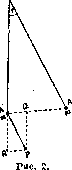
PENDULUM, in the most general sense, any heavy rigid body capable of rotating around a certain axis lying above its center of gravity. Under the action of gravity, such a body is in stable equilibrium, because the center of gravity tends to occupy the lowest possible position. If this body is displaced from its position of equilibrium (Fig. 1) and left to itself, under the influence of gravity it will return to the position of equilibrium, but by inertia will continue to move, deflecting in the opposite direction, and upon reaching a position symmetrical to the initial deflection will stop, then again begin to move toward the position of equilibrium, and so on. If axis friction and air resistance were absent, such pendulum-like oscillations would continue indefinitely. In reality, however, the initially imparted energy reserve is gradually dissipated, turning into heat: the pendulum performs d a m p e d oscillations and gradually stops. In the theory of the pendulum, the simplest case of the mathematical pendulum is initially considered, i.e., a heavy material point suspended on an inextensible, weightless thread. Let us deflect such a pendulum OA (Fig. 2) by an angle <r from the position of equilibrium. The force of gravity acting on the mass of the pendulum ball and represented by the arrow A'P is decomposed into two components: A'R, which tends to stretch the thread, and A'Q, which is perpendicular to it. Component A'R is destroyed by the resistance of the thread, and component A'Q causes the pendulum to return to the position of equilibrium. This is precisely the force that directly causes the oscillations of the pendulum. Mathematical research shows that this force is always directed toward the position of equilibrium and is proportional in magnitude to the deviation from the position of equilibrium. From this it follows that the oscillations of the pendulum are h a r m o n i c (see Oscillations); using the formulas of harmonic oscillation, it can be shown that the time of a full oscillation of the pendulum (i.e., the time during which it passes from one extreme position to the other and returns back) for small deflection angles <p is expressed by the following formula:
T = 2̀ͷV^ (1) where l is the length of the pendulum, and g is the acceleration of gravity at a given point on the earth. From this formula it is seen that the period of oscillation of a mathematical pendulum depends only on its length and the acceleration of gravity, and does not depend, for example, on the angle of deflection (i.e., on the amplitude; see Oscillations) or on the mass. This is the so-called property of isochronism of the oscillations of the pendulum. For large angles, one has to take into account the dependence on the angle <p; however, even for <p around 10°, the correction is a fraction of a percent. For the case of the physical pendulum shown in Fig. 1, the period of oscillation is expressed by a more complex formula, since in this case the moment of inertia must be introduced. The final formula has the following form: T = 2ΓV(I / mgs) (2) where I is the moment of inertia, m is the mass, g is the acceleration of gravity, and s is the distance from the axis of rotation to the center of gravity (OC in Fig. 1). We see that the property of isochronism is preserved in this case as well. If we set I / ms = l in formula (2), the formula will take the form: T = 2ΓV(l / g), i.e., it will be identical with the formula of the mathematical pendulum. In this case, l—the length of the mathematical pendulum having the same period as the given physical one—is called the reduced length of the physical pendulum. The pendulum has very numerous applications. Among them, the most famous is the application of the pendulum in clocks; the metronome, so frequently used in experimental technique, is a physical pendulum; balances can also be treated as a physical pendulum, and so on.
A. Shpolsky.
Related articles
Mentioned in
Cite this page
“Pendulum.” Soviet Medical Encyclopedia. English translation of Bolshaya Meditsinskaya Entsiklopediya, 1st ed. (Moscow, 1928–1936), ed. N. A. Semashko. https://sovietmedicalencyclopedia.pages.dev/article/pendulum/