Biological Physics
Historical document, translated for reference. It reflects medical knowledge of the 1920s–30s and is not medical advice.
Summary
This article from the 1928–1936 Soviet Great Medical Encyclopedia explores the application of physics to biology and medicine, covering hemodynamics, joint mechanics, wave motion and acoustics in relation to percussion, and optical principles in microscopy and ophthalmology.
Encyclopedia article (1928–1936)
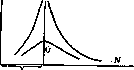
BIOLOGICAL PHYSICS (biophysics), a branch of science concerned with the application of physics to biology. Biological physics is of immense interest not only to biological sciences in general, but chiefly to medicine in view of the great practical applications of biophysics in the field of practical medical knowledge. The founder of this part of science can be considered the Petersburg academician Leonhard Euler (1707–83), the greatest mathematician of his time and one of the creators of differential, integral, and calculus of variations. In his works, Euler was the first to solve the problem of blood flow in vessels by applying a strict mathematical method for this purpose. Further work in this regard belongs to the French researcher Resal. These studies were completed with complete perfection by Zhukovsky, who provided a general formula for the propagation of elastic pulse waves in tubes, which worked remarkably well when applied in practice. Empirical models of blood circulation, consisting of a system of elastic closed tubes filled with water, were first studied from the physical side by the Weber brothers; then this system was improved by the work of Marey, who succeeded in constructing a model extremely close to reality and reproducing all the phenomena observed in the arterial and venous systems. These works also made it possible to understand a number of interesting pathological cases and thus became indispensable for clinical medicine.-The second area of biological physics of great importance for practical medicine is the mechanics of a rigid body about a fixed point, also created by the labors of Euler. This area served as the basis for the doctrine of the movement of the joints of the human body and for the movement of the eyes, and here too strict mathematical laws were established. The works of Listing, Helmholtz, and especially recently the research of Fischer (O. Fischer) have brought the doctrine of articulations to a high degree of perfection and made it possible to apply it in cases of the diagnosis of dislocations (Albert).-The doctrine of oscillations and wave motion in a medium has also found immense application in biological physics. First of all, mention must be made of the development of the doctrine of oscillations with a finite amplitude, first established by Helmholtz and developed in later experimental research. The acoustics of oscillations with a finite amplitude arose for the first time due to the demands of physiology, and a series of classical studies belonging to Riemann and Rayleigh brought this question to completion. Helmholtz's research on auditory sensations had a huge influence on the further development of the doctrine of oscillations, giving him for the first time the opportunity to analyze the timbre of musical instruments and to synthesize both sounds in general and our vowel sounds. Of particular importance was Helmholtz's study of resonance phenomena, which made it possible to establish the general laws of resonance. If we imagine that along the horizontal axis (see Figure 1), the abscissa axis, are plotted-_
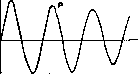
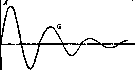
the numbers of oscillations N, and along the vertical axis - the oscillation amplitudes A of a given system arising under the influence of its excitation by sounds of the corresponding frequency, then we obtain a curve having a maximum, as shown in the figure. The same figure shows some typical curves corresponding to different damping, and the smaller the damping, the sharper the curve and the longer the oscillating system will vibrate, producing a more sustained sound. Curve P has less damping than curve G. Figure 2 depicts the oscillations of two systems: one with large (G) and the other with small damping (P). The study of percussion from the standpoint of oscillations produced by acoustic systems has recently led to extremely interesting results and has shown that the different character of the so-called tones or, rather, noises obtained during percussion depends on the degree of damping of oscillations in the areas of the body where percussion sounds arise. Thus, for example, if there is a cavity with elastic walls inflated with gas, the oscillations of such a cavity correspond to the oscillations of a closed resonator creating acoustic vibrations with very small damping. In this case, the sound, as known from practice,
Figure 1.
is tympanitic, and consequently, a tympanitic sound corresponds to small damping and a prolonged duration of sound, associated with a small change in amplitude over time (curves P, figs. 1 and 2). A clear sound is produced in such spaces where there is a large number of elastic walls to which the sound vibrations of the air filling the given organ are transmitted. The damping here is greater due to the transfer of energy to the organ; the sound changes from tympanitic to clear. Finally, if there is a cavity filled with liquid, or if there is some consolidation of the organ or its edematous state, the clear sound transitions into a dull sound, which exhibits the greatest damping. Thus, percussion data can be linked to the physical properties of the sound occurring during percussion, and in this way an objective characterization of various kinds of sounds can be obtained. This is especially clear when recording oscillations produced by percussion using microphones connected to an Einthoven galvanometer. Recently, work from the Institute of Biological Physics of the People's Commissariat of Health has revealed an interesting analogy that exists between the propagation of elastic waves in the earth's crust (seismometry) and elastic waves inside our body. Systematic work in this field promises to yield new practical methods for examining the state of internal organs.
The application of optics in the field of biology is of very great importance. Not to mention the fact that, thanks to modern geometrical optics, the use of modern microscopes, immersion systems, and apochromats has become possible, the doctrine of diffraction has made it possible to develop modern ultramicroscopy, which has found such extensive application in bacteriology and led to the discovery of the spirochete by Schaudinn. The development of the doctrine of the refractive properties of the eye, accomplished by the work of Helmholtz, has also led to a number of new theoretical problems in geometrical optics. One of them is refraction by a system consisting of media with a continuously changing refractive index, as observed in our lens. These works were completed by the research of Gullstrand, who generalized and further developed Helmholtz's doctrine, extending it to optical systems with a finite aperture of the incoming beam of rays. Gullstrand constructed a number of remarkable apparatuses widely used
Figure 2.
in ophthalmology: as an example of such instruments, one must mention his famous ophthalmoscope.-All methods of illuminating the internal parts, so-called enteroscopy, are also connected with the successes of optics. Finally, one should mention X-rays as a powerful means for diagnosis and therapy, and radium and its action, to show how great and important the applications that can currently be made from physical methods are. X-rays have not only provided new data in the field of human anatomy, but have also made it possible to experimentally study the phenomena of food movement in the gastrointestinal tract, heart movement, etc. In the field of theoretical biology, the application of physical research methods has also created enormous successes. First of all, one must note the physicochemical research of Loeb on artificial parthenogenesis. By studying the development of animal eggs, Loeb showed that it is possible to cause the division of an egg and embryo without using fertilization: it is sufficient to subject the egg to a certain sequence of treatment with chemical reagents-and the egg begins to divide, undergoing changes observed after fertilization. Thus, Loeb succeeded in imitating the natural development of the egg by treating it with chemical reagents, and reducing one of the most complex biological processes to a simple physicochemical phenomenon. Even more complex processes have been studied by Loeb, Nernst, and Lazarev in the phenomenon of excitation. Loeb showed empirically, Nernst theoretically, on the phenomena of nerve irritation, that the ions of salts, which play a huge role in the phenomena of egg division, also cause nerve irritation phenomena. Assuming that such an action of ions depends on their ability to produce changes in the aggregate composition of proteins, Lazarev derived the fundamental law of excitation and showed that ions are the primary cause of excitation in all cases, and that ions may belong either 1) to the organ itself (and be transferred due to the action of electric current or diffusion; ions may arise in organs due to chemical reactions), or 2) they can be brought to the organ from outside, due to diffusion from the surrounding environment. In all these cases, with a certain ratio between ions of different valences, the process of excitation occurs. The theory that considers all phenomena of excitation from the point of view of the ionic theory of solutions is called the ionic theory of excitation. Using the ionic theory, one can develop a mathematical theory of nerve and muscle excitation, investigate vision, hearing, taste, and smell. These studies make it possible to establish for the threshold of irritation certain relationships between external irritants, already verified and confirmed by experience. Research on the ionic theory leads to some paradoxical conclusions, which, however, upon closer examination, turn out to be perfectly justified by experiment. One of such paradoxical conclusions is the conclusion that the visual centers are tireless and that eye fatigue, which occurs with bright illumination, exists only on the periphery of the visual apparatus. Experiments carried out with direct electrical irritation confirmed this conclusion. The reasons for such tirelessness lie in the periodic fluctuations of the excitability of the centers, similar to the periodic changes in the excitability of the heart during its work. At the same time, interesting analogies were discovered between the periodic activity of the centers and periodic chemical reactions. Such reactions probably also occur in the centers. Finally, the ionic theory of excitation for the first time put pharmacology on a theoretical basis; it became possible, using the simplest physicochemical methods, to predict the results of the action of certain medicinal substances that cause certain changes in the body's blood vessels. Without going into a more detailed consideration of these areas of biological physics, one can only point out that the above-mentioned studies lead in a certain way to the idea that the organism must be considered as a certain physicochemical mechanism. Exactly the same point of view can be developed if one studies the thermodynamics of the organism, especially developed in recent years. The basis of thermodynamics is two principles. The first principle, or the law of conservation of energy, as shown by Helmholtz and as clarified by the experiments of later research, is fully applicable to the organism; the phenomena of metabolism in the organism are entirely subject to the law of conservation of energy. Along with the 1st principle, thermodynamics has a 2nd principle, which makes it possible to determine the direction of processes occurring in nature. This principle has been developed by the works of Clausius, Thomson, Helmholtz, and Boltzmann. The study of the second principle of thermodynamics and its application to the organism led to the conclusion that this law is also applicable to the organism. Thus, at present, one can with complete confidence consider the organism as a physicochemical mechanism and, therefore, use physicochemical methods not only for studying the properties of the organism, but also for constructing models of processes in the organism, which are the basis of any theoretical study. One of the most interesting questions related to the ionic theory of excitation is the question of the connection between mental processes and physical phenomena in the organism. The ionic theory leads to the conclusion that certain and constant changes in the material substrate of the organism cause certain and constant sensations, if other conditions remain equal, and thus a connection is established between the higher nervous activity and the material substrate of the organism's sensations. The ionic theory of excitation also makes it possible to generalize the Weber-Fechner law and extend it to all organs and all irritations and allows one to establish a certain relationship between it and the 'all or nothing' law. One of the current and most interesting questions in biological physics is the question of creating, not theoretically, but in the laboratory, that living substrate in which all life phenomena can occur. It is known that Pasteur's experiments seemed to give a negative answer in this regard, but they did not make it possible to conclude that under no conditions is the transformation of matter possible. That combination of individual molecules that exists in living protein may be such that its reproduction becomes very unlikely under current conditions and therefore practically escapes our observation, but that under certain conditions it is possible to obtain living protein from non-living protein. The obtaining of living protein from dead matter thus, from the point of view of modern biological physics, becomes a process not without foundation. The development of biological physics became especially favorable and rapid after centers arose in which this branch of science is systematically cultivated. The first center in terms of time of origin (1917) is the State Biophysical Institute of the People's Commissariat of Health with its departments. At present, a large institute dedicated to the problems of biological physics and biochemistry is being built in Paris. Finally, in America, a number of laboratories have been created working in the same direction.
Related articles
Mentioned in
Cite this page
“Biological Physics.” Soviet Medical Encyclopedia. English translation of Bolshaya Meditsinskaya Entsiklopediya, 1st ed. (Moscow, 1928–1936), ed. N. A. Semashko. https://sovietmedicalencyclopedia.pages.dev/article/biological-physics/