Sphygmograph
Historical document, translated for reference. It reflects medical knowledge of the 1920s–30s and is not medical advice.
Summary
A sphygmograph is an apparatus for the graphic registration of the pulse (sphygmography), which gained widespread use in practical medicine. The article describes various types of sphygmographs, including those by Marey, Dudgeon, and Frank-Petter, explaining their mechanisms and advantages for recording arterial pulse waves.
Encyclopedia article (1928–1936)
SPHYGMOGRAPH (from Greek sphygmos - movement, oscillation and grapho - I write), an apparatus for the graphic registration of the pulse (sphygmography), which has gained widespread use in practical medicine; it was first constructed by Vierordt. Due to significant shortcomings, it soon gave way to more perfect designs, of which the sphygmograph by Marey enjoyed the greatest fame for a long time. The requirements imposed on such apparatuses reduce to the most accurate possible reproduction of those oscillations of the arterial wall that are the result of the rhythmic pumping activity of the heart. Most designs are adapted for recording the pulse of the radial artery; these apparatuses properly bear the name sphygmographs; other types, more universal and suitable for recording the pulse of other arteries, are known under the name of pansasphygmographs. An essential part of each sphygmograph is a lever that registers the oscillations of the pulse on a moving plate. These oscillations are transmitted to the lever through a special button-pelote,
Figure 1.
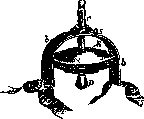
which is placed on the pulsating artery and thus serves as a connection between the lever and the artery. In view of the fact that a considerable layer of tissue (skin, subcutaneous fatty layer) is interposed between the pelote and the artery, the resistance of which must be overcome, the pressure of the pelote in the proposed systems is regulated in various ways. In Marey's sphygmograph (fig. 1), for this purpose a screw II serves, which presses on an elastic plate with the pelote fixed to it, thereby achieving the required pressure of the latter on the artery. The pelote in the center carries a pin S with a spiral thread, which in its excursions up and down engages a small toothed wheel te, mounted on a common axis with the lever r. The apparatus is equipped with a clock mechanism that moves a strip of smoked paper, on which the sphygmogram is drawn. With the help of straps N, the sphygmograph is firmly fixed on the forearm. Ludwig proposed a special holder (Arm-halter), on which the forearm rests while the hand squeezes a specially adapted wooden handle fixed to the holder's base. This position firmly fixes the arm and protects the apparatus from accidental vibrations. Marey's sphygmograph, however, leaves much to be desired in terms of more accurate recordings, and its further improvements, while preserving the same general design principle, came down to details which, however, gave many substantial advantages compared to its prototype. Thus, in Dudgeon's sphygmograph, to reduce the moment of inertia, the long lever is replaced by a system of two short levers, which is a substantial advantage both in terms of the amplitude of the curve and the significant reduction in lever inertia. Dudgeon's sphygmograph is still the most common in the clinic, although in terms of the accuracy of the sphygmogram it should give way to the very popular sphygmograph by Frank-Petter. The authors prefaced their design with a series of works of a purely theoretical nature and, on the basis of a rigorous mathematical analysis, gave a number of propositions that formed the basis of their system. The external appearance of Frank-Petter's sphygmograph (fig. 2), resembling Dudgeon's sphygmograph, advantageously differs from the latter in certain construction details. First, the lever a (fig. 3), which carries the pelote P at one end, rotates on a free axis, thereby achieving its maximum mobility. The short arm is tensioned by a spring Fx, the tension of which is regulated by a screw S. At the end of the long arm there is a hook, connected by a free ring to the lever b, which is held in equilibrium on one side by a spring F2, and on the other by the pull of the short arm of lever c, suspended on an axis with a spring F3. The writing pen slides along the smoked paper at an acute angle, and in order to ensure uniform pressure of the pen on the paper, the latter has a curvature in the plane of the pen's swing with a radius equal to lever c. In this apparatus, all conditions required by theory for the best possible registration are fulfilled to the greatest extent; the moment of inertia of the moving parts is reduced to a minimum; the double lever system (as with Dudgeon) allows increasing the amplitude of the pelote's oscillations from 5 to 80 times without losing the advantageous properties of a short lever; free axes, as well as the sliding of the pen at an acute angle, significantly reduce the friction of these moving parts. On the wall of the clock mechanism is mounted a time marker with a small lever that marks fractions of a second parallel to the sphygmogram. In addition to those just mentioned, a number of other systems have been proposed: by v. Frey, Jaquet, Hackett, etc., which however differ little from those of Marey and Dudgeon. Of the pansasphygmographs, the pansasphygmograph by Brondgeest stands out for its simplicity of construction and sufficient universality (fig. 4). A metal capsule K is stretched with an elastic membrane, to the center of which a wooden button-pelote P is attached. The outlet tube g is movable in the yoke of the horseshoe-shaped tripod b and can be fixed by a screw s at any height. After the horseshoe is fixed with a bandage on one or the other extremity, the capsule is moved down until the pelote presses with sufficient force on the pulsating area, and is then fixed with a screw. The outlet tube is connected to Marey's recording capsule (see Graphic method, Air transmission) with a rubber tube, and registration is carried out through air transmission. Polygraphs and cardiopneumographs are built on the same principle. Of the latter, Jaquet's cardiopneumograph is served by two receiving capsules, which transmit oscillations to two Marey's small drums placed side by side on the apparatus. With their levers, two recordings of the areas under study (e.g., atrium and ventricle) are obtained simultaneously. A third lever is intended for recording the pulse of the radial artery with the help of Jaquet's sphygmograph, mounted on a common base and thus forming part of the cardio-pneumograph. The apparatus is portable, fixed on the arm like a sphygmograph. Sphygmogram, see Pulse.
Figure 4.
A metal capsule K is stretched with an elastic membrane, to the center of which a wooden button-pelote P is attached. The outlet tube g is movable in the yoke of the horseshoe-shaped tripod b and can be fixed by a screw s at any height. After the horseshoe is fixed with a bandage on one or the other extremity, the capsule is moved down until the pelote presses with sufficient force on the pulsating area, and is then fixed with a screw. The outlet tube is connected to Marey's recording capsule (see Graphic method, Air transmission) with a rubber tube, and registration is carried out through air transmission. On the same principle are built polygraphs and cardiopneumographs. Of the latter, Jaquet's cardiopneumograph is served by two receiving capsules, which transmit oscillations to two Marey's small drums placed side by side on the apparatus. With their levers, two recordings of the areas under study (e.g., atrium and ventricle) are obtained simultaneously. A third lever is intended for recording the pulse of the radial artery with the help of Jaquet's sphygmograph, mounted on a common base and thus forming part of the cardio-pneumograph. The apparatus is portable, fixed on the arm like a sphygmograph. Sphygmogram, see Pulse.

Related articles
Mentioned in
Cite this page
“Sphygmograph.” Soviet Medical Encyclopedia. English translation of Bolshaya Meditsinskaya Entsiklopediya, 1st ed. (Moscow, 1928–1936), ed. N. A. Semashko. https://sovietmedicalencyclopedia.pages.dev/article/sphygmograph/