Quincke Edema
Historical document, translated for reference. It reflects medical knowledge of the 1920s–30s and is not medical advice.
Summary
Quincke edema is a localized angioneurotic edema of the skin, first described by Quincke in 1882. It manifests as periodic, circumscribed swellings of the skin and subcutaneous tissues or mucous membranes, often affecting the lips, eyelids, and cheeks.
Encyclopedia article (1928–1936)
Quincke Edema [edema cutis circumscrip-tum (Quincke), hydrops hypostrophos (Schle-singer)], angioneurotic limited edema of the skin. Attention to this disease was first drawn by Milton in 1876, but it was thoroughly studied by Quincke in 1882 and therefore bears his name. This disease is observed equally frequently in both men and women and usually develops at a young age, but it can also occur in infancy (case of Dinkelacker-a child 3 months) and in the elderly (case of Cassirer-a patient 69 years).-The symptomatology of the disease consists of periodically occurring limited edemas of the skin and subcutaneous tissues or mucous membranes, ranging from 2 to 10 cm and more in diameter, clearly protruding above the surrounding tissues. Sometimes they are pale, sometimes, conversely, redder than healthy tissues. Usually there is neither itching nor pain. These swellings can appear simultaneously in different parts of the body and usually disappear quickly, sometimes they last for several hours, and in rare cases for several days. Sometimes the edema is limited to certain areas, in other cases it affects entire limbs, half or the entire face, the scrotum, or even the entire body (case of Diethelm). The favorite sites for edema development are the lips, eyelids, and cheeks [see separate table (p. 255:-256), fig. 8, 9 and 10]. Schlesinger described periodic edema of the tendon sheaths, and a number of authors (Quincke, Gross, etc.)-the periosteum. The edema can be localized in the mucous membranes of the stomach and intestines, accompanied by pain and vomiting and simulating tabetic crises (Cassirer). Edema of the tongue is rare, but can be so severe that it leads to death due to suffocation. The edema can be localized in the uvula, in the soft palate and give a picture of croup. Schlesinger believes that attacks of bronchial asthma are caused by acute edema of the bronchial mucosa. Quincke believes that in some cases of serous meningitis there is limited edema of the brain. General cerebral phenomena have repeatedly been noted in Quincke edema. In Ullmann's case, simultaneously with skin edema, increased intracranial pressure, slowing of the pulse, loss of consciousness, cessation of breathing and convulsions were observed. A number of recurrent diseases, such as paralysis of the oculomotor nerve, edema of the eyelids, swelling of the parotid and submandibular glands, nervous rhinitis, hay fever, protrusion of the eyeballs, as well as attacks of Meniere's disease, according to many authors, may be of the same origin.-Quincke edema is observed mainly in nervous subjects and is often hereditary, with vasomotor disorders in ascending and descending generations being in some cases homogeneous, in others-different: migraine, asthma, urticaria, etc. (see scheme 1). Sometimes in one and the same patient, migraine can be combined in various ways with hay fever, angioneurotic edema, asthma, Cassirer described a case where there was Quincke edema in combination with hereditary migraine, periodic GansUn-y.paralytic paralysis of the oculomotor nerve and angioneurotic edema. Cold, psychic excitations, injuries, exogenous as well as endogenous intoxications and infections (malaria) can apparently be revealing factors for the development of the disease (Oppenheim). It should be assumed that acute edema is the result of a violation of the functions of the neuro-glandular apparatus (vegetative system and endocrine glands). Limited edema is of neurotic origin and should be contrasted with cachectic, stagnant, hydremic and inflammatory. Its mechanism of occurrence has not been clarified. To explain it, there are two theories: filtration and secretory. The first considers lymph as a filtrate of blood plasma, the second believes that in the formation of lymph, capillary cells participate. In the formation of edema, either the secretion of lymph by capillary cells increases or, through the nervous (vegetative) system, the properties of the vascular walls change in the sense that they pass more transudate. In any case, the formation of edema in Quincke edema is not simply the result of altered blood supply. There are no experimental studies to date to clarify the influence of nerves on the formation of lymph, but at the same time, the importance of innervation in the formation of edema is confirmed by both clinical and experimental-pathological observations. Cassirer distinguishes two groups of acute edema: he includes sporadic cases caused by paratypic factors in the first group; these are so-called toxic, auto-intoxication and infectious cases. These cases develop and proceed acutely; they usually do not recur, and if there are recurrences, they are always caused by the same cause. This group is closely related to urticaria and purpura. He includes hereditary cases in the second group, where the same form or similar angioneuroses (migraine, asthma) are transmitted in the family; here nervous symptoms are clearly evident in the clinical picture; in these cases, attacks occur regardless of external factors with a certain sequence or are caused by some psychogenic factors. Sometimes attacks are caused by endocrine factors (menstruation). The clinical difference between these two groups, however, is not absolute; so, in some observations, even with a clearly hereditary edema, individual attacks develop after exogenous harmful influences. Thus, it might be possible to think that both groups are essentially homogeneous and that the hereditary factor is not manifested in the 'sporadic' group only due to an insufficiently complete family analysis. On the other hand, it is easy to assume that the underlying instability of the vegetative system can be both hereditary and acquired. Thus, the question of the internal division of limited edema into two different forms cannot yet be considered resolved. In those cases where limited edema appears as a clearly familial disease, heredity was determined as more or less correctly dominant (see scheme 2). In some observations, the disease was transmitted without interruption through 5 generations. At the same time, certain peculiarities characteristic of one or another family were noted (e.g., edema of the epiglottis); this suggests that familial angioneurotic edema may be a collective concept uniting several clinically similar but biologically different forms. Schulze noted that during attacks, the amount of calcium in the blood decreases. In typical cases, the diagnosis of Quincke edema does not present difficulties; in less typical cases, diagnosis can sometimes be quite difficult; sometimes it is difficult to distinguish this disease from the related chronic recurrent urticaria. Acute edema can be a symptom of another disease, e.g., migraine, Basedow's disease, neuralgia, tabes, gliosis and compressions of the spinal cord, as well as hysteria in the form of white or blue edema. Hysterical edema is usually accompanied by other hysterical symptoms (paralysis, contractures and anesthesias). Babinski denies the hysterical etiology of edema.-:Quincke edema is very persistent, recurrences are very frequent, the disease can last for many years. In some cases, the condition improves with age. The danger to life occurs only in exceptional cases; in terms of prognosis, cases of edema of the tongue, nasopharynx and larynx are particularly unfavorable. Therapy leads to complete recovery only in rare cases. It is not always possible to prevent an attack or shorten its duration. In cases where the edema is associated with other diseases, it is necessary to treat the underlying condition. From food, those substances which in a specific case predispose to edema should be excluded. Alcoholic beverages should be prohibited in all cases. It is necessary to monitor the intestines and under no circumstances allow constipation. The diet should be predominantly milk-vegetable. Of internal remedies, strychnine and arsenic give the best results. Long-term intake of small doses of quinine (0.2) in some cases gave positive results. Dinkelacker saw good results from subcutaneous administration of atropine. Subcutaneous administration of adrenaline shortens the duration of the attack. In local edema of the eyelids, administration of adrenaline into the eye stopped the attack. Sometimes a positive result was noted from psychotherapy. In edema of the tongue or pharynx, immediate surgical intervention (scarification, tracheotomy) is necessary. Therapy should be mainly aimed at the general strengthening of the nervous system; hydrotherapy (showers, baths, etc.) is especially recommended.
in other cases-different: migraine, asthma, urticaria and pr. (see scheme 1). Sometimes in one and the same patient, migraine can be combined in various ways with hay fever, angioneurotic edema, asthma, Cassirer described a case where there was Quincke edema in combination with hereditary migraine, periodic GansUn-y.paralytic paralysis of the oculomotor nerve and angioneurotic edema.
Simple cold, psychic excitations, injuries, exogenous as well as endogenous intoxications and infections (malaria) can apparently be revealing factors for the development of the disease (Oppenheim).
It should be assumed that acute edema is the result of a violation of the functions of the neuro-glandular apparatus (vegetative system and endocrine glands). Limited edema is of neurotic origin and should be contrasted with cachectic, stagnant, hydremic and inflammatory.
Its mechanism of occurrence has not been clarified. To explain it, there are two theories: filtration and secretory. The first considers lymph as a filtrate of blood plasma, the second believes that in the formation of lymph, capillary cells participate.
In the formation of edema, either the secretion of lymph by capillary cells increases or, through the nervous (vegetative) system, the properties of the vascular walls change in the sense that they pass more transudate. In any case, the formation of edema in Quincke edema is not simply the result of altered blood supply.
There are no experimental studies to date to clarify the influence of nerves on the formation of lymph, but at the same time, the importance of innervation in the formation of edema is confirmed by both clinical and experimental-pathological observations.
Cassirer distinguishes two groups of acute edema: he includes sporadic cases caused by paratypic factors in the first group; these are so-called toxic, auto-intoxication and infectious cases. These cases develop and proceed acutely; they usually do not recur, and if there are recurrences, they are always caused by the same cause.
This group is closely related to urticaria and purpura. He includes hereditary cases in the second group, where the same form or similar angioneuroses (migraine, asthma) are transmitted in the family; here nervous symptoms are clearly evident in the clinical picture; in these cases, attacks occur regardless of external factors with a certain sequence or are caused by some psychogenic factors.
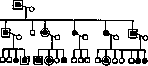
Sometimes attacks are caused by endocrine factors (menstruation). The clinical difference between these two groups, however, is not absolute; so, in some observations, even with a clearly hereditary edema, individual attacks develop after exogenous harmful influences. Thus, it might be possible to think that both groups are essentially homogeneous and that the hereditary factor is not manifested in the 'sporadic' group only due to an insufficiently complete family analysis.
Related articles
Mentioned in
Cite this page
“Quincke Edema.” Soviet Medical Encyclopedia. English translation of Bolshaya Meditsinskaya Entsiklopediya, 1st ed. (Moscow, 1928–1936), ed. N. A. Semashko. https://sovietmedicalencyclopedia.pages.dev/article/quincke-edema/