Synkinesias
Historical document, translated for reference. It reflects medical knowledge of the 1920s–30s and is not medical advice.
Summary
Synkinesias are involuntary muscle contractions that accompany voluntary movements. These can be normal physiological phenomena or pathological conditions resulting from central nervous system damage or congenital brain anomalies.
Encyclopedia article (1928–1936)
SYNKINESIAS, or associated movements (synkinesia, Mitbewegungen - German, mouvements associes - French authors), represent involuntary muscle contractions that accompany the performance of any active motor act. Various synkinesias are to a considerable extent characteristic of normal motor function. Under pathological conditions, these normal synkinesias often undergo significant changes in both inhibitory and excitatory directions. Additionally, under pathological conditions, the emergence of abnormal associated movements is possible, and this appearance of pathological synkinesias can have a dual origin: in these cases, we are dealing either with the development of certain local destructions in the central nervous system, as a result of which certain preserved areas of the nervous system develop states of persistent irritation, or with a congenital anomaly of brain development, which is characterized by some synkinesia not normal to the organism. In both cases, pathological synkinesia appears mostly as a sharp perversion or intensification of some normal synkinesia in the form of an involuntary movement from among phylogenetically ancient synergies that characterized some distant stage of development. Since many associated movements can be caused not only by active but also by corresponding passive movements, it is clear that a sharp boundary cannot be drawn between synkinesias and so-called "position reflexes" (see Magnus-Klein reflexes). Indeed, the study of involuntary associated or induced movements constantly goes hand in hand with the study of complex reflexes of standing, rising, etc. For understanding the mechanism of normal associated movements, it is necessary to keep in mind that the contraction of muscles directly necessary for performing a motor act, for example, the contraction of finger flexors when taking an object, is inevitably accompanied by a complex series of additional accompanying movements (see Movements). The study of many normal associated movements shows that they are most highly developed in infancy and childhood. Gradually, with exercise and improvement of the function of isolated voluntary movements, many initial synkinesias are increasingly suppressed and recede to the background. It is known that motor training in any new motor skill consists not only in the ability to quickly, accurately, and clearly produce the required movement, but also in the ability to suppress synkinetic impulses (involuntary movements of the tongue when teaching writing to children, tendency to mirror-symmetrical movements of the hands when teaching piano playing, etc.) that arise involuntarily during this process. Thus, it should be recognized that abundant development of synkinesias characterizes primitive kinetics above all; it is not surprising that it is observed again if the functions of the complex nervous system are somehow reduced, as in certain pathological processes or under physiological experimental conditions. The anatomical substrate of normal associated movements is not yet precisely known for each of them. Apparently, this substrate is very diverse, ranging from the most elementary possibility of direct irradiation of irritation from the motor cells of the anterior horns of the spinal cord or analogous bulbar motor nuclei to adjacent or opposite formations, and up to much higher and very complexly constructed automatic mechanisms located in the covering of the brain stem (see Subcortical functions), and even to more orally located systems of the striatum. With regard to this latter formation, it should be kept in mind that anatomical-clinical research of recent years increasingly clarifies the role of basal ganglia as the central organ of automatic mobility and associated movements. Given the extreme variety and complexity of voluntary kinetics in animals and especially humans, it appears difficult to isolate from it separate, more elementary mechanisms. Systematic research in this direction has in fact only begun in recent years. The embryological and comparative-ontogenetic methods promise to give the most valuable data in this field. Thus, Minkowski found in living human embryos aged 3 to 5 months, obtained during obstetric operations, fairly typical Magnus and de Klein neck reflexes: passive rotation of the head to one side was accompanied by abduction of the ipsilateral and adduction of the contralateral arm, and these postures were maintained as long as the head remained in the rotated position. Some labyrinthine reflexes were also obtained in these embryos. In newborn children, these neck and labyrinthine reflexes are no longer obtained, but still under certain special conditions it is possible to observe manifestations of these simpler automatisms in them. It is known that in infants from several days to several weeks of age, the so-called "Moro reflex" is observed. This reflex occurs with all kinds of external irritations: with shaking, patting on the abdomen, blowing in the face, etc. The reflex consists in the fact that the arms and legs, which are normally semiflexed and adducted, extend and abduct, after which they return to their initial flexor-adductor position.
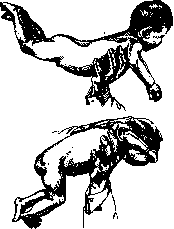
Figure 1. Landau reflex: when the head is bent, the spine and lower extremities bend.
One of the possible irritants causing this1 reflex is also passive rotation of the head. It turned out that, depending on the rotation of the head to the right or left, after the initial bilateral-symmetrical reflex, typical Magnus-Klein postures of the upper and lower extremities remain (Schaltenbrand). At about 2 months of extrauterine life in the child, very distinct labyrinthine postural reflexes appear, as a result of which the head always strives to take a vertical position, and the oral fissure a horizontal one; later these reflexes are significantly suppressed. At the 6th month in a normal child, the so-called "elevator reaction" appears in a fairly typical form: when the plane on which the child is located is raised upward, at the beginning of this movement the child bends the arms and lowers the head; when lowering, opposite postures occur. At about 6 months of age, the so-called Landau reflex also appears and lasts until the middle of the 2nd year: if the child is held in suspension so that he supports himself on the chest of the examiner only with his chest, the child raises his head, simultaneously arching the spine backward and extending the lower extremities; if at this time the head is bent, the back and legs immediately bend involuntarily (Fig. 1). Sometimes in infants, typical neck postural reflexes could also be obtained: when the head is turned to the side (in the supine position), after this the whole body automatically began to turn to the same
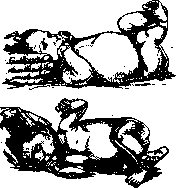
Figure 2. Neck postural reflex in an infant. (After Schaltenbrand.)
to one side (fig. 2). All these early motor automatisms and associated movements are currently being intensively studied. Only a few of the most characteristic examples are given here. Most of these movements more or less correspond to the Magnus-Klein reflexes (see). Among these movements, however, there are some that as yet find no analogues in experiment. Such is the 'optical postural reflex' of Peiper (tonic opisthotonus under strong illumination), which also disappears in older children. It was significantly more difficult to isolate these elementary automatisms in the complex kinetics of the adult. Goldstein introduced the concept of 'induced' movements to designate these phenomena. Zingerle called them 'automatoses'. The research was conducted on healthy individuals (or on neurotics). The subject is calmly placed on a couch with the head slightly tilted back, while receiving the instruction to freely yield to all motor impulses, without fixing attention on them. It then turns out that almost every (active or passive) movement of one segment causes automatic displacements in other parts. Thus, during passive abduction, resp. adduction, of the lower limbs, the upper limb is involuntarily abducted, resp. adducted; extension of the foot causes extension of the hand; the limbs deviate to the same side to which the head is deviated, etc., with the phenomena of so-called 'switching' (Schaltung) being of great importance, when one or another initial posture essentially modifies the formula of the movement obtained. Hoff and Schilder studied these induced movements in detail, and also identified a whole series of new motor automatisms. These include: the 'basic experiment' of Hoff and Schilder, for which the subject, standing with eyes closed and arms extended forward, is made to rotate the head to the right or left to the maximum possible extent; in this case, both hands are involuntarily deviated to the side of the turned head, and the hand to which the chin is turned is raised upward; S. is found in 80-90% of healthy people; in extrapyramidal syndromes it often disappears; sometimes, especially in cerebellar diseases, instead of the hands being deviated to the side of the turned head, they are deviated to the opposite side ('paradoxal deviation reaction'); 'spontaneous raising reaction': with eyes closed, arms are extended straight forward, the arms begin to rise involuntarily-normal reaction; in unilateral cerebellar lesions, it is more pronounced on the side of the lesion; 'divergence reaction': in the same position, the arms involuntarily move apart-normal reaction; 'convergence reaction': in the same position, the arms involuntarily come together-often found in extrapyramidal syndromes. Furthermore, Hoff and Schilder propose the following research method: eyes closed, both arms extended forward; one hand remains in the same position, the other is actively or passively raised, resp. lowered, by 60° and held in this position for 1/2 minute, then the subject must bring it back to the previous position; it turns out that he does not bring it to the required level by several centimeters; this reaction is constantly present in normal conditions; in extrapyramidal syndromes it is absent.-A number of other research methods have also been proposed. In relation to the lower limb, the 'pushing phenomenon' studied by Thevenard is of great importance. The phenomenon consists of the following: if a standing person is slightly pushed in the upper part
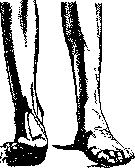
Figure 3. The pushing phenomenon, according to Thevenard, in a patient with left-sided hemiparkinsonism (on the affected side, the tension of the extensors of the thigh and fingers is absent).
of the chest, the muscles of the anterior abdominal wall immediately tense, as do the extensors of the shin and the extensors of the foot; when pushed from behind, on the contrary, the muscles of the posterior surface of the trunk and limbs tense. The phenomenon is constant in normal conditions. It is absent only in diseases of the peripheral nervous system, as well as in parkinsonism (Fig. 3). In the pathology of the human nervous system, the semiotics of associated movements is of great importance. Here one can observe both syndromes characterized by a sharp suppression of the function of associated and automatic movements, and states in which associated movements develop very sharply and pathological synkinesias appear. Syndromes of the first type include the strio-pallido-nigral syndrome (see Parkinsonism). The extinction of automatic and associated movements in parkinsonism is obviously connected with the disease of the basal ganglia, which are the main regulators of associated movements. On the contrary, in many other pathological processes in the central nervous system, synkinesias show a clear tendency to increase. In many conditions of congenital underdevelopment of the hemispheres in newborns, Magnus-Klein neck reflexes can clearly be observed. Similarly, they may appear in adults in cases of massive cerebral shutdowns. But the appearance of pathological synkinesias in central spastic paralyses, especially in hemiplegia (see Hemiplegia), should be considered particularly characteristic. Usually, the appearance of synkinesias corresponds to that period of hemiplegia when protective reflexes disappear, and instead, tendon reflexes begin to strengthen and the tone of the paralyzed muscles increases, i.e., when the so-called 'late' hemiplegic contracture phase is established. In this connection, it is important to keep in mind two circumstances: first, that the motor formula of this late hemiplegic contracture very accurately repeats the motor formula of hemiplegic synkinesia; second, that these contractures develop only in cases where synkinesias are present (rare cases of persistent hypotonic hemiplegia are characterized precisely by the absence of associated movements). Both of these considerations definitely speak in favor of the viewpoint according to which the late hemiplegic contracture is regarded as a fixed, constantly recurring associated movement (Monakow, Noica, and others). Associated movements in hemiplegics do not always correspond to the type just described. Sometimes in the upper limb, one can observe associated extension, and sometimes even two-tempo positions (flexion of the forearm, which is then followed by its extension). The initial posture at this time is of great importance (phenomena of 'switching'). Often in the motor type of hemiplegic synkinesia, manifestations of Magnus-Klein synergies (Simone, Walch, Kroll, and others) have been observed: if the patient's head is rotated toward the paralyzed arm and then synkinesia is examined, flexion of the forearm is obtained only very weakly; on the contrary, if the head is rotated toward the healthy limbs, the synkinetic flexion of the forearm becomes significantly more pronounced. Besides this global synkinesia, spastic paralyses are characterized by a whole series of other pathological associated movements. These include: Babinski's 'combined flexion of the thigh and trunk': if a hemiplegic is asked to sit, the paralyzed thigh flexes, and the heel lifts from the bed; similarly, if a patient lying in bed is asked to lie down, the affected leg involuntarily rises; Strümpell's 'Tibialis phenomenon': when attempting, while lying on the back, to flex the paralyzed leg at the knee, the m. tibialis ant. involuntarily tenses, which leads to simultaneous extension of the foot; Neri's phenomenon: the patient stands, and is asked to bend the trunk forward; at this time, the leg on the side of the hemiparesis involuntarily flexes at the knee; Raymist's 'symptom of combined abduction and symptom of combined adduction': the patient lies on the back with legs slightly apart; when attempting to bring the healthy leg toward the midline, resp. to move it away from the midline, while the examiner prevents this movement, the affected limb is involuntarily brought, resp. moved away; Souques' sign: involuntary extension and spreading of the fingers when raising the paretic arm upward; Klippel-Feil's 'thumb phenomenon': involuntary flexion of the thumb during passive extension of the II-V fingers. There are also many other types. Thus, the fan-like spreading of the fingers of the paralyzed hand during yawning, which is often the first movement that the patient notices in his paralyzed limb, is well known. Sometimes synkinetic movements accompany mental effort; for example, they are observed during attempts at speech (Babinski and Yarkovsky). In cases of strong spasticity, synkinetically developing clonus can be observed, for example, synkinetic clonus of the hand, etc. Very abundant pathological synkinesias also develop in pseudobulbar paralyses. Convulsive laughter and convulsive crying of pseudobulbar origin should be regarded as a special type of associated movement. This sharp increase in associated movements characterizes not only central paralyses of vascular origin, but also many other diseases of the brain that lead to impairment of pyramidal functions (progressive paralysis, tumors, multiple sclerosis, etc.). Sometimes pathological synkinesias clearly dominate the entire clinical picture. This is especially true of the so-called 'hemitonia' of Bekhterev, or 'intentional hypertonia,' in which true phenomena of paralysis are either completely absent or expressed extremely weakly. To explain all these states of increased associated mobility, the assumption is made that the shutdown of pyramidal impulses leads to the development of a prolonged state of irritation (the so-called 'isolation phenomena' or 'deliberation phenomena') of certain subordinate, infracortical mechanisms, which are normally significantly suppressed by pyramidal functions. These mechanisms were supposed to be at different levels. There was thought of the transition of impulses to the healthy hemisphere through the corpus callosum (Westphal), of irritation of automatic mechanisms of the brain stem (Monakow), of the spinal cord (Astvatsaturov, Skoblo). This question cannot yet be considered resolved. The absence of synkinesias for some time after a stroke is explained by temporary diaschisis (see). In the motor formula of many pyramidal synkinesias, analogues of primitive, phylogenetically ancient synergies (grasping, climbing, walking) are rightly seen. Besides these pyramidal, best-studied pathological synkinesias in the pathology of the nervous system, several other types of still unclear significance are also known. Thus, the semiotics of the so-called 'imitation synkinesias' of Marie and Foix, which consists of the repetition by the affected limb of the movements made by the healthy limb, is not yet entirely clear to us. This syndrome was observed in very mild disorders of the pyramidal tract, in Little's disease, in double athetosis, in epidemic encephalitis. In other cases, synkinesias irradiated to hypertonic muscle groups with unusual ease, occurring even during examination of tendon reflexes. Finally, the very frequent synkinesias that often develop after peripheral paralysis of the facial nerve present great difficulty for interpretation, since we have here the only example of the development of synkinesia and secondary contracture not in central, but in peripheral paralysis. These synkinesias in the area of the facial nerve are diverse: most often, involuntary lifting of the corner of the mouth, simultaneous with active closure of the palpebral fissure, or wrinkling of the forehead on the same side, is encountered; less often, closure of the palpebral fissure is accompanied by contraction of the m. platysma; sometimes by contraction of the muscles that elevate the auricle, or contraction of the m. stapedii. In the origin of these associated movements, irritation of the nucleus n. facialis itself was first blamed; then it was thought about the incorrect regrowth of regenerated fibers, as a result of which motor impulses reach the periphery in a distorted manner (Lipschutz), about peculiarities of the facial musculature, consisting in that these muscles are attached to the skin and are therefore much more mobile compared to the muscles of the limbs (Toby Kohn), about the reflex origin of the syndrome (Grinstein); other hypotheses have also been proposed; the question remains open at present. Besides all these pathological synkinesias developing as a result of certain diseases of the nervous system, we know of abnormal synkinesias that sometimes occur in people who are otherwise perfectly healthy, as a congenital trait. Here one should think of some still little-studied minor anomalies in the structure of the central nervous system. And here, in abnormal synkinesias, one often sees an expression of some return to primitive kinetics or to automatisms that could have been normal at phylogenetically more ancient stages.
Of these forms, the following types are currently better studied: 'functional, familial cortical convulsions' of Rulf, representing convulsive movements in the limbs, spreading according to the cortical type, accompanying every complex movement, e.g., rising, etc. The attacks repeat many times a day. The anomaly is hereditary and apparently dominant. - 'Gunn's syndrome,' or synkinesia palpebro-mandibularis, consisting of unilateral or involuntary elevation of the upper eyelid simultaneously with active opening of the mouth, and sometimes also with other movements of the lower jaw. Usually the syndrome is combined with a greater or lesser degree of congenital ptosis. Sometimes simultaneous defects were also observed on the part of other cranial nerves, as well as other developmental anomalies. Harman considered this S. as a restoration of phylogenetically ancient branchial-oral synkinesias (the muscles of the eyelid develop from the musculature moving the operculum), while Papadato pointed out that in normal conditions a peculiar rudimentary analogue of this S. can be found: it is easier to simultaneously open the eyes and open the mouth during rapid alternating movements than to alternate these movements in the opposite combination. The anomaly is hereditary. - 'Congenital contralateral homonymous synkinesia' was described by many authors as a congenital and hereditary anomaly. This anomaly, occurring in people otherwise completely healthy, consists of an imitative involuntary S. passing from each hand to the opposite one, which makes many manual skills impossible; strong electrical irritation often causes these people to have small muscle contractions in the symmetrical muscles of the opposite side. The anomaly is observed in many members of the same family. Here one should probably think rather of a delay of some more primitive type of kinetics. - Finally, increased associated mobility enters into the clinical picture of ordinary stuttering. There are also many other individual minor peculiarities of associated mobility, characteristic of individual individuals, and often of entire families. Thus, a peculiar blinking of the eyelids or peculiar hand movements have been described, characterizing certain families. Everyone is well acquainted with individual minor peculiarities of facial expression, intonation, handwriting, gait, gestures, posture, etc., which often imprint a special family resemblance on the members of the same family. Here the matter concerns individual variants of our conditional norm. These minor physiological peculiarities of associated movements are not yet well studied at present.
Related articles
Mentioned in
Cite this page
“Synkinesias.” Soviet Medical Encyclopedia. English translation of Bolshaya Meditsinskaya Entsiklopediya, 1st ed. (Moscow, 1928–1936), ed. N. A. Semashko. https://sovietmedicalencyclopedia.pages.dev/article/synkinesias/