Urticaria
Historical document, translated for reference. It reflects medical knowledge of the 1920s–30s and is not medical advice.
Summary
This article from the 1928–1936 Soviet medical encyclopedia provides a detailed description of urticaria, also known as nettle rash or nettle fever. It covers the clinical presentation, including the characteristic itchy, pale red wheals, the acute and chronic forms of the disease, and its diverse etiology ranging from external irritants to internal metabolic and infectious causes.
Encyclopedia article (1928–1936)
URTICARIA (syn. nettle rash, nettle fever, urticaria, cnidosis), a disease characterized by the rapid appearance of intensely itchy, flat, elevated pale red wheals (urtica), similar in appearance to the wheals from a nettle burn. The size of the eruptive elements is 1/2-2 cm in diameter. In rare cases, very large wheals the size of a palm are formed (urticaria gigantea). Individual elements may merge, taking the most varied outlines (linear, annular, etc.). Usually, red spots appear first, but then the accompanying edema transforms them into wheals. This process proceeds unevenly, and alongside developed wheals, red non-elevated spots are observed [see separate table (st. 231-232), fig. 6]. Sometimes the formation of wheals does not occur, and the process remains in the stage of spots (urticaria maculosa). The existence of each individual element of urticaria is not prolonged (from several minutes to several hours). Upon disappearance, no changes remain on the skin except for the traces of former scratching. In the development of U. on places with loose subcutaneous tissue (eyelids, penis, etc.), the skin edema can reach large sizes. In rare cases, along with the development of wheals, rupture of small capillaries and hematomas occur (urt. haemorrhagica); sometimes the epidermis is lifted by edematous fluid in the form of blisters (urt. bullosa). With very strong exudation and swelling of the skin, the cutaneous vessels are compressed; the wheals of urticaria formed in this case acquire an anemic, almost white color (urt. porcellanea). The course of U. can be acute and chronic.- Acute U. (urt. acuta) sometimes proceeds under the guise of a mild infectious disease with a slight increase in body temperature, a feeling of general malaise, headache, digestive disorders, etc. U. is often localized on places of skin subject to external irritations—thermal, mechanical, and others, i.e., on the face, neck, and hands. At the same time, other areas of skin are often affected. Rarely, eruptions on the mucous membranes of the mouth, pharynx, etc., in the form of spots or edema are observed. The paroxysms of cough or rapidly passing diarrhea noted in these cases suggest the existence of U. on the mucous membranes of the bronchi, intestines, etc. The development of U. occurs in different ways: in some cases, the rash appears immediately on large areas of skin; this is especially the case when the cause is substances taken internally. In other cases, initially a very limited lesion is formed—sometimes only 1-2 wheals, but later it can cover the whole body with the eruption. Individual eruptions disappear and are usually replaced by new ones. The entire disease lasts from 1-2 days to 2-3 weeks. Recurrences, occurring at various intervals, are characteristic.- Chronic U. (urt. chronica) proceeds according to the acute type, but attacks of itching and eruptions drag on with small intervals for months and years. A variety of chronic U. is urticaria perstans papulosa (lichen simplex acut., lichen strophulus, lichen urticatus, lichen obtusus corneus White, prurigo nodularis Hyde, neurodermitis nodularis Brocq); on the extremities, trunk, rarely on the face, small papules and nodules of a yellowish-red color are formed. They develop either immediately as such or are preceded by the formation of wheals, which do not undergo regression, harden, and turn into papules. The latter persist firmly for weeks and months, and the changes consist only of fluctuations in the intensity of itching, which in this form may sometimes be absent, or in the appearance of new elements and the development of secondary phenomena (scratching, crusts). In case of regression of the eruptive elements, pigmentation remains in their place. Sometimes warty growths form on the papules and nodules (urticaria perstans verrucosa). Pathological anatomy. The wheal in U. represents an acute limited edema, mainly of the papillary layer of the skin. The negligible amount of cellular infiltration gave rise (Neisser) to the view that this edema is a transudate. Studies of the edematous fluid, however, showed that in terms of protein content it approaches an exudate! (from 9.76% to 13.2% according to Rajka). This circumstance, in connection with the presence of capillary hyperemia, forces one to consider the edema observed in U. a genuine, although rapidly proceeding inflammatory process. The inflammatory nature is also supported by the significant cellular infiltrates with abundant admixture of eosinophils sometimes observed in the depths of the skin. However, due to the rapid regression of this inflammation, a significant emigration usually does not have time to take place.--- The mechanism of edema in U. is explained by some authors (Unna) as a result of circulatory disturbance caused by venous spasm. A different point of view, considering edema a result of increased hypersecretion of the endothelium of cutaneous capillaries with increased permeability of capillary walls (Tschernogub), is more probable. The latter phenomena arise from the action of various capillary poisons formed in the body or affecting from outside. Urticaria perstans papulosa is pathoanatomically characterized by the presence in the papillary layer of the skin of an infiltrate composed of lymphocytes, fibroblasts, and sometimes mast cells, located along the vessels. In urticaria perstans verrucosa, in addition, hyperkeratosis is observed. The etiology and pathogenesis of U. are extremely diverse. There is a series of causes which are already capable of causing the formation of itchy wheals on the skin in most people. For example, at the sites of insect bites—fleas, bedbugs, mosquitoes, sandflies—wheals are formed, externally similar to U. Similarly, nettle burns, contact with jellyfish, sea anemones, etc., act. These cases of so-called urticaria externa represent an example of the development of a limited inflammatory skin edema under the influence of various toxic external irritants. The fairly frequent cases when U. is caused by non-toxic but strongly irritating skin agents, e.g., sea water, also belong here. Alongside these forms of U., there is a large group, the occurrence of which must be attributed to the action of toxic causes of endogenous origin. These include forms of alimentary U.—urticaria ab ingestis, caused by the absorption of products of abnormal intestinal digestion (gastro-intestinal auto-intoxication). Various toxic products of abnormal metabolism in uremia, gout, jaundice, pregnancy, menstruation, and helminths can also contribute to the development of U. Chronic forms of U. can be maintained by the presence of even very small pyogenic foci in the tonsils, teeth, gallbladder, as well as by dysfunction of internal secretion organs (ovaries, thyroid gland, etc.). Finally, some infectious diseases, such as syphilis and especially malaria, are also sometimes a cause of urticaria. Particular significance and interest is represented by the extremely numerous and diverse group of diseases of U., where the cause lies in the developed ability of certain individuals in the body to give a urticarial reaction to the influence of very insignificant factors that do not act on the vast majority of people. In these cases, the cause of U. must be considered the developed increased sensitivity in relation to various external and internal factors. The mechanism of the development of this increased sensitivity is not yet precisely known, but the participation of the vegetative nervous system in the sense of increasing the excitability of its parasympathetic division, and in some cases also of the internal secretion glands, is quite probable. The essence of the process consists in the restructuring of the reactive cellular and presumably vaso-motor apparatus, as a result of which the organism acquires the ability to react to substances that are not irritants in the norm. Many organisms possess the ability to give a reaction in relation to certain agents; in this regard, only special individual susceptibility of some organisms, resting apparently on their constitutional peculiarities, should be considered characteristic. The significance of predisposing constitutional moments must be especially emphasized, since in processes of increased sensitivity (including U.), painful manifestations are often caused not only by bacterial products or chemical substances, which may possess to a certain degree primary toxic properties, but also by substances of food and animal origin serving as objects of daily nutrition and daily use. The chemistry of processes of increased sensitivity, leading ultimately to the development of various so-called allergic manifestations, including U., is still not sufficiently elucidated. Chemical agents directly acting through the vegetative nervous system on the skin can play the role of various products of metabolism formed in the body with reduced ability to deamidation. Particular significance in this regard is assigned to histamine, which possesses the selective ability to cause capillary dilation, and on the skin itching and wheals (Eppinger, Lewis, Hammer, etc.).
The fact that the skin of patients with Urticaria is in a state of heightened reactive sensitivity indicates that in most sufferers of Urticaria, even during periods of absence of eruption, and also in the chronic form, this state of hidden skin excitation can be established. In these cases, it is sufficient for a slight skin irritation (rubbing) to cause the appearance of urticarial eruptions (urticaria factitia). This state of heightened sensitivity (allergy) may remain undetected for a long time and suddenly manifest upon re-exposure of such a hypersensitive organism to the corresponding substance. The changes observed in the blood during the latter process, which are characteristic of these processes (fall in blood pressure, eosinophilia, leukopenia, etc.), as well as the experimentally proven possibility of transferring Urticaria from a sick organism to a healthy one through blood serum, speak in favor of classifying Urticaria among processes of heightened sensitivity. Urticaria is often combined with other pathological processes of an allergic nature, and in it one can observe a skin reaction to corresponding substances (see below). The process of increasing reactive skin sensitivity or the state of skin sensitization, developing in this way in the presence of appropriate irritation, is the cause of the development of a significant number of cases of Urticaria. It is not always possible to establish the moment and even the fact of sensitization with certainty; often it can only be assumed. Therefore, one often has to speak of hidden sensitization. Here one must bear in mind the very often observed and to a certain extent characteristic discrepancy between a slight amount of sensitizing agent and the size of the resulting manifestations. This circumstance often hinders the possibility of detecting the substance causing Urticaria in practice. Typical cases are those in which the sensitization that has occurred suddenly manifests after a long period during which the corresponding agent was carried without punishment. Sensitizers, i.e., substances capable of causing symptoms of Urticaria in such an organism modified in the sense of reactive sensitivity, are the most diverse agents. These can include: 1) physical factors: light, ultraviolet rays, electricity, heat, cold, wind, trauma, fatigue; 2) chemical and medicinal factors; 3) food, taste, plant, animal, bacterial products; 4) psychological influences. Urticaria is most often caused by intensified illumination of the skin, cooling; from medicinal preparations - amidopyrine, antipyrine, quinine, salvarsan, salicylic acid, emetine, podophyllin, vanillin, copaiba balsam, therapeutic sera; from chemical substances - ursol, aniline, etc.; from food - crabs, mushrooms, strawberries, eggs, wine, bread, fish, canned goods; from animal substances - hair, feathers, hair of various animals (when stuffing mattresses, sofas); by various tissues, etc. It is important to note that the etiological factors are not all homogeneous substances, but only certain varieties: For example, Urticaria is caused more often by egg yolk than by white, by white bread more often than by black, by certain medications, for example antipyrine, but not by drugs close to it, by feathers of certain birds, in some cases only by rabbit hair, and in other cases only by horses or guinea pigs, etc. But along with strictly specific cases, for example sensitivity only to one particular sort of wine or meat, less specific forms (polyvalent) are also encountered, reacting to several different products, for example to eggs and milk, etc. Cases of Urticaria caused by substances such as rubber of dental prostheses or varnish covering household items, as well as paint used for dyeing hair or fur collars, etc., have been noted. There is a huge variety of substances causing Urticaria and an extremely differentiated predisposition to one or another factor. Some of the agents listed above act directly on the skin and its nervous apparatus (contact forms of Urticaria). In other cases, absorption of various substances formed in the intestine that have a urticariogenic effect and their subsequent influence via the hematogenous route takes place. Finally, the possibility of the occurrence of Urticaria reflexively must be admitted, when eruptions appear not on those areas that have undergone harmful influence, or are caused by the slightest quantity of urticariogenic substance. A number of facts speak of the existence of a psychological form of Urticaria, i.e., Urticaria developing under the influence of psychological influences and shocks. This group can include cases of Urticaria developing in patients upon mere consciousness or representation that they, for example, are consuming a known to them substance causing Urticaria. Since a significant number of cases of Urticaria represents a manifestation of the organism's heightened sensitivity, the frequent combination of Urticaria diseases with other allergic diseases, such as bronchial asthma, hay fever, eczema, finds its explanation. Clinical practice shows that many asthmatics suffer from Urticaria. It is interesting to note the established alternation of these diseases in a number of cases. In allergic subjects, a whole symptom complex of phenomena on the part of the lungs (asthma), blood (eosinophilia), mucous membranes (vasomotor rhinitis), and skin (urticaria) can be observed. In this sense, Urticaria often acquires the character of only a symptom of the allergic state of the organism. This frequent combination of various manifestations of heightened sensitivity has created a pretext for considering bronchial asthma as Urticaria of the bronchial mucosa. In some cases, as with other allergic diseases, it has been possible to transfer this urticariogenic ability from one organism to another. Serum of patients with Urticaria, injected into guinea pigs, makes the latter highly sensitive to substances causing Urticaria in these cases. Successful experiments of transferring Urticaria in humans have been carried out by the Prausnitz-Kustner method to eggs, honey, etc. (Jadassohn, Walzer, etc.). The differential diagnosis of Urticaria is established in most cases easily, by the main clinical signs, and is facilitated by the possibility of often artificially causing blisters (by rubbing, etc.) even in the latent stage of the disease. Morphologically closest to Urticaria is Erythema exsudativum multiforme, but it does not have itching and phenomena of urticaria factitia; moreover, it is more persistent. Urticaria bullosa differs from pemphigus by acute occurrence, change of elements, and presence of typical blisters. Urticaria perstans papulosa needs to be differentiated from prurigo and lichen ruber. Prurigo differs mainly by localization on the extensor sides of the limbs, presence of white dermographism, and increase of lymphatic glands. In lichen ruber there is a smooth shiny surface of polygonal papules, often with a central depression. The possibility of confirming the etiological diagnosis of allergic forms of Urticaria by obtaining a skin reaction with the corresponding substance causing Urticaria represents significant interest. This possibility is observed only in a minority of cases, much less often than in bronchial asthma and hay fever. In these cases, upon intradermal (danger of shock!) or scarification introduction of the corresponding substance or extract obtained from it, a itchy blister surrounded by a belt of bright redness with uneven contours appears at the site of introduction after 10-30 minutes. The phenomena last about an hour. Similar reactions have been obtained with egg yolk, potato, ham (Spillmann, de Lavergne), flour (Schloss), etc. But in general, this method only rarely gives indications of the specific causal moment that caused the urticaria. The prognosis is predicted, not in acute forms of Urticaria, most often favorable. The prognosis becomes more serious in terms of cure in chronic Urticaria, especially if its cause cannot be found. - Professional significance of Urticaria. Since Urticaria is often an allergic disease, cases of the disease in those occupational groups that deal with objects capable of sensitizing the organism are possible. Here one can point to fur and tannery productions, where especially used for dyeing furs ursol causes the development of a number of allergic processes, including Urticaria; pharmaceutical labor, where the cause is most often emetine. Diseases have been described among workers on tobacco factories, shipyards when processing certain sorts of oak, in varnish productions, among gardeners, etc. Treatment of Urticaria. The determination of the etiological moment of Urticaria and its elimination has great significance. Thus, in the first place, all those influences that can cause the development of Urticaria must be excluded. Far from always this is possible, but in the case of determining such an agent, Urticaria can usually also be eliminated. In searching for the cause, one must bear in mind the possibility of developing drug-induced Urticaria due to the action of any medication. In cases of alimentary Urticaria, the determination of the harmful food product has great significance.
In addition to the anamnesis, in severe cases it is necessary to resort to temporarily transferring the patient to a hunger diet without milk, eggs, meat, white bread, etc. Gradually adding various products, it is sometimes possible to establish the cause of Urticaria. Clarification of the professional activity, as well as living conditions (housing, surrounding objects, flowers, animals), can also sometimes give the key to solving the cause of Urticaria. It is necessary to exclude the presence of any pyogenic focus (teeth, tonsils, etc.). Treatment of existing malaria, diseases of the gallbladder, diabetes, syphilis, etc., can also in some cases lead to the elimination of Urticaria. In the treatment of developed Urticaria, it is necessary to regulate the diet and eliminate all exciting substances (coffee, spices, alcoholic beverages). Limitation of carbohydrates (sweets) and salt (salt-free diet), extractive substances (broth) can also bring significant benefit. Emptying the intestines with laxatives in acute cases of Urticaria often leads to its disappearance. All factors irritating the skin must be eliminated (rubbing, scratching, cold washings, tight clothing, especially woolen clothing, etc.). Among internal remedies, disinfectants of the intestine (benzoin, salol) are applied first. The administration of quinine bromide and other bromides aims to reduce the excitability of the nervous system; moreover, the use of quinine is particularly expedient, since Urticaria is sometimes the only manifestation of hidden malaria. Adrenaline as a stimulant of the sympathetic nervous system subcutaneously often leads to the arrest of an attack of Urticaria. In the same way, calcium chloride intravenously 10 cm3 of a 5% solution or per os. Symptomatically, warm baths with the addition of zinc sulfate (30.0 per bath) are prescribed; light wiping with aromatic vinegar, alcohol with the addition of 5% tar or thymol. Desensitization methods. The technique of desensitization treatment consists in introducing the corresponding substance into the body, starting with the smallest doses and gradually increasing them. Parisot and Simonin describe a successful desensitization with respect to the egg white causing Urticaria. Desensitization was achieved as follows: a drop of protein was diluted fourfold and applied to scarified skin. After 11 reactions performed in this way, the patient began to tolerate eggs without reaction. So far, methods aiming to achieve desensitization by introducing non-specific substances are used more often. For these purposes, polyvalent peptone (fish, egg, beef) is recommended orally, especially in alimentary forms of Urticaria, 1.0 an hour before each meal. Methods of parenteral administration of protein bodies (auto-, hem-, serum-, lactotherapy, etc.) are recommended. Pigmentary Urticaria [urticaria pigmentosa, s. xanthelasmoides (Fox)]. A relatively rare form, first described in 1869. A number of authors dispute its belonging to Urticaria, and based on histological structure, relate it to pigment spots and even tumors (Darier). Most often, pigmentary Urticaria
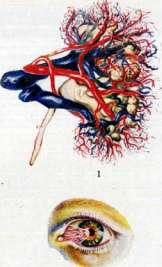
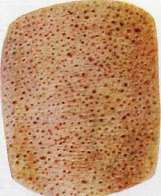
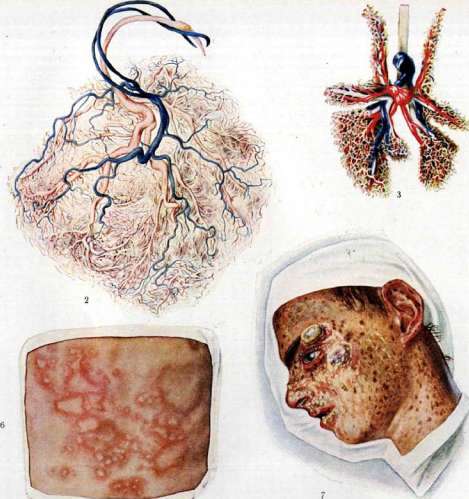
Figure I. Kidney of a human (corrosion preparation). Figure 2. Placenta of a human. Blue mass fills umbilical arteries, red - umbilical vein (celluloid preparation). Fig. 3. Lungs of a cat (corrosion preparation). Blue mass fills pulmonary artery, red - pulmonary veins (Fig. 1-3 from preparations of the Museum of the Institute of Normal Anatomy, MSU). Figure 4. Visible pleura. Fig. 5. Urticaria pigmentosa (from Iconographia dermatologica). Figure 6. Urticaria rubra (from Frieboes). Fig. 7. Xeroderma pigmentosum (from a model of the State Institute).
To the article Urticaria, Blood vessels, Chilblains. Xeroderma pigmentosum occurs in children, but is also observed in adults (urticaria pigmentosa adultorum), the disease either continuing from childhood or, less often, starting at a later age. According to Henneberg, among 286 patients, pigmentary Urticaria was observed after the age of 15 in only 64. The question of the identity of pigmentary Urticaria in children and adults cannot yet be considered finally resolved, although the majority of authors believe that clinically and histologically the process proceeds identically in both cases. Clinically, spots and flat papules of yellowish to dark red color, the size of a pea and larger, are observed. Localization of this form is the extremities, trunk (see separate table, fig. 5), rarely the face. The intensity of itching is very different and not constant; sometimes, especially in adults, it is absent. Upon rubbing of the spots, their redness and swelling are often observed (Unna's symptom); phenomena of urticaria factitia are not always observed. Histologically, the typical picture is: accumulation of brown, iron-free pigment in the basal layer of the epidermis. In the papillary and subpapillary layers, an infiltrate consisting mainly of mast cells. These cells are located around vessels or scattered (Jadassohn's type) or in whole accumulations (Mast-zellentumor, Unna's type). The presence of mast cells is so constant and typical that their absence, which occurs especially in adults, gave rise to distinguishing such cases as a special form urticaria cum pigmentatione (Kerl). The dermatosis exists for years, but may disappear spontaneously. Treatment is little developed. The most reliable are X-rays in small doses.
and.
Shimanke. U. in children. Typical urticaria is rare in the first years of a child's life, but small urticarial vesicles (especially on the lower half of the trunk) often precede the onset of strophulus. From the age of 3-4, U. is very common. U. in children develops most often, it seems, on a constitutional basis, on the basis of a congenital or hereditary predisposition (exudative diathesis - Czerny; arthritic diathesis - Lesage and others). The study of the anamneses of these children often reveals in parents and other family members a disturbance of metabolism (obesity, gout) and various anaphylactic phenomena (Quincke's edema, eczema, bronchial asthma, etc.); the same phenomena are sometimes noted in children as well. Among the factors causing the eruption of U. in each individual case, in children the alimentary factor is most common - excessive introduction of milk, eggs, meat, sugar, etc.; however, there are frequent cases where the introduction of even minimal doses of a protein (and sometimes a carbohydrate) product causes a violent eruption. In a number of cases, the products causing the eruption can apparently enter through breast milk during breastfeeding. In other cases, the immediate cause of the eruption is some infection (most often influenza), then vaccination. Some consider that such a stimulus can also be tooth eruption. Various disturbances on the part of the gastrointestinal tract - diarrhea, constipation - also favor the appearance of the rash. One often encounters U. of an acquired character in children on the basis of parenteral introduction of heterologous protein, e.g., therapeutic sera (serum sickness) or as a result of autotoxic processes (worms, toxins of intestinal origin, etc.). Finally, rashes of the U. type often appear during acute infectious diseases (cerebrospinal meningitis, scarlet fever, erythema infectiosum); in the same way, septic rashes in some cases have the character of U. The general condition of the child during U. is often disturbed; he becomes restless, sleeps poorly, and often stops gaining weight. Vomiting or dyspeptic stool is often noted, and in a number of cases it is difficult to decide whether the intestinal disorder is the cause of the rash or its consequence. With chronic, often repeated and abundant urticarial eruptions, one can encounter significant degrees of malnutrition in the child, which is probably connected not with U. itself directly, but with those intermediary metabolic processes which cause U. Usually the child is greatly bothered by constant itching; he scratches the vesicles, as a result of which fairly often secondary purulent (impetiginous) processes develop. In differential diagnosis, one has to take into account besides what was said above insect bites and sometimes nodular erythema. Treatment of U. in children is fundamentally no different from treatment in adults and is in the same degree considered to be poorly developed and in many cases very difficult. In constitutional urticarial eruptions, one tries first of all to regulate the diet, eliminate constipation or diarrhea, then make attempts to establish the nature of the agent causing the eruption. Since one most often deals with an alimentary-anaphylactic factor, one tries to do this by successively excluding various food substances from the child's (or nursing mother's) diet (first eggs, then milk, meat, etc.) and observing whether the eruption disappears. If in this way it is possible to establish the nature of the food substance causing U., then it should be excluded from the menu. If this cannot be established, then the diet is regulated, significantly reducing the protein component of the food ration (milk, meat, soups, eggs, as well as sugar). Sometimes it is necessary to completely eliminate a certain product or dish for a time. In some cases it is possible to replace it with a product of the same nature but from another animal (e.g., beef meat - game meat, cow's milk - goat's milk). Having achieved the disappearance of the rash by excluding a certain protein product, after some time it is introduced again (starting with minimal amounts), thereby accustoming the patient to tolerate this protein (desensitization). Sometimes it is possible to achieve the same by introducing subcutaneously very small doses of the same protein or simply milk (non-specific desensitization). For the same purpose, pepsin is given internally (0.1-0.3 two or three times a day half an hour before meals). In some cases thyroidin brings benefit, improving oxidative processes. It is further noted that a change of residence (a trip in the summer to the country, to a health resort, etc.) sometimes eliminates the rash; this especially concerns a move to a mountainous area and to the sea. External treatment is directed towards reducing itching and is carried out according to general rules. A. Sokolov.
Related articles
Mentioned in
Cite this page
“Urticaria.” Soviet Medical Encyclopedia. English translation of Bolshaya Meditsinskaya Entsiklopediya, 1st ed. (Moscow, 1928–1936), ed. N. A. Semashko. https://sovietmedicalencyclopedia.pages.dev/article/urticaria/