Laennec
Historical document, translated for reference. It reflects medical knowledge of the 1920s–30s and is not medical advice.
Summary
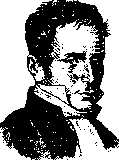
Rene Laennec (1781-1826) was a French physician who created the new anatomical-clinical method in medicine. He invented the stethoscope and made significant contributions to the understanding of tuberculosis and chest diseases.
Encyclopedia article (1928–1936)
LAENNEC Rene (Rene Theophile Hyacinthe Laennec, 1781-1826), famous French physician, who in an era dominated by various speculative hypotheses, became the creator of a new anatomical-clinical method in medicine. The merits of L. are characterized by three moments. First, he is the creator of auscultation. With the help of the instrument he invented, the stethoscope ('chest investigator'), he discovered a whole series of new clinical signs of diseases of the chest cavity, which he gave precise descriptions of, providing them with the corresponding anatomical substrate. This anatomical-clinical semiotics remains unshakable to this day. Secondly, L. was the greatest pathologist-anatomist, connecting anatomy with clinical practice and giving for the first time without a microscope, using only a magnifying glass, a fairly precise morphological description of numerous pathological processes. Finally, L. was the first to give a clear description of tuberculosis, providing it with a definite anatomical concept, and without knowing its etiology, established its specificity, uniting the diverse pictures of this complex process with the word he first used, 'tuberculosis'.-L. was born in Quimper (Brittany) in the family of a physician. From the age of 14, he began to study medicine, working in the hospital of Nantes. From the very first months, he seriously took up anatomy and became very fond of dissection work. His success was so great that at 18 he already received the position of military physician. In 1801, L. moved to Paris, where his talent developed widely under the guidance of the famous Bichat and Corvisart. At 21, L. published his first remarkable work on peritonitis. In it, for the first time, various types of peritonitis were indicated, its individual symptoms were described with striking accuracy, etc. Then L. published a series of works on worms, on the anatomy of the brain membranes, on cirrhosis of the liver, etc., and became a close collaborator of the famous surgeon Dupuytren. Soon L. became chairman of the anatomical society founded by Dupuytren. At 24, L. presented two dissertations on Hippocrates. In the first, he expressed the thought that Hippocrates is a collective name and his works are the product of the work of a whole series of researchers. In the second, he analyzes the teaching of Hippocrates itself. L., simultaneously with autopsies, made constant observations of patients, using various methods known at that time: inspection, palpation, succussion, percussion, invented by Auenbrugger in 1765, and direct listening with the ear. But the latter did not give those tangible results that were obtained after the invention of the stethoscope by L. (1816). For three years, L. continuously worked in hospitals and collected facts and observations, and finally published his famous book 'Traite d'auscultation mediate' (Paris, 1819). This book has not lost its significance to this day, especially in the field of phenomena and signs of diseases of the respiratory organs. Among the numerous masterful descriptions in this work, special attention is drawn to the chapter on tuberculosis. L. firmly stated that there is no other consumption besides that which depends on the formation of tubercles in the body; thus, many years before the discovery of the tubercle bacillus, he established the specificity of tuberculosis and the presence in it of a single pathological-anatomical substrate. L. was the first to point to the tuberculous nature of serous pleurisy. Unusual interest for that time represents L.'s view on hemoptysis; he was the first to definitely state that hemoptysis is a consequence, not a cause of tuberculosis. L. was the first to point to the possibility of curing tuberculosis and brought in his book amazing anatomical and clinical examples of cavernous scarring. L.'s views on the treatment of pulmonary consumption are quite modern: he speaks of mental and physical rest, fresh air and proper nutrition. As often happens with remarkable discoveries, L.'s book was received rather coldly; 'they feared that this new method of auscultation would become fashionable and make doctors forget the sacred Hippocratic traditions'. However, soon the fame of L. became worldwide. He was elected professor at the College de France and a member of the Medical Academy. L. died in Brittany from pulmonary tuberculosis in poverty and vainly, a few weeks before his death, sought a prize for his remarkable book.
Among the numerous masterful descriptions in this work, special attention is drawn to the chapter on tuberculosis. L. firmly stated that there is no other consumption besides that which depends on the formation of tubercles in the body; thus, many years before the discovery of the tubercle bacillus, he established the specificity of tuberculosis and the presence in it of a single pathological-anatomical substrate. L. was the first to point to the tuberculous nature of serous pleurisy. Unusual interest for that time represents L.'s view on hemoptysis; he was the first to definitely state that hemoptysis is a consequence, not a cause of tuberculosis. L. was the first to point to the possibility of curing tuberculosis and brought in his book amazing anatomical and clinical examples of cavernous scarring. L.'s views on the treatment of pulmonary consumption are quite modern: he speaks of mental and physical rest, fresh air and proper nutrition. As often happens with remarkable discoveries, L.'s book was received rather coldly; 'they feared that this new method of auscultation would become fashionable and make doctors forget the sacred Hippocratic traditions'. However, soon the fame of L. became worldwide. He was elected professor at the College de France and a member of the Medical Academy. L. died in Brittany from pulmonary tuberculosis in poverty and vainly, a few weeks before his death, sought a prize for his remarkable book.
Among the numerous masterful descriptions in this work, special attention is drawn to the chapter on tuberculosis. L. firmly stated that there is no other consumption besides that which depends on the formation of tubercles in the body; thus, many years before the discovery of the tubercle bacillus, he established the specificity of tuberculosis and the presence in it of a single pathological-anatomical substrate. L. was the first to point to the tuberculous nature of serous pleurisy. Unusual interest for that time represents L.'s view on hemoptysis; he was the first to definitely state that hemoptysis is a consequence, not a cause of tuberculosis. L. was the first to point to the possibility of curing tuberculosis and brought in his book amazing anatomical and clinical examples of cavernous scarring. L.'s views on the treatment of pulmonary consumption are quite modern: he speaks of mental and physical rest, fresh air and proper nutrition. As often happens with remarkable discoveries, L.'s book was received rather coldly; 'they feared that this new method of auscultation would become fashionable and make doctors forget the sacred Hippocratic traditions'. However, soon the fame of L. became worldwide. He was elected professor at the College de France and a member of the Medical Academy. L. died in Brittany from pulmonary tuberculosis in poverty and vainly, a few weeks before his death, sought a prize for his remarkable book.
Related articles
Mentioned in
Cite this page
“Laennec.” Soviet Medical Encyclopedia. English translation of Bolshaya Meditsinskaya Entsiklopediya, 1st ed. (Moscow, 1928–1936), ed. N. A. Semashko. https://sovietmedicalencyclopedia.pages.dev/article/laennec/