Marchand
Historical document, translated for reference. It reflects medical knowledge of the 1920s–30s and is not medical advice.
Summary
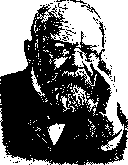
Felix Marchand (1846-1928) was a prominent German pathologist who made significant contributions to the understanding of arteriosclerosis, inflammation, wound healing, and various pathological conditions. He served as professor and director of pathological institutes in several German universities and authored over 200 scientific works.
Encyclopedia article (1928–1936)
MARCHAND Felix (Felix Marchand, 1846-1928), outstanding German pathologist. He graduated from the medical faculty of Berlin University in 1870 and until 1876 worked as a military doctor. In 1876 he took the position of assistant at the pathological institute in Halle, and in 1879 he moved to the position of senior assistant at the pathological institute in Breslau under the direction of the then-famous Ponfik. In 1881, M. was elected professor of pathological anatomy in Giessen, in 1883 he moved to the identical chair in Marburg, and in 1900 after the death of the famous Leipzig pathologist Birch-Hirschfeld, he moved to Leipzig, where he held the position of professor and director of the pathological-anatomical institute until 1921, when he retired after years of service. In Leipzig, under M.'s direction, a new pathological institute was built and equipped (opened in 1906). From 1910 to 1921, M. served as president of the Saxon Academy of Sciences and chairman of the Leipzig Medical Society.
M.'s scientific works (over 200) concern the most diverse fields of parasitology, embryology, and especially pathology. He was the first to develop the pathological anatomy of the branched cysticercus (cysticercus racemosus); in embryology, he gave several very valuable descriptions of early human embryos, as well as the development of deciduous tissue and the placenta, and a number of works concerning the development and malformations of the corpus callosum of the brain. As for pathology and pathological anatomy, M.'s scientific merits are very significant, since he and his school were the first to develop and reveal the pathological anatomy of the late stages of acute yellow atrophy of the liver and nodular hyperplasia of it, the question of the significance of the islets of Langerhans in the pancreas in diabetes, the question of the origin of the granular balls of the nervous system, the pathological anatomy of bronchial asthma, the essence of adenocarcinomas of the kidneys, the essence of the so-called chorio-epitheliomas (the term "chorio-epithelioma" was first proposed by M. instead of the previous "deciduoma") and many others. However, M.'s works on arteriosclerosis, inflammation, and wound healing are of the greatest importance. He created the doctrine of atherosclerosis (the term atherosclerosis was introduced by M.), which quickly gained almost universal recognition and retains its force to the present time (see Arteriosclerosis). In the chapter on inflammation, M. and his school emphasized the enormous importance in the process of inflammation of the participation of local cellular elements, which in the form of leukocytoid (according to M.'s terminology) cells already in the very earliest periods of inflammation participate in the exudate and infiltrate (see "Wandering cells"); for the study of the participation of local cells in inflammation, M. and his school created the technique of introducing porous foreign bodies into the abdominal cavity of experimental animals (later combined with vital staining). These studies of M.'s school introduced very important corrections to the doctrine of inflammation of Cohnheim and created the histological and histogenetic picture of inflammation, which is generally recognized at the present time. To the works on inflammation are attached M.'s studies on the processes of transplantation and wound healing, summarized by him in volume 16 of Deutsche Chirurgie under the title "Process der Wundheilung" (Stuttgart, 1901). Together with L. Krehl, Marchand published a large collective manual on general pathology ("Handbuch der allgemeinen Pathologie", V. I-IV, Lpz., 1913-1925), in which M. himself wrote a number of chapters (thermal causes of diseases, animal parasites, circulatory disorders); in volume IV of this manual, published in 1925, M. wrote a voluminous (about 400 pp.) chapter "Uber ortliche reaktive Prozesse-Lehre von der Entzundung", which can be considered a classic exposition of the current state of the doctrine of inflammation.
Related articles
Mentioned in
Cite this page
“Marchand.” Soviet Medical Encyclopedia. English translation of Bolshaya Meditsinskaya Entsiklopediya, 1st ed. (Moscow, 1928–1936), ed. N. A. Semashko. https://sovietmedicalencyclopedia.pages.dev/article/marchand/