Starvation
Historical document, translated for reference. It reflects medical knowledge of the 1920s–30s and is not medical advice.
Summary
This article from the 1928-1936 Soviet Medical Encyclopedia examines different types of starvation in animals and humans, including complete and incomplete starvation, and discusses physiological effects and metabolic changes during starvation.
Encyclopedia article (1928–1936)
Starvation, the deprivation of the body of food substances, either completely or partially, according to which complete and incomplete starvation are distinguished. I. Complete starvation - 1) Biological starvation, when animals at certain periods of their lives do not take food at all. Examples can serve: a) Some insects in the imago state, b) Some marine fish that enter rivers for spawning and cease feeding (however, they perform considerable mechanical work during this time); in some species (for example, the Rhine salmon) the distribution of organic substances in the body changes at this time: the sexual organs develop to a strong degree, while fatty and muscular tissues, on the contrary, undergo very significant reduction, c) Many animals during unfavorable periods for them fall into a special state resembling sleep, in which respiratory movements and heartbeat decrease in frequency and strength; this includes the "winter hibernation" of some mammals (bear, bat, hedgehog, etc.), fish, amphibians and reptiles of our climate, as well as the hibernation of lungfish during the dry season in their homeland (Australia, Africa), d) The camel has the ability to tolerate prolonged starvation, performing at the same time considerable work of movement with a load across the desert; this ability depends on the one hand on the special structure of some parts of the intestine, where a supply of water is preserved for a certain time, and on the other hand on the strong development of fatty tissue on its back (humps), at the expense of which work can be performed. -2) Forced starvation, often accidental, when an animal cannot find food for a time (e.g., predatory mammals and birds with the onset of winter; man in crop failure years, during wars, sieges of fortresses, etc.). This also includes cases of starvation in maniacs and people suffering from intestinal obstruction. - 3) Experimental starvation has repeatedly been performed on humans and various animals in laboratory conditions with the aim of studying the consequences of starvation, as well as the phenomena by which the organism reacts to starvation. Depending on the tasks, these experiments had different durations: with humans - up to a month or more, with animals - often until their death. II. Incomplete starvation, when an animal is deprived of some of the food substances necessary for it. -1) Deprivation of water is very difficult for animals to bear, and death occurs significantly sooner than with complete starvation. Thus, pigeons without water on dry feed die on the 3-5th day, while on water alone they live up to 12-13 days. In experiments of "water" starvation, "complete" starvation sets in after just a few days, since the animal without water quickly loses the ability to digest dry food. However, at first the animal excretes urine and intestinal juices at the expense of water from its tissues; some of them become severely dehydrated during this time. - 2) Protein starvation does not stop protein breakdown in the body, so a certain amount of N continues to be excreted in urine and feces, representing the magnitude of protein metabolism under these conditions. This magnitude undergoes large fluctuations even in the same individual depending on the amount of nitrogen-free substances constituting the food; the more of these enter the body, the less protein breakdown occurs in it. In Thomas's experiments on himself when consuming starch and sugar, N excretion in urine, starting at a level of 28.3 g (on the 1st day), reached 2 g (pro die) after 17 days. Conversely, with a decrease in the intake of nitrogen-free compounds, the organism increases the destruction of protein in the body. -3) Amino acid starvation, -when the proteins of food lack those amino acids that cannot be synthesized in the body. The most important of these are: tryptophan, tyrosine, leucine, cystine, etc. Amino acid starvation (prolonged) is especially evident during periods of growth: the latter stops or young animals even begin to gradually lose their weight. The addition of the missing amino acids in the food always causes resumption of growth. -4) Mineral starvation occurs under experimental conditions when an animal is given food devoid of ash elements. On such food animals die very quickly: the loss of salts from the body with urine and feces does not then cease and leads to a great impoverishment of the body with mineral compounds. Under certain conditions there can be incomplete mineral starvation, when the organism does not find in the food in sufficient quantity certain or other ash elements; thus, one can observe for example phosphorus starvation, calcium starvation, etc. In these cases starvation manifests itself most sharply in growing organisms, when the balance of mineral elements, as well as generally the balance of any other elements, must necessarily be positive. However, for the correct growth of certain tissues (e.g., bones) not only sufficient delivery of mineral materials but also the ratio of some of them to each other is important (cf. for example the ratio of Ca to P in rickets). -5) Lipoid starvation - deficiency in the food of so-called "lipoids" (for example lecithin, sterols, etc.), which are considered exogenous bodies, i.e., not synthesized in the body from other compounds at a sufficient rate; it is therefore necessary that such bodies be introduced with the food in the required amounts, otherwise the organism will die, since without lipoids cell life is impossible. However, lipoid starvation has only been traced in mammals. A particular type of lipoid starvation should include D-avitaminosis (rickets), since the healing substance in this case is a sterol body (ergosterol Windaus), i.e., belonging to the class of lipoids. It is very probable that A-avitaminosis is also a type of lipoid starvation, since here the anti-avitaminosis principle is associated with some sterol ("biosterol" Takahashi). Metabolism during complete starvation. A physiological measure of the process of starvation can be the period of time during which a certain percentage of the total body mass is expended. Thus the time of starvation, i.e., the interval from the moment of cessation of food intake until the onset of starvation death, depends on the rate of metabolism. Other things being equal, the time of starvation is a function of the absolute size of the body, since it also depends on the magnitude of metabolism, which is inversely proportional to its absolute size. In mammals and birds the magnitude of metabolism is inversely proportional to the linear dimensions of the body or the cubic root of its weight (X=f/G). Consequently, the times of starvation are directly proportional to the linear dimensions of the animal. Thus, a pigeon of 350 g dies from starvation in 11 days, and a condor of 18-20 thousand g in 40 days: in this case the times of starvation of the pigeon and condor are as 1:3.64, and their linear dimensions as 1:3.5-1:3.85, i.e., the ratios almost coincide. A rabbit of 2.422 g dies in 26 days, a dog of 20.000 g in 60 days, a mouse of 18.5 g in 6-7 days. The few data relating to complete starvation of humans give a figure of about 75 days, which also corresponds to the expected calculation. For cold-blooded animals the times of starvation are incomparably longer. For the bed bug a figure of 6 years is given, for the leech - 1 year. Externally starvation manifests itself in strong emaciation: body weight decreases approximately in proportion to the time of starvation, so that the changes in weight plotted on a coordinate system with respect to the time of starvation represent almost a straight line inclined to the abscissa axis. However, in different animals the morphological effect is different; thus, in vertebrates (and of invertebrates - in insects) starvation can lead to loss of up to 50% of their original weight; it however never leads to resorption of entire areas of the body, which is exactly what is observed in most of the invertebrates studied in this respect. In ciliated worms (Planaria) and coelenterates (Hydra) the body as a result of starvation decreases to 1/200-1/300 of the original volume, and in hydras it turns into an amorphous mass and loses all external organs. At the same time it is usually observed that as the total body weight decreases, the percentage content of water in it increases. Thus, in experiments with starvation of the river crayfish it was found that at a weight of 19.16 g it contains 76.29% water, and after 5 months, at the end of the experiment, at a weight of 16.26 g the percentage of water in it is 79.12; in other words - the total loss of weight in the crayfish is 12%, and the loss of organic substances 47%. In the simplest organisms (Protozoa) starvation can also cause a significant decrease in body size; at the same time in some cases it leads to an absolute increase in the size of their nucleus and can promote the onset of the sexual process in them. The study of starvation phenomena in plant microorganisms, bacteria, is very difficult because for them the creation of conditions of complete starvation is in most cases difficult to achieve, because even distilled water contains a sufficient amount of nutritional material for many bacteria, which continue to assimilate it and even multiply vigorously in it (Bac. fluorescens liquefaciens). The composition of the blood during starvation changes relatively little, despite the fact that the body's cells draw from the blood all the food substances necessary for life processes - fats, proteins, carbohydrates, ash elements.
The material for restoring the blood's composition to normal is obtained from the body's own tissues, namely: protein substances—from muscle tissue; fats—from fat depots; mineral compounds—from bones and muscle tissue; and finally, carbohydrates are supplied to the blood by the liver, first from its glycogen reserves, and then from intermediate products of protein breakdown. This somewhat schematic view is based on the fact that liver glycogen gradually disappears as early as the first days of S. The bones of a continuously starving animal become depleted of mineral compounds, and the muscle masses "melt" to a considerable extent (up to 65% of their dry substance). On the other hand, however, some organs, such as the heart and brain, change little in weight even in those who have died of starvation, as can be judged by comparison with normally fed individuals of the same weight and constitution (control). Thus, the work of the body's organs during S. occurs at the expense of the body's own substance, but the loss of materials is distributed unevenly: the most important organs lose less than others; at the same time, during S. there may even be cases of organ growth. Observations on the metabolism of starving people have been made repeatedly, but these observations were most comprehensively conducted by Benedict (Benedict, C. A. S.), whose subject fasted for 31 days. As can be seen from the accompanying diagram, body weight falls along a hyperbolic curve; daily heat production, as well as O2 consumption and CO2 excretion (calculated per kilogram of body weight per hour) experience a gradual decline to the middle of the experiment, and then remain within relatively narrow limits of fluctuation; the same can be said of blood pressure and the tension of CO2 in the alveolar air. On the contrary, the respiratory frequency slightly increases, while body temperature and the respiratory coefficient change very little; the latter, from the very first days, establishes values typical for cases where fat is the predominant source of energy in the body. The pulse frequency and heat production per kilogram of body weight per hour follow very similar curves, gradually descending to the middle of the experiment and then rising again at the end. Total N shows a distinct increase on the 3rd-4th day of fasting—a phenomenon typical of the starving organism, associated with the rapid disappearance of glycogen reserves, as a result of which protein, as a transportable substance, is intensively used by the organism until the metabolism of adipose tissue reaches dimensions fully satisfying the body's energy needs, after which protein breakdown decreases again. However, in humans, fat metabolism reactions proceed relatively slowly, and therefore during S., when relatively large amounts of fats are broken down, besides the end products of this breakdown (CO2 and H2O), certain intermediate products that manage to pass into the urine also accumulate in the body, namely the so-called "ketone bodies" (β-hydroxybutyric acid, acetoacetic acid, and acetone); the diagram shows how the excretion of β-hydroxybutyric acid gradually increases. The increase in acidic intermediate products in the body and the simultaneous constant loss of alkalis in the urine could significantly increase the acidity of the blood and tissues, however, the use of ammonia, obtained from protein breakdown, as an alkali leads to the fact that the active reaction of the blood during S. changes relatively little (see on the diagram the course of the ammonia nitrogen curves). Uric acid shows fluctuations first in one direction, then in the other, remaining within certain constant limits (see diagram). Tissues breaking down during S. release significant amounts of mineral compounds, which are excreted from the body in urine. As can be judged from O2 consumption, heat production, and N excretion—the amount of tissue breaking down during S. first gradually decreases, and then becomes more or less constant. In full accordance with this, the daily excretion of mineral elements, after an initial gradual decrease, then becomes constant (compare on the diagram Cl, P2O5, S, and N). Observations on a starving animal gave essentially the same results in the main features, but the possibility of conducting experiments until death itself allowed observation of certain peculiarities; thus, shortly before death, an increase in N excretion is detected; some saw in this phenomenon a pre-death intensified breakdown of tissues, others believed that the intensified breakdown of protein was caused by a significant decrease in body fat. Okunev pointed out hypercholesterolemia during S. on the basis of increased catabolic processes. This phenomenon often finds morphological expression in the form of fatty degeneration of the reticulo-endothelial system. Morphological changes in tissues have also been found in animals. The mechanism of death from starvation is not exactly known. Apparently, a loss of 30-50% of total weight is not sufficient for this. It is possible that it occurs due to the expenditure of certain substances in the body essential for maintaining life, for example certain salts, etc., or due to poisoning that occurs in connection with a general disturbance of metabolism. In this regard, the following experiment is indicative: a dog weighing 19.65 kg, which lost 5.21 kg during complete S. in 27 days and was already clearly near death, receives a reduced amount of calories over the next 4 days and recovers sufficiently to withstand a second period of S. for 61 days, losing another 5.27 kg in the process. After bringing the dog's weight down to 9.17 kg, i.e., to 46.5% of its original weight, it is fed normally and brought back to its previous state. Thus, if the dog had died at the end of the first experiment, it could by no means have been considered a death from exhaustion. The sensation of hunger. The rhythmic contractions of the empty stomach described by Boldyrev were later by Cannon and Washburn associated with the subjective sensation of hunger. This question was then studied more thoroughly by Carlson on a boy with a gastric fistula, and it was found that there are two types of rhythmic movements: 1) relatively weak but constant movements, at a rate of three movements per minute; 2) strong contractions, the amplitude of which is closely related to the intensity of the sensation of hunger. It was also noted that the sensation of hunger disappeared along with the cessation of the rhythmic movements of the second type when chewing any substances, when stimulating taste sensations (sweet, bitter, salty, sour), when smoking, and when swallowing movements. In addition, coffee, tea, beer, wine, cognac, as well as water introduced into the stomach, delayed its movements and reduced the sensation of hunger. However, the sensation of hunger observed in people with an extirpated stomach suggests that impulses arising from the rhythmic movements of the stomach are not the only cause of the sensation of S.
B. Lavrov. Starvation from a clinical point of view. From two points of view, starvation is of interest to clinical practice: as a condition that gives rise to many diseases, and as a therapeutic agent. Numerous observations of prolonged (30 days or more) starvation have clearly demonstrated that starvation itself within these time limits does not lead to any pathological phenomena and is even tolerated without suffering. Only in the first days does the starving person feel the need for food and some sensation of tightness and emptiness in the epigastric region, and later even this sensation disappears, and no desire for food is experienced. Thirst also noticeably decreases, especially in the first days. Later, the need for drink increases. Sleep, strength, and mental state do not suffer, contrary to our usual conception of starvation and the starving state; only in the first days is some irritability noted (not always). Almost all starving individuals complain somewhat of a sensation of cold and seek to warm themselves by movement. In spring and summer, some tolerate starvation more easily. The bowels evacuate sluggishly, and dry, scanty feces are passed irregularly. One of the individuals undergoing starvation in the propaedeutic clinic of 1st Moscow State University recounted that when he smelled fresh bread during his fast, he felt rumbling and pain in his abdomen, after which he was relieved of his bowels. The appetite of the starving person is often directed toward something sour. A dry, yellowish tongue and bad breath are noted. Observations of the composition of the blood, blood pressure, and pulse do not show any typical deviations; the only striking symptom—emaciation—depends on the loss of fat, protein, and water and is not accompanied by symptoms of cachexia. The picture of calm exhaustion from starvation, however, changes sharply if, in addition to abstaining from food, the starving person also refuses water. In such cases, body weight begins to fall more rapidly. The eyes feverishly shine and sink deeply, phenomena of acute excitement and exaltation appear. Such dry starvation should not be continued for long. From the experience of psychiatrists, it is known that one can lose a patient if the introduction of liquid is delayed. Having exhausted glycogen and possessing only their fat and protein reserves for life's needs, the starving person begins to secrete significant amounts of acetone bodies and ammonia, as always happens when metabolism proceeds in the absence of carbohydrates. However, this acidosis characteristic of starvation does not manifest itself with any distressing symptoms and does not present danger within the limits indicated. The data obtained from the study of starving individuals should be generalized and all the more cautiously applied to clinical practice. The people undergoing experiments of long-term starvation in most cases starve repeatedly. It is possible that professional fasters possess individually special endurance with respect to starvation. From the outside, they rather appear physically weak and far from well-nourished. It is possible that with repeated fasts, a certain training and adaptation of metabolism to starvation occurs. It is not indifferent what nutrition occurred before starvation. Such questions have by no means all been investigated and resolved. Finally, a sick organism and a healthy organism of course also differ from each other in many respects. Starvation diet is most popular in diabetes mellitus. Complete starvation represents a powerful means of combating glycosuria and elevated sugar content in the blood. It has been recommended not to hesitate in prescribing fasting days to a diabetic and to begin the treatment of diabetes with this. However, practice has shown that in some cases a sharp transition to starvation can give undesirable phenomena (coma, intestinal colic); and therefore most cautious clinicians, without denying the importance of starvation for treatment, prefer first to apply less energetic measures and at the same time become acquainted with the peculiarities of the patient's condition and their metabolism. Starvation even with reduced drinking has been recommended for some types of uremia. However, in nephritis it would rather be appropriate to restrict carbohydrates, in order to force the patient to live mainly on carbohydrates and to reduce as much as possible the breakdown of protein and to decrease the amount of nitrogen-containing products to be excreted by the kidneys. In certain skin ailments, associated with deviations in metabolism (closer to us unknown), starvation can give good results (eczema, itching, psoriasis). It has also been recommended to prescribe starvation in the treatment of childhood epilepsy with the aim of inducing a starvation acidosis, which is supposedly effective in this condition. Test trials have shown that a certain success is observed in this treatment. Besides medical prescription, some individuals engage in periodic voluntary fasting, caused by peculiar conceptions of disease and metabolism (desire to burn uric acid, expel mucus, etc.). There is no doubt that among those undergoing starvation, many feel vigorous and fresh after fasting. The modern city dweller, engaged mainly in mental work and not having sufficient exercise, often is in a state of some overeating, and 1-2 days of fasting in such cases can bring significant improvement in well-being. Excess glycogen reserves disappear in this way. The intestines are freed from undigested food masses. The abdomen becomes softer, breathing freer, body weight decreases by 1-2 kg; all this taken together gives a sensation of vigor and health. For many cases of overnutrition and that not quite clearly defined picture known under the word 'arthritism,' periodic starvation is indicated. With a somewhat different purpose, starvation is used for the treatment of all kinds of diseases of the intestines and organs of the abdominal cavity. Here, metabolism is less the point than the rest and relaxation of the affected organs (stomach ulcer, hepatic colic, appendicitis, etc.). In diseases of the intestines, starvation and removal of decomposing masses also have an effect on the bacterial flora. Clinical prescription of starvation is carried out periodically for 1-2 days, more rarely for longer periods. It is best to somewhat reduce the amount of food a day before starvation. After the end of starvation, it is recommended to transition to food cautiously, not overloading the stomach and intestines with solid masses, nor the metabolism with excessive nutrition. Of no less importance than acute starvation is prolonged undernutrition. The picture of disease in many chronic processes that interfere with nutrition (narrowing of the esophagus and pylorus, painful lesions of the oral cavity) is substantially conditioned by chronic starvation (Unterernährung). The most important signs of long-term undernutrition—weakness, emaciation, anemia, and often a certain puffiness—have long been known in clinical practice. But to distinguish the effect on the organism of the disease from the effect of starvation in these cases is not always easy, and therefore undernutrition in these patients is usually not studied. Greater interest is presented by that undernutrition to which the organism is subjected with consciously and intentionally reduced nutrition. Zuntz and Loewy proved on dogs and on themselves that if the experiment is conducted for a long time (years), then oxygen consumption decreases not proportionally to the loss of weight, but somewhat more, which proves a reduction in general metabolism and adaptation to undernutrition. However, individual long-term experiments with insufficient nutrition on human subjects are for obvious reasons not often conducted, and the clinical study of undernutrition is based mainly on mass observations among the population in famine years. The exhausted weakened by starvation not only physically but also to a considerable extent loses the ability to fight infections (tuberculosis, typhoids); therefore, famine years abound in epidemics, the successful spread of which is also facilitated by the fact that the chronically starving person usually becomes apathetic and unclean. All phenomena observed in starving regions should be considered consequences not only of insufficient but also of incorrect nutrition in composition. The greatest reduction usually concerns fats and proteins, to a lesser extent carbohydrates. It is very important that food simultaneously becomes poorer in vitamins and certain mineral elements. Only in rare cases can one hope to avoid the harmful effects of perverted food composition with the help of scientific rationalization of nutrition. Placed in conditions of insufficient nutrition, the population usually begins to seek substitutes for the missing customary food and thereby often further worsens its difficult situation. Weakness, besides loss of working capacity, also manifests itself in atypical sluggish course of diseases (especially pneumonias) and poor healing of surgical wounds. The skin dries and peels with general pallor and puffiness. It is interesting that appetite in this case is often directed toward the missing product (fat). The sexual activity of men decreases, the menstruation of women ceases. A relaxation of the sphincter of the bladder and the anal opening is noted. In many, but not all cases, edemas appear on the face, legs, all over the body. This edema led to the establishment of the picture of starvation edema. The cause of the edemas is not sufficiently clarified. Its connection with starvation is noted also in the folk expression 'to swell from starvation.'
Opinions have been expressed about damage to the endocrine system, about disorders of mineral metabolism, about the importance of vitamins, etc., but no theory has prevailed over all the others. Edematous disease can be combined with scurvy, but it can also occur without manifestations of scorbutic avitaminosis. If it is possible to place a patient chronically exhausted by starvation in conditions of better and proper nutrition, then, despite this, improvement in the general condition often does not occur for a long time, and the patient recovers only slowly. Clinically, underfeeding as a therapeutic measure is applied in all cases where it is desirable to reduce the patient's weight. Any treatment of obesity by diet is in principle treatment by underfeeding. Acute starvation is little suitable for this purpose, since the weight losses it causes are usually quickly restored, and moreover, obese people as a rule poorly tolerate acute starvation. The art of the physician in treating obesity consists in conducting chronic underfeeding in such a way that the patient does not notice physical and nervous weakness at the same time. The goal of treatment is to destroy excess fat without exposing the body's protein mass to breakdown.
E. Fromgold. Starvation in children can be complete and partial (underfeeding); the latter can be quantitative, qualitative, or have a mixed character. During breastfeeding, quantitative starvation can be caused by deviation from the norm on the part of the child itself as well as the mother. In the first case, weakness of sucking due to debility of the child (premature infants, etc.), difficulties for sucking due to developmental defects of the oral cavity, profuse vomiting in neurotics, in pylorospasm (spasm), in infections and digestive disorders may be of importance; furthermore, anorexia of various origins. Among the causes lying in the mother's organism, one should note: flat nipples, so-called 'tight' breast, certain diseases of the mammary gland, insufficient milk secretion (hypogalactia), etc. Symptoms of quantitative starvation in infants are often peculiar. Usually, restlessness, prolonged crying, especially after feeding, are observed; decrease in the number of urinations, delay in stool (scanty, dry, dark excretions with mucus, so-called hungry stool), dry red mucous membranes, fall in weight or its cessation, etc. Sometimes, on the contrary, hungry infants are excessively calm. Very often starvation gives symptoms similar to symptoms of overfeeding (vomiting, frequent dyspeptic stool, meteorism). The treatment of these forms of starvation depends entirely on their cause: thus, in deformities of the child and in defects from the mother's breast, feeding with expressed milk or through so-called shields is applied; vomiting, depending on infections, usually disappears with the cessation of the disease. The importance of qualitative underfeeding during breastfeeding is small, since qualitative defects in women's milk are rarely significant. Lack of water can also be classified as qualitative starvation. When added to other types of starvation, insufficient water intake can create especially severe pictures; it is very sharply manifested, mainly in the smallest children, in disorders of nutrition and digestion, when feeding with concentrated mixtures, etc.; sometimes a severe toxic symptom complex develops, consisting in increased temperature, sharp fall in weight, toxic breathing, vomiting, clouding of consciousness, etc. In healthy, artificially fed infants, quantitative starvation in pure form is rarely encountered. Qualitative underfeeding is much more common. Here, prolonged feeding of infants with excessively diluted milk still plays a role. The latter, as well as skimmed milk, can give rise to the development of avitaminoses (see). The lack of carbohydrates, especially sugar, is of great importance; these defects usually cause pictures of hypotrophy. The reverse phenomenon, i.e., one-sided feeding with carbohydrates in the absence of other elements, gives in infants a peculiar picture of flour disorder of nutrition, but in our conditions it is now almost never encountered. The salt starvation (lack of salts) is of no less importance. It can occur with excessive dilution of milk, as well as when feeding with some therapeutic mixtures (e.g., Finkelstein's eczema food), etc., and is manifested mainly in violation of the weight curve due to the release of water. Loss of the ability to retain salts is sometimes observed in children with nutritional disorders; this leads to increased excretion of salts ('internal' salt starvation - Czerny, Langstein, Meyer). The phenomena characteristic of partial starvation can also be observed in cases where the child receives too monotonous food for a long time, although it may be sufficient in terms of calories (e.g., excessively long feeding exclusively with cow's milk, etc.). When judging underfeeding, it is necessary to take into account the individuality of the child and not be guided only by average figures; thus, some atrophics, premature infants, and some neurotics relatively starve on food that is on average sufficient in calories for a given age, and begin to gain weight only when caloric content is increased. Signs of relative starvation can also be found in children with reduced nutrition, if their food ration is determined based on their weight at the given moment ('Habengewicht'), and not on the weight that should be in this age in normal conditions ('Sollgewicht'). Starvation affects the child sharply. Here, age is of primary importance: the younger the child, the more dangerous quantitative starvation is for him. It is especially severely manifested in cases of hydro-lability (see), as well as if quantitative starvation is accompanied by lack of water. Further, the state of nutrition and the duration of the starvation period are important: in hypotrophics, and especially in atrophics, even a short deprivation of food (especially repeated fasts) can lead to collapse. Partial (quantitative or qualitative) underfeeding also responds no less harmfully to the child if it occurs over a long time. This concerns both healthy and especially sick children; often one can see, for example, how acute gastrointestinal disorders are greatly prolonged if food is dosed too sparsely in the reparative stage. After prolonged underfeeding, tolerance to food sharply decreases; the child loses the ability to assimilate normal portions of food, and therefore the increase in food ration after prolonged underfeeding should be done gradually and with great caution. The general effect of all types of starvation in the child is manifested by disturbance of nutrition; as a result, both general and local immunity of the child falls. On this basis, various infectious complications develop more easily: of the respiratory tract (pneumonias), purulent infections, etc. In older children, besides the general disturbance of nutrition, accompanied by fall in weight, lowering of all functions, general weakness, pallor, easy fatigability, irritability, etc., with non-severe, although prolonged starvation, there may be no other morbid phenomena. Stefko pointed out to pronounced atrophic changes in the germinal elements of the sex glands, especially in girls, which in his opinion can lead to early sterilization. Significant starvation, if it is prolonged, can give in general two forms of disorders: the dry form, in which the child develops severe exhaustion, eventually dying from some complication (see Figure 1), and the edematous form, in which along with general exhaustion, edemas of the whole body develop, sometimes reaching enormous degrees (see Fig 2). Edemas are most often found on the face and extremities, then in the abdominal cavity (ascites). The pathogenesis of these edemas has not yet been clarified (see Edematous disease). The morbidity of such children is generally extremely high; colitis develop especially frequently in them - more often than in the dry form; often the symptom complex of scurvy (see) is added to this picture. Recovery is established with great difficulty; mortality is very high, mainly from complicating infections. This form of starvation was widespread in 1920-22, during the famine in the Volga region, where there was mainly almost complete absence of proteins and fats in the food ration, which consisted of a scanty amount of carbohydrate substances.
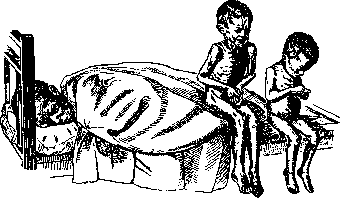
Figure I.
on the face and extremities, then in the abdominal cavity (ascites). The pathogenesis of these edemas has not yet been clarified (see Edematous disease). The morbidity of such children is generally extremely high; colitis develop especially frequently in them - more often than in the dry form; often the symptom complex of scurvy (see) is added to this picture. Recovery is established with great difficulty; mortality is very high, mainly from complicating infections. This form of starvation was widespread in 1920-22, during the famine in the Volga region, where there was mainly almost complete absence of proteins and fats in the food ration, which consisted of a scanty amount of carbohydrate substances.
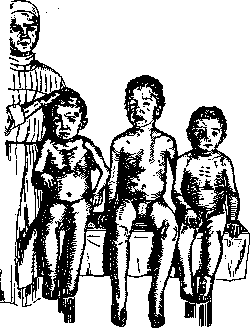
Figure 2. Children suffering from 'hungry edematous disease'.
on the face and extremities, then in the abdominal cavity (ascites). The pathogenesis of these edemas has not yet been clarified (see Edematous disease). The morbidity of such children is generally extremely high; colitis develop especially frequently in them - more often than in the dry form; often the symptom complex of scurvy (see) is added to this picture. Recovery is established with great difficulty; mortality is very high, mainly from complicating infections. This form of starvation was widespread in 1920-22, during the famine in the Volga region, where there was mainly almost complete absence of proteins and fats in the food ration, which consisted of a scanty amount of carbohydrate substances.
Related articles
Mentioned in
Cite this page
“Starvation.” Soviet Medical Encyclopedia. English translation of Bolshaya Meditsinskaya Entsiklopediya, 1st ed. (Moscow, 1928–1936), ed. N. A. Semashko. https://sovietmedicalencyclopedia.pages.dev/article/starvation/