Vulpius
Historical document, translated for reference. It reflects medical knowledge of the 1920s–30s and is not medical advice.
Summary
Oskar Vulpius (1867-?) was a prominent German orthopedist who founded one of Germany's largest orthopedic institutes and made significant contributions to orthopedic surgery, particularly in tendon transplantation and spinal paralysis treatment.
Encyclopedia article (1928–1936)
VULPIUS, Oskar (Oskar Vulpius, b. 1867), outstanding German orthopedist. Received his medical education in Heidelberg and Berlin. In 1890 he was awarded the university prize in Heidelberg for his work "Ober die Entwickhmg u. Ausbreitung d. Tangential-fasern in der menschlichen Grosshirnrinde" (Archiv f. Psychiatrie, Vol. XXIII, 1892) and the degree of Doctor of Medicine for defending his dissertation "Die Radikaloperationen der Hernien in d. vorderen Bauchwand". From 1891 to 1896 he served as assistant in the surgical clinic of Professor Czerney and organized a university orthopedic polyclinic. In 1896 he founded a private orthopedic hospital, which subsequently became the largest institution of its kind in Germany. In 1910 he established the Baden regional shelter for disabled people with a clinic and technical workshops. Additionally, in Rappenau he founded a sanatorium for bone tuberculosis, expanded after the imperialist war and supplemented with an orthopedic Freiluftklinik. His scientific and practical merits in the field of orthopedic surgery brought him relatively early wide fame far beyond Germany. Thus, in 1903 he was the first to be awarded the King Umberto Prize by the Rizzoli Institute in Italy for his work "Die Sehnenuberpflanzung" (Leipzig, 1902). Among his other monographic works that ensure V. an honorable place in the history of orthopedics, special attention should be paid to his works on spinal paralysis and the book written together with A. Stoffel "Orthopadische Operationslehre" (3rd edition--Stuttgart, 1924). In total, Vulpius published about 300 works on orthopedic and surgical topics.
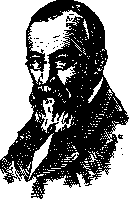
WUNDT, Wilhelm Max (Max Wilhelm Wundt, 1832-1920), famous German psychologist and philosopher, founder of experimental psychology. Studied medicine in Tübingen, Berlin, and Heidelberg, where he began his scientific activity as a privat-docent of physiology; was assistant to Helmholtz. In 1864 he became professor of physiology. In 1874 he was elected to the chair of philosophy in Zurich, from where he moved to Leipzig in 1875; here almost all his scientific activity as an ordinary professor, director of the Institute of Experimental Psychology, scientific researcher and writer took place. In 1879 W. founded the world's first laboratory of experimental psychology and a few years later created the scientific journal "Philosophische Studien". W.'s scientific creativity is characterized by enormous productivity and versatility, abundance of scientific works and areas of research. W. was a scientist-encyclopedist in the true sense of the word. A physician and professor of physiology, he was not only a natural scientist but also a philosopher who wrote ethics and logic, a psychologist who created experimental psychology, a researcher in the field of cultural history and ethnology, who collected enormous material on the development of language, myths and customs in his ten-volume ethnic psychology ("Volkerpsychologie"). In all these fields of scientific knowledge W. was not a dilettante and in each he appeared as a specialist-researcher. The main merit of W. lies in the creation of experimental psychology. Psychology was the true center of all his scientific creativity; natural science (physiology) and cultural history were for him the foundations on which he sought to build the edifice of scientific psychology; philosophy was for him the dome that completed this edifice. The reform of psychology made by W. was possible precisely because of his encyclopedism. He expanded and strengthened the empirical basis of psychology-in contrast to the speculative nature of rational psychology. He instilled in this science the methods and spirit of natural science. "Psychology," says W., "insofar as it exists as a natural science, lies almost entirely in the field of experimental and measurement research. Many of these studies date back to quite a distant time, and they belong not to psychologists but to physicists, astronomers, physiologists, who often stumbled upon them by chance and most often did not suspect their psychological significance". The experimental method was first applied to psychological research not by W., but by scientists of other specialties. Fechner is the true founder of the experimental method in psychology, but it was W., completing the work of his predecessors, who created experimental psychology as a science, as a systematic and independent discipline. Without experiment, in W.'s opinion, psychology was doomed to "remain essentially unchanged for centuries, since what was scientific in it was barely distinguishable from what belongs to everyday experience". Along with experiment, a tendency toward precise measurement, toward establishing "solid laws that govern phenomena," a tendency to transform it into an explanatory science penetrated psychology. In his "Foundations of Physiological Psychology" W. developed a system of experimental research and measurement of elementary psychological processes, based on the physiological conditions of their occurrence and course; in fact this meant a refusal to study psychological processes outside their connection with physiological processes, an attempt to establish psychological research on objective foundations allowing precise measurement. However, the essence of the psychological experiment for W. remained self-observation. A similar expansion of the empirical basis of psychology was made by W. in his "Volkerpsychologie". Indeed, here, despite the enormous factual material collected by W., he failed to enrich psychology with a system of positive knowledge, as in the field of physiological psychology, and to create a new scientific discipline. The largest shortcoming of this work is the methodological underdevelopment of the problems and method of ethnic psychology. W. failed to clarify the uniqueness of this discipline and its methodological differences from individual psychology. The fundamental constructions of his ethnic psychology show a clear analogy with individual psychology and a direct dependence on the latter. "Ethnic psychology," says W., "wishes to be nothing other than an extension and continuation of psychology in the field of phenomena of social life"; therefore, the threefold division-language, myth, custom-corresponds, according to W., to three groups of psychological processes-representation (language), feeling (myth) and will (custom). Another consequence of the methodological underdevelopment is, as already said, the insufficiently clearly drawn distinction between the psychological point of view and the historical, ethnographical,
linguistic. The reason that V. could not create from the psychology of peoples an independent scientific discipline is perfectly clear: he had nothing to rely on, as in the creation of physiological psychology; there was a solid and developed soil of natural science, here there was a complete absence of any genuinely scientific theory of social and historical phenomena. The scientific and fruitful theory of historical materialism was alien to V. Therefore, the idea of social psychology turned out to be unfeasible for V. V.'s psychological teaching is based, mainly, on the theory of association and apperception. Association for V. denotes all possible connections introduced by the subject into sensations, representations, feelings and in all elementary psychological processes in general, and creating new qualities in complexes arising in this way—qualities not contained in the elements forming the complex. Such connections V. called creative syntheses of the psyche. Wundt distinguished several forms of association: fusion, assimilation, complication, etc. The difference of this teaching from the traditional association theory consists, first, in emphasizing the subjective processing of psychological elements when associatively combining them into "psychical formations" and, second, in expanding the concept of association: it covers, according to V., simultaneous connections of elements; as well as sequential emotional elements, and cognitive elements (sensations). Along with associative connections, V. distinguished apperceptive connections, the main difference of which is that they are experienced by us as the internal activity of our consciousness, while associative connections are formed in a passive state of consciousness. Apperception for V. is an internal volitional process accompanied by active attention and the feeling of activity. V. brings the concept of apperception closer to the concept of will, the roots of which he saw in affect. The concept of apperception in V. is permeated with metaphysical-idealist views and stands in connection with his philosophical views on the psyche. V. stood on the point of view of psycho-physical parallelism and believed that this principle "necessarily leads to the recognition of independent psychical causality." He considered that the main auxiliary concept of psychology is the soul, as matter is the auxiliary concept of natural science. He replaced the concept of substantiality of the soul with the concept of actuality, from which the idealist metaphysics of this teaching did not approach a scientific construction. But, as already said, the strength and significance of V. lie not in his philosophical constructions and not even in the positive content of his psychological teaching, but precisely in the creation of experimental psychology. -Main works of V.: "Volkerpsychologie", V.I-X, Leipzig, 1912-23; "Elemente der Volkerpsychologie", Leipzig, 1913; "Grundriss der Psychologie", Lpz., 1911 (trans.); "Logik", V. I-III, Stuttgart, 1906-08; "Naturwis-senschaft und Psychologie", Stuttgart, 1911; "Hypnotismus und Suggestion", Lpz., 1894; "Die Prinzipien d. mechanischen Naturleh-re", Stuttgart, 1910. In 1893-1902, in Leipzig, collections of works of Wundt and his students were published: "Philosophische Studien". The main works of V. translated into Russian: "Osnovy fiziologicheskoy psikhologii", V. I-III, SPB, 1912-13; "Lektsii o dushe cheloveka i zhivotnykh", SPB, 1894; "Gipnotizm i vnu-shenie", SPB, 1898; "Ocherki psikhologii", M., 1912; "Vvedeniye v psikhologiyu", SPB, 1912; "Vvedeniye v filosofiyu", M., 1902; "Fantaziya osnova khudozhestvennoy deyatel'nosti", SPB, 1914 (part of the section on art from "Volkerpsychologie"); "Etika", SPB, 1887-88.
Related articles
Mentioned in
Cite this page
“Vulpius.” Soviet Medical Encyclopedia. English translation of Bolshaya Meditsinskaya Entsiklopediya, 1st ed. (Moscow, 1928–1936), ed. N. A. Semashko. https://sovietmedicalencyclopedia.pages.dev/article/vulpius/