Wormwood
Historical document, translated for reference. It reflects medical knowledge of the 1920s–30s and is not medical advice.
Summary
Wormwood (Artemisia) is a genus of plants from the composite family. The article describes bitter wormwood (Artemisia absinthium), its medicinal properties, chemical composition, preparations, and uses in traditional medicine.
Encyclopedia article (1928–1936)
WORMWOOD, Artemisia, generic name of plants from the composite family (Compositae). Among the numerous species of this genus are wormwood P. and bitter P. (figs. 1 and 2). Bitter P., true P., or wormwood (Artemisia absinthium L., s. Absinthium officinale Richt., s. Abs. vulgare Lam.) - a perennial herbaceous plant (Va-1-w), growing wild everywhere in the middle and southern zones of the USSR, sometimes in abundance (no cultivation is needed). All parts of the plant are grayish-green, soft to the touch due to pubescence with white silky (bifid, T-shaped) hairs. Leaves - alternate; lower ones - petioled and tripinnatisect (with oblong-lanceolate lobes); middle ones - sessile and bipinnatisect; upper ones - trilobed or simple lanceolate, entire. Inflorescences - numerous, small (up to 3 mm in diameter), almost spherical drooping baskets, collected in terminal spikes; baskets on the outside are wrapped with imbricate green lanceolate bracts. Flowers - few, yellow, tubular-bell-shaped; marginal - female, central - bisexual. - Active principles: 1) absinthin, a very bitter, glycoside-like substance, poorly soluble in water, and 2) essential oil - Oleum Absinthii aethereum; the first accounts for the extreme bitterness of P. (meat and milk of livestock fed with P. acquire a bitter taste), and the second for the characteristic aromatic odor and spicy taste. Due to this, bitter P. has been used since ancient times in medical practice as an aromatic bitter. According to the Pharmacopoeia, the official dried flowering herb of P (rather - dried upper parts of leafy-flowering stems) - Herba (s. Summitates) Absinthii. The herb is used either in powder form (0.5-1.0 per dose) or as an infusion (1:10) by the tablespoon several times a day. More often, official preparations are used: an alcoholic tincture and an alcohol-water extract made from the herb: T-ra Absinthii (1:5), 20-30 drops several times a day, and Extr. Absinthii (spiss.), 0.2-0.5 g several times a day, in pills or mixture solutions (wormwood extract is also part of the official Extr. amarum and Elixir Auranti composit.). In former times, bitter P. and its preparations were used to prepare Species amarae, Elixir Mynsichti, Elixir roborans Gendrini, Elixir uterinum Crolli, Vinum aromaticum, Aqua vulneraria spirituosa (white arquebusade) and many others. The Sal Absinthii used in ancient times was obtained by burning P. and represented ash rich in potash (in P., along with salts of succinic and malic acids, it contains many potassium salts, including up to 2.7% saltpeter, which is why P. was once proposed for obtaining potash).-In folk medicine, bitter P. was used as an anthelmintic (infusions internally and in enemas), as well as for intermittent fever, for exterminating insects, in beer brewing (instead of hops), in preparing wine infusions, for dyeing wool, etc. Bitter P. is widely used to prepare wormwood vodka-vermouth (see) and wormwood liqueur-absinthe (see). The particularly harmful effect of these beverages is due to the essential wormwood oil. This oil is contained in P. (1/2-2%) mainly in the leaves, in special multilayered (characteristic of composites) glands; it can be obtained by distillation of fresh herb with steam; it is a thick aromatic liquid of green color with specific weight 0.925-0.955. The oil consists of: 1) terpenes - phellandrene, pinene (C10H16) and cadinene (C15H24); 2) aromatic ketone - absinthol (C10H16O, identical to thujone or tanacetone), which has a harmful effect on the central nervous system; 3) thuylic alcohol (C10H17OH), free and in the form of esters with acetic, isovaleric and palmitic acids, and 4) a fraction dark blue oil, isomeric with absinthol, called cereulein.-Under the name of bitter P. can be included mugwort (Artemisia vulgaris L.) with oblong or oval baskets of pinkish flowers; sea P. (A. maritima L.) with narrow-linear leaf lobes and bisexual flowers (3-5 in a basket); Pontic P. (A. pontica L.) and others. Mugwort was previously used in medicine (Herba et Radix Artemisiae), at present it is known as a folk remedy (to enhance menstruation) and as a spicy seasoning for dishes.-Also among the edible plants of the P. genus is tarragon (Artemisia dracunculus L.), growing wild in the southern zone of the European part of the USSR, in Siberia and Turkestan and cultivated in gardens and vegetable gardens. This is a perennial herbaceous (glabrous with entire linear-lanceolate or oblong leaves) plant, used as a seasoning, for pickling cucumbers and preparing vinegar.
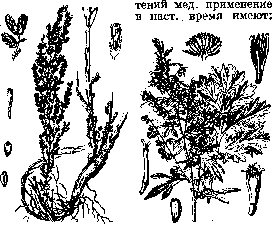
Figure 1. Wormwood citvar. Figure 2. Wormwood bitter.
Under the name of bitter P. can be included mugwort (Artemisia vulgaris L.) with oblong or oval baskets of pinkish flowers; sea P. (A. maritima L.) with narrow-linear leaf lobes and bisexual flowers (3-5 in a basket); Pontic P. (A. pontica L.) and others. Mugwort was previously used in medicine (Herba et Radix Artemisiae), at present it is known as a folk remedy (to enhance menstruation) and as a spicy seasoning for dishes.-Also among the edible plants of the P. genus is tarragon (Artemisia dracunculus L.), growing wild in the southern zone of the European part of the USSR, in Siberia and Turkestan and cultivated in gardens and vegetable gardens. This is a perennial herbaceous (glabrous with entire linear-lanceolate or oblong leaves) plant, used as a seasoning, for pickling cucumbers and preparing vinegar.
Related articles
Mentioned in
Cite this page
“Wormwood.” Soviet Medical Encyclopedia. English translation of Bolshaya Meditsinskaya Entsiklopediya, 1st ed. (Moscow, 1928–1936), ed. N. A. Semashko. https://sovietmedicalencyclopedia.pages.dev/article/wormwood/