Bier's Method
Historical document, translated for reference. It reflects medical knowledge of the 1920s–30s and is not medical advice.
Summary
This article from the 1928–1936 Soviet medical encyclopedia details August Bier's method of artificially induced hyperemia for treating infections and inflammation. It describes the techniques for both active (arterial) and passive (venous) hyperemia, including the use of hot air cabinets and rubber bandages, and discusses their bactericidal effects and applications in various diseases.
Encyclopedia article (1928–1936)
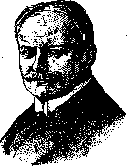
BIER, August (born in 1861), one of the founders and leaders of modern German surgery. He graduated from the medical faculty in 1886; from 1887 to 1899 he worked in Kiel under Professor Esmarh. He then successively held chairs at Greifswald (1899–1903) and Bonn (1904–1907); since 1907 and until the present time he has been director of the Surgical University Clinic and rector of the Higher School of Physical Education in Berlin. Already at the beginning of his activity, Bier (1893–95) put forward original and strictly substantiated proposals regarding bone-plastic operations for amputations for the purpose of creating a supportive stump. These works bore the stamp of creativity and touched upon questions that, in the words of Trendelenburg, had not been seriously considered up to that time. In them, B. first appeared as a surgical thinker, and he remains so throughout his exceptionally brilliant activity. Soon after, from 1895, B. began work on passive and active hyperemia as a therapeutic method in surgical tuberculosis and infectious processes, in connection with the general doctrine of circulation. In 1901 he first published the method of spinal anesthesia, which created an epoch in the question of anesthesia, and in 1909 the doctrine of venous anesthesia. An extensive fourth cycle of B.'s works concerns tissue regeneration in humans, the doctrine of inflammation, the treatment of wounds in connection with the question of irritating therapy and immunity. B.'s works on the question of surgical tuberculosis had enormous significance. In recent decades, B. headed the doctrine of the conservative method of treating surgical tuberculosis—a question that did not leave the stage until recent years. B. organized a world-famous institution in Hohenlichen, where the principles of treating surgical tuberculosis are carried out, of which B. is the inspirer. During the imperialist war, Bier was occupied with questions of military field surgery and published a number of works, among which the most significant are those on vascular injury. The very list of works by cycles indicates B.'s enormous clinical scope, and naturally this drew to him the audience of physicians of the entire civilized world and gave him the opportunity to surround himself with a whole series of students who developed B.'s ideas and rose to the front ranks of German surgery, such as Schmieden and Klapp. B.'s most important works include: "Absetzung an d. Gliedern," Die deutsche Klinik am Eingange d. 20 Jahrhunderts, 1901; "Hyperamie als Heilmit-tel," Vogel, Lpz., 1908; "Tragfahige Amputa-tionsstumpfe im Bereiche der Diaphysen," Archiv fur klinische Chirurgie, B. XLVI; "Os-teoplastische Amputationsstiimpfe," Archiv fur klinische Chirurgie, B. CXII; "Kokaini-sierung d. Ruckenmarks," Deutsche Zeitschrift fur Chirurgie, B. LI; "Ruckenmarksanasthe-sie," Archiv fur klinische Chirurgie, B. LXIV, Miinchener medizinische Wochenschrift, 1904; "Stauungshyperamie d. akut entzundlichen Krankheiten," Archiv fur klinische Chirurgie, B.LXXVII;"tlber Venenanasthesie," Berliner klinische Wochenschrift, 1909; "Knochenrege-neration," Archiv fur klinische Chirurgie, B. C; "Konservative Behandlung d. sogen. chirurgischen Tuberkulose," ibid., B. CXVI; "Beobachtungen uber Regeneration beimMen-schen," Deutsche medizinische Wochenschrift, 1917, 1918, 1919.
BIER'S METHOD, artificially induced hyperemia (see) of tissues with the aim of influencing the inflammatory process. In his method, Bier, in essence, repeats the process that usually occurs in the organism at the site of any infection (local), one of the main symptoms of which is hyperemia, facilitating the struggle against bacteria through intensified antibody formation. Distinguish: 1) active (arterial) hyperemia, when a greater amount of blood flows into the vascular system of a given area and flows out of the vessels, and 2) passive (stagnant, venous) hyperemia, when the blood richness depends exclusively on the reduced outflow of venous blood. In the early 90s of the 19th century, Bier began to apply hyperemia in tuberculosis of organs, and then also for the treatment of acute inflammatory processes. - Active hyperemia is easiest to induce by heat; the most convenient means is hot air. Apparatuses for treating with hot air consist of boxes in which there is one or two openings, depending on the location of the pathological focus, for placing and removing the affected limb from the box. The openings are tightly closed with material that is poorly permeable to heat and air (see Figure 1). The source of heat is combustible material (gas, alcohol, kerosene) in one or another device (lamp, Bunsen burner, etc.), to which a pipe is led to the box. The hot air flowing through the pipe circulates in the apparatus and acts on the affected organ placed in it. At the top of the box, one or two openings are arranged for draft. - Passive hyperemia is induced by various means. The most tested method of applying it is the application of a rubber bandage above the place that is to be subjected to hyperemia; the turns of the bandage are tightened so much that only veins with more compliant walls are compressed; the arteries, however, are not compressed at all or are compressed only to a very slight extent. The limb must turn red, the temperature must increase, since due to the hindered outflow, its blood filling increases. The same hyperemia, which should rather be referred to as stagnant, is achieved by applying glass dry jars (see) to the skin of the affected area or by placing the affected part of the body in large glass apparatuses of various shapes and sizes, in which the air is rarefied with the help of a suction pump (see also Figures in the article Abscess). For better adhesion of the jars to the skin, their edges are smeared with a layer of fat, and for uneven surfaces of the body they are given various shapes by providing appropriate cutouts on the edges. - Both active and passive hyperemia act pain-relievingly in a whole series of acute and chronic diseases (joint diseases of various origin, gonorrheal arthritis, acute articular rheumatism, phlegmons, etc.).
Figure 1. Box for the ankle joint (according to Bier).

Furthermore, the effect of hyperemia is expressed in a bactericidal influence on the causative agents of inflammation (in the sense of a killing or weakening action on them), in the intensification of absorption processes (active hyperemia), nutrition, and tissue regeneration. Hyperemia, like any therapeutic means, must be strictly dosed both in terms of strength and duration of its application. Sessions of treatment with hot air last 1/2 - 1 hour (at most for two hours daily). To produce venous stagnation, the bandage should be applied not too tightly, centrally from the pathological focus, the limb being in a bent position, and the bandage not too close to the joint (see Figure 2 and 3). The place of bandage application should, if possible, be changed; the duration of the session depends on the nature of the disease and ranges from 1-2-20 hours. The degree of stagnation is controlled by the following two symptoms: the organ subjected to stagnation must be warm to the touch (no less warm than on the healthy side), and pain must be absolutely absent. Passive hyperemia is more applicable in the treatment of acute surgical infections (furuncles, carbuncles, paronychia, phlegmon of tendon sheaths, mastitis, gonorrheal inflammation of joints, etc.). Active hyperemia is also useful in chronic processes of non-bacterial origin and their consequences (contracture, limited mobility of joints, etc.). Bier's method requires strict individualization both in terms of the choice of process and stage of its development, and in terms of the method of application. Research by Lexer, König, and other surgeons showed that Bier's method gives especially good results in the initial stage of mild forms of infection, primarily caused by staphylococcus. Sometimes it is even possible to curb the development of the process. In severe streptococcal infection, Bier's method is useless. 47B
Figure 2. Correctly applied bandage (according to Bier).

Figure 3. Incorrectly (in the extended position and too close to the elbow joint) applied bandage. When the arm is bent, the bandage fits too tightly and causes bedsores in the elbow bend (according to Bier).
Figure 1. Box for the ankle joint (according to Bier).
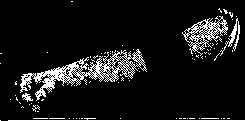
Figure 2. Correctly applied bandage (according to Bier).
Figure 3. Incorrectly (in the extended position and too close to the elbow joint) applied bandage. When the arm is bent, the bandage fits too tightly and causes bedsores in the elbow bend (according to Bier).
Related articles
Mentioned in
Cite this page
“Bier's Method.” Soviet Medical Encyclopedia. English translation of Bolshaya Meditsinskaya Entsiklopediya, 1st ed. (Moscow, 1928–1936), ed. N. A. Semashko. https://sovietmedicalencyclopedia.pages.dev/article/biers-method/