Arthropathy
Historical document, translated for reference. It reflects medical knowledge of the 1920s–30s and is not medical advice.
Summary
This article from the 1928–1936 Soviet Great Medical Encyclopedia defines arthropathy as a trophic change in a joint. It details various forms of arthropathy associated with neurological conditions, including hemiplegia, spinal cord diseases, neuritis, tabes dorsalis, and syringomyelia.
Encyclopedia article (1928–1936)
ARTHROPATHY (from the Greek arthron—joint and pathos—suffering), a trophic change of a joint. Arthropathies are observed in diseases of the brain, spinal cord, and peripheral nerves, but can also be of endocrine origin (in the latter case, most often in cases of thyroid insufficiency and in lesions of a pluriglandular nature). Arthropathies of cerebral origin occur in hemiplegias that have developed as a result of encephalitis and softening of the brain; somewhat less frequently, they occur in hemiplegias that appeared following a hemorrhage or in the case of a brain tumor. In hemiplegias, arthropathies always develop in the paralyzed limbs; the onset of arthropathy in such cases is connected with vasomotor-trophic changes. It is customary to divide the arthropathies of hemiplegics into two types based on their localization and course. In some cases, arthropathies develop a short time after the onset of hemiplegia; in these cases, the arthropathies affect the joints of the fingers with edema of the back of the hand; sharp pain appears during movement. In other cases, arthropathies develop slowly, affecting large joints, for example, the scapulohumeral joint; in this case, fairly extensive movements are possible. Arthropathy can also be encountered in various spinal diseases, for example, in acute myelitis, Pott's disease, in traumatic lesions of the spinal cord, etc.; as a rule, in these cases as well, arthropathies develop in the paralyzed limbs; sometimes hydrarthrosis, suppuration of the joint, or ankylosis appears; radiographically, a rarefaction of the bone mass in the articular heads of the joint is determined. In neuritis and lesions of the plexuses, it is also possible to encounter acute and chronic arthropathies; deformation of the joint is observed; radiographically, bone atrophy can be established; initially, edema appears, and subsequently, ankylosis is possible. In gunshot wounds of peripheral nerves, due to nutritional disturbances, synovitis is usually encountered, most often in the wrist and ankle joints, without an increase in temperature, with slight swelling and tenderness of the joint; occasionally, a slight crepitus can be noted; the course of such synovitis is quite favorable, and improvement runs parallel to the improvement of the underlying condition. Typical arthropathies can often be found in patients suffering from tabes dorsalis and syringomyelia. In tabes dorsalis, arthropathies are encountered in 2–10% of patients, somewhat more often in men than in women; large joints are predominantly affected, for example, the knee, shoulder, etc.; less frequently, arthropathies are encountered in the ankle, wrist, and other joints; sometimes arthropathies are multiple; in 80% of cases, arthropathies develop in the lower limbs (see Figure 1). Tabetic arthropathy usually develops suddenly, from a minor injury, without causing pain, and without an increase in temperature or redness of the joint. Swelling of the joint appears, sometimes quite significant in size and initially spreading to the entire limb; however, the absorption of the edematous fluid proceeds quickly, and the joint again acquires its normal volume; only in severe cases is the absorption delayed. In the acute stage, the skin in the area of the affected joint appears shiny and tense, with clearly visible veins; when pressed with a finger, no mark remains on the skin. The fluid located in the joint cavity is usually transparent, sometimes blood-tinged. Upon objective examination of the affected joint, a loud crepitus can be established; radiographically, a change in the articular surfaces is revealed, sometimes with intra-articular bone fragments. The origin of tabetic arthropathy is attributed to a disturbance of the trophic function of the spinal cord. Arthropathies in syringomyelia are encountered in 10–20% of patients, somewhat more often in men than in women; according to Schlesinger, in 83% of cases, the upper limbs are affected (see Figure 2); one can often see the destruction of the fingers, the so-called "mutilation" of the fingers, which, according to Roth, are encountered in 40% of cases. Often, arthropathies develop suddenly; hydrarthrosis appears, causing swelling of the joint; upon examination, one can establish the painlessness of the affected joint and a loud crepitus during movement; radiographically, there is rarefaction of the bone substance. In the area of the diseased joint, there is always a sensory disturbance in the form of dissociated anesthesia. Arthropathia psoriatica, see Psoriasis. Arthropathic atrophy, see Myatrophy.
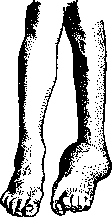
Figure 1. Tabetic arthropathy of the ankle joint.
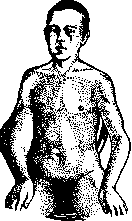
Figure 2. Arthropathy of the elbow joint in syringomyelia.
joints, e.g., the knee, shoulder, etc.; less frequently, arthropathies are encountered in the ankle, wrist, and other joints; sometimes arthropathies are multiple; in 80% of cases, arthropathies develop in the lower limbs (see Figure 1).
Related articles
Mentioned in
Cite this page
“Arthropathy.” Soviet Medical Encyclopedia. English translation of Bolshaya Meditsinskaya Entsiklopediya, 1st ed. (Moscow, 1928–1936), ed. N. A. Semashko. https://sovietmedicalencyclopedia.pages.dev/article/arthropathy/