Compresses
Historical document, translated for reference. It reflects medical knowledge of the 1920s–30s and is not medical advice.
Summary
Compresses are a form of applying therapeutic substances, used primarily for thermal effects or as a type of medication. In ophthalmology, they are applied to eyelids or as eye baths for various inflammatory and infectious conditions.
Encyclopedia article (1928–1936)
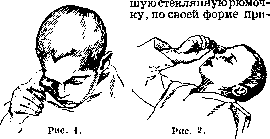
Compresses, one of the forms of application of therapeutic agents, having a comparatively limited range of application. Compresses are used either with the aim of purely thermal effect on the pathological process, for which water of a certain temperature can serve, or they are one of the types of medicinal treatment and then represent solutions of various medicinal substances; being in a heated or cooled state, the latter can exert both effects simultaneously. At present, compresses have still preserved their application mainly in the therapy of certain skin and partly eye diseases. In the first specialty, they are used almost exclusively for the treatment of weeping and itching skin suffering of an eczematous nature, for which purpose the following are most commonly used: lead water in an undiluted state, Bur's solution (in the dilution of 1-2 tablespoons per glass of water) and a solution of silver nitrate (1:1,000) at room temperature. In ophthalmic practice, compresses already have a significantly wider application with the aim of both purely thermal and medicinal effect on the pathological process. The reality of the first of these is proven by such observations that the temperature of the conjunctival sac already after several seconds after the application of hot or cold compresses to the eyelid skin changes in the corresponding direction and quickly returns to normal upon cessation of their action; the same thing, but to a lesser degree, is observed in the orbit behind the eye itself. Furthermore, it has been noted that under the influence of hot compresses, the protein content in the aqueous humor increases; the diffusion of medicinal agents applied inside the eye is also enhanced. The technique of applying compresses depends on whether it is desirable to affect only the eyelids, or through them the closed eye, or directly the anterior surface of the eye itself and its mucous membrane. If it is a matter of effect through the outer coverings, compresses are used in the form of compresses made of gauze or hygroscopic cotton wool, immersing them in water of the required temperature or in one solution or another, then they are slightly wrung out and applied to the closed eyelids, preferably with the patient in a lying position. The compresses must be changed every 1-2 minutes, due to the fact that the temperature of the liquids used, which for cool and cold compresses ranges from room temperature to icy, and for warm and hot from 25° to 50°, is lost very quickly. Such a procedure is performed 2-3 times a day for 20-30 minutes. Since the skin of the eyelids is often very sensitive to prolonged moistening (it macerates), it should previously be smeared with fat (vaseline).-If the solutions used need to be brought into direct contact with the anterior segment of the eye itself or its mucous membrane, then such compresses can also be used in the form of so-called "eye baths" (Fig. 1 and 2). The latter is a vessel adapted to the oval of the palpebral fissure, with concave edges, which are sometimes still bordered with a thin layer of rubber. Such a bath is filled with the corresponding solution at room temperature or slightly warm and is tightly pressed against the edges of the orbit, after which the patient's head is thrown back, the palpebral fissure opens, and the liquid comes into contact with the eye itself and the mucous membrane covering it and the posterior surface of the eyelids; repeated blinking movements of the latter, as well as the excursions of the eye itself in all directions, facilitate the access of the applied solution to all corners of the palpebral fissure and folds of the conjunctival sac. The duration of each session, during which the contents of the bath are changed 1-2 times, ranges from 5 to 10 minutes depending on the patient's subjective sensations.
As for the general indications for the use of compresses in eye diseases, they are resorted to in the first place where it is necessary to weaken or, conversely, activate the inflammatory process, further-in the presence of the need for prolonged disinfecting or astringent effect on the diseased eye membranes, as well as for the neutralization of all kinds of poisonous substances entering the eye, and finally in those cases where one counts on enhanced diffusion into the eye of various therapeutic agents during prolonged direct contact with its anterior surface. In particular, hot compresses are especially readily prescribed for all kinds of purulent, inflammatory processes of the eyelid skin or their glands (styes, meibomianitis, furuncles, phlegmonous dacryocystitis, etc.), especially when, on the one hand, an energetic thermal effect is required, and on the other-it is undesirable to apply a hermetic dressing of a heating compress to the eye in order to avoid increased pathological secretion from the mucous membrane. In chronic ulcerative processes on the edges of the eyelids with the formation of dense crusts, they are often used with the aim of softening them for subsequent removal. In addition to the appendages of the eye, hot compresses are also often used in diseases of its anterior segment, especially in suffering of the corneal, scleral and iris membranes, with the aim of enlivening blood circulation, accelerate the absorption of pathological exudates and alleviate painful sensations. On the contrary, cold compresses are especially indicated for all kinds of acute inflammations of the mucous membrane of an infectious nature, as for example in acute conjunctivitis, acute trachoma, gonorrhea, diphtheria, etc.; between other things, in the last two infections, cold compresses should not be applied only in the very first period of the disease, i.e. in the period of infiltration (in this stage cold can lead to tissue necrosis). In acute conjunctivitis, the beneficial effect of cold compresses can also be explained by the circumstance that, by lowering the temperature in the conjunctival sac to a certain limit, they thereby create unfavorable conditions for a whole range of bacteria requiring a certain temperature environment. Cool compresses on the eyelids are widely practiced in many chronic diseases of the conjunctiva, as they significantly alleviate various subjective unpleasant sensations (heat, heaviness, etc.). Compresses used for the same diseases in the form of eye baths also give excellent results, exerting an astringent and antiseptic effect directly on the mucous membrane itself and having an advantage over the usual treatment with drops due to the duration of contact of the therapeutic agent with the diseased surface and the penetration of the solution into all folds of the conjunctiva. On the same basis, compresses in the form of baths are used for the treatment of burns of the anterior segment of the eye by various chemical substances, as well as in some deep diseases of it, as for example in incipient cataracts, counting on the increased diffusion into the eye of medicinal agents from solutions.-Among the liquids used for compresses in eye diseases, in addition to water, infusions of aromatic herbs are sometimes used, as for example chamomile, or especially the infusion of ordinary tea, which is especially favored in communal living, possessing mild astringent properties, as well as solutions of medicinal substances of an astringent, antiseptic, resorbing or neutralizing nature (lead compress, alum, boric acid, etc.). a. Crusta.
Related articles
Mentioned in
Cite this page
“Compresses.” Soviet Medical Encyclopedia. English translation of Bolshaya Meditsinskaya Entsiklopediya, 1st ed. (Moscow, 1928–1936), ed. N. A. Semashko. https://sovietmedicalencyclopedia.pages.dev/article/compresses/