Fedorov
Historical document, translated for reference. It reflects medical knowledge of the 1920s–30s and is not medical advice.
Summary
Sergei Petrovich Fedorov (1869-1936) was one of the foremost Russian surgeons. He graduated from Moscow University's medical faculty in 1891 and continued his studies in Professor Bobrov's clinic, where the antiseptic method of surgery was in use.
Encyclopedia article (1928–1936)
FEDOROV Sergei Petrovich (1869-1936), one of the foremost Russian surgeons. Graduated from the medical faculty of Moscow University in 1891, SO
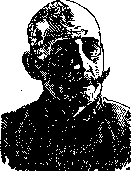
after which he remained to work for further improvement in Professor Bobrov's clinic, where, as in most Moscow surgical institutions of that time, the antiseptic method of surgery was applied, which gave a large number of suppurations. In 1892, F. was sent by Bobrov to Berlin to the clinic
to Bergmann to study the entire system of the aseptic method of operating. Familiarization with the aseptic method under Schimmelbusch makes F. a fervent supporter of this method. Upon returning to Moscow, F. brings with him all the necessary equipment and organizes the aseptic method of operating in Bobrov's clinic, which quickly spread to Moscow and other cities of Russia. In addition, during his stay in Berlin, F. studied with Kasper the newly introduced method of cystoscopy and catheterization of the ureters, as well as the then nascent methods of esophagoscopy and direct laryngoscopy. All the relevant equipment was brought to Moscow, and he began to widely apply these methods in Bobrov's clinic, thus becoming a pioneer in the introduction of these endoscopic methods in Russia. The introduction of these methods into surgery served as the basis for the development of a new specialty in it - urology. And it should be noted that thanks to F., urology began to develop almost simultaneously in the West and in our Russia, and F. is quite rightly called the father of Russian urology. On Bobrov's assignment, F., in addition to the clinic, worked extensively on pathological anatomy with Prof. Nikiforov and even wrote a monograph on tetanus, covering issues of bacteriology and immunity. This work was defended by Fedorov in 1895 as his dissertation. Soon after receiving his doctorate in medicine, F. took the position of senior assistant in Bobrov's clinic, and within the next year became a privat-docent at Moscow University. In 1903, after the death of Prof. Ratimov, F. was elected professor of the hospital surgical clinic of the Military Medical Academy, a position he held for over 30 years. The main problems of F.'s scientific activity are surgery of the urinary tract and surgery of the bile ducts. In these areas, he published a large number of works and frequently discussed them in his numerous reports in various surgical societies, as well as repeatedly speaking on them at surgical congresses, both in former Russia and in the USSR and abroad. A large number of works on these topics were also written by F.'s students. All the extensive experience accumulated by F. in these areas, he summarized in his guides: "Atlas of Cystoscopy and Rectoscopy" (St. Petersburg, 1912), "Surgery of the Kidneys and Ureters", vols. 1-6 (Moscow-Leningrad, 1923-1925), "Gallstones and Surgery of the Bile Ducts" (Moscow-Leningrad, 2nd ed., 1934). These books became in our Union the beloved desk books of all surgeons. In addition to surgery of the urinary and bile ducts, F.'s clinic paid great attention to general surgery of the abdominal cavity and, in particular, to surgery of the stomach. This area, as is known, began to develop abroad only in the last twenty years, and its development in F.'s clinic occurred almost simultaneously with foreign successes in stomach surgery. Surgery of the cranial cavity also constantly attracted Fedorov's attention, from the technique of trepanation to operations on Gasser's ganglion and surgery of brain tumors. From Fedorov's clinic, several substantial works on surgery of the spine and spinal cord tumors also emerged. F. devoted much attention to the problem of treating malignant tumors, very early evaluating the significance of various methods in this field. As soon as the first successes from the use of X-rays in the treatment of malignant tumors became apparent, a mobile X-ray apparatus appeared in F.'s clinic, with which the operative field is directly exposed to X-ray irradiation during the very operation of extirpation of sarcoma or cancer. In 1908-1910, in France, the successes of Keating Hart in curing malignant tumors by fulguration caused a great stir, and somewhat later, works by Duayen on the successes in treating malignant tumors by high-frequency currents appeared. And almost at the same time, all these apparatuses were installed by F. in the clinic, and the treatment of malignant tumors by physical methods was subjected to thorough scientific verification. - Among other scientific problems to which F.'s clinic paid attention, the introduction of intravenous hedonal anesthesia should be mentioned. Further, it should be noted that from Fedorov's clinic came Krotkov's work on collateral circulation, which gave impetus to a number of further interesting studies in this field made by Russian authors. In the last decade, F.'s clinic was the first in the Union to begin developing problems related to blood transfusion, operations on the sympathetic nervous system, and the study of trophic ulcerative processes. In recent years, F. has been engaged in surgery of the peripheral and central nervous system in the broadest sense of the word, even taking on the directorship of the Institute of Neurosurgery in Leningrad. A great impression in medical circles of the Union was produced by F.'s philosophical article that appeared in 1926 under the title "Surgery at a Crossroads." In this article, the author points out the false paths and errors into which many prominent surgical figures so easily fall in their attempt to solve a number of the most complex processes occurring in the organism by purely mechanical means. However, F.'s article, written in pessimistic tones, although it played a certain positive role in the search for new paths, caused a wave of polemics and severe criticism in the Soviet surgical press, proving that Soviet surgeons, armed with the powerful weapon of dialectical materialism and actively participating in the giant socialist construction, are alien to pessimism. . For 40 years of his scientific activity, F. published over 120 scientific works; several hundred works were published by his students. From F.'s school came a large cohort of students, 26 of whom occupied independent surgical departments in various parts of the Soviet Union, and an immeasurably larger number of whom scattered throughout the USSR, heading surgical departments of various hospital institutions. - As a public figure, F. had to constantly participate in a whole range of various commissions, where his richest experience as a highly qualified specialist always proved to be extremely valuable. In addition, for many years he was the permanent chairman of the Russian Surgical Society of Pirogov, was elected chairman of the IX Congress of Russian Surgeons, and several times served as chairman of the organizing bureau of these congresses. At the international congress of urologists held in Berlin (1914), F. was offered the honorary position of chairman of the congress. A great merit of F. to Russian surgery is also the fact that, during the civil war when the publication of almost all medical literature stopped, he, together with Ya. O. Galpern, undertook the extremely difficult task at that time of publishing a surgical journal. Thanks to their energy and persistence, the "New Surgical Archive" appeared in 1921, which became the cornerstone around which the creative scientific thought of Russian surgery boiled and on the basis of which the construction of new Soviet surgery began. In recent years, F., together with S. S. Girgolav and A. V. Martynov, served as editor of the large 9-volume "Guide to Practical Surgery" published in Russian (L.-M.). - As a clinician, F. fully absorbed and developed in himself the best traditions of Russian clinical schools: he harmoniously combined extensive clinical experience, a strictly scientific approach to the patient, and a subtle understanding of pathological processes with systematic, detailed, and thoughtful examination of the patient. As a surgeon, F. always distinguished himself by the exceptional clarity of his work, based on excellent knowledge not only of anatomical relationships but also of all the features of the pathological-anatomical process. After the revolution, F. took the most active part in the intensive construction of the new higher school, in the search for new, better forms of teaching in it. He actively participates in the reform of the higher medical school, in the construction of new programs, in the creation of a new profile of the Soviet physician and, in particular, of the physician-commander of the Red Army. In the pre-revolutionary period, F. served as court physician to the tsar's court and in his political views was a supporter of the monarchical system. This did not prevent him, some time after the revolution, from understanding the grandeur of the restructuring of our entire life, which the party, under the leadership of the genius comrade Stalin, was and is carrying out, and to completely switch and work as a specialist devoted to Soviet power. With young enthusiasm, he takes up the question of training new cadres, directly supervising even the details of work in this area himself. The military-sanitary command noted F.'s intensive work in this area both when he was awarded the title of Honored Scientist of the Republic in 1928 and during the celebration of the 30th anniversary of his professorial activity. By a special order of the Revolutionary Military Council signed by comrade Voroshilov, his merits were noted, and by a resolution of the Central Executive Committee he was awarded the Order of Lenin.
F., harmoniously combining in his personality the qualities of a brilliant clinician, an excellent operator, an outstanding scientist, and a talented teacher, rose to the forefront of Russian surgeons, and then gradually not only took his place as the universally recognized leader of Russian surgery, but also stood on the same level as the best representatives of European and American surgery.
Related articles
Mentioned in
Cite this page
“Fedorov.” Soviet Medical Encyclopedia. English translation of Bolshaya Meditsinskaya Entsiklopediya, 1st ed. (Moscow, 1928–1936), ed. N. A. Semashko. https://sovietmedicalencyclopedia.pages.dev/article/fedorov/