Gastropexy
Historical document, translated for reference. It reflects medical knowledge of the 1920s–30s and is not medical advice.
Summary
Gastropexy is a surgical procedure for treating gastroptosis by suturing the stomach to the anterior abdominal wall. This article describes historical techniques, including those by Duret, Rovsing, Perthes, and Hammesfahr, along with their associated complications.
Encyclopedia article (1928–1936)
GASTROPEXY (from Greek gaster—stomach and pexis—fixation), or the suturing of the stomach to the anterior abdominal wall in cases of gastroptosis, was first performed by Duret in 1896. According to the method he proposed, the abdominal wall is incised down to the peritoneum by a midline incision between the xiphoid process and the navel. The peritoneum is opened in the lower 2/3 of this incision, and the right half of the lesser curvature of the stomach is sutured with a continuous silk suture to the unopened peritoneum and to the edges of the incision, as shown in Figure 1. Duret's method was soon supplanted by the Rovsing method: the abdominal cavity is opened by a midline incision from the xiphoid process to the navel; three strong silk threads are passed with separate punctures through the serous and muscular layers of the stomach, and their ends are brought out through the entire thickness of both edges of the wound; the upper

Figure 1. Gastropexy according to Duret.
continuous silk suture
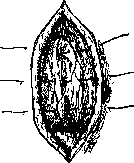
Figure 2. Gastropexy according to Rovsing.
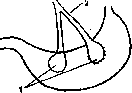
Figure 3. Gastropexy according to Hammesfahr: 1—tongue-shaped flap from the peritoneum and the posterior wall of the rectus sheath; 2—round ligament.
suture is placed 1 cm below the lesser curvature, the lower one—3 cm above the greater curvature (see Figure 2). In order to induce firm adhesions between the serosa of the stomach and the anterior abdominal wall, both are scarified. After closing the abdominal cavity, the sutures are tied over gauze rolls. After 3 weeks, the sutures are removed. At the present time, the Perthes method is readily used: the stomach is suspended from the anterior abdominal wall using the round ligament of the liver; the round ligament of the liver is isolated, severed at the navel, passed under the serous membrane of the anterior wall of the stomach along the lesser curvature and further under the left costal arch through the posterior wall of the rectus sheath, where it is attached. Hammesfahr cuts out, together with the round ligament, a tongue-shaped flap from the peritoneum and the posterior wall of the rectus sheath (m. recti). He divides the flap together with the ligament into 2 pedicles, one of which he secures to the posterior wall, and the other to the anterior wall of the stomach. If this is not enough, 2–3 strips 21/2–3 cm wide are cut from the greater omentum, passed upward behind the transverse colon, attached to the lig. gastrocolicum, and, passing behind the stomach, are sutured to its lesser curvature and as high as possible near the liver itself to the round ligament (see Figures 3 and 4). Significant statistics exist only for the Rovsing method. According to Wehner and Boker, this method yields 64% cures. The disadvantages of this method include: 1) broad planar adhesions of the stomach to the anterior abdominal wall, which cause pain, 2) a large part of the anterior wall of the stomach is excluded from normal function, 3) in the case of repeat operations in the upper floor of the abdomen, difficulties may be encountered due to extensive adhesions to the anterior abdominal wall. Literature: Oppel V. A., Schemes and Individualization of Surgical Treatment, "Nauchnaya Meditsina", 1919, No. 1; Duret H., De la gastropexie, Revue de chirurgie, 1896, No. 6; Rovsing Th., Uber Gastroptose u. ihre operative Behandlung, Archiv f. klinische Chirurgie, B. LX, 1900; same author, Resultate u. Indikationen d. Gastropexie, Zentralblatt f. Chirurgie, 1911, No. 39; Perthes G., Uber Operation d. Gastroptose unter Verwendung des Ligamentum teres hepatis, ibid., 1920, No. 27; same author, Erfahrungen mit d. Operation d. Gastroptose, Archiv f. klinische Chirurgie, Band CXX, 1922; Hammesfahr C., Physiologische Gastroenteropexie, Zentralblatt fur Chirurgie, 1923, No. 7.
Related articles
Mentioned in
Cite this page
“Gastropexy.” Soviet Medical Encyclopedia. English translation of Bolshaya Meditsinskaya Entsiklopediya, 1st ed. (Moscow, 1928–1936), ed. N. A. Semashko. https://sovietmedicalencyclopedia.pages.dev/article/gastropexy/