Oppel
Historical document, translated for reference. It reflects medical knowledge of the 1920s–30s and is not medical advice.
Summary
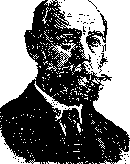
Vladimir Andreevich Oppel (born 1872) was a prominent Russian surgeon known for his original school of surgical biochemists. He made significant contributions to the study of collateral circulation, trauma, and endocrine pathology, publishing over 170 works and training numerous students who became professors across the USSR.
Encyclopedia article (1928–1936)
Oppel Vladimir Andreevich (born in 1872), known surgeon. In 1896 he graduated from the Military Medical Academy with the Palfiev prize. By competition he was retained at the Academy for 3 years for advanced study. He worked in the hospital surgical clinic of Professor Ratimov. After defending his dissertation (1899) he was sent on a foreign business trip for two years. He worked under Virchow and at the Pasteur Institute with Metchnikov. In 1908 he was elected by the Military Medical Academy to the chair of surgical pathology and therapy with a clinic. In 1918 he was elected to the chair of the academic surgical clinic, which he occupies at the present time. In 1924 he organized the surgical department of the Metchnikov Hospital in Leningrad, where in 1927 a clinic for advanced study of physicians was opened.-Oppel created and continues to perfect his own, quite original school of surgical biochemists. Works of a morphological nature cover the first period of his activity. The most significant of them: "Lymphangiomas" (dissertation, St. Petersburg, 1899); on the regeneration of myocardium and endocardium (Virchows Arch., Vol. CLXIV-CLXVI, 1901). Questions of immunity are set forth in the article "A few words about island-inflammatory surgical diseases" (News of the Military Medical Academy, Vol. X, No. 1, 1905). Since receiving the chair Oppel has developed especially productive activity, soon grouping around him many students. The development of the question of collateral circulation takes place. Works in this field are summarized in the reviews "Collateral circulation" (St. Petersburg, 1911) and "Reduced circulation" (Russian Physician, 1914, Nos. 47-48). By this time the fame of Oppel had penetrated beyond Russia, and in 1914 he was elected a member of the Royal Surgical Society of England. Questions of traumatology interested Oppel throughout his entire activity. Having published a large article "On the mechanism and classification of fractures of the pelvic ring" (Annals of Russian Surgery, 1899, Book 1), he
repeatedly returned to this theme both himself and in the dissertations of his students. A broad generalization of his thoughts on these questions is set forth in the articles "Traumatism" (Bulletin of Surgery and Wounded Regions, 1929, Books 48-49) and "Surgical traumatism and maiming" (ibid., 1929, Book 52). From the very beginning of the October Revolution Oppel responded lively to the questions agitating Soviet society, more than once speaking out on current questions in the general press, popular brochures, etc. The organizational experience of Oppel finds its reflection in the articles "Measures for combating cold and frostbite in field troops" (Petrograd, 1919; awarded a prize by the literary-publishing department of the Revolutionary Military Council of the Republic), "Organizational questions of the advanced surgical belt of the active army" (Petrograd, 1917), "Organization and work in the surgical department" (Leningrad, 1926). The present period of Oppel's work covers the study of the pathology of the endocrine apparatus, based on a broad biochemical foundation. First place here should be given to the question of spontaneous gangrene. It is dedicated to the monograph "Spontaneous gangrene" (Petrograd, 1923) and the collective work "Spontaneous gangrene as hyperadrenalinemia" (Leningrad, 1928). Further one can note: "The endocrine formula and its significance in the clinic" (Physician's Newspaper, 1924, Nos. 21-22); "The clinic of changes in the function of epithelial bodies" (Kharkov, 1927); "Endocrinology in surgery" (New Surgical Archive, Vol. XIII, Book 1, 1927); "Lectures on clinical surgery and clinical endocrinology for surgeons" (Leningrad, 1929); "Clinical lectures for students" (Leningrad, 1928); "History of Russian surgery" (Vologda, 1923). In addition Oppel has written a number of popular brochures and journalistic articles. In general, to the present time Oppel has published about 170 works. An even greater number has been done by his students and collaborators according to his assignments. Under his editorship 5 volumes of works of the clinic and 2 volumes of the collection "Modern Surgery" (Leningrad, 1925) have been published. A number of Oppel's students occupy chairs of surgery in various cities of the USSR.-Original proposals of Oppel: simultaneous ligation of vein and artery for the treatment of aneurysms, ligation of vein in spontaneous gangrene, transplantation of bone under the skin to increase the calcium content of the blood, extirpation of the adrenal gland in spontaneous gangrene, several modifications of various operations (amputation according to Gritti, herniotomy according to Rou, resection of the large intestine by a three-moment method, etc.). Oppel-chairman of the XX Congress of Russian surgeons; repeated chairman of the Russian Surgical Society named after Pirogov; chairman of the Endocrinological Society.
Related articles
Mentioned in
Cite this page
“Oppel.” Soviet Medical Encyclopedia. English translation of Bolshaya Meditsinskaya Entsiklopediya, 1st ed. (Moscow, 1928–1936), ed. N. A. Semashko. https://sovietmedicalencyclopedia.pages.dev/article/oppel/