Grassi
Historical document, translated for reference. It reflects medical knowledge of the 1920s–30s and is not medical advice.
Summary
Battista Grassi (1853-1925) was a prominent Italian zoologist and malariologist who made significant contributions to the understanding of malaria transmission and protozoology. His research established that Anopheles mosquitoes are the sole vectors of malaria parasites.
Encyclopedia article (1928–1936)
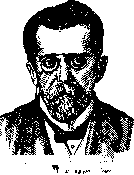
Grassi, Battista (1853-1925), professor at the University of Rome, member of the Academy (Accademia dei Lincei), famous malariologist. G. was one of the most outstanding zoologists of the last 50 years. G. authored numerous works on intestinal Protozoa; among these works, his research on intestinal Protozoa of termites, which he was the first to study, is of particular interest. G. devoted much time to the study of the etiology of goiter. His monograph on Phlebotomus ("Ricerche sui Phlebotomi", Memorie della Societa Italiana delle Scienze, ser. 3 a, v. XIV, 1907) is one of the best studies of its time. G.'s works concerning malaria are of outstanding significance. R. Ross's research on bird malaria, showing that the vectors of the parasites (Plasmodium) are mosquitoes of the genus Culex, and observations on the development of the malaria parasite in the body of the "spotted mosquito" gave G. the impetus for research in this field. Together with his two collaborators, Bignami and Bastianelli, G. brilliantly solved this problem by tracing the complete life cycle of the malaria parasite and proving that the only vector of malaria is the mosquito Anopheles (Grassi B., Bastianelli G. e Bignami A., "Ciclo evolutivo delle semilune nell'Anopheles claviger ed altri", Studi sulla malaria, Atti della Societa per gli studi della malaria, v. I, Roma, 1899). G. presented a general summary of his works on malaria in his classical monograph: "Malaria, Studien eines Zoologen" (2nd edition, Jena, 1901; Supplement to this, Jena, 1903; 1st edition in Italian - Roma, 1900). Until his last day, G. worked in Fiumicino on solving individual problems in the field of malaria control; at his suggestion, stables and barns for domestic animals were arranged around the city of Ostia in Italy, which were to attract mosquitoes and thereby serve as protection for the residents of Ostia.

Related articles
Mentioned in
Cite this page
“Grassi.” Soviet Medical Encyclopedia. English translation of Bolshaya Meditsinskaya Entsiklopediya, 1st ed. (Moscow, 1928–1936), ed. N. A. Semashko. https://sovietmedicalencyclopedia.pages.dev/article/grassi/