Hoffmann
Historical document, translated for reference. It reflects medical knowledge of the 1920s–30s and is not medical advice.
Summary
This entry provides biographical sketches of two prominent medical figures named Hoffmann: Erich Hoffmann, a German dermatologist and venereologist known for his work on syphilis, and Eduard von Hofmann, an Austrian forensic medicine expert.
Encyclopedia article (1928–1936)
HOFFMANN, Erich (born 1868), a distinguished clinician. He received his higher medical education at the University of Berlin, where in 1904 he also received his docentship in the department of venereal and skin diseases. In 1908, he was elected professor of the same department in Halle; since 1910, he has been an ordinary professor at the University of Bonn. Hoffmann was a collaborator of Fritz Schaudinn in the discovery of the pale spirochete (1905); he is the author of major works in the field of experimental syphilis (on monkeys, rabbits, and other animals; 1908). As a clinician, Hoffmann is the author of capital works in the field of dermatology, where he histologically studied a whole range of skin processes (dermatofibrosarcomatosis, nevo-epitheliomas); he created and substantiated the concept of "esophylaxis" as an expression of a special protective function of the skin (Bonn, 1919); in the field of syphilidology, in a whole series of works, he revealed the practical significance of early salvarsan therapy; among other things, he proposed sodium thiosulfate as a remedy against side effects of salvarsan; he described a fundamentally important case of syphilis infection through cadaveric material (1926). Hoffmann's most important works: "Die nach innen gerichtete Schutz- u. Heilwirkung der Haut (Esophylaxie) mit besonderer Berücksichtigung der Tuberkulose" (Berlin, 1927); together with F. Schaudinn—"Über Spirochaeta pallida bei Syphilis u. die Unterschiede dieser Form gegenüber anderen Arten dieser Gattung" (Berliner klinische Wochenschrift, 1905, No. 22–23); together with S. Prowazek—"Untersuchungen über die Balanitis- u. Mundspirochaeten" (Centralblatt für Bakteriologie, 1. Abt., Orig., B. XLI, 1906).
HOFMANN, Eduard (Eduard von Hofmann, 1837–1897), a European-renowned professor of forensic medicine. He was born in Prague, where he received his medical education. From 1869, Hofmann was a professor of forensic medicine (in Innsbruck, and from 1875 in Vienna), and also a member of many foreign medical societies; from 1876—
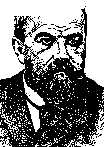
he was a member, and later president, of the Austrian Supreme Sanitary Council. In Innsbruck and Vienna, Hofmann was dean of the medical faculty. Hofmann wrote about 70 scientific works. His "Lehrbuch der gerichtlichen Medizin" (1st ed., Vienna, 1877–78; 11th ed., edited by A. Haberda, Berlin–Vienna, 1927) is
a classic
textbook on forensic medicine; it has been translated into Russian (St. Petersburg, 1912) and into many other languages. One of Hofmann's major works is "Atlas der gerichtlichen Medizin" (Munich, 1898).
Related articles
Mentioned in
Cite this page
“Hoffmann.” Soviet Medical Encyclopedia. English translation of Bolshaya Meditsinskaya Entsiklopediya, 1st ed. (Moscow, 1928–1936), ed. N. A. Semashko. https://sovietmedicalencyclopedia.pages.dev/article/hoffmann/