Levaditi
Historical document, translated for reference. It reflects medical knowledge of the 1920s–30s and is not medical advice.
Summary
This article is a biographical entry for the French microbiologist and biochemist Constantin Levaditi, detailing his extensive research on syphilis, including the discovery of the pale spirochete in neonatal pemphigus and the development of the silver impregnation method for staining it.
Encyclopedia article (1928–1936)
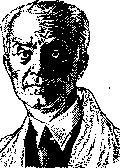
LEVADITI Constantin (Constantin Levaditi, born in 1874), the noted French microbiologist and biochemist, professor at the Pasteur Institute in Paris, member of the French Academy of Medicine (since 1928). He was born in Galați (Romania), later naturalized in France, and graduated from the medical faculty in Bucharest, then the medical faculty in Paris (1902). Since 1901 he has worked at the Pasteur Institute, where he now heads a department. A pupil of Ehrlich and Metchnikoff. Levaditi's very numerous and diverse works relate primarily to the study of spirochetes and spirochete-killing substances. In 1905 it was established by Levaditi that the pale spirochete is present in the vesicles of pemphigus (pemphigus syphiliticus neonatorum) and in the internal organs of children with congenital syphilis. Subsequently, he studied in detail the presence of spirochetes in the internal organs, and in particular in the liver, and for the first time obtained (though not pure) a culture of spirochetes in collodium pouches placed in the abdominal cavity of monkeys. Based on the method of Bertarelli and Volpino, Levaditi proposed a method for staining the spirochete by impregnation with silver nitrate (a method which is now considered classical). At the same time he studied the method of penetration of spirochetes into the organism and proved their presence in tissues affected by the syphilitic process. By these works Levaditi finally confirmed the etiological role of Schaudinn's spirochete in syphilis. After this, Levaditi proved the presence of spirochetes in the placenta and in the ovaries, as well as in the umbilical cord of newborn children. Levaditi also studied the incubation of syphilis and proved the diversity of forms of spirochetes differing in degree of virulence. Levaditi was the first to propose liver, even one not containing spirochetes, as an antigen in the Wassermann reaction, and proved the non-specificity of the antigen from the liver of congenital syphilitics. Levaditi asserted that the specificity of the Wassermann reaction in syphilis depends not on the specificity of the antigen, but on the presence in the serum and in the cerebrospinal fluid of the patient of various substances in a colloidal state. In the presence of bile salts and liver lipoids these substances precipitate and cause the binding of complement. It was shown by Levaditi that races of spirochetes can be formed which are not affected by mercury preparations, which explains the failure of mercury treatment in some cases. In 1921, together with Sazerac, Levaditi proposed a new anti-syphilitic remedy—bismuth and sodium or potassium tartrates (sodium tartratomismuthate). Subsequently, he also showed the therapeutic action of carbolic (phenolic) derivatives of bismuth and pure metallic bismuth in syphilis. From the study of bismuth in syphilis, Levaditi turned to the study of other metals and showed the action of vanadium, gold, platinum, and tellurium.
Very important are Levaditi's works on the study of poliomyelitis. He was the first to succeed in inoculating the virus of this disease to monkeys, proving its specificity and studying the patho-anatomical changes in poliomyelitis. Levaditi made a number of very important works in the field of the study of neurotropic viruses of poliomyelitis, lobar encephalitis, herpes, and vaccine, as well as the virus of rabies and post-vaccinal encephalitis. Together with R. Kraus, Levaditi is the editor and one of the authors of the fundamental "Handbuch der Technik u. Methodik der Immunitatsforschung" (B. I-II u. Erganzungsband, Jena, 1908-11). In total, Levaditi published over 360 works; a significant part of them in collaboration with other authors. Of the works by Levaditi published separately, the most important are: "La nutrition dans ses rapports avec l'immunite" (Paris, 1904); "La syphilis" (together with J. Roche, Paris, 1909); "Ectodermoses neurotropes" (Paris, 1922); "Le bismuth dans le traitement de la syphilis" (P., 1924); "L'herpes et le zona" (P., 1926). A vast number of Levaditi's works were published in Annales de l'Institut Pasteur, Comptes rendus des seances de la Société de biologie, Comptes rendus de l'Académie des Sciences, Bulletin de la Société Française de dermatologie et de syphiligraphie.
Related articles
Mentioned in
Cite this page
“Levaditi.” Soviet Medical Encyclopedia. English translation of Bolshaya Meditsinskaya Entsiklopediya, 1st ed. (Moscow, 1928–1936), ed. N. A. Semashko. https://sovietmedicalencyclopedia.pages.dev/article/levaditi/