Meat
Historical document, translated for reference. It reflects medical knowledge of the 1920s–30s and is not medical advice.
Summary
This article from the 1928–1936 Soviet Great Medical Encyclopedia details the morphological and chemical composition of meat, including its tissue types, water, fat, protein, and vitamin contents across various animals.
Encyclopedia article (1928–1936)
MEAT. Contents: Morphological and chemical composition of meat . . . 41 Animals used for food . . . . 44 Meat procurement . . . . 46 Distinction of meat from various animal species . . . 50 Post-slaughter changes in meat . . . 50 Meat products . . . 54 Veterinary and sanitary supervision . . . 55 Methods of examining meat and meat products . . . 59 Meat of sick animals . . . 62 Poultry and game meat . . . 65 Meat (in commodity science)—all parts of slaughtered animals consumed as food by humans. This concept includes tissues covering the skeleton and internal organs (tongue, brain, trachea, heart, lungs, spleen, esophagus, kidneys, stomach, udder, etc.). In a narrower sense, meat is understood as the aggregate of soft tissues covering the bony skeleton. This includes: muscle, epithelial, connective, adipose, cartilaginous, and nervous tissues, blood, and lymph. Morphological and chemical composition of meat. 1. Morphological composition of meat. The main part of meat is muscle tissue, consisting of striated muscle fibers. The fibers are joined into muscle bundles of various sizes; their cross-section allows one to determine what is known in the meat trade as the "graininess" of meat, and the longitudinal section what is called "fibrosity." Animal muscles have varying colors: from white and pale pink to dark red.--The second morphological component of meat is fat. Fat is contained in meat in various quantities. Its content ranges from 2% to 30%. In young animals with good fattening, fat is located in the thickness of the muscles in layers of connective tissue. Such meat is called "marbled." In old animals with good fattening, fat is deposited predominantly in the subcutaneous tissue, as well as inside cavities (mainly in the abdominal cavity, near the kidneys, in the omentum, mesentery). Fat in pigs deposited in the subcutaneous tissue is called "lard." Fat varies in color and density. Its color depends firstly on age: in young animals it is white, in old animals it is yellower; secondly, on feed: in summer with green feed the fat is yellower, in winter with dry feed it is whiter. The change in the color of fat in some cases is caused by various diseases, e.g., jaundice, etc. The density of fat in various animals differs depending on its composition. The more olein and less stearin it contains, the softer and more fusible it is. The most refractory fat is in sheep, and the most fusible in horses.--Further, a component of meat is connective tissue—the main place among various types of connective tissue is occupied by bone tissue. The amount of bones in the carcass on average ranges from 7% to 12%. The predominance of one or another type of connective tissue in meat is of great importance in the pricing of meat, since different types of connective tissue are not digested equally in the human gastrointestinal tract: collagen is easily digested, while elastic is not subject to digestion. Cartilage tissue occupies an insignificant place in meat in terms of its quantitative content, which is why it does not affect the quality of meat. Nervous tissue in meat is found in the form of peripheral nerve fibers. In addition, there are blood and lymphatic vessels in the meat with remnants of formed elements. 2. Chemical composition of meat. The main components of meat proper and organs consumed as food are water, nitrogen-containing substances, fat, and a very small amount of nitrogen-free substances and inorganic salts. The fatter the meat, the less water it contains. In very fat meat, the content of other components decreases accordingly (Table 1). Thus, as the animal is fattened and its degree of fatness increases, fat accumulates in meat while water and proteins simultaneously decrease. For consumption in Table 1. Amount of fat and protein (in grams per 1 kg) of meat in oxen of various degrees of fatness (according to Ignatyev). Oxen Water Fat Unfattened . . . Moderately fattened Fully fattened Protein Meat is most profitable for consumption from moderately fattened meat animals, in which the amount of fat and proteins is almost equal. This circumstance has long been taken into account by meat markets, which quote such meat at a higher price. Meat without fat, i.e., muscle tissue cleared as much as possible of fat and tendon, contains approximately the same amount of water in various animals. According to König, in beef, veal, mutton, pork, horsemeat, and rabbit meat, the amount of water ranges from 74.24% to 78.85%. According to Petersen, from 71.93% to 79.29%. On average, it can be considered equal to 76.20%. Meat of young animals is always richer in water than meat of old ones; meat of animals in an embryonic state can contain up to 98% water. Nitrogenous substances consist of proteins and nitrogenous extractive substances (see Meat extract). Table 2. Amount of nitrogen in the meat of various animals (cocording to Petersen). Fluctu-Species of meat ations in % Average in % 3.45 3.18 3.15 3.25 3.63 3.20 Beef ........j 2.97-3.84 Veal ........> 3.07-3.31 Mutton ........1 3.03-3.22 Pork ........j 3.12-3.36 Horsemeat .........i 3.10-4.02 Rabbit meat .......1 2.94-3.50 ! When converted to dehydrated meat, from 11.88% to 15.07% of nitrogen is obtained. Among nitrogen-free extractive substances in meat are glycogen, lactic acid, sugar, inositol, and traces of butyric, acetic, and formic acids. Glycogen is always found in living muscle and not always in dead muscle. In various muscles of the same animal, glycogen is not contained in equal quantities: in the back muscle of a horse it contains up to 10.8%, in the masticatory muscle - 0.047%, which largely depends on work and nutrition. Horsemeat contains a lot of glycogen - from 0.586% to 0.940%. Lactic acid is contained in meat in an amount from 0.05% to 0.07%. The sugar contained in meat consists of maltose and partly grape sugar (Hammarsten); along with it there is a little dextrin - from 0.1 to 0.38 (Polenske). Inorganic salts of meat consist mainly of phosphates of potassium, calcium, magnesium, as well as NaCl. Recent studies have shown that fresh meat contains vitamins (Moulton). Vitamin A is also found in frozen meat. It is especially abundant in the liver and kidneys. Vitamin B is abundant in raw, boiled, and salted pork; it is also contained in smoked and boiled ham. Freezing pork Table 3. Chemical composition of ash of meat of slaughtered animals (in percent, according to König). ; i ev « S H" 1 га a o « ' И 1 Content h & O QJ И rt o V ы ctf d 1 ce K оэ o н ! 48.9 и . : s ОЙ 1.10 Ок 0 к 3.8 8.4 к « Highest . . . 25.6 7.5 '♦.в 48.10 2.5 Medium . . . . ! 37.0 10.14 2.42 3.23 0.44 41.20 0.98 4.56 0.69 Lowest .... . 1 25.0 0.0 0.9 1.4 0.3 36.1 0.30 0.6 0.6 does not significantly affect the content of vitamin B (Wright). It is found in significant quantities in mutton (Hoagland). Liver, kidneys, and brain are also rich in vitamin B. In beef, this vitamin is found in insignificant quantities. Raw meat contains vitamin C, but it is destroyed in the cooking process (see Table 4). Meat is also a source of vi- Products Chemical composition in % of raw substance Lean beef ..... Medium beef ...... Fat beef ...... Salted meat . . . Fat veal ...... Lean veal ...... Fat pork ...... Lean pork ..... Ham . . Fat mutton ...... Horsemeat .... Chicken ..... Goose..... Lung .... Liver .... Kidney ..... Tongue..... Brains ..... Rendered beef fat . . . Rendered pork fat . . . Unrendered pork fat . 20.5 20.6 2.0 5.5 18.3121.4 19.2 4.5 18.91 7.4 19.9 14.5 20.0 21.6 16.4 21.7 19.8 16.6 15.2 19.4 17.2 16.5 9.0 0.4 0.3 11.0 0.8 37.3 6.6 18.7 31.0 2.5 5.1 28.7 2.5 4.6 4.8 17.8 9.0 99.0 68.3 1 ы п и Сч O o ^ Кш 0.7 1.2(76, 1.1 72, ! 1.058, |16.7159; 0.5 1.0 0.8 2.8 1.3|72.3 0.5 78.7 0.7147.4 1.1.172.5 3.8:55.6 1.051.2 1.174.3 l,li72.8 1.1151.0 1.8,79.9 1.6171.6 4.8 800 ; 1080 | 2 140 | 940 1 140 3 285 1 165 : 2 135 : 2 775 i 815 : 1 075 1 2 705 715 | 1090 930 1890 76.6 64.6 80.6; 1 170 1.3| 8 230 I 0.7! 8 670 14.8J 6 470 tamin E, which is not affected by cooking. Table 5. Indigestible food nitrogen excreted with excrement (according to Khlopin). Products Percentage ' Authors Fried meat....."]
3,3 Wheat bread .... 21.0-30.5 Rye bread......| 32.0-46.6 Mixed food (meat and plant) . . I 7.0-14.0 Rubner Atwater Brilliant Rubner Woods Benedict Gorokhov Golunsky Khlopin Table Vitamins Digestibility of meat. In terms of the digestibility of nitrogen-containing substances, meat surpasses all plant proteins. The difference in digestibility can be seen from the data in Table 5.
To make meat most suitable for human consumption, it is subjected to boiling or frying. To preserve the best flavor, it is recommended when boiling to drop the meat into boiling water; in this case, due to the action of high temperature, the proteins of the surface layers of the meat quickly coagulate and prevent the release of nourishing juice from the meat, thanks to which it retains a good flavor and maximum nutrition. - Fried meat, as can be seen from Table 6, contains more nutrients than raw and boiled meat.
At high frying temperatures, the proteins of the surface layers of the meat coagulate, part of the fat melts, and the meat becomes covered with a more or less impermeable crust that preserves the maximum amount of nourishing juice. In addition, thanks to the decomposition of organic substances and the crust formed on the meat, aromatic and pleasant-tasting substances are formed; they enhance the activity of digestive organs. slightly
- j boiled meat under normal preparation conditions loses about 40% ~
-
Animals consumed for food. Slaughter animals include: a) cattle - bulls, oxen, and cows; - : - | b) small cattle - sheep, rams, goats, he-goats; c) pigs - females and males (castrated and uncastrated); d) horses. Buffalos, camels, deer, rabbits are less frequently used as slaughter animals; and among wild animals - wild boars, bears, badgers, etc.
The main sources of meat products are cattle, pigs, and sheep; cattle meat accounts for the first place at 50%, pork at 35%, and mutton at 15% (Yakovlev). Meat obtained from domestic animals that are more or less early-maturing meat breeds is considered the best, that is, breeds that reach a certain growth and full development in the shortest possible time. - In the USSR, the main breeds of meat cattle are considered to be the Kalmyk, Kyrgyz, gray Ukrainian cattle, or crosses of these breeds with foreign cattle, predominantly Simmental, Schwyz, Shorthorn, Dutch, and Wilstermarsch. The meat yielded by these cattle breeds and known under the name of "Cherkasy" is of the best quality. Kyrgyz, Kalmyk, and gray steppe cattle represent the meat reserve of the meat industry of the USSR; our internal supply of meat relies mainly on them. Until 1914, more than 80% of all beef delivered to the Moscow market was provided by cattle of these breeds and their crosses. "Russian cattle", cull dairy Great Russian cattle, yielded predominantly sausage meat. - Kalmyk cattle (southeast of the USSR), working cattle, have the advantage that during fattening they quickly fatten up. During grazing and fattening, this breed accumulates fat, mainly in the abdominal cavity, omental fat, and around the kidneys. Little fat is deposited under the skin and between the muscles. It yields rather juicy and tasty meat despite comparatively coarse muscle fibers. The disadvantage is the late-maturing nature of this breed. It constitutes 50% of all slaughter cattle driven to the Moscow and Leningrad markets. - Gray steppe cattle (south of the USSR) are predominantly working cattle. They yield the so-called "fatty" meat, surrounded externally and internally by fat. The meat of this breed is less tender and juicy than that of Kalmyk cattle. - Kyrgyz cattle (Turkestan and Kazakhstan) are meat, range cattle, distinguished by the ability to fatten quickly. With good fattening, they yield tender, juicy, fat-streaked, so-called "marbled" meat. Crossbreeds differ little from Russian breeds in terms of fattening and slaughter (Yakovlev).
As for small cattle, there are no special meat breeds of sheep in the USSR. The most widespread are fat-rumped sheep. Good meat is yielded by the Wallachian (more correctly, Vlach) sheep and its crosses (southeast of the USSR) and Tsigai (Crimea). They fatten well. Adayev and Edilbay sheep (Caucasian breeds) graze well - up to 80% and more of live weight. Good meat is yielded by the Tushin sheep, and in the central regions of the USSR - the Romanov sheep (Yaroslavl Governorate). - The pig is the only meat animal in the USSR whose breeding pursues a single goal - to obtain a meat product. The pig previously entering the internal consumer market was most often the ordinary Russian (mongrel) village pig. With the development of bacon production in the USSR, there is a rapid penetration into the market of crosses of the peasant pig with purebred ones, mainly English. At bacon factories, and now occasionally at large slaughterhouses slaughtering pigs for the domestic market, purebred pigs are also encountered. - In order to improve the quality of meat of slaughter animals, artificial fattening methods are practiced: fattening with beet-sugar production waste (pulp), pasture grazing, and stall feeding. Currently, the grazing of cattle is carried out in the regions of the North Caucasus, the Central Black Earth Region, and the Lower Volga region, the grazing of sheep - in the southeastern parts of the Lower and Middle Volga regions, in Kazakhstan, Turkestan, and the steppe regions of Siberia. When choosing cattle for fattening, one is usually guided by the animal's appearance, age, condition, as well as weight and health. The purpose of livestock fattening is to obtain well-conditioned, fat, and heavy animals from lean and lightweight ones. Meat procurement. Livestock intended for slaughter are transported to slaughterhouses from the place of procurement (fattening, grazing, etc.). Transporting requires great care and attention, as it affects the animals negatively: their body temperature rises and they lose weight. Animals delivered to the slaughterhouse are kept for several hours (abroad 48 hours) in special premises, the so-called holding pens. Preslaughter rest is necessary because the muscles of tired animals contain so-called fatigue toxins, which disappear only after prolonged rest. In the absence of preslaughter rest, an unstable "low-value" meat is obtained, unfit for storage. Currently, experiments are being conducted in the USSR to determine the time required for preslaughter holding of animals.
Slaughter. The methods of slaughter used are very diverse; each country has its own methods developed by practice. All of them are aimed mainly at obtaining the most complete (thorough) bleeding out of the meat. These methods can basically be reduced to two: slaughter with preliminary stunning, where the animal is preliminarily rendered unconscious before slaughter by a blow with some tool, apparatus, or special device, and slaughter without preliminary stunning, where bleeding is performed immediately after fumbling the animal - the method of sticking. Slaughter by sticking, or the Jewish method of slaughter, consists of cutting the neck vessels without preliminary stunning and without destruction of the medulla oblongata. With this method of slaughter, only the front part of the carcass is considered edible (and only if upon inspection the pleura is found to be undamaged) and is called "kosher meat". In the USSR, the slaughter of cattle is mostly practiced with preliminary stunning of the animal by a blow with a stiletto between the occipital bone and the first cervical vertebra. The blow is struck with the intention of destroying the medulla oblongata, after which the cervical blood vessels are cut. This method is called the "Russian" method of slaughter. Based on a number of studies, it has been proven that slaughter with preliminary stunning of the animal by a blow to the frontal bones (the American method) and slaughter by means of sticking (without preliminary stunning) give the greatest yield of blood. With the "Russian" method of slaughter, the blood yield is considered the smallest. The amount of blood lost (in cattle) depending on the method of slaughter (bleeding data according to Holtz) is given in Table 7.
Table 7. Amount of blood obtained as a percentage of live weight of slaughtered cattle. 1. When sticking without stunning 3.56. 2. When stunning with destruction of the medulla oblongata 3.28. 3. When stunning with a captive-bolt pistol 3.24. 4. When stunning with a hammer 3.85. 5. When stunning 3.60, 4.07, 4.50, 6.03, 3.35, 3.59, 3.24, 3.59, 3.61, 4.18, 5.07, 5.86. With the horizontal method of dressing, when bleeding takes place while the animal is lying down, much less blood flows out than with the vertical method of dressing, when the animal is suspended by its hind limbs. In well-equipped slaughterhouses, the bleeding process is carried out as follows: when the stunned animal falls, shackles are applied to its hind limbs, and the animal is lifted by means of an electric winch onto the bleeding rail (overhead tracks on which carcass bleeding is performed); at this moment, the butcher cuts the cervical blood vessels; the carcass is left in a suspended state for 8-10 minutes to allow the largest amount of blood to drain out. The slaughter of small animals (calves, sheep) is usually carried out on special benches with small sides. The animals are placed on these benches on their backs, the head is bent back somewhat, after which the butcher cuts the cervical blood vessels. Then the animal is suspended by the hind limbs to obtain the most complete bleeding possible. The desire to obtain the most complete bleeding during slaughter is explained by the fact that the keeping quality of meat both during transport and during storage depends on the degree of bleeding. Blood, being a source of moisture in the animal organism and being left in the blood vessels, promotes the development of putrefactive microbes and various kinds of microorganisms in the meat, i.e., its rapid spoilage. Dressing and butchering of carcasses. For the keeping quality of meat, protecting it from contamination from the very initial moments of preparation is also of great importance. For this purpose, a very expedient measure has been introduced in the refrigeration slaughterhouses of Argentina, significantly reducing the possibility of meat contamination during slaughter. On the way to the slaughter hall, animals are subjected to thorough washing by bathing in special baths and passing through a special kind of shower. Carcass dressing is performed in a vertical position, on a winch. Internal organs are removed with special precautions; in order not to contaminate the carcass with gastrointestinal contents, double ligatures are applied at the sites of the intestinal and esophageal incisions during their extraction. Washing carcasses with water during dressing is not allowed: it introduces extra infection and delays the formation of a surface crust on the meat. In cattle, all internal organs are removed, including the kidneys; vessels and tissue remnants are trimmed. To obtain meat of good quality, thorough carcass dressing is a necessary condition, because in the process of it, the meat of healthy animals can easily become infected with a significant number of bacteria, which rapidly multiply, penetrate deep into the meat, and cause its rapid spoilage. After dressing, carcasses at slaughterhouses are often subjected to butchering. At the present time, butchering
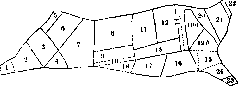
Figure 1. Retail butchering of cattle carcasses (table beef): 1 - shin; 2 - heel; 3 - rump; 4 - flank steak; 5 - rump cap; 6 - sirloin tip; 7 - sirloin; 8 - tenderloin; 9 - tenderloin strip; 10 - tenderloin strip trimming; 11 - short loin; 12 - rib eye; 13 - edge strip; 14 - under-blade strip; 15 - brisket bone; 16 - brisket (middle); 17 - spiral; 18 - chuck tender; 19a - upper part of the shoulder blade from the 1st joint; 19b - lower part of the shoulder blade up to the 1st joint; 20 - under-blade; 21 - neck; 22 - chuck; 23 - front shin; 24 - shank.
carcasses is standardized (Fig. 1). Cattle carcasses are first butchered along the spine into two symmetrical parts, then each half is in turn divided into two parts by a transverse incision between the 11th and 12th ribs. Such butchering into four parts—quarters—ensures faster cooling of the meat, and if it is preserved by cold, thorough freezing. This butchering is also convenient for transport and storage, as it facilitates the carrying and stacking of meat. Small cattle. Calves are not subjected to butchering; besides, they usually enter the market with the head and lower parts of the legs. Sheep and goats are also not subjected to butchering. Usually, their heads and lower parts of the legs up to the hock and calcaneal joints are removed. The kidneys remain with the carcass. In pigs, the skin is removed during dressing, and the head and lower parts of the legs are removed, as in sheep. Carcass butchering usually takes place in cooling departments. Preparation of meat for storage. After dressing, carcasses are usually sent to the cooling room—a room with an air temperature from 10° to 12° and with good artificial ventilation. In the cooling room, the carcasses give off their animal heat, evaporate some of the moisture, get rid of the remaining blood, and dry out slightly on the surface, which subsequently protects them from the action of dust and air microbes. Animal slaughter products. All products obtained after slaughter are subdivided into 1) main, 2) secondary, 3) by-products, and 4) waste. The main ones include the carcass (meat proper). Secondary products: fat (caul, mesentery), offal (the pluck; by this is meant the head, lower part of the extremities, trachea, lungs, heart, liver, spleen, all together constituting the so-called goose-neck), stomach, and kidneys. Offal is consumed as food on a par with meat. By-products: skin, blood, intestines, urinary bladder, hair, bristles, horns, hooves, endocrine glands (used mainly for technical purposes). Waste and refuse: external and internal genital organs, fetuses, intestinal mucus, gastrointestinal contents—chyme (used for various technical purposes). A distinction is made between warm, cooled, chilled, and frozen meat. 1) Warm meat is meat obtained immediately after slaughter, when it has not yet lost its animal heat—has not cooled, has not stiffened. The signs of such meat are as follows: when pressed with a finger, it is elastic, and the depression under the finger immediately smooths out, the muscles on the cut are dry, have a lacquer hue, do not moisten the fingers when touched, are of a uniformly red color with a violet tinge; the odor is of fresh blood, the reaction to litmus is alkaline or neutral; an aromatic clear broth is obtained from this meat, but the meat itself when boiled and roasted is hard, in places viscous. 2) Cooled meat—held at slaughterhouses or warehouses for 12-24 hours after slaughter. Signs of such meat: when pressed with a finger, it is not devoid of elasticity, the resulting dimple, although slowly, smooths out; the muscles on the cut slightly moisten the finger when touched, have a matte hue; their color resembles the color of ripe raspberries, the odor is aromatic. The reaction to litmus is weakly acidic or neutral. 3) Chilled meat—held in artificial cold at a temperature from 0° to 4° and having an internal temperature averaging +3°. By its signs, it is identical to cooled meat, but differs in greater density. Chilled meat is more stable during storage, tender, tasty, and aromatic; the reaction to litmus is acidic or weakly acidic. 4) Frozen meat is meat frozen at a temperature of -2 to -18°. Such meat is dense, does not lend itself to cutting, and can only be butchered or sawed. When struck with a hard object, it makes a distinct sound. The color of the meat is pinkish-red. On the cut, the meat is penetrated by ice crystals, in the interior (at a depth of 8-10 cm) it has -6°. Meat prepared with the aid of cold (chilled and frozen) was for a long time considered meat of lower quality than warm meat in terms of nutrition, taste, and digestibility. However, further studies have shown the complete untenability of this assertion. This is shown by the comparative analysis of the chemical composition of frozen and fresh beef and mutton given in Table 8 (in %) (according to A. Gautier). Table 8. Mutton | Beef Constituents: Water... Globulins and albumins of aqueous extract... Peptones... Myosin... Myostromin... Indigestible substances (keratins, plates)... Extractives (leukomain enzymes)... Glycogen... Fats and cholesterols... Soluble mineral salts... Insoluble mineral salts... 74.6, 73.66, 74.75, 3.32, 2.14, 3.06, 1.33, 1.29, 2.24, 8.31, 10.33, 110.96, 4.49, 4.94, 4.30, 73.96, 2.69, 2.56, 9.29, 6.41, 0.86, 0.75, 0.24, 0.94, 0.49, 0.40, 5.23, 0.60, 0.95
0.65 1.01 0.16 2.04 0.47 0.65 j 0.44 0.44 0.44 The effect of cold on meat is expressed in the fact that it suspends the action of enzymes without destroying them; enzymatic processes are temporarily halted. Distinction of Meat of Various Animal Species. The ability to distinguish meat of various species of slaughter animals has a certain practical importance. Cases of substitution of high-value meat with less valuable meat are not uncommon, e.g., beef for horse meat, mutton for goat meat, etc. The distinctive features for recognizing meat of various animal species serve as 1) color, density, and odor of the meat, 2) color, density, and amount of fat (Table 9). Post-Mortem Changes in Meat. After the slaughter of an animal, a series of changes occur in the meat, which ultimately lead to its complete decomposition. Two groups of changes are distinguished: a) changes of physical and chemical character, proceeding without the participation of microorganisms, and b) all those processes of decomposition of meat caused by the activity of microorganisms. The first group of changes includes cadaveric or muscular rigor mortis. It begins in the muscles of the head and nape and gradually spreads to the entire musculature of the body; the muscles lose their softness, elasticity, contract and harden, as a result of which the joints become immobile. The process of rigor begins a few minutes after death, but there are also cases of delay. These external signs of rigor are accompanied by a gradual increase in the amount of lactic acid in the meat, as a result of which the initial alkaline or amphoteric reaction of the meat turns into an acidic one. The gradual increase in the amount of lactic acid subsequently again entails the dissolution of muscle proteins and the cessation of rigor. Simultaneously with these changes, the action of enzymes appears, causing chemical splitting processes Distinguishing features Table 9. Comparative synoptic table of meat originating from different animals (according to Violet). Beef Bull meat |
Bull meat ' Cow meat Veal Horse meat Mutton Goat meat Lamb Pork Color Dark red- Bright red
Bright red; Dark red Pale or; Dark red, Pale or ro- Pale or pink soon turning
dark red sore pink j dark pink and z y on exposure
! even red to air
! on the extremities The tenderer, the younger the animal Dense in adults, soft in old and emaciated Dense Dense, leathery Soft Soft; denser on the extremities Surface
stan-cous
' Odor Fresh, reminiscent I of bull odor Fresh, slightly aromatic External fat is absent, and in its place is white tissue; internal fat is very white External fatty layer more or less abundant, white or yellowish; internal fat dense white or yellowish More resistant, but coarser-grained than that of the bull; little or not at all mottled, depending on age, breed, etc. Fresh in the rear parts, sometimes reminiscent of the milk odor; odor less significant than that of the bull External fatty layer often absent in old cows; internal fat white or yellowish, usually softer than bull fat Fine-grained, never mottled Fresh, turning easily into acid-resistant and coarse-grained, not mottled Barely noticeable in healthy ones, reminiscent of a stable odor in thin ones, especially after the addition of sulfuric acid External The external fatty layer is often absent; internal fat is dense, white or yellowish, oily, often slimy
Resistant and coarse-grained, not mottled Fresh, aromatic Resistant, coarse-grained, not mottled Muscat External fatty cover exists only in some areas; internal fat is dense and white External fatty layer usually absent; internal fat pale yellow or even yellow Little resistant, fine-grained, not mottled Very resistant, finely and densely grained, strongly marbled on the carcass and never on the extremities None or j None or reminiscent of the pig odor ! milk odor; easily turns into acid External fatty layer is found only in some animals and only in some areas; internal fat in good ones is white, in thin ones yellowish-gray External fatty layer is thick, internal fat white, grayish-white or pink soft; in an old boar or old pig the outer layer is thick, hard and unpalatable meat of protein substances. The further action of lactic acid together with enzymatic splitting causes the ripening of the meat. It loses its initial stiffness, acquires tenderness and a slightly acidic aromatic odor and taste. Eber calls this period the period of acid fermentation. Lactic acid also acts on connective tissue, converting it into glutin, which loosens the meat and facilitates its chewing. The external sign of the approaching ripening of meat is the release of meat juice even under slight pressure; from fresh warm meat, juice is squeezed out with difficulty. The processes of the most successful ripening take place in chilled meat when stored for 8-14 days in a chamber with a temperature from 0° to + 4°. From the point of view of modern hygiene, it is necessary to strive to ensure that only ripened meat is released for consumption, and consequently the consumer receives a tender, tasty, and easily digestible product. Decomposition processes caused by microorganisms can generally be included in the concept of "putrefaction." It is caused by various types of microorganisms that fall onto the surface of meat and, due to their vital activity, cause putrefactive decomposition. Among the numerous microorganisms causing the putrefaction of meat, the first place is occupied by various types of Bacillus proteus and especially Bacillus proteus vulgaris. The putrefaction process in the meat of healthy animals usually begins with the connective tissue and the surface layers of the carcass and then spreads along the connective tissue pathways around the bones and large vessels deep into the adjacent muscles (Schneidemuhl). With the gradual development of putrefaction on the surface of meat, first a thin, and then a thicker soiled layer is formed, and finally the connective tissue of the muscles begins to disintegrate—putrefaction becomes complete. With a strong development of putrefaction, the intermuscular connective tissue is colored gray and becomes soiled. Meat on the cut appears porous, sometimes pierced with gas bubbles; the initially yellow or white fat becomes greenish. Under the influence of putrefactive bacteria, the odor, color, consistency, and reaction change. From the appearance of NH3, H2S, mercaptans, and volatile fatty acids, the odor becomes fetid. The color from the action of putrefactive products on the muscle pigment becomes gray-red, dirty gray, gray-green. The consistency becomes soft, flabby; parts strongly affected by putrefaction turn into a soiled mass; the reaction becomes alkaline. Putrid meat is considered unconditionally harmful to health.—Fetid-acid fermentation. Simple acid fermentation is distinguished, i.e., the post-mortem formation of lactic acid, causing the ripening of meat, and so-called fetid-acid fermentation, which, for example, is observed (according to Eber) in game placed on top of each other or packaged, which has still retained its animal heat. Meat of packaged game that has not been sufficiently cooled becomes hot and fetid. This phenomenon is also observed in the meat of slaughter animals that has retained its animal heat, mainly in the thick parts near the bones. Such meat is soft, on the cut surface it has a greenish color (musculature and bones). Its reaction is acidic; NH3 is absent, but H2S is detected (Reinsch).—Phosphorescence of Meat. Meat represents an extremely favorable nutrient medium for all kinds of fungi. The phenomenon of meat phosphorescence is explained by the vital activity of bacteria accidentally getting onto the meat. Phosphorescence is caused by Photobacterium Pflugeri. Such meat, although not harmful to health, should nevertheless be considered of low value due to departure from normal properties (Ostertag). Meat products. From meat and offal, a number of very highly nutritious meat products are manufactured: salt beef, bacon, ham, dried and smoked meat, sausages, and pâtés. Salt beef is meat preserved by salting. NaCl, saltpeter, sugar, and spices are usually used for salting. Salt beef is a drier and tougher product than ordinary meat, because during salting a significant percentage of moisture leaves the muscles and forms brine with salt. On salting methods—see Canning, preserves. The content of salt and water in salt beef under different methods of meat salting can be seen from the following table: Table 10. Method of meat salting
Salt
28.77%. During salting, a certain decrease in the nutrient substances of meat occurs; it loses a significant amount of water (Table 10) and a certain amount of organic substances (Font, Polenske, Notwang). The brine also extracts a large amount of potassium salts from the meat. In view of the significant extraction of phosphoric acid and extractive substances from meat during salting, salted meat is considered a less valuable product than fresh meat (Polenske). The temperature of the salting room should be 4-10°. Storage of salted meat is recommended at a temperature from 0° to +4°. Ham is usually called pork that has undergone only salting or preliminary salting and subsequent smoking. Most rarely, ham is prepared in the form of hind hams, less often fore hams (shoulders) go into it, and sometimes other parts of the pork carcass. Bacon is called pork cut in a special way and prepared in the form of salted half-carcasses. It is a high-quality product, differing from ordinary pork in a relatively low fat content and a high content of actual meat. Animals going for bacon must meet the following requirements: a) live weight from 75 to 120 kg, b) age not older than 10 months, c) breed improved by crossing local breeds with white Anamese pigs (Yorkships); d) good fatness and grain fattening, e) males castrated at an early age, f) females that have not had piglets and are noticeably non-pregnant. When butchering the carcass for bacon, the head is removed at the first cervical vertebra and the internal fat is extracted. The carcasses are cut along the spine into halves; from each half are removed: the spinal column, shoulder blade, breastbone, pelvic bone, ribs are sawed out; the entire half-carcass is cleaned of fringes and fat. The half-carcass cut in this way goes into pickling. Salting of bacon halves is carried out at a temperature of 4° to 5°. Salting is carried out by injecting brine into the thickness of the muscles and aging in brine. Sun-dried meat. Preparation of this kind of meat is developed in Uruguay (South America). For its manufacture, beef is cut into strips and immersed for several hours in a strong salt solution. Upon removal from the brine, the meat is rubbed with salt and, after salting, dried in the sun for 15-20 days. In terms of nutrition, it is not inferior to fresh meat, but contains a lot of salt. Meat powder. Meat is mechanically freed from fat, bones, tendons, and layers of connective tissue and then passed through a cutlet machine. The crushed meat mass is salted, laid out in a thin layer on zinc sheets, and subjected to the action of heated air in special furnaces, initially at a temperature of 37°, and then the temperature gradually rises to 60-70°; final drying takes place at a temperature of 100°. The dried meat mass is ground in special mills into a fine powder of a light brown color. In its fresh form, it has the smell and taste of broth. From four weight parts of fresh meat, one part of meat powder is obtained. Its chemical composition is as follows: nitrogenous substances 57.29%, extractive and glue substances 23.79%, fatty substances 9.73%, mineral substances 4.45%, water 4.73%. It is used mainly for feeding patients in soups or in a mixture with boiled potatoes, vegetables, etc. Its digestibility differs little from the digestibility of fresh meat (A. M. Petrov). Sausages - see Sausage products. Pâtés are a variety of sausage production products. The best grades of meat and fat go into the manufacture of the highest grades of pâtés. The famous Strasbourg pâtés consist of crushed goose liver, and in some cases of goose meat and fat, truffles, and spices. For greater stability during storage, the pâté mass is enclosed not in intestines, but in hermetically sealed tin cans. In the USSR, pâtés are made from the liver, lungs, and heart of cattle and pigs. Smoked meat (brisket, loin, hams, smoked sausages) - meat subjected to the action of smoke (see Preservation, canned food). Veterinary and sanitary supervision. Slaughterhouse veterinary and sanitary supervision is established at all slaughter points. Its duty includes pre-slaughter and post-slaughter inspection of animals and taking samples for laboratory research. The inspection of slaughter animals aims to detect diseases that affect the quality of meat and its suitability for human food or require appropriate veterinary and sanitary measures. The inspection is carried out on the day of slaughter. Animals suspected of being sick with infectious diseases are subject to isolation (quarantine) until the nature of the disease is clarified. Animals sick with anthrax, symptomatic carbuncle, cattle plague, and rabies are not allowed to be slaughtered. All processes of slaughtering animals, preparation and butchering of carcasses are carried out in the presence and under the control of a veterinarian. After slaughter, internal organs and the carcasses themselves are inspected. Internal organs are inspected at the place of their extraction. Examination and inspection of carcasses are carried out in the cooling departments of slaughterhouses. On the basis of veterinary and sanitary inspection, meat products are divided into 4 categories: 1st category - meat that is completely fit, released from slaughterhouses for sale without delay; 2nd category - meat conditionally fit, subject to disinfection before release from slaughterhouses under the supervision of veterinary and sanitary supervision; disinfection is carried out by boiling, steam sterilization, salting, or prolonged cooling (storage in a refrigerator); 3rd category - meat of lesser value, with reduced taste and food quality, but acceptable for human food; this category includes meat a) having some deviation from the norm in terms of taste, smell, color, composition, and stability, b) very lean meat, but obtained from a healthy animal, c) meat of calves slaughtered at the age of less than 2 weeks and foals at the age of less than 4 weeks; 4th category - meat unfit for human food and subject to destruction or disposal for technical purposes. Brands are affixed to carcasses recognized by veterinary supervision as fit for food, indicating the slaughterhouse or slaughter point in such a quantity that on each individual part of the slaughterhouse butchering there are at least 2 brands. Meat of all kinds (except horsemeat), completely fit, is marked with blue ink, with a brand having a rectangular shape. Conditionally fit meat is marked with blue ink, with a brand having the shape of an isosceles triangle; meat of lesser value, regardless of the type of animal from which it was obtained, is marked with red ink, with a brand having an oval shape. Imported meat. All meat and meat products brought into cities and towns by railways, water, and dirt roads in fresh, chilled, frozen, salted, smoked, and other forms, as well as raw pork, beef, and mutton fat, must be subjected to veterinary and sanitary inspection before being put on sale. Imported meat and meat products and fat without signs of veterinary and sanitary supervision must be provided with certificates from the village council and district executive committee of affiliation regarding the well-being of the place of export of meat in relation to epizootics. All available parts of meat carcasses and organs are subjected to investigation. Additional studies of meat for the presence of finns, trichinoscopy of pig meat, examination of the nasal cavity, larynx, and trachea during the inspection of horsemeat are mandatory in all cases (rules for veterinary and sanitary inspection of slaughter animals and research and culling of meat products of June 12-18, 1928). Veterinary and sanitary inspection of imported meat products is carried out at special points - at stations for the inspection of imported meat and meat control stations. The task of veterinary and sanitary supervision in transport is also to prevent the spread of infectious diseases by livestock and raw animal products among animals and their transfer to humans. The duties of representatives of veterinary and sanitary supervision include the inspection of livestock subject to dispatch, the issuance of relevant certificates of its condition, and the detention of sick animals. During transport, animals are inspected by representatives of veterinary and sanitary supervision at those stations where livestock is watered. Export and import livestock are inspected by a veterinarian of control export-import points. At the station of arrival, the animals are again subject to inspection, which must be carried out no later than 24 hours from the time of arrival. Railway transport of meat. Fresh meat is transported in the form of fresh (cooled), chilled, and frozen. Carriage of fresh and chilled meat is carried out in insulated cars in a suspended state. For this purpose, insulated cars are cooled with ice and salt to a temperature of +2°. Chilled meat intended for transport is surface-dried and cooled to +3°. In the cold season, fresh meat is transported in ordinary cars with some insulation to avoid freezing. Frozen meat is also transported in insulated cars, laid in the form of stacks. In winter, with the onset of a more or less uniform low temperature, transportation of frozen meat in ordinary boxcars is allowed. Usually, meat is transported without packaging. Offal or pluck is allowed for transportation only in the cold season in a well-frozen state, packed either in rigid (boxes, barrels) or soft packaging (gunny sacks, bags).
Canned meat products—salt beef, bacon, hams, lard, fatback, and others—are transported both in rigid and soft containers, with the exception of wet-salted beef, which is packed in barrels. The main task of transport is the delivery of meat and meat products to their destinations in the same good condition in which they were loaded at the procurement sites. Car defect, contamination, extraneous odors, rise in temperature en route, and transport delays can cause spoilage or contribute to a significant depreciation of the meat. Storage. Only meat from healthy animals in a fresh state is accepted for storage, and each carcass or part thereof is subjected to veterinary and sanitary inspection both for the presence of pathological changes and regarding its sanitary condition. Freshly slaughtered and chilled meat is stored in chambers with temperatures from 0° to 4° in carcasses and parts and in a suspended state. Constant veterinary and sanitary supervision is established over the meat located in storage chambers. The storage period for chilled meat usually does not exceed 3 weeks from the day of slaughter. Frozen meat is stored at temperatures from -8° to -10°, stacked in piles with passages arranged between them for inspecting the products during storage. The maximum duration of storage according to refrigerator rules for beef and mutton is 6 months, for pork—4 months. Salted beef is stored in cellars at temperatures from +1° to +4°; the duration of storage is 10–12 months. Bacon is stored at temperatures from -2° to -4°. The duration of its storage is 4 months. The storage of fresh and chilled meat in uncooled premises is not permitted. Frozen meat is allowed to be stored in uncooled premises only if a constant outside air temperature of -8° and below has been established. Before releasing meat and meat products from storage places to distribution places, they are subjected to a preliminary veterinary and sanitary inspection. Vans and automobiles used for the transportation of meat and meat products must be lined with galvanized iron and provided with clean tarpaulins to protect the meat en route from dust, dirt, and atmospheric precipitation. Requirements for meat retail outlets. Trade in fresh raw, salted meat and offal is conducted in special stores called butcher shops and meat stores, or in isolated premises of cooperatives—meat departments, as well as in meat stalls. Trade in horse meat is conducted in separate butcher shops intended exclusively for the sale of horse meat. Butcher shops consist of three rooms: 1) the shop proper—with a counter, product display, and cash register, 2) a back room (storeroom), and 3) a warehouse with an icehouse. With a large distribution capacity of the store, there are added a) a room for the office and b) a room for the rest of the staff. The counters of meat stores are marked with marble slabs or slabs of polished artificial stone; shelves and display cases are faced with marble. Racks for hanging meat carcasses and their parts are lined with iron. Instruments used in the sale of meat and meat products are kept clean and stored in special cases. Scales for dispensing goods must have a marble slab on one side. Scale pans can be made of smooth, easily cleaned material. Trade in meat or offal in stalls is allowed only in bazaars and markets. Stalls trading in meat must form a special meat row, separated from other rows. Shop butchering. Upon entering the butcher shop, the carcass is divided into grades for sale. Division into grades is caused by the fact that meat in its individual parts varies greatly in nutritional value and taste. Division into grades is based on the presence in each grade of varying amounts of tendons and ligaments, which greatly worsen the quality of the meat. They make the meat tough, stringy, and less nutritious. Such meat is chewed with difficulty and digested poorly. According to the amount of tendons, the grades differ: first grade—10.3%, second—14.3%, third—15.0%, fourth—23.4%. In the front part of the animal's body, which participates more in work, there is a significantly greater number of tendons than in the rear; the meat is coarse and stringy. Highest quality meat is located in the rear part and along the spine on the back. The lower parts of the carcass, containing many tendons, are considered lower in quality than the parts located closer to the spine. The back and rear parts of the carcass usually belong to the first grade, and the front and brisket belong to the remaining grades. In various cities of the USSR, there are various methods of butchering: Moscow, Leningrad, Kharkov, etc. Standard sorting norms are currently being developed,
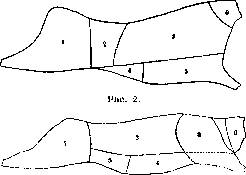
Figure 3. Figure 2. Retail butchering of mutton carcasses: 1—hindquarter with shank; 2—kidney part with two ribs; 3—loin; 4—flank; 5—
brisket; b-neck. Figure 3. Retail butchering of pork carcasses: 1-ham; 2-cutlet part; 3-shoulder; 4 - brisket; 5-belly; 6 - neck part. which must eliminate this difference in butchering (Fig. 1-3). The methodology of research of meat and meat products consists of three main stages: a) pre-slaughter inspection of animals, b) inspection of meat, and c) inspection of meat products. Pre-slaughter inspection of animals amounts to their external inspection with the purpose of separating obviously sick animals or those suspected of disease. During the inspection, attention is paid to the appearance of the animal and the state of the natural openings. Suspicious animals are subjected to a more thorough inspection and thermometry. If an elevated temperature is detected, the animal is sent to quarantine, where it is kept until recovery or until its slaughter at special sanitary slaughterhouses. The inspection of meat consists of the inspection of the skin, internal organs, and the meat itself (carcass). The methodology for inspecting internal organs and the meat itself is based mainly on macroscopic examination; if necessary, microscopic and bacteriological examinations are also used. During the macroscopic examination of internal organs, attention is paid to their appearance, size, shape, color, consistency, and changes in the lymphatic system; during the inspection of the meat itself—to the appearance of the carcass and changes in the lymph system. Macroscopic examination of organs and tissues is performed by inspecting, feeling, and cutting them. In cattle and pigs, to detect the presence of bladder worms, an incision of the masticatory muscles and the heart is made, and the tongue is felt; additionally, the intercostal muscles, the muscular part of the diaphragm, and the lumbar muscles (m. psoas) are examined. Incisions are made across the entire thickness of the muscles. In horses, the nasal cavity, larynx, and trachea are additionally examined for glanders. If there is a suspicion of a septico-pycemic disease, microscopic, bacterioscopic, bacteriological, and in some cases biological examinations are resorted to, for which a piece of muscle surrounded by fascia, measuring 8x8x8 cm, is cut from the flexors and extensors of the front and rear limbs, and one meat lymph gland (humeral and stifle fold gland) from the opposite half of the carcass, together with the surrounding connective and adipose tissue, is taken. In addition, the spleen, kidney, and one of the tubular bones are taken whole. When inspecting meat at slaughterhouses, main attention is focused on its patho-anatomical changes, while when inspecting so-called imported meat, attention is also focused on the degree of its freshness. Auxiliary special research methods include histological and bacteriological methods. Histological examination of meat is used mainly in relation to pork, which is examined for trichinae, and is known under the name of trichinoscopy. To examine pork carcasses for the presence of trichinae, 2 samples weighing 15-25 g (the size of a walnut) are taken from the legs of the diaphragm. From each sample, using scissors, 24 slices the size of an oat grain are made. The slices are placed on a special glass, known as a compressorium, and examined under a microscope at a magnification of 30-50 times, in a fresh state, without staining. Histological examination is also used for any suspicious change when macroscopic data are insufficient for a diagnosis (actinomycosis, sarcosporidiosis, etc.). In this case, slices are made on a freezing microtome and subjected to staining (hematoxylin, eosin). In doubtful cases, the bacterioscopic method is also used: smears from blood, exudates, transudates, and other pathological objects are prepared on glass slides or coverslips, which are fixed, stained, and examined under a microscope. Methods of laboratory research of meat and meat products have the purpose of clarifying a) the state of the meat or meat products, b) the presence of patho-anatomical changes, and c) their nature. For this purpose, both the organoleptic method and the microscopic, bacterioscopic, bacteriological, biological, and also chemical methods are used. For research, samples are taken from 2-3 places from the carcass or its parts; when studying salted meat, the brine is also subjected to research. Research of products for freshness consists of 1) determining organoleptic properties (appearance, color, meat smell, taste), 2) determining the reaction to litmus, 3) the test for ammonia according to Eber, 4) the test for hydrogen sulfide, 5) the boiling test, and 6) microscopic research. Appearance. All features of the sample noticeable to the naked eye are noted: the presence of mechanical contamination, spots of a special kind, mold, etc.-Color. All sorts of abnormal coloring of meat and its products are studied with particular care, paying attention to the color of the meat and fat layers. In salted meat and canned goods, the appearance and color of the brine and broth are noted. Color research is carried out both from the surface and in the depth of the product. Attention is also paid to the possible presence of inclusions in the form of bubbles the size of a hemp seed, indicating a cysticercus lesion of the meat. These inclusions are cut out, clamped between two glass slides, and studied microscopically.-Smell. In addition to the olfactory test from the surface, to detect signs of a bad smell inside the thickness of the meat, a heated knife or fork is inserted into it in various places and attention is paid to the smell felt on the surface of the removed knife. The consistency of the meat is tested by pressing a finger on its surface. With elastic consistency, the resulting depression quickly evens out, with flabby consistency it remains for a longer or shorter time.-The taste of meat is tested additionally in case of uncertainty of other indicators of spoilage of the sent product. Determination of reaction. To determine the reaction of the test product, incisions are made in it in various places, into which red and blue litmus papers moistened with distilled water are placed, pressing them to the product with a clean glass rod; after 10 minutes, these papers are transferred to some white surface to compare them with paper moistened with distilled water alone; the change in color characterizes acidic or alkaline reactions. Ammonia test: 10 drops of extract are added drop by drop to 1 cm3 of Nessler's reagent (see Ammonia), or 10 drops of the reagent are added drop by drop to 1 cm3 of the extract. With ammonia, a yellow coloration appears ranging from turbidity to sediment. The degree of turbidity determines the relative amount of ammonia. Eber's test. Reagent: 1 volume part of 25% hydrochloric acid, 3 parts of 96% alcohol, and 1 part ether. 2 cm3 of Eber's reagent are poured into an ungraduated cylinder or wide test tube. Having plugged the vessel with a clean stopper, the reagent is shaken, after which the stopper is removed and the test tube is immediately closed with a new stopper, through which a thick glass rod with a hooked lower ring is threaded, to which a piece of the test product is attached using sterilized tweezers. After this, without touching the walls of the test tube with the rod and carefully advancing it through the opening of the stopper, the rod is positioned so that its lower end, on which the piece of test product is fixed, is 1-2 cm above the level of the liquid contained in the test tube. If ammonia is present, a mist or cloud from the formation of ammonium chloride is visible near the test object. Conditions ensuring the accuracy of the reaction: 1) correct preparation of the reagent (concentration of HCl) and bringing the test object to the temperature of the surrounding air (not used for hot-steamed meat; has relative value when studying canned products). Hydrogen sulfide test. A portion of the crushed product is placed in a glass jar equipped with a well-ground stopper, then a strip of filter paper, on the surface of which 1-2 drops of lead acetate solution had been applied, is lowered there, and the paper is secured in the jar by clamping its end between the surface of the neck and the stopper of the jar. The experiment is stopped after 15 minutes. In the presence of hydrogen sulfide, the drop of lead salt solution is colored from light brown to black. The sensitivity of the reaction can be increased if an alkaline lead salt solution is used, which is prepared by adding caustic soda to the lead salt solution until the formed precipitate of lead oxide dissolves. If garlic is present in the meat product, the reaction to H2S gives non-specific results.-Boiling tests. 1) The meat under study is boiled in a covered cup and tasted for smell (also the broth). 2) A piece of meat is immersed in boiling water for a few moments on tweezers and, taking it out, tested for smell. Although the boiling test is not very sensitive, nevertheless it is often possible to detect spoiled meat in such cases when cold raw meat does not show a bad smell. The presence of patho-anatomical changes is established by microscopic, bacterioscopic, and bacteriological research. The nature of the meat is determined by the smell it has when boiled, by the color and consistency of the fat, by the anatomical features of the structure of organs and bones, by determining the iodine number of muscle fat, by the presence of glycogen in the meat (in dry beef—from 0% to 0.08%, in dry horsemeat—up to 5%), precipitation reactions, complement fixation, and anaphylaxis.
When examining salted meat, in addition to determining its freshness, attention is paid to the quantitative content of salt, saltpeter, and nitric acid salts. Meat of sick animals. Based on the rules issued in furtherance of the Veterinary Statute, the following rules apply to the meat of sick animals: I. The entire carcass, fat, internal organs, head, and feet are not allowed for food upon the detection of 1) anthrax, 2) symptomatic anthrax, 3) rabies, 4) glanders, 5) cattle plague, 6) septicemia and pyemia (suspicion of the existence of septicemia and pyemia in slaughtered animals must be considered whenever they exhibit inflammation of the intestines, udder, uterus, joints, tendon sheaths, hooves, umbilical cord, lungs, pleura and peritoneum, skin and subcutaneous tissue, kidneys, hemorrhages in the meat, lymph nodes, hemorrhages and ecchymoses on the pericardium and endocardium); 7) tuberculosis—in the presence of emaciation and in mixed blood infection, when softening of tuberculous foci is observed regardless of the state of fleshiness; 8) swine erysipelas; 9) hemorrhagic septicemia and swine plague; and 10) tetanus—in the presence of muscle changes; 11) jaundice, if all parts of the carcass, 24 hours after slaughter, are still colored yellow or yellow-green, or in the presence of emaciation; 12) general dropsy, if 24 hours after slaughter the hydremic condition of the meat does not disappear; 13) multiple tumors in the muscles, bones, and lymph nodes when it is impossible to remove them; 14) strong odor in the meat (medicinal, sexual, urine, fish, blubber) and unpleasant taste, if a boiling or roasting test, performed 24 hours after slaughter, shows that the meat retains its defect; 15) severe emaciation due to some disease. II. The entire carcass except for the fat is not allowed for food upon the detection of 1) Cysticercus inermis of cattle, Cysticercus cellulosae of pigs, sheep, and goats in an amount of more than one cysticercus (bladder worm), live or dead, in the majority of sections of muscles favored by cysticerci, or in the presence of wateriness or discoloration; furthermore, the liver, spleen, kidneys, stomach, intestines, brain, and udder are allowed for food if no cysticerci (bladder worms) are found in them; 2) sarcosporidia, if the meat is watery or strongly discolored, with the fat being released without restriction; 3) trichinae in pigs—in the presence of distinct muscle changes; 4) echinococci in the pig carcass. III. Only the affected parts of meat carcasses or organs are not allowed for human food upon the detection of 1) contagious pleuropneumonia; 2) tuberculosis, except for the cases indicated in clause 7 of Section I, and an organ is considered tuberculous even if only the corresponding lymph node is affected by tuberculosis; 3) actinomycosis and botryomycosis; 4) tetanus, except for the cases indicated in clause 10 of Section I; 5) single tumors; 6) swine erysipelas; 7) hemorrhagic septicemia of cattle and other animals; and 8) hemorrhagic septicemia and swine plague, in the absence of muscle changes; 9) animal parasites in internal organs, and in cases where parasites cannot be thoroughly removed from them, the organs are destroyed; if careful removal of parasites is possible, then after removing the affected parts, the organs are released without restriction; 10) other diseases accompanied by inflammatory changes and degenerations of organs, muscles, extremities, and joints; 11) contamination of the lungs and other organs by the contents of the gastrointestinal tract; 12) difficult-to-wash-off contamination of the meat; 13) changes in the color of the meat and its consistency: pigment deposits (melanosis, xanthosis), bruising, fractures, hemorrhages with infiltration of adjacent tissues, wateriness, scar and calcareous formations (concretions), etc. IV. Conditionally fit meat products, not entirely wholesome and allowed for food only after preliminary decontamination, include 1) fat in the cases indicated in clause 2 of Section II, except for the fat of measly cattle; it is released without preliminary decontamination if careful examination reveals no cysticerci (bladder worms) in it. Pig backfat, in the case indicated in clause 3 of Section II, if it contains no muscle layers, is released without restriction. 2) The entire carcass, excluding the affected parts and its organs (Section II), upon the detection of: a) acute miliary tuberculosis in the absence of signs of emaciation; b) swine erysipelas, except for cases of septicemia; c) hemorrhagic septicemia and swine plague—without muscle changes; d) hemorrhagic septicemia of cattle and other animals; e) bacteria of meat poisoning in the organs, but not in the meat itself in calves; f) cysticerci (bladder worms) of cattle, pigs, sheep, and goats, except for the cases indicated in clause 1 of Section II; g) trichinae in pigs, except for the cases indicated in clause 3 of Section II; h) in the presence of foot-and-mouth disease lesions, the head with the tongue, as well as the esophagus, stomach, and extremities up to the fetlock joint are released after they have been subjected to scalding in boiling water under the supervision of veterinary supervision. V. Decontamination of conditionally fit products. Fat is subjected to rendering in cases where cysticerci (bladder worms) are detected in pigs, sheep, and goats in an amount of more than one cysticercus in the majority of sections of muscles favored by cysticerci (bladder worms) and in the presence of wateriness or color changes. Fat of cattle carcasses affected by cysticerci is released without preliminary decontamination. Meat and fat are decontaminated by boiling or steam sterilization 1) in tuberculosis in cases of acute miliary process without signs of emaciation; 2) in the presence of bacteria of meat poisoning in the organs, but not in the meat itself in calves; 3) in swine erysipelas except for cases of significant muscle changes; 4) in hemorrhagic septicemia of cattle and other animals; 5) in swine plague except for those cases where significant muscle changes are observed; 6) in trichinosis of pigs in the absence of signs of distinct muscle changes. Meat and fat are decontaminated by boiling, steam sterilization, or salting in cysticercosis (bladder worm disease) of pigs, sheep, and goats, if the infection is mild; by boiling, steam sterilization, salting, or cooling and freezing in cysticercosis (bladder worm disease) of cattle in cases of mild infection. If boiling or sterilization is impossible, rendering of fat is permitted, while the meat and internal organs are subjected to utilization for technical purposes or destruction. Decontamination of conditionally fit meat and fat is carried out under the supervision of the veterinary and sanitary inspection of the slaughterhouse and must meet the following requirements: a) fat is considered decontaminated if, when rendered in open cauldrons, it turns completely liquid and when rendered in steam apparatus, before being discharged from it, it was subjected to a temperature of 100°; b) boiling of meat is considered sufficient if the meat in its internal parts has acquired a gray color (beef) or white-gray (pork), and the juice flowing from a fresh cut is not colored with blood. Trichinous meat must be chopped into pieces no more than 10 cm thick and must be boiled for at least 2.5 hours from the start of boiling. Meat affected by other animal parasites and bacteria must also be boiled for at least 2.5 hours from the start of boiling, and the pieces of meat must not be thicker than 15 cm; c) steam sterilization of meat is considered sufficient if it has been subjected in its internal layers to a temperature of 80° for at least 10 minutes or if the meat in pieces weighing no more than 2.5 kg has been subjected for at least 2 hours to the action of steam under a pressure of 0.5 atmospheres, and in the internal layers it has discolored to a gray color, and the juice flowing from the cut has no bloody coloring; d) upon salting, meat is considered decontaminated no earlier than three weeks later. Meat for salting must be chopped into pieces of no more than 2.5 kg in weight; at the same time, it must be sprinkled with salt or placed in a salt solution containing 25 parts by weight of NaCl per 100 parts by weight of water; e) to kill cattle bladder worms by keeping them in a cooling chamber (refrigerators), at least three weeks are required. VI. Hides of slaughtered animals found to be sick with anthrax, symptomatic anthrax, glanders, rabies, and sheep pox are subject to destruction. Hides of animals sick with tuberculosis, actinomycosis, botryomycosis are released freely. Hides of animals sick with other contagious diseases are subject to preliminary decontamination at slaughterhouses. Hides of animals killed at slaughterhouses are marked with hot brands or by placing a seal on them in the neck part. Poultry and game meat. Meat of domestic poultry (chickens, geese, turkeys, ducks, guinea fowl) and feathered game (partridges, hazel grouse, black grouse, pheasants, quail, thrushes, pigeons, woodcocks, wild ducks, etc.) is highly valued due to its good taste, digestibility, and significant protein content. Due to the high content of extractive substances in this meat, it is also an important tonic and flavoring substance.
The chemical composition of poultry meat (in % of raw substance) is given in Table 11. Poultry meat contains a large amount of water, nitrogenous and extractive substances, and salts. The best meat in terms of palatability is provided by young birds, no older than one year. Usually, the color of the meat in young birds is white (with the exception of the muscles of the lower extremities, which are darker in chickens than the remaining muscles); with age, in some of them it becomes pale pink, in others it remains white. Thus, for example, in turkeys and chickens the meat is white, in geese and ducks it is pale pink and pinkish-red. According to Pennington's studies, there are certain differences in the chemical composition between white and pink-red meat (Table 12). Table 12. Constituents | White meat | Pink-red meat (in %): Water 73.30-75.73 | 71.75-75.94; Nitrogenous substances 21.84-23.50 | 19.77-23.19; Extractive substances 1.01-1.10 | 0.64-0.83; Fat 0.17-0.98 | 1.38-2.99; Ash 1.17-1.33 | 1.18-1.49. As can be seen from the table, the difference lies mainly in the fact that white meat, compared to pink-red meat, is significantly poorer in fat and richer in extractive substances. Chicken fat is characterized by the following constants (according to Monvoisin): melting point - 33-40°; solidification point - 17-27°; iodine number - 57-70°; acidity - 0.5-0.7°. Compared to beef and mutton fat, chicken fat has a lower melting point and a higher iodine number.
The slaughter of poultry is carried out either by wringing the neck or by cutting the cervical blood vessels (externally or through the mouth using a knife with a very thin blade). To clear the bird's intestine of its contents, it is stopped being fed 24 hours before slaughter or given a laxative—a teaspoon of Glauber's salt. Slaughtered poultry is prepared in eviscerated and uneviscerated form. According to a number of researchers, uneviscerated poultry with the gastrointestinal tract cleared of contents keeps better than eviscerated poultry. After the specified preparation, the poultry either enters the market fresh or is subjected to chilling and freezing; the chilling temperature ranges from -1° to +4°. For longer storage, the best temperature is considered to be from -1° to 0°. The duration of storage at this temperature can reach 2-3 weeks. Freezing is carried out either at -6°, which takes about 8 days, or at -11°, -12° (about 3 days). At the present time, it is preferred to use quick freezing within 48 hours at temperatures from -14° to -18°. Poultry is stored in chambers with a temperature of -9° and a humidity of about 85%. It is usually stored in packaging (boxes). Under these conditions, the storage of poultry can last from 6 to 9 months. Transportation of poultry in both frozen and chilled states is carried out in specially equipped isothermal rail cars. Inspection of poultry stored in the warehouse must be carried out regularly every month. Due to the properties of their fat to undergo rapid spoilage, ducks and geese keep worse than other birds. Therefore, their storage should not exceed 2.5-3 months.
Game. Usually, the conditions of slaughter and delivery to cold storage for various game are extremely unfavorable for prolonged storage even at low temperatures; wild animals are killed after more or less prolonged pursuit, and the wound causing death can be anywhere on the body. Game usually arrives at the warehouse not immediately, but several days after it was killed and after more or less prolonged transportation, often under unfavorable conditions that promote spoilage and infection of the product. To retard the development of microorganisms, it is necessary to store game at the lowest possible temperature. Feathered game keeps better unplucked and uneviscerated. It is stored in a frozen state at a temperature of about -9°.
Related articles
Cite this page
“Meat.” Soviet Medical Encyclopedia. English translation of Bolshaya Meditsinskaya Entsiklopediya, 1st ed. (Moscow, 1928–1936), ed. N. A. Semashko. https://sovietmedicalencyclopedia.pages.dev/article/meat/