Wastes
Historical document, translated for reference. It reflects medical knowledge of the 1920s–30s and is not medical advice.
Summary
This article from the 1928-1936 Soviet Medical Encyclopedia discusses various types of wastes, their classification, composition, and impact on public health. It covers household, industrial, and agricultural wastes, as well as their removal and disposal methods.
Encyclopedia article (1928–1936)
WASTES, residues that have become unnecessary or harmful after the use of various substances or items in human household or industrial life. Wastes also include excreta, urine, carcasses, and all kinds of garbage. The concept of wastes is not firmly established. It changes depending on the state of technology, economic factors, and cultural views of the population. At present, in all countries, including the USSR, there is a clear tendency to reduce the amount of substances classified as wastes and to consider most wastes merely as raw material for various methods of utilization. The removal and neutralization of wastes is a responsible task of sanitary supervision and municipal authorities, receiving its authorization in the system of measures called the cleaning of populated areas (see). At the present level of culture, especially in large cities, wastes represent enormous diversity, which extremely complicates their classification. In specialized literature, there are only individual attempts to give a more or less complete classification of wastes, based on economic and sanitary aspects in their evaluation. American authors R. Hering and S. Greeley give the following classification of wastes, based on their origin (see table). For practical purposes, the following classification can be proposed, in which various wastes are grouped according to the commonality of sanitary-technical measures aimed at their removal and neutralization. Wastes of populated areas. 1. Liquid wastes: a) filth: feces and urine; b) slop water: dirty water from cooking, washing the body and floors, laundry, etc.; c) wastewater removed by means of sewerage: domestic wastewater, industrial wastewater. 2. Solid wastes: a) domestic or household garbage, which includes kitchen wastes, wood, paper, textiles, bones, coal, metal, stones, glass, rubber, room dust; b) wastes of industry, trade, public catering establishments, and institutions; their composition is extremely diverse and depends on the type of establishment; these include metal, paper, leather, textile residues of chemical production, wood, food wastes, etc.; c) street dust, snow, precipitation from gutters. 3. Animal wastes: a) slaughterhouse wastes: whole carcasses and their parts condemned by veterinary-sanitary supervision (confiscates), skins from diseased animals, kaniga (contents of the first three compartments of the stomach of ruminants, the rumen, reticulum, omasum), aborted calves, piglets and other animals, parts of animals not used for food or processed for other needs (genital organs, trachea, pieces of fat and meat, etc.); b) carcasses of dead animals; c) food wastes confiscated by sanitary supervision; d) manure. Wastes listed in section 1 are removed either by hauling in cesspool vehicles (see Cesspool) or by sewerage (see). Wastes listed in section 2 are removed by the hauling system; however, their further fate is sharply different from liquid wastes from non-sewered properties (see Garbage, Garbage Incineration, Cleaning of Populated Areas). Finally, the disposal of wastes of section 3 takes place in special installations: utilization plants, in cemeteries (see Cemetery, animal cemeteries) or in the process of utilization in agriculture (see Manure).-In cities and industrial centers, one has to deal with all the types of wastes listed above. In agricultural-type settlements, the greatest importance belongs to filth and slop water, as well as animal manure, the removal and neutralization of which should be closely linked with their use in agriculture as fertilizer (see Cesspool, Toilets, Manure). The chemical composition of wastes, their physical properties and quantity are extremely diverse. Liquid wastes from non-sewered properties consist of filth (feces and urine), usually collected in cesspits, and slops collected in slop pits. The amount of both varies considerably depending on local conditions: cultural level of the population's life and technical condition of the receivers for wastes. The amount of feces and urine varies from 1150 g (Dobroslavin) to 1400 g (Pettenkofer) per day per person - about 0.5 m3 per year (taking the weight of filth equal to the weight of water).-The amount of slops depends on water consumption and can be taken for households without water supply and sewerage from 15 to 25 liters per person per day. However, these theoretical norms are many times greater than the amount of liquid wastes that are usually removed by the hauling system from non-sewered properties. Khlopin believes that no more than 10% of dirty water is available for hauling. According to data from the city of Moscow, only 6% of the theoretical accumulation is removed, the rest is absorbed by the soil due to the poor design of slop and cesspits. On the basis of empirical observations, it is usually accepted in the design of cesspool systems that accumulation amounts to 0.6 m3 per person per year (one 50-bucket barrel). The amount of wastewater is subject to exact calculations when installing sewerage (see).-The amount of garbage can be taken for large cities of the USSR at 0.5 m3 per person per year (Moscow, Leningrad, Kharkov); however, this amount is subject to large fluctuations and should be established on the basis of systematic research in each individual case. Street dust according to Moscow data amounts to only 0.015 m3 per 1 m2 of pavement per year. Its amount depends on the method of paving, intensity of traffic, climate and method of cleaning. The amount of industrial wastes, as well as their composition, cannot be determined in advance and requires study in each individual case.-From the third group of the scheme presented, kaniga is of considerable interest from a sanitary point of view, both in terms of its quantity (up to 12% of the live weight of cattle) and the difficulty of its processing and neutralization. Kaniga consists mainly of fiber, which is extremely difficult to decompose, for which reason, when buried in the ground, it remains for up to 10 years. Attempts to utilize kaniga as feed for animals or fuel are not yet economically beneficial.
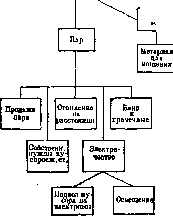
Beynart recommends as the cheapest and most effective method the composting of garbage in mixtures. In view of the danger which Wastes represent from a sanitary standpoint, care for their timely removal and neutralization is one of the most important functions of municipal and sanitary supervision authorities. The best method for removing Wastes is their daily removal in specially adapted vehicles: automobiles or horse-drawn carts (see Garbage, Cleaning of populated areas). The actual neutralization takes place in special installations depending on the type of Waste. For solid wastes—municipal garbage—the most radical method is their incineration in special destructors (see Garbage incineration). Another most widespread method of neutralization is the soil method on special plots. In this case, the garbage is distributed in a layer up to 1.0 m thick and undergoes mineralization under the influence of natural forces. Research by the Moscow Sanitary Institute named after Erismann showed that for the mineralization of a 1.0 m layer of garbage, at least 6 years are required. Plowing the plot and sowing with grass accelerate mineralization. Recently, the use of garbage in agriculture for fertilization, and especially as a source of heat in greenhouses, has been gaining increasing popularity. This method deserves the greatest attention, as it allows populated areas to eliminate unsanitary dumps with the greatest benefit. Finally, in Italy, Switzerland, America, a method has gained some development of burying garbage in special chambers (Büchari chambers, Biadgianno-Pixo septic towers), where it ferments over a certain period of time, turning into excellent fertilizer. Liquid Wastes are neutralized either on irrigation fields and in biological installations (see Waste water, Biological method of waste water purification) or, in the case of removal by hauling in cesspool carts, on cesspool fields (see Cesspool sanitation). Neutralization of sewage can also occur in the process of using it in agriculture, which takes place either directly by fertilizing fields and burying sewage or by mixing sewage with peat (preparation of peat manure). The utilization of Wastes (see diagram) is extremely diverse, just as the Wastes themselves are diverse. A whole series of technical inventions and improvements have made the Wastes of one production the raw material for another: the extraction of paints, explosives, medicines (aspirin, phenacetin, pyramidone, etc.) from coal tar, which is a Waste in coke production. From the point of view of material resources, there is no basis for objecting to the widespread utilization of various Wastes. On the contrary, the utilization of Wastes provides an economic basis for sanitary measures for the neutralization of Wastes. It is important at all stages of Waste processing to uphold the sanitary standpoint in order to completely neutralize the danger which Wastes represent for humans. For this purpose, sanitary authorities must be well acquainted with all possible methods of collection, removal, utilization, and neutralization of Wastes, choosing from those that can give the greatest sanitary effect.
Related articles
Mentioned in
Cite this page
“Wastes.” Soviet Medical Encyclopedia. English translation of Bolshaya Meditsinskaya Entsiklopediya, 1st ed. (Moscow, 1928–1936), ed. N. A. Semashko. https://sovietmedicalencyclopedia.pages.dev/article/wastes/