Sanitation (The word "Sanitation" comes from the French)
Historical document, translated for reference. It reflects medical knowledge of the 1920s–30s and is not medical advice.
Summary
This article from the 1928–1936 Soviet medical encyclopedia defines sanitation as the system of measures for waste removal and neutralization. It details the transition from primitive horse-drawn barrel collection to mechanized automobile-based systems for handling fecal and solid waste.
Encyclopedia article (1928–1936)
SANITATION. The word "Sanitation" comes from the French "assainissement" and, in a precise translation into Russian, denotes the improvement of living conditions for the population. In Russian sanitary practice, however, "Sanitation" is commonly used to refer to the removal of cesspool waste from populated areas by special transport units called sanitation wagons (see below). At the present time, in the USSR as well, a more correct understanding of the term in question is gradually taking hold, by which, in sanitary engineering—in accordance with foreign terminology—is meant a system of measures aimed against the pollution of the soil by waste. There are two main systems of sanitation for populated centers: the sewerage system and the removal system. The objects of the first system (sewerage) are liquid waste and sewage, removed by means of pipes (canals). The second system of sanitation (removal) combines measures for dealing with waste removed by transport. The objects of the removal system of sanitation are fecal and slop waste from non-sewered properties, various kinds of solid waste—household refuse, street sweepings, market waste, carcasses of dead animals, etc. (Regarding the removal and neutralization of solid waste, see Waste, Incineration). A properly developed system of sanitation includes a group of organizational and technical measures for the collection, transportation, and neutralization of waste. Sanitation wagons. Sanitation wagons are usually called special transport vehicles intended for the transport of fecal waste. The name "sanitation" is usually not applied to wagons for the transport of other types of waste. The design of sanitation wagons depends on the composition
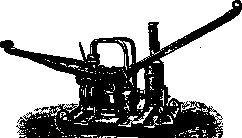
Figure 1. Pneumatic pump.
and state of the waste. Three types of fecal waste are distinguished: a) liquid, which can be transported in pneumatic barrels and cisterns; b) thick, transported by scoop barrels; and c) frozen, solid, which are usually transported in carts. Pneumatic sanitation wagons have the feature that the barrels or cisterns included in them are filled by means of so-called pneumatic pumps (see Figure 1); these pumps rarefy the air in the barrel (cistern), as a result of which liquid waste is raised by atmospheric pressure into the barrel (cistern) through a hose lowered into the cesspool (see Figure 2). The pump is equipped with a furnace for burning those foul-smelling gases that are drawn out by the pump from the barrel (cistern) along with the air contained in it. Pneumatic barrels (see Figure 3) are the most expedient from a sanitary standpoint, both in terms of their filling method and because, when removing them, one has to use scoops; the loading of the corresponding so-called scoop barrels therefore takes place through large openings at the top, closed by tightly fitted lids. The discharge of waste from the barrels is carried out through an opening made in the rear bottom. In winter, in the cesspools of cold outhouses, waste usually freezes, and for removal, it must first be chipped out. It is recommended that carts for the transport of this frozen waste be lined on the inside with iron (galvanized) and equipped with lids. The filling of pneumatic barrels is performed faster than that of scoop barrels; less stench is spread when working with them, and they are more convenient from a sanitary standpoint. Sanitation barrels can be wooden or iron and of various capacities—from 300 to 1,000 liters. To prevent rotting, wooden barrels are scorched on the inside; on the outside, they are painted in one color or another. It is highly desirable that sanitation wagons be under the jurisdiction of municipal services,

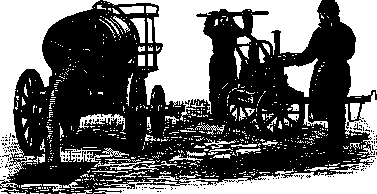
Figure 2. Raising waste by atmospheric pressure into a cistern through a hose lowered into a cesspool.
their airtightness. By means of pneumatic pumps, a large part of the waste is collected from cesspools at water closets; the sediment resulting after this on the bottom requires scooping. With simple outhouses, waste of such thick consistency can be obtained that Figure 3. Pneumatic barrel. and not in the hands of private individuals. In both cases, this trade must be regulated by a corresponding mandatory decree regarding the procedure for registering the wagons, their design, maintenance, and operation. Horse traction, automobiles, and steam engines can be used for moving sanitation wagons. The horse-drawn rolling stock of the wagon can be single or paired. Depending on climatic conditions, there can be summer and winter undercarriages, onto which these barrels are mounted depending on the season. Automobiles for the transport of waste are used only when there are large cesspools, when there are access roads convenient for automobile traffic to the places of their reception. These sanitation automobiles are equipped with iron cisterns, usually filled by a pneumatic method. With an automobile load capacity of 5 tons, the capacity of the cistern reaches 3.5–4 thousand liters. The pump for rarefying the air in the cistern can be driven by the automobile's motor. With pumps of a special design, the rarefaction of air and the filling of a 4,000-liter cistern with waste is completed extremely quickly, in 3–4 minutes. The appearance of such an automobile is shown in Fig. 4. Automobile transport
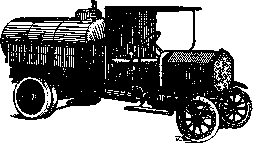
Figure 4. Automobile cistern.
of waste has the following advantages, confirmed by experience in Moscow: speed and mechanization of loading, speed of movement, greater productivity, rational execution of all manipulations with waste from a sanitary standpoint, and placing the entire operation in conditions that do not cause objections from a domestic perspective. These advantages—technical, sanitary, and domestic—are also of serious importance in the eyes of the working personnel, whose labor is already less unpleasant and does not evoke such a contemptuous attitude as in the operation of horse-drawn barrel sanitation wagons. The emptying of automobile cisterns is carried out either on designated areas capable of withstanding great weight at their unloading sites or in special facilities—discharge stations (see). For the process of unloading an automobile cistern at one of the Moscow discharge stations connected to the sewerage network, see Figure 5. Neutralization of waste. The goal of any sanitation system should be not only the removal of waste but also its neutralization, its transformation into a state that cannot harm human health through the pollution of water, air, and soil, and the danger in an epidemic sense. The neutralization of waste removed by transport in sanitation barrels and carts occurs most often on land plots specially designated for this purpose, i.e., it is carried out by the so-called soil method. Less frequently, its neutralization is applied either at artificial structures and treatment plants of the sewerage system (which can be carried out both by flushing them into the sewerage network at discharge stations and points, and by processing them into fertilizer at poudrette factories) or by incineration at the place of origin. The soil method has several varieties. The most primitive is the transport of waste to so-called dumps, which are plots of land often poorly or not at all adapted to fulfilling the main task—to neutralize the incoming waste—and usually serving only for the isolation and "dumping" of waste burdening the city. A significant step forward was the organization of plowing in waste, especially on so-called sanitation fields, i.e., on plots specially adapted for the purposes of neutralization and operated in accordance with these purposes. An intermediate place between these two methods is occupied by the neutralization of waste in the process of agriculture, namely, the use of waste as fertilizer on fields and vegetable gardens, as well as the use of waste after special processing in compost pits, in the form of peat-fecal fertilizer, etc. All these methods—sanitation fields, fertilizing fields, etc.—are based on the soil's ability to process organic substances capable of rotting into mineral salts harmless to humans. This process, known as mineralization, in its main features boils down to the conversion, under the influence of bacterial activity, of ammonia formed from the rotting of organic substances into salts, first of nitrous, then of nitric acid, i.e., saltpeter. In addition, there is simultaneously the formation of phosphoric acid and potassium, so necessary for plant nutrition. Thus, the process of mineralization, important from the point of view of waste neutralization, fully coincides with the process of enriching the soil with substances nutritious for plants—in other words, the neutralization of waste is one of the links in the cycle of substances in nature, returning to the soil what was taken from it by the consumer of agricultural products. An approximate calculation shows that 1 person per year produces 520 kg of waste, which contains 5 kg of nitrogen (which corresponds to 32 kg of saltpeter), 1 kg of phosphoric acid, and 1 kg of potassium (according to Shevtsov). This calculation shows that 10 people can saturate 1 hectare of land with nitrogen over the course of a year. However, the most significant part of the fertilizing properties
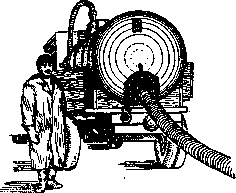
Figure 5. Unloading of an automobile cistern.
of sewage is lost during the process of its storage and transport (without its appropriate treatment); thus, the amount of nitrogen decreases from 1% to 0.25%. A comparison of human feces with the manure of other animals shows that human feces contain more nitrogen and phosphoric acid and less potassium—a circumstance which is important to take into account for the proper management of agriculture on these fields.— Plowing fields. The least perfect, although, unfortunately, the most common method of sanitation is the removal of sewage to so-called dumps. Usually, unimproved dumps represent a great danger in a sanitary regard: they pollute the soil, emit a stench; liquids, flowing from them, pollute ravines and rivers; they serve as a place for the abundant breeding of flies and a place for the infection of livestock with parasites (helminths). Therefore, cities and other populated places must, if possible, transition to more perfect systems of sanitation. In the event that it is impossible to use more perfect methods of sanitation, it is necessary to observe conditions aimed at somewhat weakening the harmful influence of such dumps. The location for them must be chosen far from residential buildings, factories, railway stations, and especially far from open bodies of water. The location of dumps upstream from a populated place along a river, even if far from the bank, must be prohibited. It is also necessary to take into account the direction of prevailing winds (leeward side). There must be convenient access roads to the dumps, if possible, paved and illuminated at night. Unauthorized persons, as well as animals, must not be allowed into the dumps, for which the dumps must be enclosed with a fence, a ditch with a rampart, or a hedge. Sections of the dumps must be flooded with sewage evenly. The discharge must occur only onto a plowed field. Twice a year, each section of the dumps must be plowed; for better mixing, it is useful to cover the layer of sewage with a layer of earth 0.1–0.2 m thick. It is also possible to recommend filling deep furrows previously plowed with a plow with sewage, which are then plowed over again. The entire field is divided into 2-3 sections, and the filling proceeds in turns. The section free from filling is plowed and rests. In the case of organizing such plowing fields, it is possible to save some sections for subsequent use for agricultural crops. The construction of pits, trenches, and settling ponds at dumps must be condemned from a sanitary standpoint as polluting the soil, groundwater, and open bodies of water for a long time.— Sanitation fields. Plowing fields, divided into alternately filled sections, are a transition to one of the most rational methods of neutralizing sewage by the soil method, to sanitation fields. On sanitation fields, such an order of sewage discharge is applied, in which individual sections are filled in a known sequence, while free, "resting" sections are used for agricultural crops. Such a method aims to make the processes of mineralization in the soil, abundantly supplied with nutrients, more intense, so that upon completion of the crop rotation, the given section would again be capable of fulfilling its purpose—to neutralize a new quantity of sewage. For the first time, sanitation fields were set up in our country in the city of Tula in 1891 by the sanitary physician P. P. Belousov, who first proposed this method and described it in his dissertation, which became a classic exposition of this method. Unfortunately, this method is slowly taking root in the cities of the USSR, because it requires the expenditure of certain funds and, most importantly, great attention to itself and an understanding of the benefit that the city will receive by freeing itself from primitive dumps. Sanitation fields are known in the following cities: Tula, Tomsk, N. Novgorod, Vologda, Kozlov, Orekhovo-Zuyevo, Bogorodsk. In addition, before the war, there were sanitation fields in some cities of the Baltic region. At the present time, in many other settlements, attempts are already being observed to implement this measure as well. In its simplest form, sanitation fields represent a field divided into four sections; two sections are called summer fields and are filled during the summer every other year; one section (winter field) is filled in winter, and one section is a reserve—in case of an increase in the arrival of sewage, autumn and spring mud, the unpreparedness of the summer field, etc. At the present time, in many cities, an even more complex crop rotation is applied: in Kozlov, a 6-field system was conducted, in Vologda an 8-field system was planned, and in Tula, at one time, even a 10-field system was implemented. A necessary condition for the operation of sanitation fields is the plowing in of sewage. The latter are necessarily poured onto a plowed field and are plowed in turn—in the warm season no later than 24 hours after unloading, and in winter—as soon as the snow melts. The plowing must be deep, 25–30 cm. The norms for filling are accepted as different in different places. It must be kept in mind that in this regard, strict norms generally do not exist. Everything depends on practice and local conditions: the character of the soil, climate, consistency of the sewage (thick or highly diluted sewage), the type of crops, and the character of the crop rotation. On the basis of local observations, it is sometimes possible to sharply increase existing norms. Initially, 1 barrel of 500 liters was accepted for 4.5 or 6.8 sq. m of field (Belousov, Nikitin). The practice of some cities allows for a greater load: the city of Kozlov—4 barrels per 4.5 sq. m, Tomsk—up to 3 barrels, Vologda up to 2-4 barrels. In winter, filling according to accepted norms is performed once; in summer, the filling of one and the same section can be repeated 2-4 times. This circumstance must be kept in mind when calculating the dimensions of the section. Usually, in this case, one 500-liter barrel of sewage per one inhabitant per year is assumed. Agricultural crops on the fields are applied variously; on the Tula fields, rye, millet, potatoes, hemp, vetch, peas, barley, and sunflowers were sown. One can cite an example of crop rotation adopted in the city of Vologda (8-field): 1st year—sewage, 2nd—cabbage and fodder beets, 3rd—barley, partly rye, 4th—clover, 5th—clover, 6th—vetch with oats, 7th—rye or potatoes, 8th—flax or hemp. Especially recommended can be: green fodder, fodder root crops, hemp, flax. The choice of crop depends on the climate and soil. A necessary condition for the proper functioning of the fields is the guidance and participation in their operation of a person competent in agronomy, as well as proper sanitary supervision. All types of soil are suitable for sanitation fields, with the exception of wet peat bogs. The best soils for the fields are sandy and sandy-loam. With proper management of the business, any soil, with the exception of swampy soil, copes perfectly with the task. With the observance of the correct load of the fields and other conditions, the fields can be significantly brought closer to populated points, which, without violating the interests of improvement, should be reflected in the cheapening of transport. There must be convenient access roads to the sanitation fields. The fields must not have runoff into open bodies of water, for which the location for them must be chosen not on the bank of rivers or ponds. The fields must be well planned. With the goal of reducing the movement of barrels across the plowed field, it is necessary when planning the sections to make the latter narrow and easily accessible in all their parts. The sections are separated from each other by small ditches (it is usually assumed that 10-20% of the total area is required for ditches, roads, etc.). It is desirable that the sanitation fields be under the jurisdiction of municipal authorities. The experience of some cities that leased their fields (Tula, Kozlov, Kovrov) did not yield positive results. For the control of the results of the work of sanitation fields, observation of the crops is usually sufficient; however, for many reasons, laboratory studies of the soil and groundwater are highly desirable, which can give precise indications about the ability of the soil to self-purify.— Fertilization of fields. Many populated points can rationally solve the task of neutralizing sewage by removing it to the vegetable gardens and fields of suburban peasants and market gardeners. The norm for fertilizing fields is always many times lower than the sanitary norm, determined by the ability of the soil to process the entire quantity of sewage. Therefore, in the presence of sufficient supervision to ensure that the sewage is transported to the destination and distributed evenly, there are no particular objections to such use of sewage. Fertilization of fields is performed either directly by introducing sewage into the ground (pouring, splashing) or by composting. The latter is carried out in the form of a pit or a "compost heap." In both cases, a layer of peat (about 10 cm) is placed at the base of the compost, and then layers of sewage and layers of peat or sifted dry earth are laid out in layers. It is useful to add a little lime. The compost must be moistened. After 12 months, the compost is ready. Compost is an excellent fertilizer. 20-30 tons of it are taken per hectare. Good fertilizer is also obtained when using so-called earth and peat closets, i.e., by covering the sewage with peat or earth. In this case, fertilizer is obtained in the form of a powder, which is convenient for the farmer to manipulate. In rural-type settlements, it is possible to recommend the construction of latrines directly over a manure pit or near a cattle yard, so that the sewage falls onto the manure and mixes with it.
When applying night soil directly to fields, it is necessary that the latter also be plowed beforehand. The plowing under of night soil is carried out immediately in the summer, while night soil spread in the winter is plowed under in early spring.
Related articles
Mentioned in
Cite this page
“Sanitation (The word "Sanitation" comes from the French).” Soviet Medical Encyclopedia. English translation of Bolshaya Meditsinskaya Entsiklopediya, 1st ed. (Moscow, 1928–1936), ed. N. A. Semashko. https://sovietmedicalencyclopedia.pages.dev/article/sanitation/