Schmidt
Historical document, translated for reference. It reflects medical knowledge of the 1920s–30s and is not medical advice.
Summary
This article covers three notable figures named Schmidt: Adolf Schmidt (1865-1918), a German physician specializing in digestive physiology; Alexander Schmidt (1832-1894), a physiologist known for his blood coagulation theory; and Martin Benno Schmidt (b. 1863), a pathologist who made significant contributions to hematology, pigment metabolism, salt exchange disorders, and bone pathology.
Encyclopedia article (1928–1936)
SCHMIDT Adolf (Adolf Schmidt, 1865-1918), noted German therapist. He studied in Breslau, Berlin, and Bonn, where he wrote his dissertation on the physiology of renal secretion, becoming a professor in 1898. From 1898 to 1906 he was senior physician at the Friedrichstadt Hospital in Dresden, and from 1907 professor of polyclinic and later clinic in Halle. In 1918 he received a professorship in Bonn and died there the same year. As Merling's successor, S. immediately distinguished himself as an excellent expert in the physiology and pathology of digestion. His great fame came from a book written together with J. Strasburger, "Die Faces des Menschen" (B., 1916) and a monograph on the study of intestinal function by trial diet, which went through several editions and was also published in Russian. In it he proposed and described in detail two tests: the nuclear test (see Pancreas) and the mercuric chloride test (see Feces). In addition, S. thoroughly developed questions about diet in muscular rheumatism. To S. also belongs a fundamental guide to intestinal diseases, later revised by Noorden (A. Schraidt-Noorden, "Lehrbuch der Darm-krankheiten"). S. was editor of the journal "Zentralblatt fiir innere Medizin" for many years.
SCHMIDT Aleksandr Aleksandrovich (1832-1894), famous physiologist. After graduating from the gymnasium in Revel in 1850, he entered the Derpt University, where he began to study history. Soon he transferred to the medical faculty, which he graduated from in 1858. There in 1862 he brilliantly defended his dissertation for the degree of Doctor of Medicine "Ueber Ozon im Blut", after which he went abroad for 4 years, where he worked in the laboratories of the most famous physiologists. Upon his return in 1867 he was elected professor of physiology in Derpt. From 1876 to 1879 he served as dean of the medical faculty, and from 1885 to 1890 as rector of the university (the last "rector magnificus"). The main merit of S. lies in the theory of blood coagulation he created (see Blood), which brought him world fame. He isolated thrombin (fibrin-ferment) from blood serum and studied the role of leukocytes, cellular proteins and other substances in blood coagulation. His main works: "Ueber d. Faserstoff und die Ursache seiner Gerinnung" (DuBois Reymond's Arch., 1861, p. 682); "Uber Ozon im Blut" (Dorpat, 1862); "Die Lehre von d. fermentativen Gerinnungserscheinungen" (Dorpat, 1876); "Zur Blutlehre" (Lpz., 1892); "Weitere Beitrage zur Blutlehre" (Wiesbaden, 1895).
SCHMIDT Martin Benno (Martin Benno Schmidt, b. 1863), one of the greatest German pathologists, professor of pathological anatomy at the University of Wurzburg. More than 150 scientific works by S. are mainly focused on 4 very topical questions of pathology: 1. Histology and histogenesis of hem
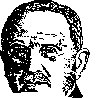
In his 4th works S. outlined the differences between inflammatory and non-inflammatory purpuras. 2. Questions of pigmentation. This category includes S.'s research on changes in blood pigment in infarcts, on bile production in primary liver cancers and their metastases, on pseudomelanosis, on general melanosis in malignant melanomas. Of greatest importance among the works of this category are S.'s studies on iron metabolism in the spleen and liver. 3. Disorders of salt exchange. S. was the first to clarify the origin of calcareous metastases in connection with their relationship to the insufficient excretory function of the large intestine. He also revealed the general disorder of calcium exchange, which he called "calcium gout" (Kalkgicht). A number of S.'s works are devoted to renal infarction and the origin of kidney stones. 4. Pathological anatomy of the bone system. Here S. did much to clarify the pathological anatomy and essence of rickets and osteomalacia, syphilitic osteochondritis, the process of galisteresis. S. was the first to draw attention to the so-called mosaic structures in bones and clarified their significance. S. wrote the chapter on bone changes in Aschoff's guide to pathological anatomy.
Related articles
Mentioned in
Cite this page
“Schmidt.” Soviet Medical Encyclopedia. English translation of Bolshaya Meditsinskaya Entsiklopediya, 1st ed. (Moscow, 1928–1936), ed. N. A. Semashko. https://sovietmedicalencyclopedia.pages.dev/article/schmidt/