Stadium
Historical document, translated for reference. It reflects medical knowledge of the 1920s–30s and is not medical advice.
Summary
This article traces the history and development of stadiums, from ancient Greek and Roman venues to modern sports complexes, and discusses their construction, design, and role in physical culture.
Encyclopedia article (1928–1936)
STADIUM (Greek - stadion), a sports facility, a special area for physical training with places for spectators around it. The creation of the first S. is connected with the beginning of the Olympic Games in Ancient Greece, where S. were built in Athens, Delphi, and other cities. S. had the shape of an elongated horseshoe. In the middle was a rectangular area for competitions about 200 m long (a "stadion" - a measure of length, a "stadiodromos" - running a stadion, i.e., the length of the S., whence the name) and about 30 m wide; on the sides of this area stands for spectators were built (up to 50,000). For them, slopes of hills covered with simple stone or marble were used, at the foot of which S. were usually located. Similar structures of the Roman Empire era were intended, in accordance with the Roman views on physical training, mainly for performances and spectacles and had the character of grand circuses, with an arena in the middle, enclosed on all sides by a cup-shaped amphitheater of stands (the Roman Colosseum, accommodating up to 87,000 people, is typical). The interest in physical training in the era of imperialism, together with the revival of the idea of holding international Olympic Games, also revived S. as a type of special sports facility for major competitions. The first modern S. was created for the 1st Olympiad in Athens (1896); it was to a certain extent a copy of the ancient Athenian S. and accommodated about 40,000 spectators. The next S. in terms of construction time were also created for world Olympiads: the 4th in London (1908), the 5th in Stockholm (1912), the 7th, which did not take place due to the imperialist war in 1916 (the S. under Berlin, in Grunwald, was roughly ready by 1913) and the one postponed to 1920 - in Antwerp, etc. In the post-war period, in connection with an even greater increase in the attention of the bourgeoisie to the development of physical training as a powerful means of military preparation of youth and diversion of workers from class struggle, there is a growth in the construction of S. in all bourgeois countries - victors, vanquished, and neutral. This growth is especially noted in the USA, where grand stadiums (for 50-100 thousand spectators) are possessed not only by the majority of significant cities, but also by a number of universities. The form of the first S. was largely determined by the necessity of including in the central area places for competitions in the main types of sports included in the program of modern Olympiads: a football field (international average size - 105x70 m), surrounded by a running track (usual length - 400 m), further on some S. - a motorcycle track and already behind it stands, in which sometimes a swimming pool is located. Most stadiums of the latest construction are characterized by a closed form, similar to Roman circuses, which is connected with the narrow goal of bourgeois sport - to demonstrate sporting achievement (amateur and professional sport). At the same time, a number of giant S. are adapted exclusively for individual sports: in Tokyo - for baseball, in Montevideo - for football, etc. Some of the foreign S. have a number of additional areas - training football fields, tennis courts and other sports games, athletics, areas for mass performances, etc., representing a part of the general sports complex. A number of S. are located on the territory of significant green masses: Cologne Sports Park - 55 ha, Amsterdam S. - 52 ha, etc. The stands on most large S. are open, on some partially rain and sun protection is used (roof, canopy, canvas tent). Almost all large S. are reinforced concrete. Earthen stands are built only with a particularly successful relief of the terrain. A number of large S. were built with the location of the arena and part of the stands below ground level (e.g., Grunwald, Los Angeles). Vast spaces under the stands are used for the placement of gymnastic halls, cinemas, locker rooms, showers, rooms for sheltering the public from rain, etc. Tsarist Russia had no S. at all. The network of sports facilities in the largest cities was reduced to a few sports grounds. The growth of the physical training movement in the USSR required its provision. By 1932, for example, Moscow already had up to 50 S. of various sizes against 8 sports grounds in 1913. However, in the absence of its own experience in the field of sports facilities, the impossibility of applying foreign experience entirely in the construction of S. in the first years allowed a certain lack of system. Decisions of the CC of the VKP(b) on physical training movement (1929), the XVII party conference on the report of Comrade Kuibyshev, the September plenum of the CC and CCk in 1932 on the report of Comrade Kaganovich and the Council of People's Commissars of the USSR of September 23, 1931 determined a major shift in the matter of growth and planning of sports facilities in accordance with the tasks of the development of physical training in the USSR and the creation of a socialist city (reconstruction of old and planning of new cities). The direct implementation of this work was carried out by the sector of sports facilities of the VSFK of the USSR, and in recent years by the physical training group of the Academy of Communal Economy under the Council of People's Commissars of the RSFSR. In the developed system of types of sports facilities and their network, S. found its place as the central part of a higher type of sports base in district sports complexes, in parks of culture and rest, etc. Among the main requirements for S., determined by the Soviet physical training views, is the organic connection of S. with the whole complex of other facilities and areas of the base or complex, ensuring the involvement of the spectator coming to S. in active physical training. This view is reflected both in the desire to give the necessary form to S. itself (the arrangement of stands, allowing one to see from them not only the central sports area, but also the area of mass actions), and in the planning and zoning of the entire territory of the base (complex), i.e., the rational placement of areas and facilities. The construction of large S. raised a whole series of the most important technical problems: external architectural design, rapid filling and especially emptying of stands, transportation of hundred-thousand masses to S. and from it, ensuring sufficient visibility from distant places of stands, questions of acoustics and radiofication, etc. From a sanitary-hygienic point of view, the most important is the question of the location of S.: a) general sanitary-hygienic requirements for the area chosen for it must in no case be lower than those presented for habitation, b) non-flooding and non-pollution of the area, c) its upwind location relative to the prevailing winds, d) location on a river above the outflows, e) distance from industrial enterprises, f) separation from housing by forest plantings and sufficient greening of the entire area, etc. In addition to the first giant S. built in the USSR, the "Dinamo" (Moscow, 1929, accommodating up to 50,000 people) (Fig. 1), during the first five-year plan large S. were built in a number of cities - Leningrad, Kharkov, Kiev, Odessa, Gorky, etc. In 1932, in accordance with the decision of the Council of People's Commissars of the USSR of September 23, 1931, the construction of the Central S. of the USSR in Moscow (in the Izmailovo zoo, on the assignment of at least 120,000 seats) (Fig. 2) began, intended for holding international and union major specially physical training and general cultural-political holidays,
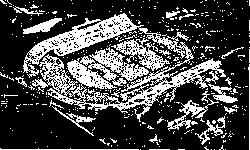
Figure 1. The "Dinamo" Stadium in Moscow.
as the central part of a higher type of sports base in district sports complexes, in parks of culture and rest, etc. Among the main requirements for S., determined by the Soviet physical training views, is the organic connection of S. with the whole complex of other facilities and areas of the base or complex, ensuring the involvement of the spectator coming to S. in active physical training. This view is reflected both in the desire to give the necessary form to S. itself (the arrangement of stands, allowing one to see from them not only
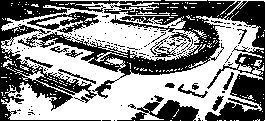
Figure 2. Project of the All-Union Stadium in Moscow.
the central sports area, but also the area of mass actions), and in the planning and zoning of the entire territory of the base (complex), i.e., the rational placement of areas and facilities. The construction of large S. raised a whole series of the most important technical problems: external architectural design, rapid filling and especially emptying of stands, transportation of hundred-thousand masses to S. and from it, ensuring sufficient visibility from distant places of stands, questions of acoustics and radiofication, etc. From a sanitary-hygienic point of view, the most important is the question of the location of S.: a) general sanitary-hygienic requirements for the area chosen for it must in no case be lower than those presented for habitation, b) non-flooding and non-pollution of the area, c) its upwind location relative to the prevailing winds, d) location on a river above the outflows, e) distance from industrial enterprises, f) separation from housing by forest plantings and sufficient greening of the entire area, etc. In addition to the first giant S. built in the USSR, the "Dinamo" (Moscow, 1929, accommodating up to 50,000 people) (Fig. 1), during the first five-year plan large S. were built in a number of cities - Leningrad, Kharkov, Kiev, Odessa, Gorky, etc. In 1932, in accordance with the decision of the Council of People's Commissars of the USSR of September 23, 1931, the construction of the Central S. of the USSR in Moscow (in the Izmailovo zoo, on the assignment of at least 120,000 seats) (Fig. 2) began, intended for holding international and union major specially physical training and general cultural-political holidays,
N. G.unkshg.
Related articles
Mentioned in
Cite this page
“Stadium.” Soviet Medical Encyclopedia. English translation of Bolshaya Meditsinskaya Entsiklopediya, 1st ed. (Moscow, 1928–1936), ed. N. A. Semashko. https://sovietmedicalencyclopedia.pages.dev/article/stadium/